

If you’ve ever stared at a pond wondering, “Water lily or lotus?”, this is your moment of clarity. Once you learn the leaf notch, bloom height, and what happens after flowering, you’ll never mislabel a Nymphaea again.
The myth-busting visual checklist: how to spot Nymphaea (water lily) every time
1) The leaf test: find the notch
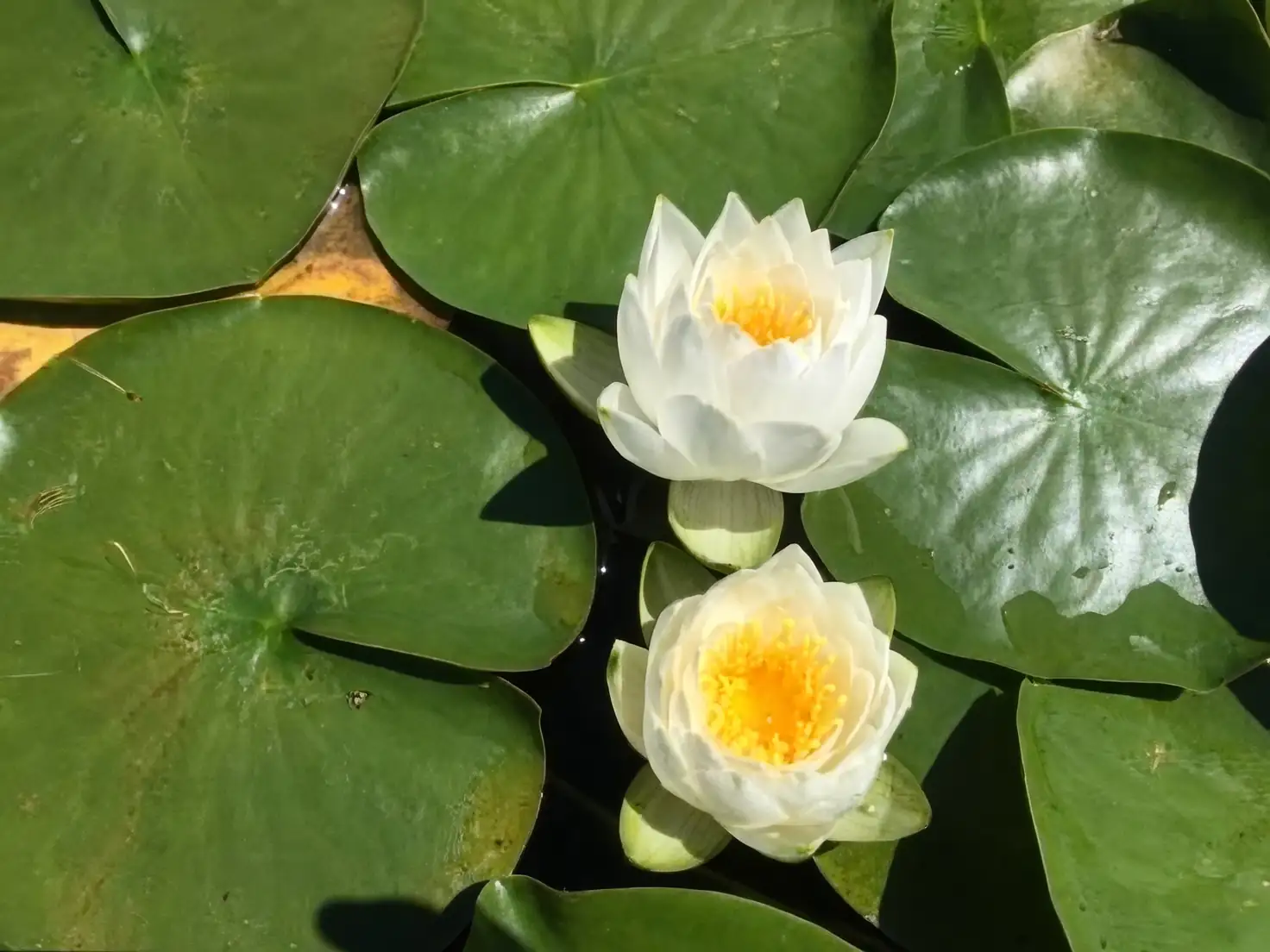
- Water lily (Nymphaea): Look for a round, floating leaf with a clean “pie-slice” cut from the edge to the center—a hallmark notch. The upper surface is typically glossy green; the underside is often purplish-red, and many cultivars show marbled mottling. Tropical types may have slightly toothed edges; many hardy types are smoother.
- Lotus (Nelumbo): Leaves are round and unbroken (no notch) and typically stand above the water on tall stalks like tilted umbrellas.
Quick win: If it floats and has a notch, you’re looking at Nymphaea.
2) Flower position: hugger vs. high-riser
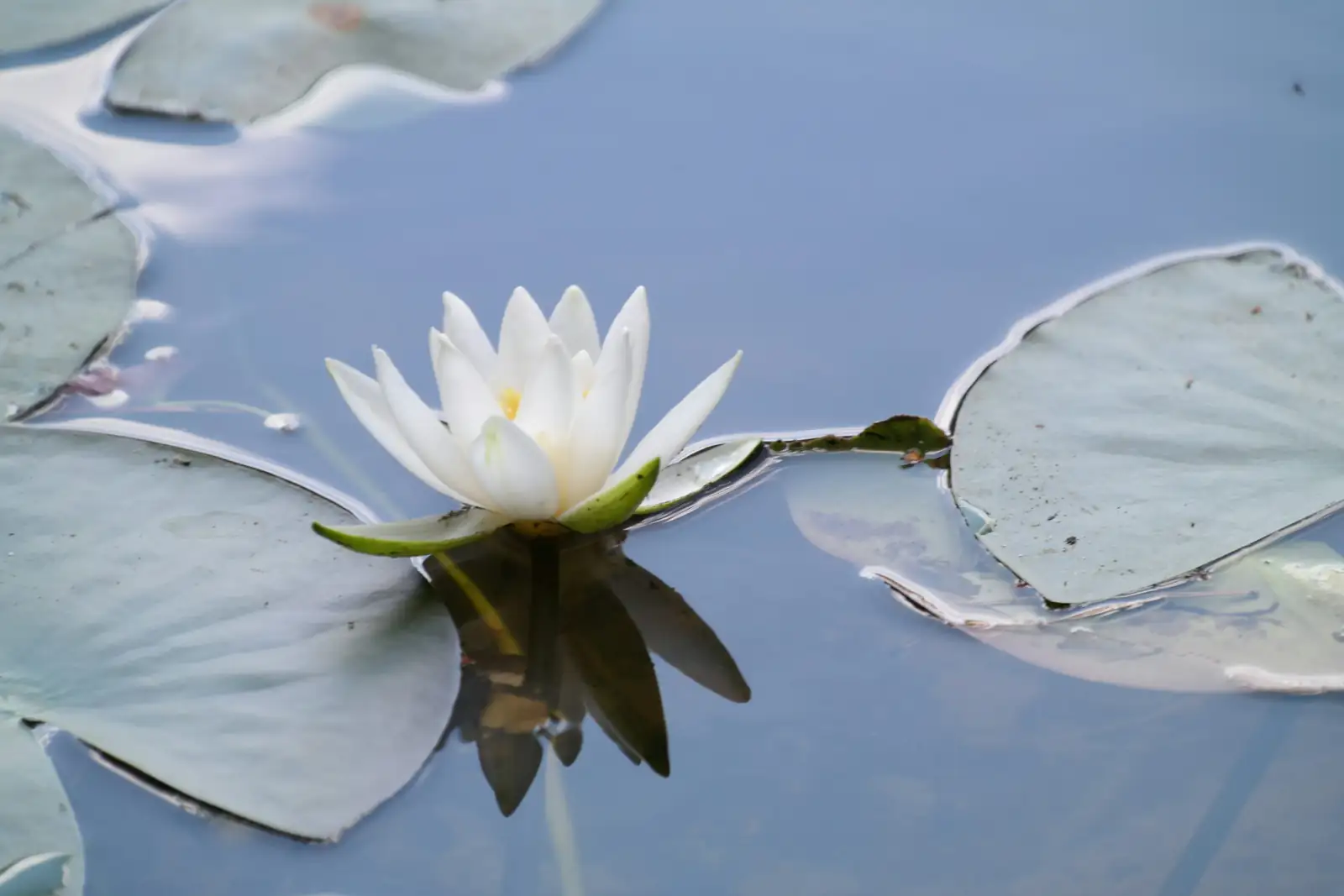
- Nymphaea: Flowers are borne on or just above the water’s surface. Tropical water lilies may hold their blooms a bit higher than hardy ones, but think “surface-skimming,” not sky-high.
- Nelumbo: Flowers rise well above the water on sturdy stalks.
Quick win: Surface-level blooms? Nymphaea. Towering flowers? Nelumbo.
3) After the show: the seed giveaway
- Nymphaea: Spent flowers typically slip beneath the surface; seeds ripen underwater. There’s no lingering “showerhead” seed pod.
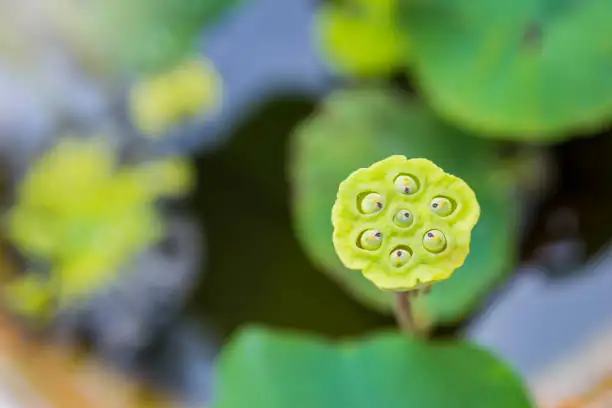
- Nelumbo: Produces a familiar, cone-shaped seed pod that remains elevated above the water long after the petals drop.
Quick win: No above-water seed pod = Nymphaea.
4) Growth habit: floating rosette vs. architectural verticals
- Nymphaea: Grows from thick, underwater rhizomes (or tubers in some tropical kinds). Leaves and blooms rise up on petioles from a crown, the foliage forming a floating rosette. Plants spread gradually and can become crowded over time.
- Nelumbo: Emergent habit with robust vertical leaves and flowers held well above the water, giving ponds a bold, architectural look.
5) Color and fragrance clues
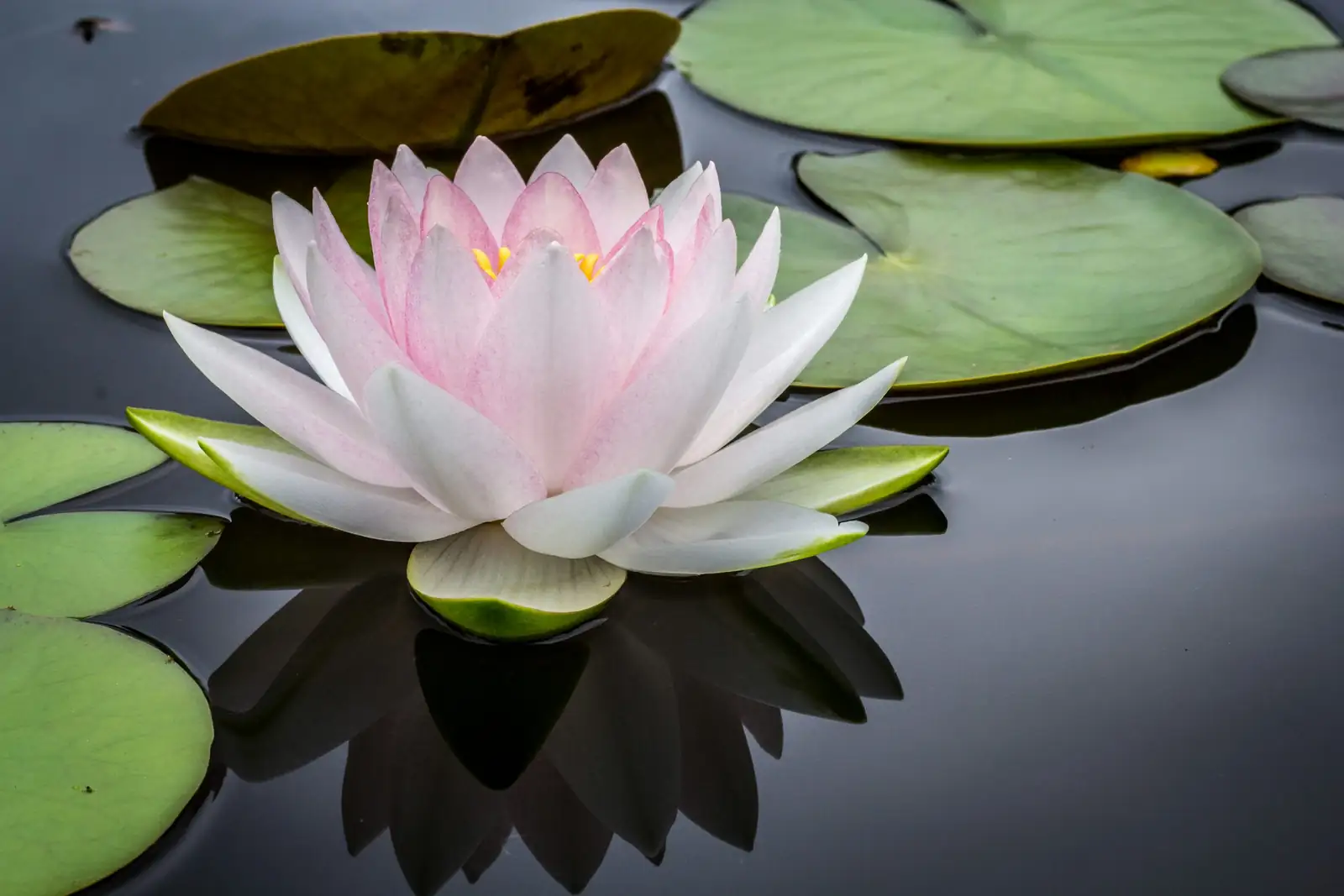
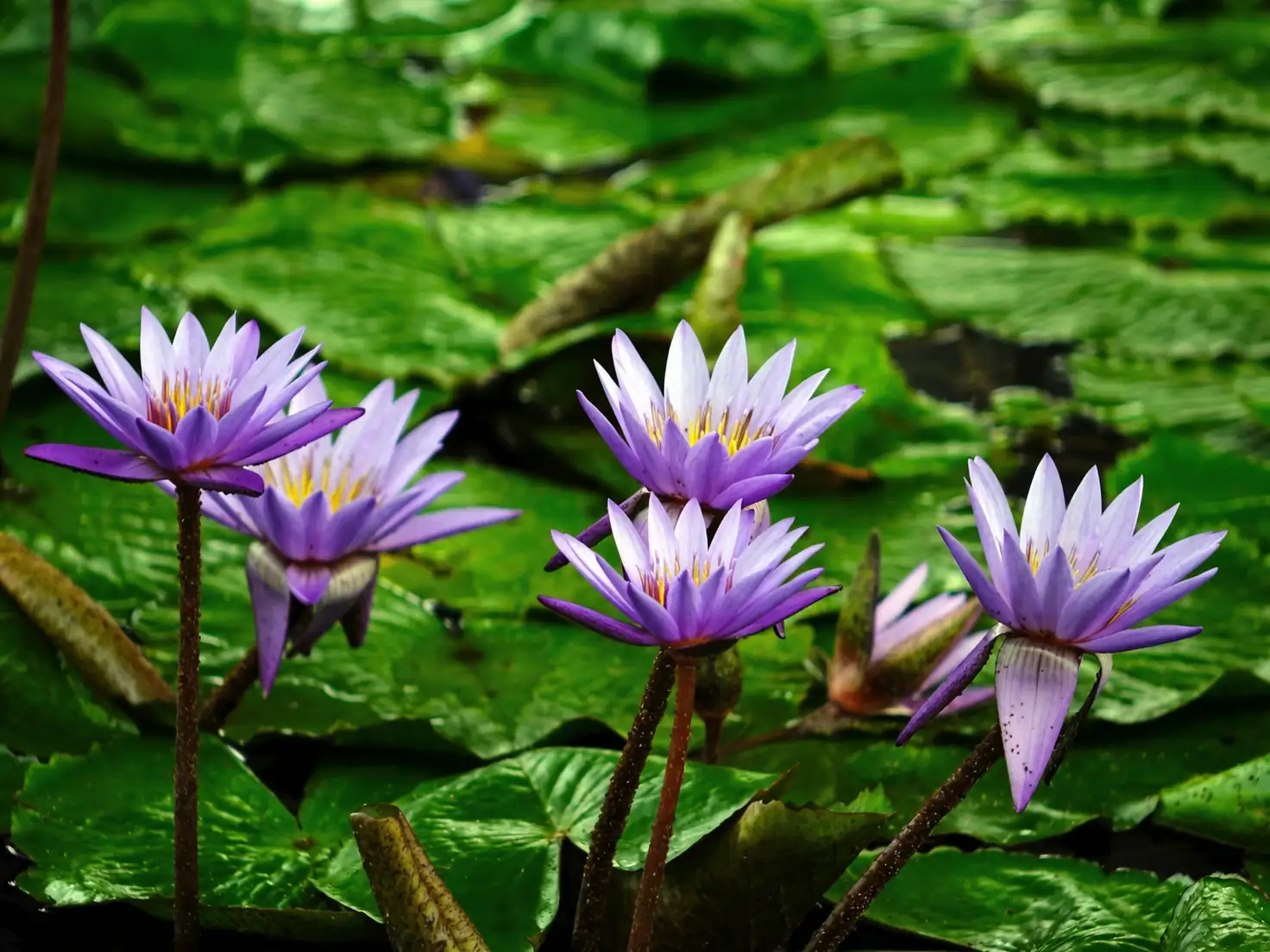
- Nymphaea: Many-petaled blooms in white, yellow, orange, pink, red, and purple—and among tropical water lilies, even luminous blues. Many cultivars are fragrant. Individual flowers usually last 3–5 days and often follow a day-open/night-close rhythm. Some tropical cultivars are famously night-blooming.
- Nelumbo: While also fragrant and showy, you won’t see true blue lotus flowers in typical cultivation; the “blue lotus” sold in many places is actually a blue Nymphaea.
Quick win: True blue on a “lotus” label? It’s almost certainly a tropical Nymphaea.
—
Field IDs you can trust (snap these photos to double-check later)
- A clear notch in a floating leaf (“pie slice” missing).
- A flower resting on or barely above the water.
- Spent flowers slipping under the surface (no above-water seed pod).
- Underside of the leaf showing purplish-red tones or mottling.
- In tropical types, a slightly toothed leaf edge; in many hardy types, smoother margins.
Two out of the five? Very likely Nymphaea. Three or more? You’ve nailed it.
—
Nymphaea 101: the essentials for gardeners
- Light: Full sun is best—aim for 6–8 hours of direct sun daily. With less, leaves will look fine but blooms will underperform.
- Water depth over the crown: Typically 5–30 cm (2–12 in); some vigorous cultivars tolerate deeper (up to about 80 cm/31 in).
- Temperature:
- Hardy water lilies: Tolerate cooler water; can bloom in a wide range of conditions.
- Tropical water lilies: Prefer warm water around 25°C+ (77°F+); growth slows strongly below ~15°C (59°F).
- Hardiness:
- Hardy water lilies: Generally USDA Zones 4–10 (depending on cultivar and whether rhizomes remain below the ice line).
- Tropical water lilies: Frost-tender, typically Zones 9–11; overwinter indoors where frost occurs.
- Water conditions: Still or gently moving water only—avoid strong turbulence, waterfalls, and constant splashing that batter leaves and reduce flowering.
- Soil: Heavy, nutrient-rich loam/clay aquatic soil; pH ~6–8. Skip fluffy potting mixes that float or foul water.
- Feeding: During active growth (roughly May–September).
- Hardy types: About monthly.
- Tropical types: About every 2 weeks.
Use aquatic fertilizer tablets pushed into the soil near the roots.
- Grooming: Remove yellowing leaves and spent blooms by cutting stalks near the base. This tidies the plant and helps keep water clearer.
- Repotting/Division: Every 2–3 years in spring. Divide rhizomes and replant vigorous sections with 2–3 growing points.
Pro tip: For balcony tubs and small containers, choose compact cultivars—your future self (and your water level) will thank you.
—
Troubleshooting myths (and quick fixes)
- “It must be a lotus because it’s not flowering.”
- More likely: not enough sun, planted too deep, water too cool, low nutrition, or overcrowded rhizomes.
- Fixes: Move to full sun, adjust depth to 5–30 cm over the crown, feed regularly with aquatic tablets, and divide if crowded.
- “Blue lotus” at the garden center?
- That’s a tropical water lily (Nymphaea) with blue blooms—lovely, but not a lotus.
- “Why did my flowers disappear overnight?”
- Individual Nymphaea flowers last about 3–5 days and many close at night; spent blooms then sink to ripen seeds underwater.
—
A living icon: meaning, myth, and art
- Name notes: Nymphaea takes its name from the water nymphs of Greek mythology—spirits of fresh waters and springs.
- Symbolism: Purity, serenity, renewal, and spiritual clarity. The bloom rising clean from still water, opening with the sun and often closing at night, has long suggested cycles of rebirth and reflection.
- Culture and history: In ancient Egypt, water lilies were revered and linked to the sun’s daily rebirth, appearing widely in art and ritual motifs. Centuries later, Nymphaea starred again in Claude Monet’s Water Lilies paintings, turning a garden pond into an emblem of light and perception.
A thoughtful take on “flower language”: Rather than a fixed code, these meanings grew from lived observation—the daily choreography of opening and closing, the pristine petal above opaque water, the tranquil disks that shade fish below. It’s a visual metaphor the plant writes for us, day after day.
—
Safety, pests, and pond companions
- Pests: Aphids (often rinsed off), caterpillars (hand-pick), water mites, and leaf beetles. Wildlife like turtles, fish, and waterfowl may nibble foliage and buds.
- Diseases: Leaf spot and crown/rhizome rot—prevent with clean water, full sun, and prompt removal of affected leaves.
- Toxicity: Some species contain bioactive alkaloids; avoid eating raw plant parts. In some regions, certain water lilies are consumed only after thorough cooking/processing.
—
Quick-reference cheat sheet (save this for your next pond stroll)
- Leaf with a notch + floating = Nymphaea.
- Flower on or just above the surface (not lofted) = Nymphaea.
- No above-water seed pod after bloom = Nymphaea.
- Blue flowers in a “lotus” listing = almost certainly Nymphaea (tropical type).
- Glossy pads, sometimes mottled or reddish beneath = often Nymphaea.
Once you start using this checklist, you’ll spot Nymphaea instantly—and never confuse these incomparable pond beauties with Nelumbo again.


