

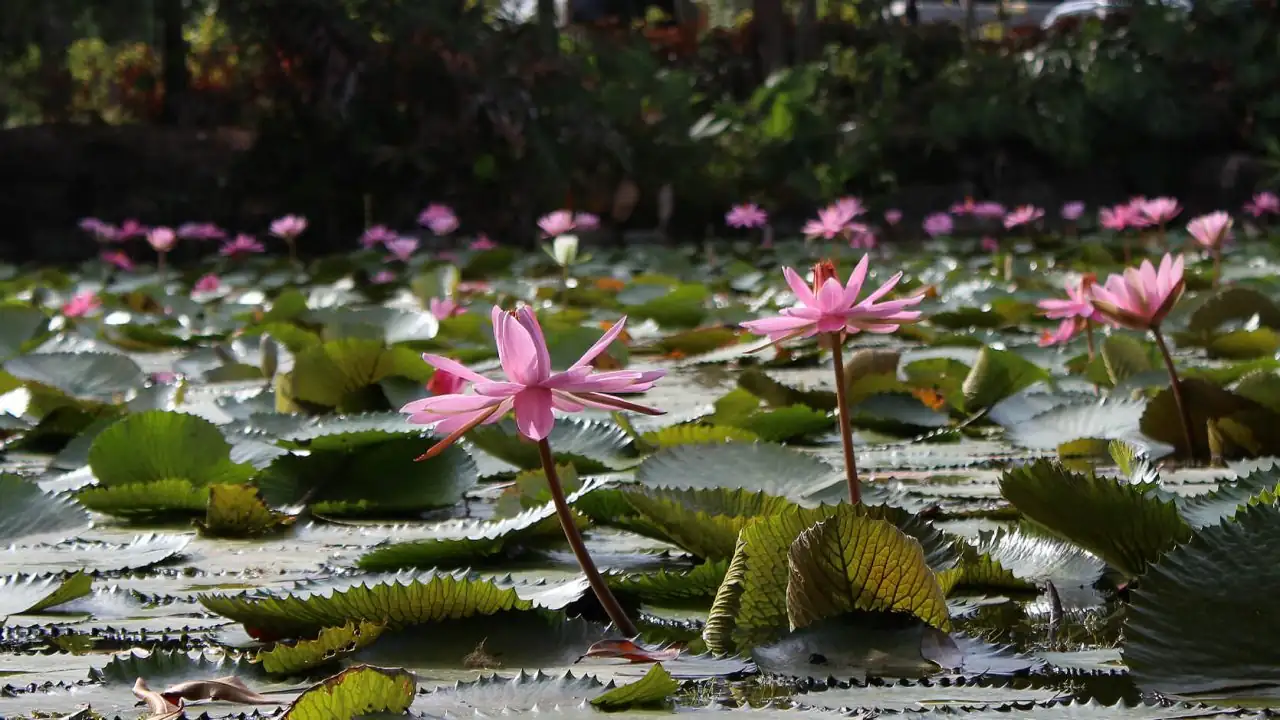
Water lilies don’t just decorate ponds—they run a tight social calendar for their pollinators. In Nymphaea, flowers open and close on precise day or night schedules, broadcast heady perfumes, and even, in a few cases, offer a faint touch of warmth. The result is a choreographed courtship that decides whether beetles or bees carry the pollen baton from bloom to bloom.
Timing is everything: day vs. night “opening windows”
Most Nymphaea flowers follow a rhythmic routine over 3–5 days, opening and closing daily like shutters. Which window they choose—daylight or darkness—signals which pollinators they’re courting.
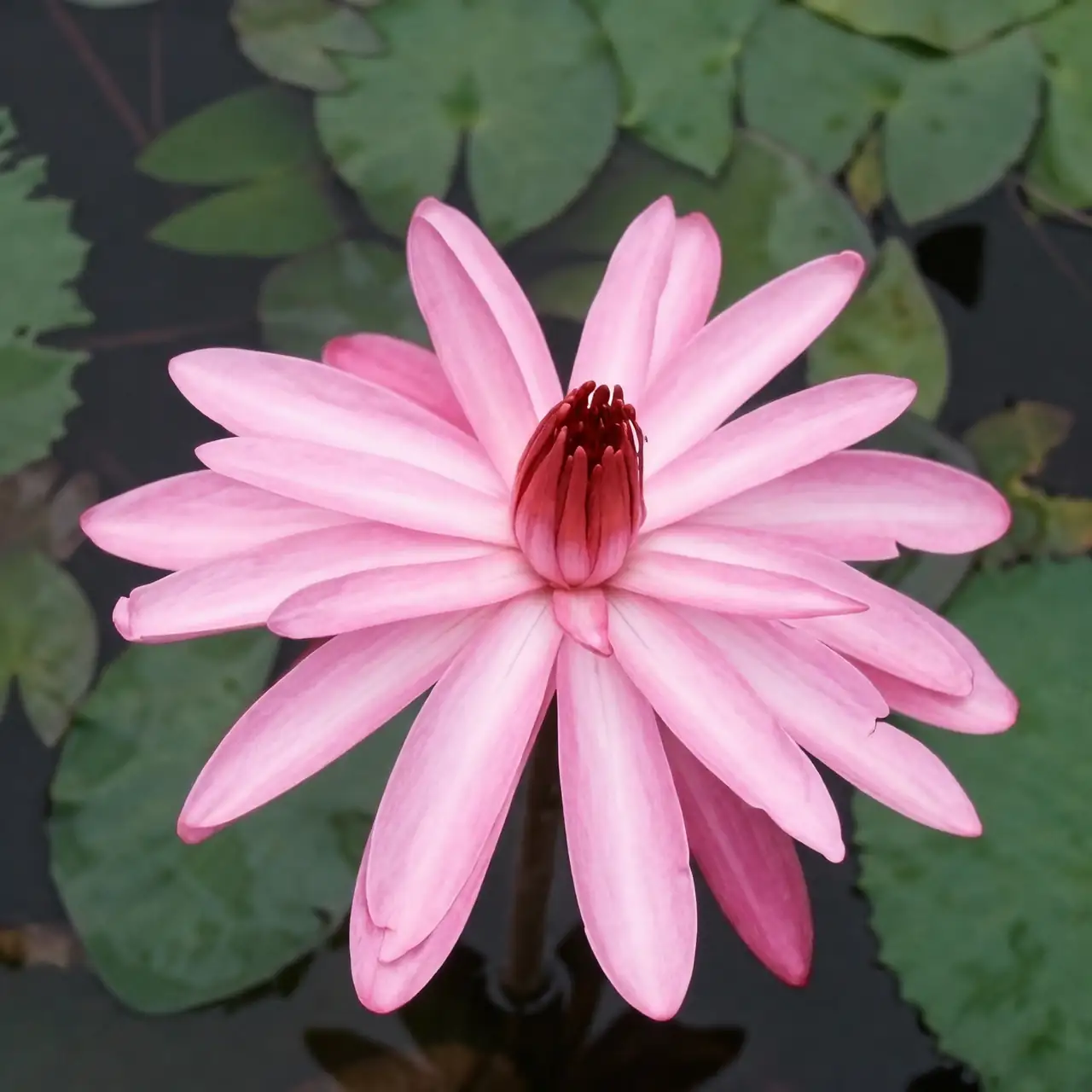
- Day-bloomers (bee shift)
- Open in bright hours (often mid-morning), when temperatures rise and bee traffic peaks.
- Close by late afternoon or evening.
- Often vividly colored—white, yellow, pink, red, purple, and in tropical species, even blue—with sweet, classic “floral” scents.
- Many hardy water lilies in temperate ponds fit this pattern.
- Night-bloomers (beetle shift)
- Open at dusk, stay open through the night, and close by late morning.
- Frequently pale—white or cream—so they glow in low light.
- Scents can be stronger, sometimes richer or fruitier at night to lure crepuscular and nocturnal beetles.
- Tropical species such as Nymphaea lotus are emblematic night-bloomers.
This circadian timing funnels the right visitor to the right phase of the flower’s life.
A three-day love story: the protogynous dance
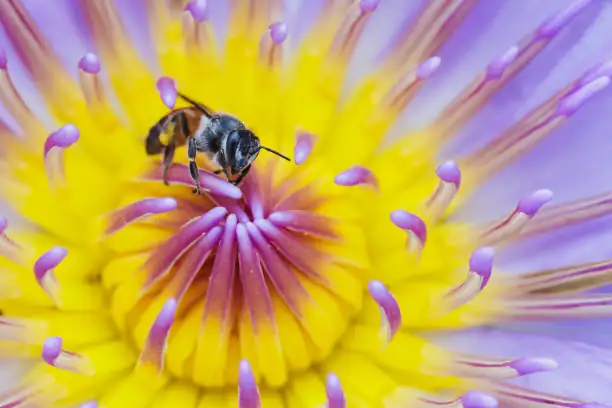
Nymphaea flowers are typically protogynous: female first, male later. This sequencing encourages cross-pollination and reduces selfing.
- Day/Night 1: Female phase
- The flower opens (by day in bee-pollinated species, by night in beetle-pollinated ones).
- Stigmas are receptive and glistening with a minute, sticky film ready to capture incoming pollen.
- Scent is strong—a sensory billboard—and the inner floral chamber is easy to enter.
- In several night-bloomers, visiting beetles may linger inside when petals close, becoming overnight guests.
- Day/Night 2: Male phase
- The flower reopens, this time releasing pollen in copious, brush-like clouds from the stamens.
- The stigmas are no longer receptive, pushing insects to carry pollen away to younger (female-phase) flowers.
- In bee-leaning species and hybrids, pollen production and bee foraging often peak in late morning.
- Day/Night 3 (and sometimes 4–5): Encore and farewell
- Some species give a final, lighter pollen show, then petals fade and sink, completing the cycle.
Perfume as a promise: scent cues and who’s listening
Water-lily fragrance is not just for us. It’s a precisely timed message.
- For bees:
- Day-bloomers tend toward bright, “floral–sweet” bouquets.
- Scents crest when stigmas are receptive on Day 1 and again around pollen release on Day 2, aligning with peak bee activity (often mid-morning).
- For beetles:
- Night-bloomers release stronger evening perfumes that travel over still water at dusk.
- The enclosed floral chamber can concentrate scent (and sometimes a hint of warmth; see below), encouraging beetles to stay overnight, feed, and mate—then depart dusted in pollen.
Beetles or bees? Species snapshots
While local conditions shape real-world outcomes, certain Nymphaea species and lines show clear tendencies.
- Nymphaea lotus (night-blooming white water lily)
- Pollinator lean: Nocturnal beetles are prime partners; in parts of West Africa, rhinoceros beetles have been documented as key visitors.
- Bonus act: Morning bees may collect leftover pollen when the flower briefly reopens, but the nighttime beetle set does much of the transfer.
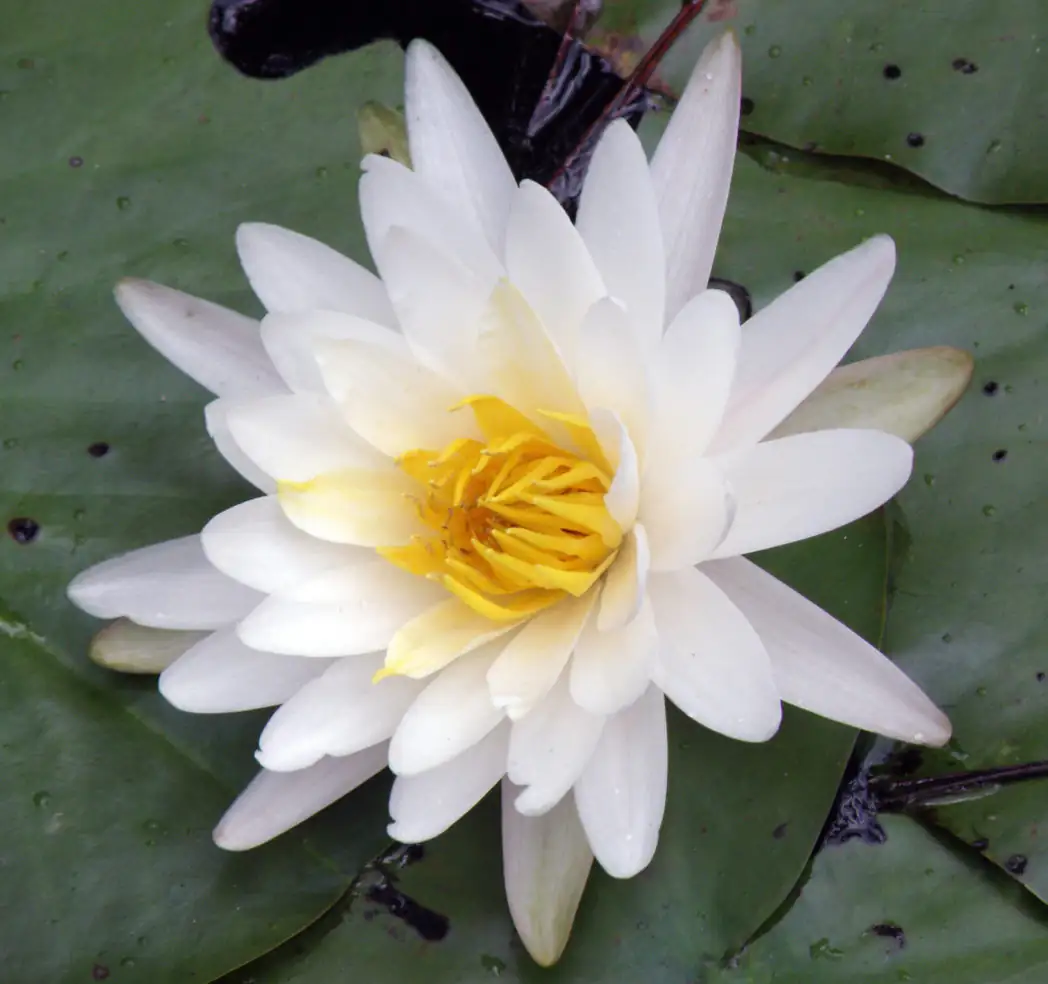
- Nymphaea odorata (American white water lily; day-blooming)
- Pollinator lean: Bees (including small native bees) and other daytime visitors.
- Hallmarks: Sweet fragrance, bright mid-day presentation, classic day-open/night-close rhythm.
- Tropical blue Nymphaea and modern hybrids (day-blooming)
- Pollinator lean: Strongly bee-oriented. Studies on cultivated hybrids show stigmas most receptive on Day 1 and peak pollen viability on late-morning Day 2—ideal for bees (including bumblebees) shuttling between female- and male-phase flowers.
- Visual cues: Saturated blues and purples with sunny yellow centers act like landing targets.
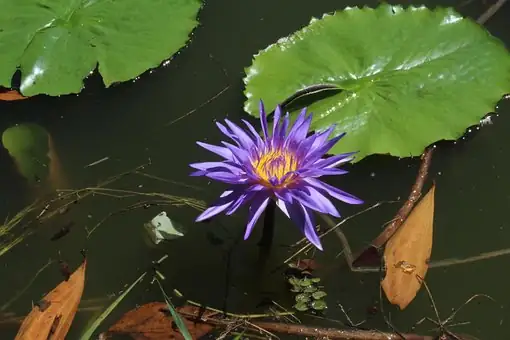
Note: Many tropical species do hold blooms a bit more upright, which can intensify scent around the floral chamber and make access easier for pollinators.
Warm welcomes: floral warming, myth vs. measurement
Floral heat in the water-lily family spans a spectrum.
- The family’s heavyweight heater:
- The giant Amazon waterlily (Victoria, a close relative, not Nymphaea) is famous for robust, sustained thermogenesis that keeps its floral chamber several degrees above ambient at night—an energy reward and scent amplifier for large beetles.
- Nymphaea’s lighter touch:
- Reports from the field and experimental observations suggest that some Nymphaea (especially certain tropical, night-blooming taxa) can show mild floral warming during peak scent release—subtle compared with Victoria and not universal across the genus.
- What it likely does:
- Modestly boosts fragrance volatilization.
- Makes the floral chamber a slightly more comfortable microclimate for lingering visitors.
- What it doesn’t do:
- Create the intense, long-lasting heat waves typical of thermogenic champions. In most Nymphaea, timing and scent are the main lures; any heat is a gentle nudge, not the headline act.
The pollinator’s playbook: how the flower guides traffic
- Architecture: Many-petaled blooms create a cup; a ring of showy stamens guides insects toward the center where stigmas (Day 1) or pollen (Day 2) await.
- Movement: Subtle daily changes in petal and stamen posture open thoroughfares or close doors, sometimes keeping visitors inside overnight in night-bloomers.
- Color and contrast: Pale tones for moonlit signals vs. saturated daylight hues with bright yellow centers for bee targets.
- Rhythm: A strict open/close cadence that syncs with pollinator activity windows over 3–5 days.
Pond-side detective work: watch the dance yourself
- Note the opening time:
- If it starts at dawn and shuts by evening, it’s courting bees.
- If it glows open at dusk and closes by late morning, it’s on the beetle shift.
- Follow the fragrance:
- Sniff on “Day 1” (female phase): the scent often peaks.
- Return the next day: look for bees dusted in yellow pollen, or in night-bloomers, inspect early morning for beetle departures.
- Track visitors by hour:
- Bees swarm mid-morning on day-bloomers.
- Beetles arrive at twilight on night-bloomers; some remain as the flower closes.
Why this choreography matters
- For the plant: Staggered female-to-male phases and time-targeted signals promote outcrossing, improving genetic health.
- For pollinators: Reliable nectar/pollen schedules and safe floral chambers reward timely visits.
- For gardeners and breeders:
- Choosing day- or night-blooming varieties shapes the pollinator community you’ll host.
- Breeding lines increasingly consider opening windows, scent, and color as traits that fine-tune pollinator fit—especially for blue and purple tropical strains admired for their vivid hues and perfume.
In short, Nymphaea doesn’t leave pollination to chance. Each bloom follows a script—day or night curtains up, a well-timed scent cue, and a carefully staged handoff between female and male phases. Whether your pond stars entertain bees in the morning or beetles after dark, the show is exquisitely timed—and well worth pulling up a chair at the water’s edge.


