


Breathe in that sweet, apple-y perfume, watch the white petals lie flat like tiny sunhats—then pluck. That’s the moment when chamomile tastes honeyed and mellow, not grassy or bitter. Here’s how to catch that window, dry your harvest like a pro, and blend gentle teas you’ll reach for night after night.
Meet the two “chamomiles” in your cup
- German chamomile (Matricaria chamomilla): an erect, branching annual grown widely for tea and essential oil. Taller plants, loads of blooms.
- Roman chamomile (Chamaemelum nobile): a low, creeping perennial that can carpet paths with fragrance; also lovely in tea, especially homegrown blends.
Both have daisy-like flowers with white rays and a sunshine-yellow center, and both smell like a crisp “ground apple” (a nod to the old Greek nickname). Grow either—or both. Choose German for volume harvest; choose Roman if you also want a resilient, fragrant groundcover.
Pinpoint peak bloom for the sweetest flavor
Think of each flower as a tiny clock face. You want it right at “tea o’clock”—fully open, but not yet slipping toward seed.
Read the bloom like an expert
- Petals: mostly flat and horizontal around the disc (not cupping in, not yet drooping strongly).
- Center: bright yellow, domed. In German chamomile, the receptacle becomes distinctly conical and hollow as it matures; pick before the petals noticeably droop.
- Disc florets: when roughly two-thirds of those tiny tubular florets in the yellow center have opened, flavor and aroma are delightfully rounded.
Avoid:
- Very young buds (flavor too green).
- Overmature heads with strongly drooping petals (tend to taste more bitter).
Season windows and rhythm
- Main flowering: spring to midsummer (typically May to July), often with multiple flushes if you keep harvesting.
- A flush can last ~50–65 days; individual blooms unfold over ~20–25 days. Check plants every day or two and harvest in waves.
Best harvest conditions
- Dry weather is non-negotiable. Never harvest wet flowers.
- Time of day: go when the heads are open and dry. Many gardeners like mid‑morning (after dew dries) or midday on a sunny day for highly aromatic flowers. Consistency matters more than the exact hour.
- Handle gently and do not wash (you’ll rinse away the delicate aromatics you just timed perfectly).
How to harvest without bruising
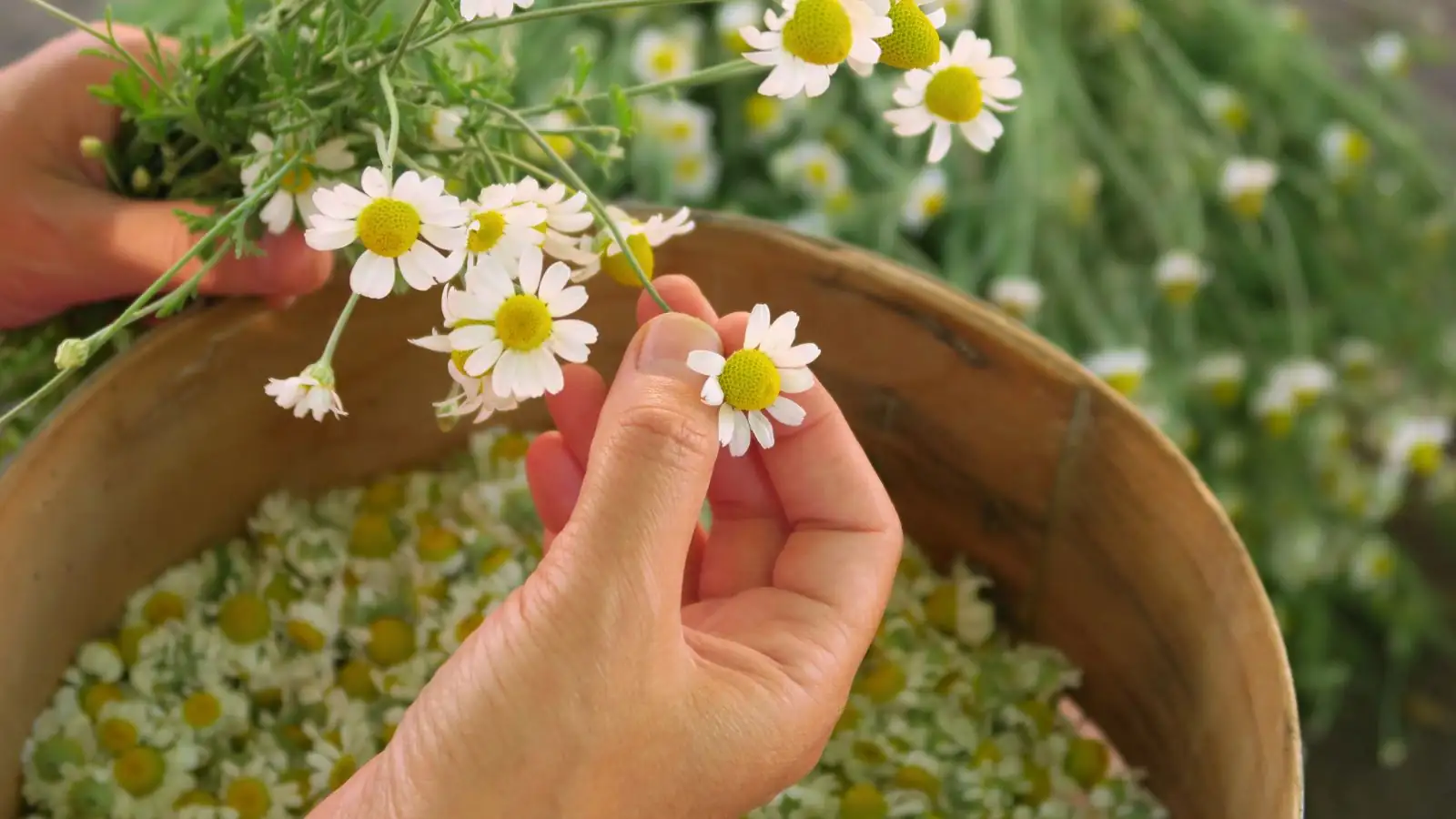
- Use clean snips or pinch: place two fingers under the flowerhead and pop it off with a short stem. Keep stems minimal—they add bulk, not flavor.
- Drop blossoms into a shallow, breathable basket or tray so they don’t steam themselves warm.
- Harvest little and often; the plant will respond with more flowers.
Dry like a pro: preserve aroma and color
Your goals: low heat, moving air, and darkness. Light and high heat bleach color and drive off those volatile, apple-like notes.
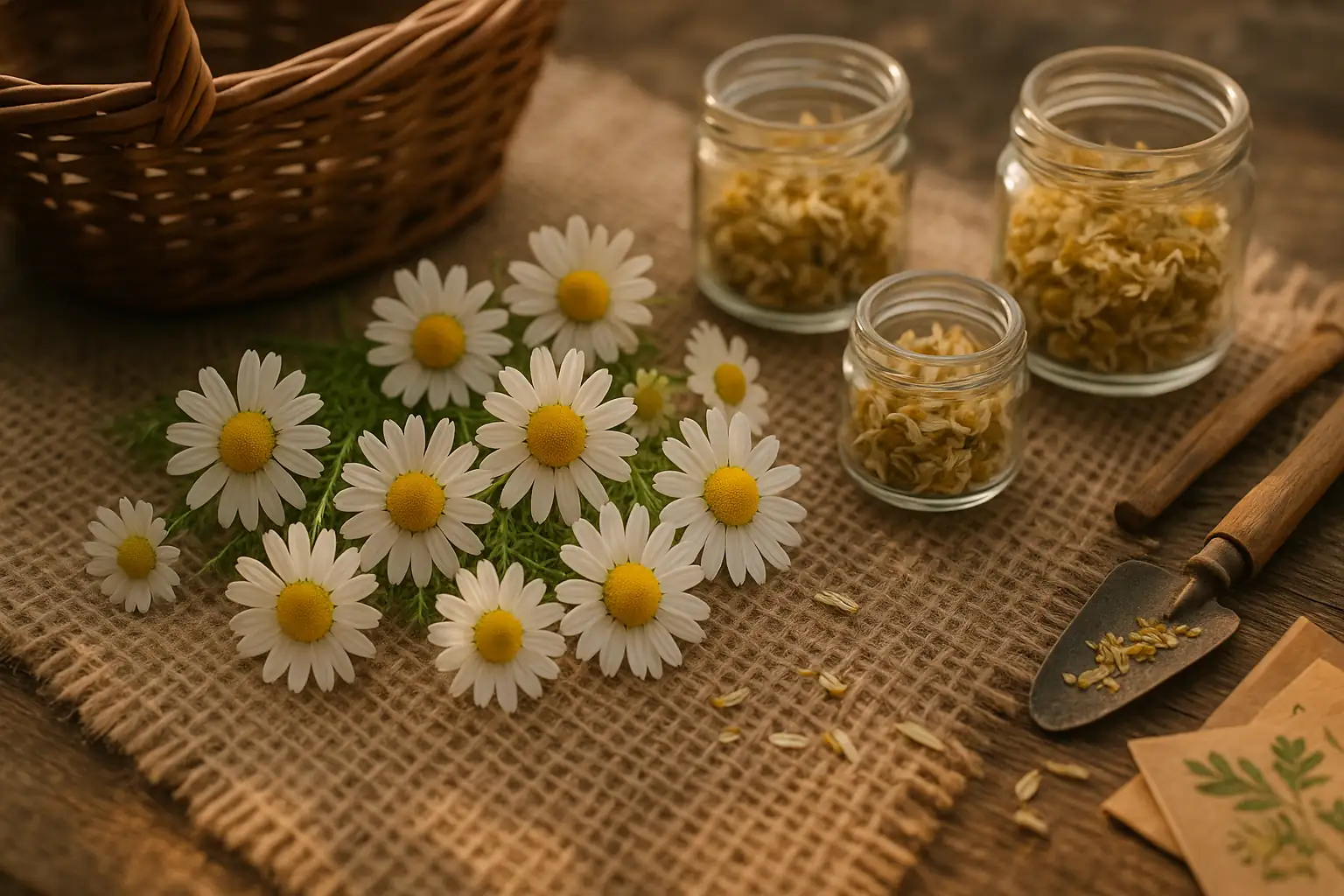
Set-up and pre-dry
- Inspect and flick away any hitchhiking insects.
- Spread in a single layer on mesh screens or paper-lined trays. Avoid piling.
- Keep out of direct sun with plenty of airflow.
Drying methods
- Air-dry on screens: 5–10 days in a warm, dry, shaded space with good ventilation.
- Dehydrator: 86–95°F (30–35°C), 4–8 hours, rotating trays. Err on the cooler side for better flavor.
- Oven (last resort): use only the light or the absolute lowest setting with the door cracked and a fan. Most ovens run too hot—watch like a hawk.
How to know they’re done
- Heads feel papery and brittle; centers crumble when pressed.
- Color stays butter‑yellow and white (not brown).
- Aroma is sweet and fruity, not hay-like or musty.
Store to keep that just‑picked fragrance
- Pack immediately into airtight, lightproof containers (amber jars or tins). Fill nearly to the top to reduce trapped air.
- Label with date and batch. Tuck in a food-safe desiccant if your climate is humid.
- Keep cool, dark, and dry. Best quality is within 6–12 months; recheck a week after jarring for hidden moisture.
Brew for the best flavor
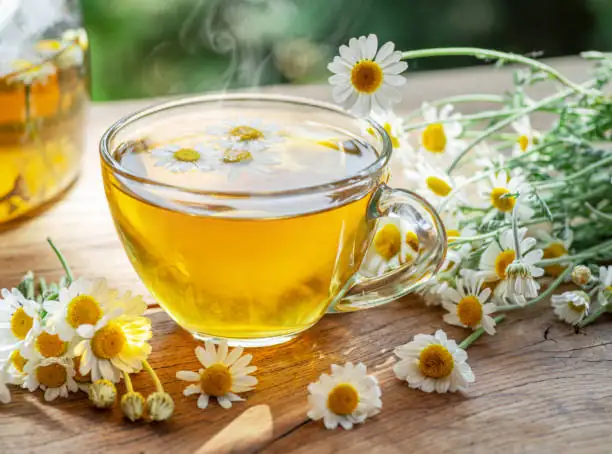
- Hot infusion: 1–2 teaspoons dried flowers (or 2–3 teaspoons fresh) per 8 oz (240 ml) just-boiled water cooled a beat. Cover while steeping 5–7 minutes; strain. Honey or a lemon twist plays nicely without overpowering.
- Cold infusion: 1 tablespoon dried per cup of cold water; refrigerate 6–12 hours, then strain. Soft, round, and never bitter.
Pro tip: Always cover your cup—those gentle aromatics are volatile and love to escape with steam.
Gentle blend ideas (mint, lemon balm, lavender)
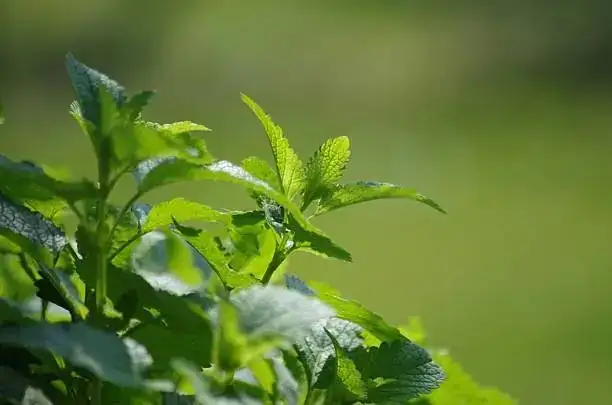
Start small, taste, and adjust. These are calm, balanced, and easy to love.
- Garden Breeze (daily sipper)
- 2 parts chamomile
- 1 part spearmint or peppermint
- Optional: a thin strip of fresh lemon zest per cup
- Notes: Bright, cooling top notes over a honeyed base. Lovely hot or iced.
- Lemon Meadow (afternoon calm)
- 2 parts chamomile
- 1½ parts lemon balm
- ½ part lavender buds (very light hand)
- Notes: Lemon balm softens the cup; lavender adds a whisper of floral without turning soapy.
- Night Porch Blend (evening wind‑down)
- 2 parts chamomile
- 1 part lemon balm
- ½ part peppermint
- Pinch of lavender (just a pinch)
- Notes: Round, soothing, and gentle enough for most palates.
Blending rule of thumb: lavender is potent; keep it to 5–15% of the mix. Lemon balm brings lemony-herbal lift; mint delivers clean, cooling clarity that pairs naturally with chamomile’s apple tones.
A quick grow-to-cup checklist
- Sun: full sun (6–8 hours) for sturdy growth and heavy bloom; in very hot climates, a touch of afternoon shade keeps flowers pristine.
- Soil: well‑drained and on the lean side. Overly rich or soggy soil = floppy stems and fewer flowers.
- Water: regular moisture while young, then let topsoil dry between waterings. Avoid waterlogging.
- Feed: minimal; too much fertilizer reduces bloom.
- Keep the flowers coming: deadhead often. If plants get leggy mid‑season, shear to about 4 in (10 cm) to spark a fresh flush.
- Propagation:
- German chamomile: easy from seed; surface‑sow (needs light), germinates in ~1–2 weeks; readily self‑seeds.
- Roman chamomile: divide creeping mats in early spring; great for fragrant edging and between pavers.
Safety first: who should go slow
Chamomile is generally well‑tolerated, but a few groups should take extra care:
- Allergy alert: if you’re sensitive to Asteraceae (daisy family) plants like ragweed, you may react to chamomile. Discontinue if itching, rash, or swelling occurs.
- Skin contact: fresh plants can cause contact dermatitis in susceptible individuals—wear gloves if you’re sensitive.
- Pregnancy and infants: use extra caution with concentrated extracts or essential oil; consult a healthcare professional before use.
- Medications: potential interactions have been reported with anticoagulants (blood thinners). If you take these—or any medication—speak with your clinician before making daily use.
- Essential oils: highly concentrated; not a 1:1 substitute for tea. Avoid internal use unless guided by a qualified professional.
When trying a new blend or a stronger cup, start with small amounts and see how you feel.
Troubleshooting flavor
- Bitter cup?
- Picked too late (petals drooping); try harvesting earlier.
- Steeped too hot/too long; aim for 5–7 minutes and keep the water just off the boil.
- Bland cup?
- Herbs are old or poorly stored; use within a year and keep away from light/heat.
- Not enough herb; increase to 2 teaspoons per cup or try a cold infusion for rounder flavor.
- Grassy notes?
- Harvested in tight bud; wait for full open faces next time.
A note on symbolism and “flower language”
Across cultures, chamomile is linked with comfort, gentle healing, and resilience—the little daisy that keeps smiling even when conditions aren’t perfect. Victorian floriography (the “language of flowers”) popularized symbolic meanings, but these were social fashions rather than universal truths. Still, chamomile’s long use as a soothing household herb makes that association feel apt: a humble plant that steadies the day.
One last nudge
Harvest when the petals are outstretched and the center is sunny and domed. Dry slow and low, store in the dark, and blend with a light hand. Do this, and every jar you open will smell like a walk through a warm, apple‑scented meadow—no matter the season.


