

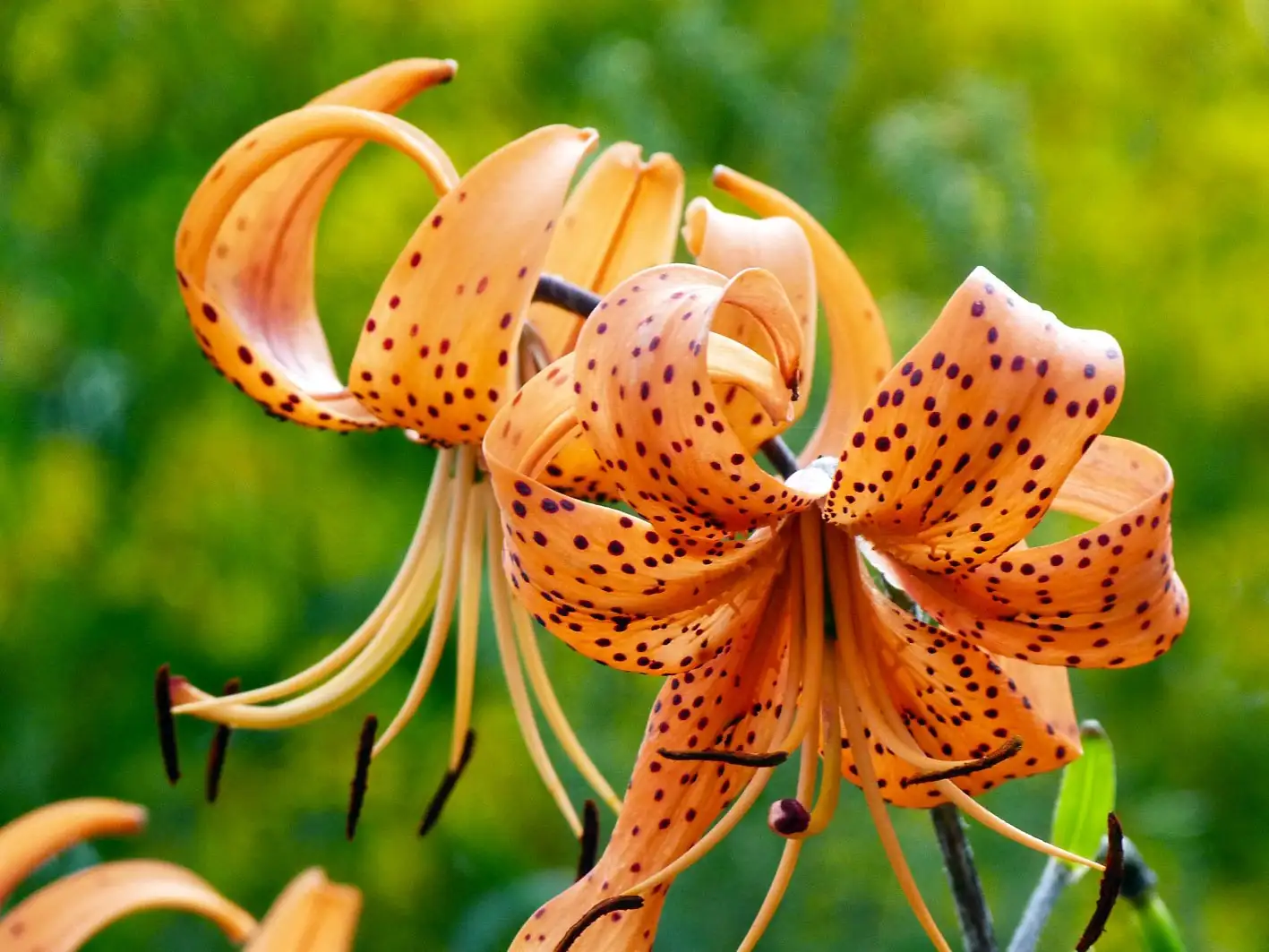
Curious about the lilies you see in gardens and bouquets, and whether any belong in the kitchen? Yes—some true lilies (Lilium spp.) are traditional foods, especially in East Asia. But many “lilies” aren’t true lilies at all, ornamentals are often treated with chemicals, and misidentification can be risky. This safety-first guide focuses on culinary-friendly species like tiger lily (Lilium lancifolium), how to prep them well, and how to steer clear of confusing, non-culinary look-alikes and hybrids.
What counts as a “culinary lily”?
“Lily” is used broadly in common names, but we’re talking about true lilies in the genus Lilium—bulb-grown, summer-blooming perennials with six petal-like segments (tepals) and upright leafy stems. The genus is native across the temperate Northern Hemisphere, with a major center of diversity in East Asia.
- Culinary use centers on specific, verified edible species. The star for home growers is the tiger lily (Lilium lancifolium), long valued in Asian cuisines for its bulb.
- Important nuance: not every lily species is used as food, and you should never assume a bulb is safe to eat just because it’s a Lilium. Stick to verified edible species from trusted sources and prepare them correctly.
Common “lilies” that are NOT true lilies:
- Daylily (Hemerocallis): edible in its own right, but botanically different (no bulb, fans of grassy leaves).
- Calla lily (Zantedeschia) and lily of the valley (Convallaria): not Lilium and can be toxic.
Safety first: five golden rules
- Identify with certainty
- Confirm you have a true lily (Lilium) and, ideally, a known edible species such as L. lancifolium.
- When in doubt, consult a local botany expert, extension service, or a reliable field guide.
- Avoid ornamental hybrids for eating
- Popular garden groups (Asiatic, Oriental, LA, OT, and many named cultivars) were bred for bloom, not food use. Some may be fine, many are unverified, and store-bought bulbs/flowers are often treated with systemic pesticides or fungicides. Don’t eat florist or nursery stock unless it’s explicitly sold as food-grade.
- Keep all lilies away from cats
- True lilies are extremely toxic to cats—pollen, leaves, flowers, bulb, even vase water. If exposure is suspected, seek emergency veterinary care immediately. Dogs are generally less affected but may get stomach upset.
- Start small in the kitchen
- Even edible lilies can cause sensitivities. Try a small portion first and cook bulbs thoroughly.
- Forage ethically—and carefully
- Wild lilies can be uncommon or protected in some areas. Don’t harvest from roadsides (contaminants) or private/property plantings. Grow your own for a safe, sustainable supply.
How to recognize tiger lily (Lilium lancifolium)
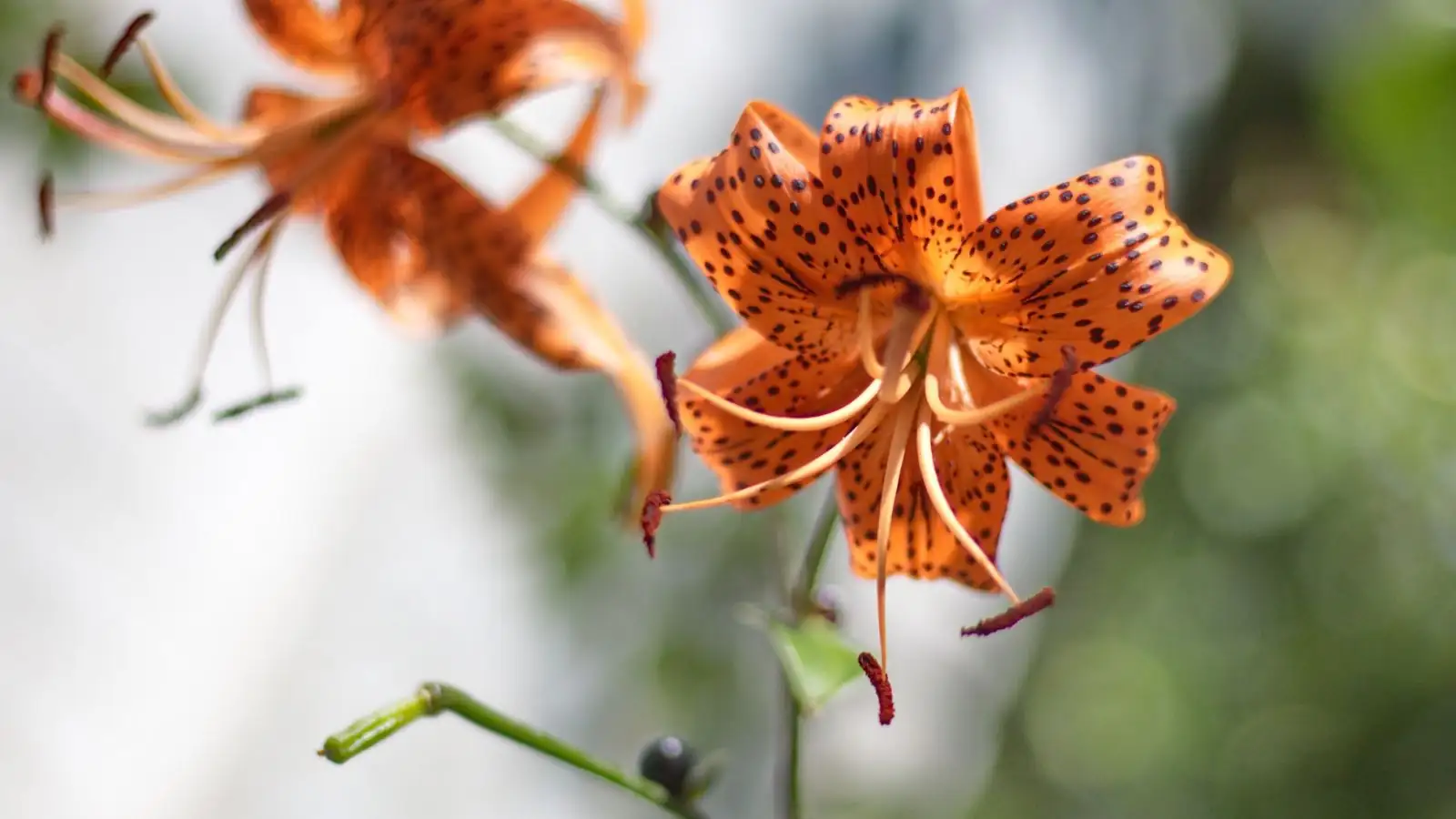
Tiger lily is among the easiest culinary lilies to verify.
- Flowers: vivid orange with black spots; the tepals strongly reflex backward (“Turk’s cap” look). Blooms are usually downward-facing in mid to late summer.
- Stems and leaves: upright stems lined with narrow, lance-shaped leaves; leaves may appear alternate or in loose whorls.
- Signature clue: small, dark purple to black bulbils (little bulbs) often form in the leaf axils along the stem—these clone the parent and are a strong ID hint.
- Bulb: a scaly bulb (like overlapping garlic-like scales, but larger), not a solid onion-type bulb.
Note: Some Asiatic hybrids can look orange and spotted; they typically do not produce those distinctive dark bulbils on the stem.
Grow-your-own culinary lilies (so you know exactly what you’re eating)
Growing your own is the safest route. Lilies are moderate-care plants: once established, they’re generous as long as their bulbs never sit soggy.
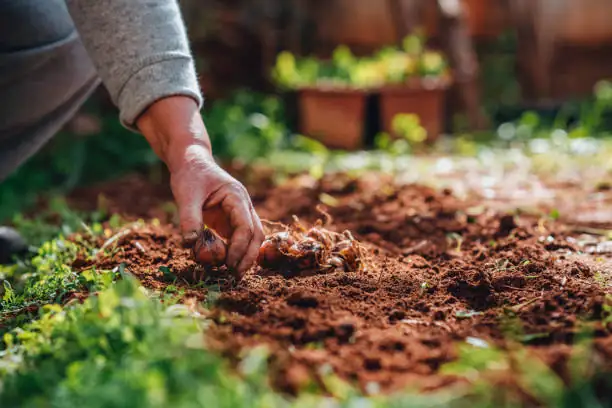
- Sunlight: full sun to partial shade; aim for at least 4–6 hours of sun. In hot climates, give afternoon shade.
- Soil: fertile, loose, and sharply drained. Slightly acidic to near-neutral (about pH 5.5–6.5). Avoid waterlogged mixes.
- Water: keep evenly moist during active growth, never sodden. Water at the base. Ease off after flowering; stop once foliage dies back and bulbs go dormant.
- Feeding: start with good soil; feed lightly at early growth and again at bud set. Overfeeding before roots are active can backfire.
- Planting depth:
- In garden beds: commonly 2–3 times the bulb’s height deep to support strong stem-root formation.
- In containers: use a deep, well-drained pot. Drainage matters more than exact depth.
- Airflow: moderate humidity with good circulation helps prevent Botrytis and other fungal woes.
Clump care and propagation
- Lilies grow from scaly bulbs and often make offsets over time. Tiger lily also makes aerial bulbils you can plant.
- Divide crowded clumps in dormancy every few years to keep plants vigorous.
Harvesting bulbs and other edible parts (from verified edible stock only)
Timing
- Harvest mature bulbs after the tops yellow and die back (late season into dormancy). Expect 2–3 years to reach good bulb size.
- Take only a portion of a clump and replant offsets to maintain your patch.
How to lift and clean

- Use a fork to loosen soil widely around the bulb, then lift gently.
- Trim off the basal plate and roots, peel away any damaged outer scales, and separate the bulb into crisp, clean scales.
Kitchen-safe handling tips
- Rinse well. To limit browning, briefly soak separated scales in cold water with a pinch of salt or a splash of mild vinegar, then drain.
- Blanching for 30–60 seconds in boiling water can remove surface bitterness and help scales cook evenly.
- Always cook before eating sizeable portions.
Other edible parts (again, from verified edible species only)
- Young shoots and tight flower buds of L. lancifolium are sometimes cooked like a spring vegetable. Harvest sparingly, as overharvesting weakens the bulb.
Kitchen prep: texture, flavor, and foolproof methods
Lily bulbs from culinary species have a mild, slightly sweet, nutty taste and a crisp-tender bite that turns pleasantly creamy when fully cooked.
Simple, reliable techniques
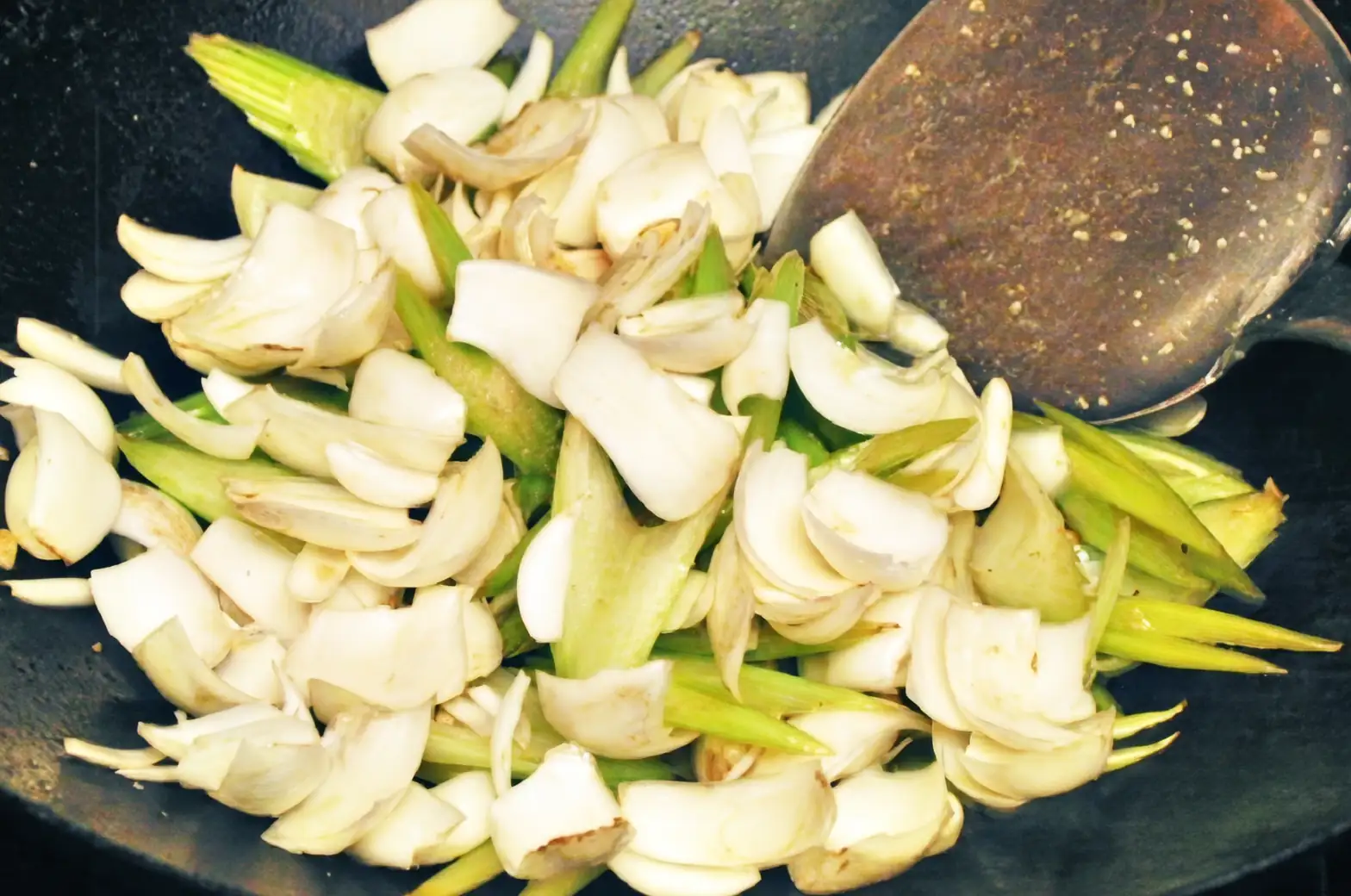
- Quick stir-fry (great for blanched scales)
- Aromatics (ginger/garlic), then lily scales over high heat 1–2 minutes.
- Add tender greens, snap peas, or celery; season with light soy, rice wine, and a pinch of sugar; finish with sesame oil.
- Gentle steaming
- Steam separated scales 6–8 minutes until just tender; dress with a light soy-sesame dressing or fold into warm salads.
- Roasting
- Toss whole small bulbs or thick clusters of scales with oil and salt; roast at 200°C/400°F for 20–30 minutes until lightly golden and soft at the core.
- Comforting soups and congee
- Add rinsed, blanched scales in the final 5–10 minutes so they stay tender, not mushy.
Flavor partners
- Lily’s subtle sweetness loves spring vegetables, mushrooms, mild stock, tofu, white pepper, scallions, and citrus zests.
Allergy and tolerance note
- Try a small portion the first time, cooked well. Discontinue if any adverse reaction occurs.
How to avoid confusing edible lilies with look-alikes and hybrids
Spot the true lily vs daylily difference
- True lily (Lilium): grows from a scaly bulb; upright leafy stem with leaves along it; six tepals; flowers often on a vertical stem.
- Daylily (Hemerocallis): no bulb; clumps of grasslike leaves from the base; flowers on leafless scapes; many daylily buds are edible—but they are not Lilium.
Beware non-culinary “lilies”
- Calla lily (Zantedeschia) and lily of the valley (Convallaria) are not true lilies and can be toxic.
Skip ornamental hybrids for eating
- Asiatics, Orientals, LA/OT hybrids and florist lilies come in many colors and forms (trumpet, bowl, cup, or Turk’s cap). They’re gorgeous, sometimes powerfully fragrant, and perfect for vases—but not intended as food. They’re often treated with systemic chemicals you can’t wash off. If it didn’t come from a food-focused grower with edible use in mind, don’t put it on your plate.
A quick field checklist before you ever taste
- Do I have a confirmed edible species (e.g., L. lancifolium) from a food-safe source?
- Is this plant grown pesticide-free in clean soil I control?
- Can I clearly rule out daylily, calla, lily of the valley, and ornamental hybrids?
- Am I keeping every part away from cats?
If any answer is “no” or “not sure,” don’t eat it.
Troubleshooting and plant health (so your crop stays edible and abundant)
- Bulbs rotting? Almost always soggy conditions. Improve drainage, water less often, and never let pots sit in saucers of water.
- Petals turning mushy on garden plants? Keep irrigation at the base; wet blooms and stale air invite Botrytis.
- Poor flowering? Often too little sun, shallow planting, undersized bulbs, or light feeding. Plant deeper (2–3× bulb height in beds), ensure 4–6 hours of sun, and feed lightly during growth and at bud set.
Tip for cut stems you’re displaying (not eating): Lilies are sensitive to ethylene from ripening fruit—keep bouquets away from the fruit bowl to prolong bloom life. Remove anthers to avoid pollen stains.
A note on meaning: why lilies show up at weddings and on the menu
Across cultures, lilies symbolize purity, renewal, admiration, and abundance. In Chinese, the name for lily bulb (bai he) echoes the blessing “百年好合” (a hundred years of harmonious union)—a wish for lasting marriage. That’s why lilies appear both in bridal bouquets and in celebratory dishes. Flower “language” as marketed by florists is modern and romanticized, but the culinary use of certain lily bulbs in East Asia is rooted in centuries of tradition, making the symbolism feel lived-in rather than merely decorative.
Quick-start plan: from bulb to bowl, safely
- Source: Buy verified edible lily stock (e.g., L. lancifolium) from a reputable, food-aware grower.
- Plant: Full sun to partial shade in fast-draining, fertile soil; in beds, plant 2–3× bulb height deep.
- Grow: Keep evenly moist during growth, never soggy; feed lightly at early growth and bud set.
- Protect: Keep all lilies away from cats; don’t spray systemic pesticides on crops you plan to eat.
- Harvest: Lift mature bulbs in dormancy; clean, separate scales, and cook thoroughly.
- Cook: Blanch, then stir-fry/steam/roast; start with small portions to gauge tolerance.
Final word: Culinary lilies can be delicious, but safe enjoyment depends on precise identification, clean cultivation, and proper preparation. When you grow the right species and treat the bulbs with the same care you’d give any garden vegetable, you’ll discover why cooks have prized them for generations—creamy, gently sweet, and a memorable bridge between the flower border and the dinner table.


