


Poinsettias don’t “bloom”—they put on costumes. Those vibrant reds, pinks, whites, and marbled swirls that star in holiday photos? They’re not petals at all. Meet Euphorbia pulcherrima Willd., the poinsettia: a Mexican native with a flair for disguise, a love of long nights, and a secret life as a full-on outdoor shrub in frost-free places. Let’s do a fun, fact-packed tour of this holiday headliner.
Meet Euphorbia pulcherrima Willd. (aka Poinsettia)
- Family: Euphorbiaceae (the spurge family—famous for its milky white sap)
- Origin: Southern Mexico (especially around Taxco) and tropical America
- Aliases: Christmas Flower, Christmas Red, Christmas Star, Lobster Flower, Mexican Flame Leaf, Painted Leaf
- Habit: Upright, branching shrub with straight stems and latex sap
- Size:
- As a houseplant: typically 30–90 cm (12–36 in) tall
- In frost-free landscapes: 2–4.5 m (6.5–15 ft) tall
Fun Fact #1: Those “petals” are actually bracts
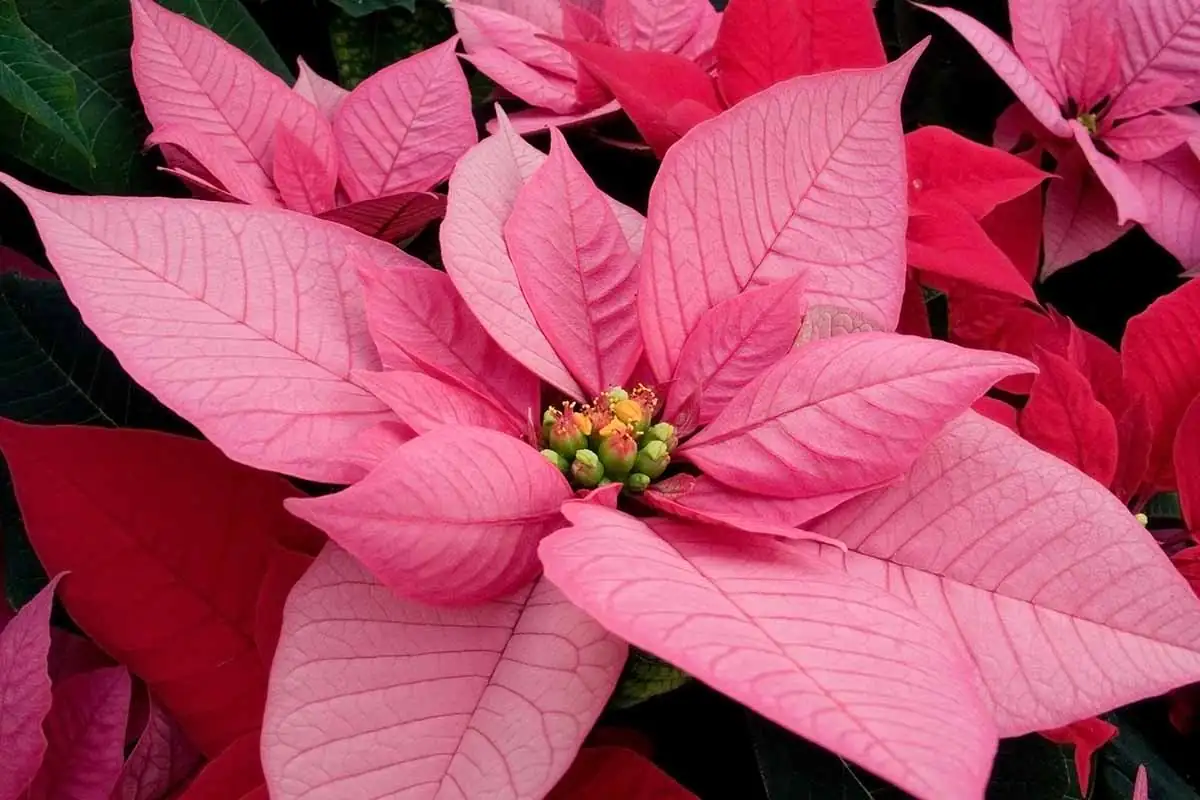
- The showy “flowers” are bracts—modified leaves that flush red (or pink, white, creamy yellowish, or marbled).
- The true flowers are the tiny yellow-green cups in the center called cyathia. Look closely and you’ll sometimes see pollen as they mature.
- Bracts commonly span a few inches across and frame the cyathia like a colorful collar.
Pro tip: When buying, choose plants whose center cyathia are still closed or just opening—your display will last longer.
Fun Fact #2: Photoperiod magic—long nights make the color happen
Poinsettia is a classic short-day (long-night) plant. It doesn’t color up because it’s “winter”—it colors because the nights are long and uninterrupted.
- The recipe: about 14–16 hours of true darkness each night for 8–10 weeks, with bright days.
- “True darkness” really matters. Even small light leaks (hall lights, TVs, porch lamps) can delay or prevent bract coloring.
- Home hack: In late September, move your plant to a totally dark room or use a lightproof cover from evening to morning, then return it to bright light by day.
- Grower geekery: Commercial growers use blackout cloth for consistent “nights,” and different modern cultivars are bred to finish in roughly 8–11 weeks.
Fun Fact #3: The milky sap is latex—and it’s a bit spicy
Like many Euphorbia species, poinsettias ooze a milky white latex if cut or damaged.
- What it does: It helps seal wounds and deter pests in nature.
- For people and pets: It’s mildly toxic/irritating—handle with care. The sap can irritate skin and eyes, and ingestion may cause mild stomach upset. Folks with latex sensitivity should be extra cautious.
- Safety smarts:
- Wear gloves when pruning or propagating.
- Keep plants out of reach of curious kids and pets.
- Wash hands after handling.
Fun Fact #4: From coffee table to hedge—yes, it can be a shrub outdoors
In warm, frost-free climates, poinsettias graduate from seasonal houseplants to woody, flowering shrubs.
- Best zones: Commonly grown outdoors year-round in USDA 9–11, with the most reliable landscape performance in truly frost-free, warmer 10–12 conditions (microclimate matters).
- Size outdoors: 2–4.5 m (6.5–15 ft) as a shrubby perennial.
- Garden tip: Streetlights and porch lights can delay coloring outdoors too—plant away from nighttime light sources if you want that winter show.
- Shape it: Pinch and prune through the warm season to keep it compact and bushy; it responds well to shaping.
Fun Fact #5: A rainbow of modern cultivars
Breeding has unleashed a spectrum far beyond “holiday red.”
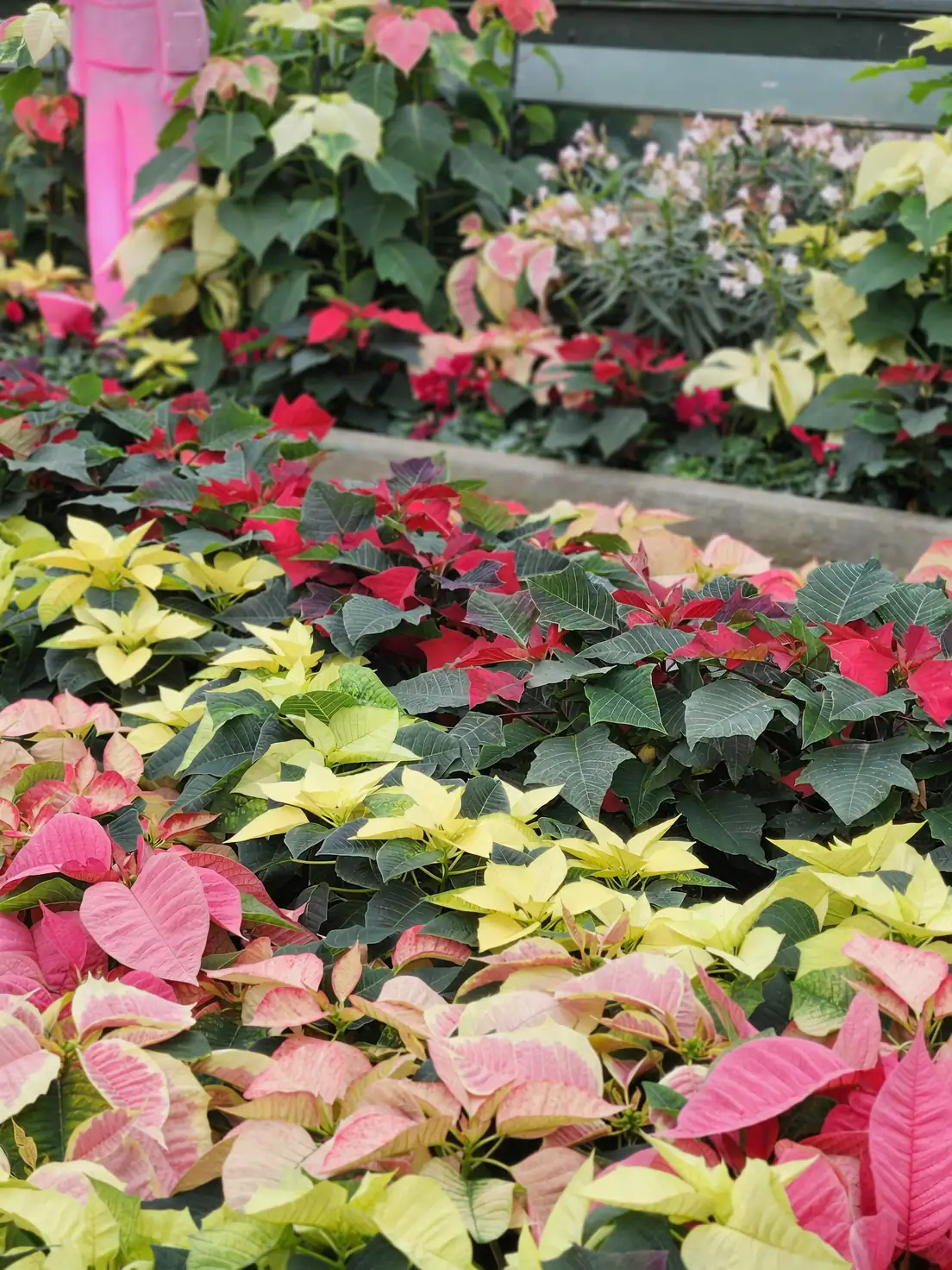
- Colors and patterns: Crimson, scarlet, pink, blush, white, cream to yellowish tones, burgundies, and wild marbled/variegated patterns.
- Modern perks: Improved longevity, stronger stems, and better branching for tidier plants. Commercial growers may also use plant growth regulators to keep shapes compact and retail-ready.
- Seasonal timing: Some newer cultivars color earlier for Thanksgiving; others hold beautifully through New Year’s.
How to keep your poinsettia happy (and fabulous)
- Light:
- Bright is best—bright indirect light with a touch of gentle direct sun, especially in autumn.
- Avoid harsh midday sun magnified through hot glass.
- Temperature:
- Day: around 18–25°C (64–77°F)
- Night: about 15–18°C (59–65°F)
- Keep it above 10°C (50°F) at all times; for best winter performance, aim above 15°C (59°F).
- Protect from cold windows, drafts, and HVAC blasts.
- Humidity:
- Prefers moderate to moderately high humidity. Very dry air leads to stress and leaf drop.
- Water:
- Evenly moist, never soggy. Water when the top 2.5–5 cm (1–2 in) is dry; then water thoroughly and empty the saucer.
- Avoid the drought-then-drench rollercoaster—it triggers yellowing and leaf drop.
- Soil:
- Loose, well-aerated, fast-draining mix (peat/coir with perlite/vermiculite; a little compost optional).
- Slightly acidic to near-neutral pH around 5.8–6.5.
- Feeding:
- Spring through early autumn: balanced houseplant fertilizer every 2–4 weeks (lighter doses work well).
- Pause or reduce feeding while bracts are in peak display; resume after pruning when new growth starts.
- Pruning:
- After the display fades (late winter to early spring), cut back to build a bushy framework.
- Options: back to 10–15 cm (4–6 in), or leave 20–25 cm (8–10 in) with 2–3 nodes per stem.
- Pinch soft new growth in summer for more branching.
- Repotting:
- In spring after the show; step up just one pot size and refresh the mix. Prune and repot can happen together—keep conditions airy while cuts callus.
- Propagation:
- Tip cuttings in spring to early summer (about 7.5–10 cm / 3–4 in).
- Let latex sap stop flowing (or rinse) before sticking.
- Root in clean perlite/vermiculite/sand at 25–28°C (77–82°F); rooting usually in ~2–4 weeks.
Holiday buying and display tips that actually work
- Choose plants with:
- Vibrant bracts and center cyathia still closed or just opening
- Dark green leaves all the way down the stems
- No wilting, torn bracts, or signs of pests (check leaf undersides)
- At home:
- Bright room, no cold drafts, and no bracts pressed against chilly glass
- Punch holes in any decorative sleeve and use a saucer—never let roots sit in water
- Water thoroughly when needed, then pour off excess
- Skip fertilizer while in peak color
Common hiccups (and quick fixes)
- Leaf drop:
- Usual culprits: cold drafts, cold windows, very dry air, low light, or soggy soil.
- Move to a warm, bright spot; water only when the top layer dries slightly; boost humidity.
- Pests:
- Watch for whiteflies, spider mites, thrips, fungus gnats, and occasional scale.
- Tactics: rinse, isolate, improve airflow, and use insecticidal soap or horticultural oil as needed.
- Diseases:
- Botrytis, leaf spots, powdery mildew, and stem/root rot—often tied to overwatering or stagnant air.
- Prevention: bright light, sharp drainage, tidy up fallen leaves, and don’t overwater.
The meaning behind the “Christmas Star”
- Symbolism:
- The star-shaped bracts echo the Star of Bethlehem; red forms are often linked with love and sacrifice, while white forms suggest purity.
- Where this comes from:
- These associations are cultural, not botanical—they grew from centuries of holiday tradition, church displays, and storytelling.
- Deep roots:
- Indigenous to Mexico, the plant was known to the Aztecs as “cuetlaxochitl” and used for dye and traditional remedies.
- A beloved legend tells of a poor girl who offered humble weeds at a church altar; they miraculously turned scarlet—hence the holiday bond.
- In the U.S., December 12 is National Poinsettia Day, nodding to its historical journey into American horticulture.
Your year-at-a-glance game plan
- Jan–Mar: Enjoy the color. Keep warm, bright, and gently moist. As the display wanes, ease up slightly on watering.
- Apr–May: Prune back and repot. Resume feeding when new growth appears.
- May–Sep: Provide strong light (avoid scorch), steady warmth, regular watering and feeding; pinch to keep it bushy.
- Late Sep–Nov: Start the long-night routine—give 14–16 hours of uninterrupted darkness nightly for ~8–10 weeks. Keep days bright and avoid any night lighting.
- Nov–Dec: Bracts color up. Maintain stable warmth and bright light to extend the show.
Quick-fire Q&A
- Are poinsettias poisonous?
- They’re not deadly, but the latex sap can irritate skin and eyes, and nibbling may cause mild stomach upset—especially for pets and kids. Handle with care and keep out of reach.
- How do I get mine to turn red again?
- From late September, give it bright days and 14–16 hours of absolute darkness each night for 8–10 weeks. Even tiny light leaks can reset the clock.
- Can I plant it outdoors?
- Yes—if you live where frost isn’t an issue (roughly USDA Zones 9–11, most reliable in 10–12). In cooler regions, summer it outside, then bring it in well before nights cool.
The takeaway: Euphorbia pulcherrima Willd. is part botanical illusionist, part timing trickster, and entirely captivating—whether it’s lighting up your living room or growing into a glowing winter hedge in a tropical garden. Master the long-night magic, keep the soil just right, and you’ll have the brightest “non-flowers” on the block.


