

The plant that lights up winter isn’t a diva—it just likes things steady, bright, and gently moist. Think of poinsettia (Euphorbia pulcherrima Willd.) as your holiday houseguest from the tropics: give it warm days, cozy nights, and no cold drafts, and it will reward you with lush leaves and glowing bracts from late autumn through spring.
Meet the plant
- What you call the “flowers” are colorful bracts—modified leaves—in red, pink, white, or marbled patterns. The true flowers are the tiny yellow-green centers (cyathia).
- Indoors it stays compact (about 30–90 cm/12–36 in). In frost-free climates, it’s a woody shrub.
- Native to Mexico, it loves bright light, steady warmth, and evenly moist (never soggy) soil.
Light targets that keep the color glowing
Aim for bright days, gentle sun, and absolutely no night-light interruptions if you’re re-coloring next year.

- Daily light target
- 6–8+ hours of bright, indirect light.
- If you measure: roughly 2,000–6,000 lux (200–600 foot-candles) at leaf level is great indoors.
- Add 1–2 hours of soft morning sun in autumn if you can; avoid harsh midday summer sun through hot glass.
- Best windows: Bright east, west, or a pulled-back spot near a sunny south window.
- Rotate the pot a quarter turn weekly for an even, bushy look.
- For next year’s color: From late September, give 14–16 hours of uninterrupted darkness nightly for 8–10 weeks—no lamp, hallway, or TV glow.
Warmth, drafts, and the “cozy sweater” rule
Poinsettia is warm-loving. Chilly air and blasts from vents are its nemesis.
- Temperature sweet spot
- Day: 18–25°C (64–77°F)
- Night: 15–18°C (59–65°F)
- Keep above 10°C (50°F) at all times; for best winter performance, stay above 15°C (59°F).
- Draft-proofing tricks
- Keep 30–60 cm (12–24 in) away from cold window glass.
- Use a plant stand or cork mat to lift the pot off cold sills or floors.
- Redirect vents with a deflector or close the nearest register.
- Test for sneaky drafts with a tissue; if it flutters, move the plant.
- Transport home in a sleeve or bag in cold weather; once inside, unwrap immediately for fresh airflow.
Watering rhythm from late autumn through spring
Evenly moist is the mantra—never sopping, never bone-dry.
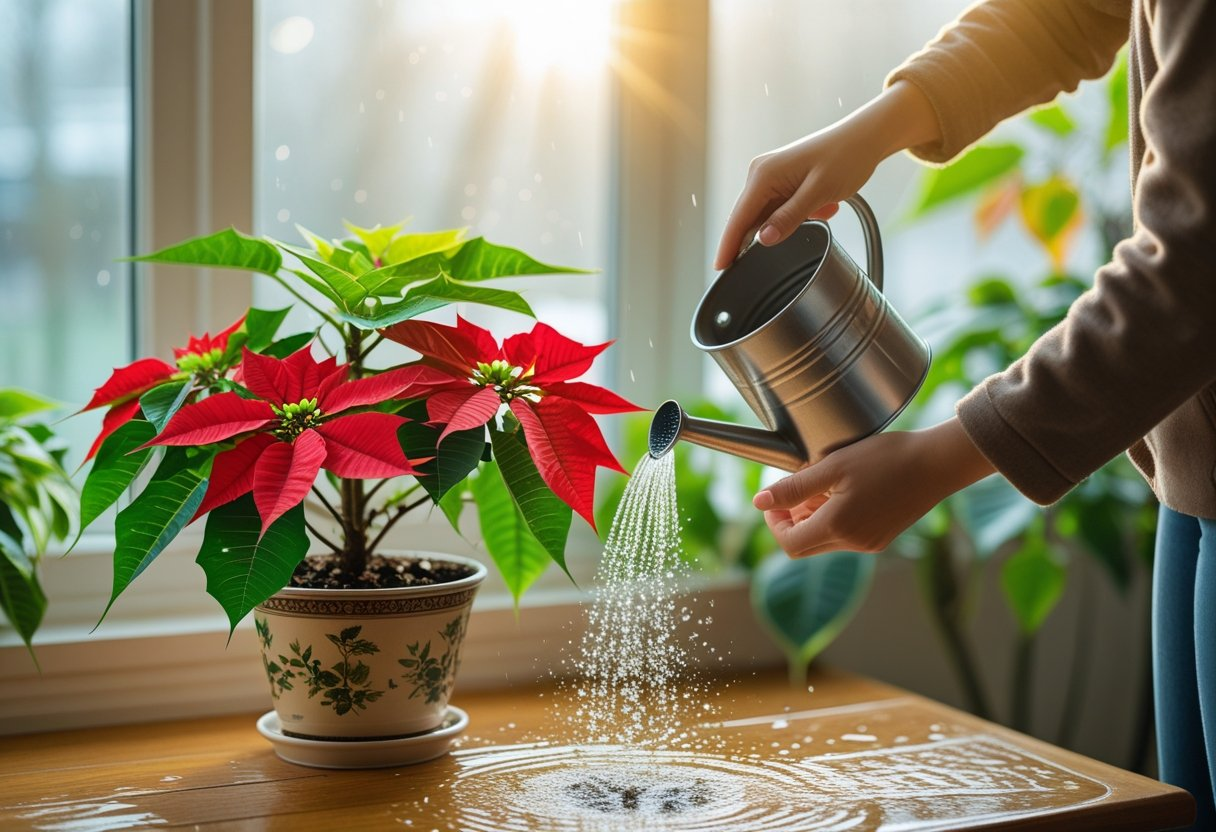
- How to water (any season)
- Check soil with a finger: water when the top 2.5–5 cm (1–2 in) feels dry.
- Water thoroughly until excess drains out; empty the saucer so roots don’t sit in water.
- Use room-temperature water (cold water can shock roots).
- Remove decorative foil or punch drainage holes so you can safely water and drain.
- Seasonal cadence (adjust for your home’s light, heat, and pot size)
- Late autumn/holiday setup: Water about weekly, keeping the mix gently moist as bracts color up.
- Winter: About once a week on a bright morning. Avoid the drought-then-drench cycle that triggers yellowing and leaf drop.
- Early spring (as display fades): Reduce slightly, still avoiding full-on dryness. After pruning and as new growth starts, resume a steady weekly rhythm.
- Spring into summer (if you keep it): In warmth and brighter light, you may water 1–2 times weekly depending on drying speed.
Pro tip: If it wilts, don’t panic—water promptly, drain well, and improve your checking routine. Repeated wilting shortens the show.
Humidity help (especially with indoor heating)
- Prefers moderate to moderately high humidity; it tolerates average homes but drops leaves in very dry air.
- Group plants, run a small room humidifier, or set the pot on a pebble tray with water below (not touching) the pot base.
- Keep good airflow without cold drafts.
Soil and potting
- Use a loose, well-aerated, well-draining mix: peat or coir blended with perlite/vermiculite (slightly acidic to near-neutral, pH ~5.8–6.5).
- Always choose a pot with drainage holes.
- Repot in spring after the display ends, going up one size (about 5–10 cm/2–4 in wider) if rootbound. Pair repotting with spring pruning for a neat reset.
Feeding schedule
- Feed during active growth (spring through early autumn):
- Every 2 weeks at a lighter dose, or every 3–4 weeks at half strength with a balanced houseplant fertilizer.
- Pause or reduce feeding during peak bract display.
- Resume once you prune and see fresh growth.
Pruning and shaping for a compact, bushy plant
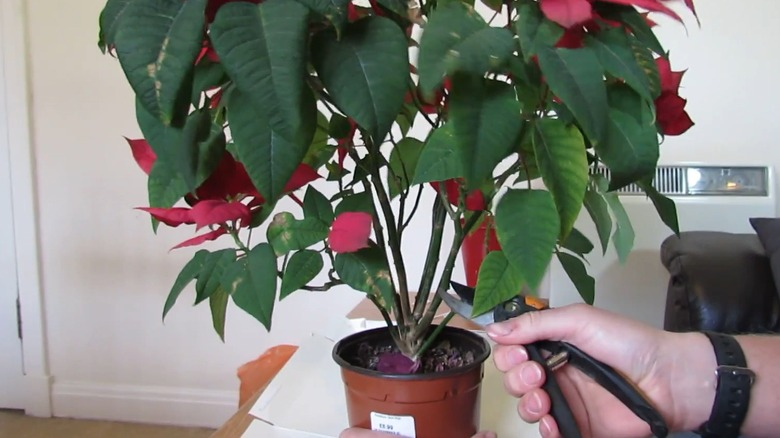
- After bracts fade (late winter to early spring), cut stems back to 10–15 cm (4–6 in) above soil, or leave a 20–25 cm (8–10 in) framework with 2–3 nodes per stem.
- Pinch soft tips during summer to encourage branching and fullness.
- Wear gloves—the plant’s milky latex sap can irritate skin—and keep tools clean.
How to re-color next year (short-day, long-night routine)
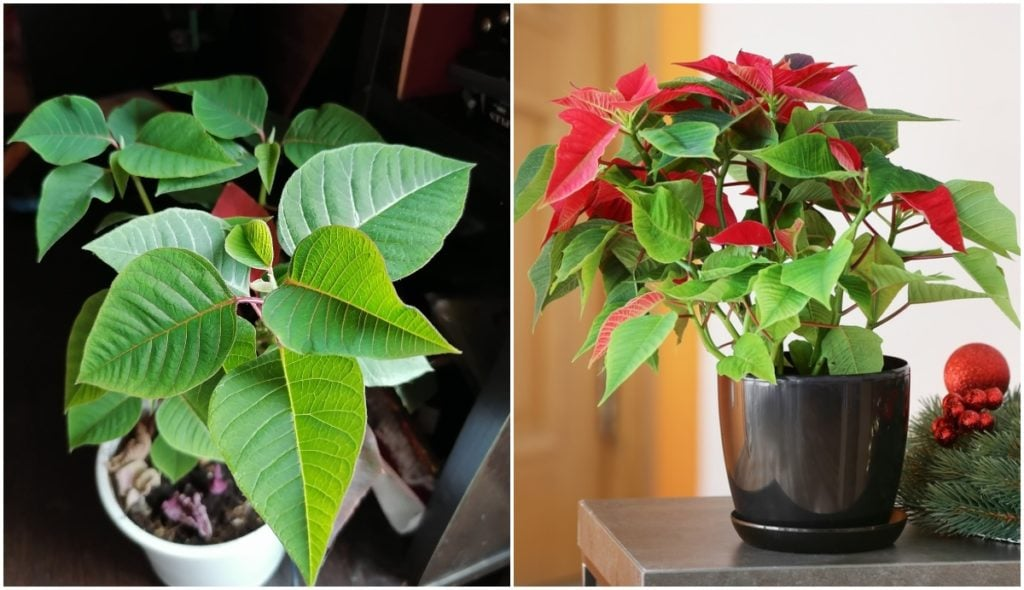
- Timing: Start in late September to early October.
- Each day: Bright light during daytime, then 14–16 hours of complete darkness nightly for 8–10 weeks.
- Darkness must be truly dark: cover with a lightproof box or place in a room that’s unused and unlit at night. Even brief light at night can delay bract coloring.
- Keep days bright and temperatures steady for the best show.
Placement and safety
- Great indoors in bright rooms—living rooms, offices, lobbies—away from drafts, cold glass, and heating/AC vents.
- Outdoors only in frost-free climates; bring inside well before nights dip below 15°C (59°F).
- Safety: The milky latex sap is irritating; ingestion can cause mild stomach upset in people and pets. Not considered deadly poisonous, but keep out of reach and wear gloves when pruning.
Troubleshooting at a glance
- Leaf drop
- Usual culprits: cold drafts, cold windows, low light, or watering swings (soggy or bone-dry).
- Fix: Warmer, brighter spot; steady watering; move away from vents and cold panes.
- Yellowing leaves
- Often from overwatering/poor drainage; also low light.
- Fix: Improve light, check for clogged drainage, water only when the top 2.5–5 cm dries.
- Bracts fading early
- Cause: Not enough light, hot/dry air, or temperature extremes.
- Fix: Brighter days, gentle humidity, stable 18–25°C (64–77°F).
- Pests
- Whiteflies, spider mites, thrips, fungus gnats, and sometimes scale.
- Response: Rinse, isolate, and treat with insecticidal soap or horticultural oil; improve airflow and avoid overwatering.
- Fungal issues
- Botrytis, powdery mildew, leaf spots, and root/stem rot often follow soggy soil and stale air.
- Fix: Prune out affected parts, increase airflow, water correctly, and ensure fast-draining mix.
Smart shopping and the ride home
- Choose sturdy stems with dark green leaves down to the base.
- For longest bloom, the tiny yellow cyathia should be closed or just opening.
- Avoid plants with droop, damaged bracts, leaf drop, or standing in water.
- In cold weather, have the plant sleeved/bagged for the trip. Once indoors, unwrap immediately so leaves can breathe and dry quickly after any condensation.
Quick seasonal calendar
- Jan–Mar: Enjoy the show. Keep bright, warm, and evenly moist; water about weekly.
- Apr–May: Prune back and repot. Resume feeding once new growth starts.
- May–Sep: Strong light (avoid scorch), regular watering and feeding; pinch to keep it bushy.
- Late Sep–Nov: Begin long-night routine—14–16 hours of full darkness nightly for 8–10 weeks; keep days bright.
- Nov–Dec: Bracts color up. Maintain stable warmth and bright days for maximum holiday impact.
Fun to know
- Those “petals” are actually bracts—the flowers are the tiny yellow centers.
- It’s a classic photoperiod plant: long, uninterrupted nights trigger the color change.
- In warm regions, it becomes a shrubby perennial 2–4.5 m (6.5–15 ft) tall.
- Modern breeding offers a rainbow of reds, pinks, whites, burgundies, yellows, and marbled patterns. “Blue” or glittered options are typically painted white cultivars for holiday flair.
Flower language and deeper meaning
In the language of flowers, poinsettia often symbolizes celebration, goodwill, and the guiding Star of Bethlehem—fitting for its star-shaped bracts and winter timing. Historically in Mexico, it’s tied to legends of humble gifts becoming radiant, reinforcing themes of hope and renewal. While floriography is a relatively modern, culture-shaped tradition (not a botanical rule), poinsettia’s seasonal brilliance and long-night transformation make it an especially poetic emblem of light returning in the darkest months.
—
With bright days, cozy nights, and that steady “gently moist” rhythm, your poinsettia will look lush well past the holidays. Keep the drafts at bay, give it the light it craves, and let this Mexican star carry your space from late autumn all the way into spring.