

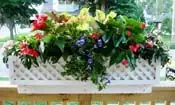
Spring doesn’t tiptoe in with primroses—it bursts open. Those crinkled green rosettes and saturated blooms, each stamped with that sunny yellow eye, are the perfect spark for statement containers. Think jewel-box color, woodland polish, and pots that glow even on cool, gray days. Below you’ll find bold palette ideas that use the primrose’s classic yellow center as a unifying “color anchor,” plus practical soil recipes, a watering cadence that keeps petals perky, and a feeding plan tailored to life in pots.
Meet Primula (Primrose) at a Glance
- Botanical: Primula spp. (Primulaceae), often sold as “primrose” or “polyanthus”
- Habit/Size: Low, clumping perennial; typically 6–12 in tall and 8–20 in wide
- Season: Early spring bloom (often April–May), lasting several weeks
- Light: Partial shade to full shade; in cool climates, morning sun is fine, but protect from harsh midday light
- Climate: Loves cool conditions (ideal nights 50–60°F/10–15°C; daytime below 80°F/27°C)
- Soil: Moist yet well-drained, humus-rich, slightly acidic (pH 5.5–6.5)
- Use: Shade containers, woodland-style pots, cool bright indoor displays in bloom
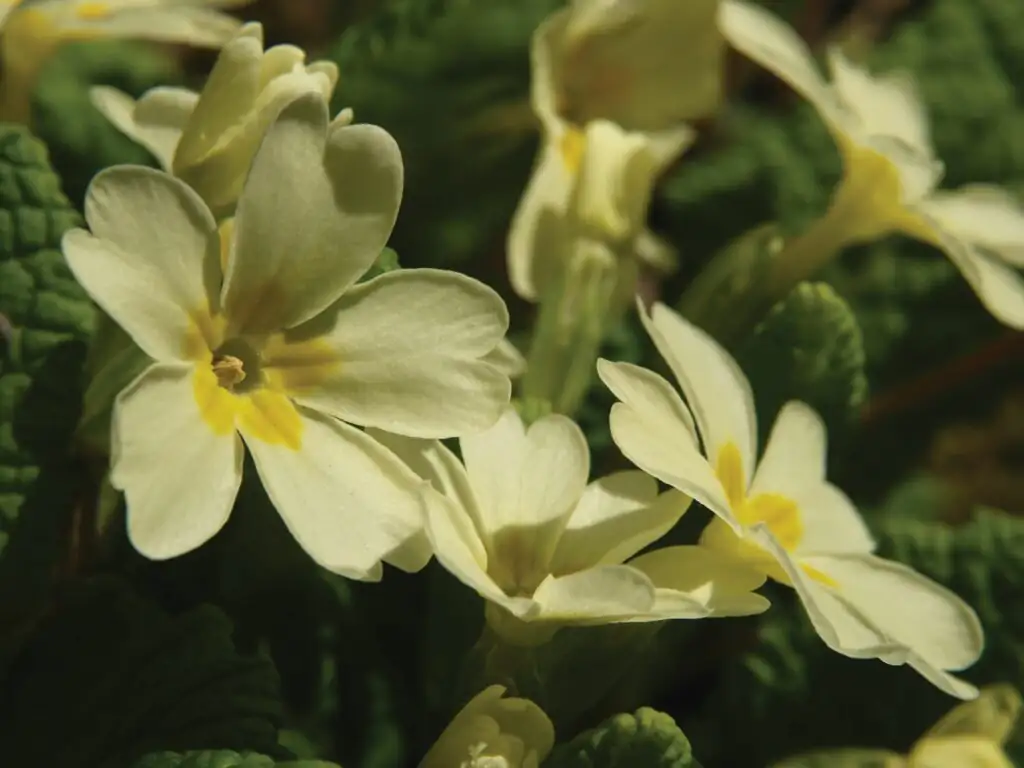
Color Strategy: Let the Yellow Eye Do the Heavy Lifting
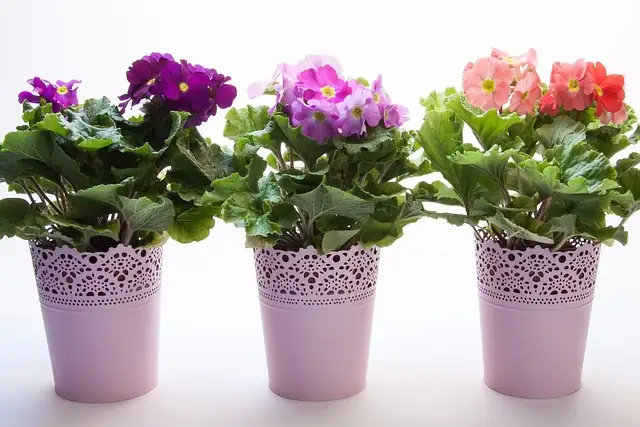
Primroses come in confetti-bright hues—red, magenta, coral, orange, violet, blue, and white—but nearly all showcase a golden “eye.” Use that yellow as your design anchor:
- Echo it in foliage: Pair with variegated and gold-striped plants (Carex oshimensis ‘Evergold’), chartreuse heuchera, or golden creeping Jenny (Lysimachia nummularia ‘Aurea’).
- Repeat it in accessories: Choose a glazed pot with mustard undertones, a straw-colored cachepot, or warm brass accents.
- Balance brights with grounding tones: Charcoal, indigo, or forest-green containers make saturated primrose colors sing while keeping the look chic, not chaotic.
5 Bold Primrose Container Recipes (Thriller–Filler–Spiller)
Tip: Primroses are your standout “fillers.” Keep crowns level with the soil surface and cluster in odd numbers for impact.
1) Electric Jewel Box
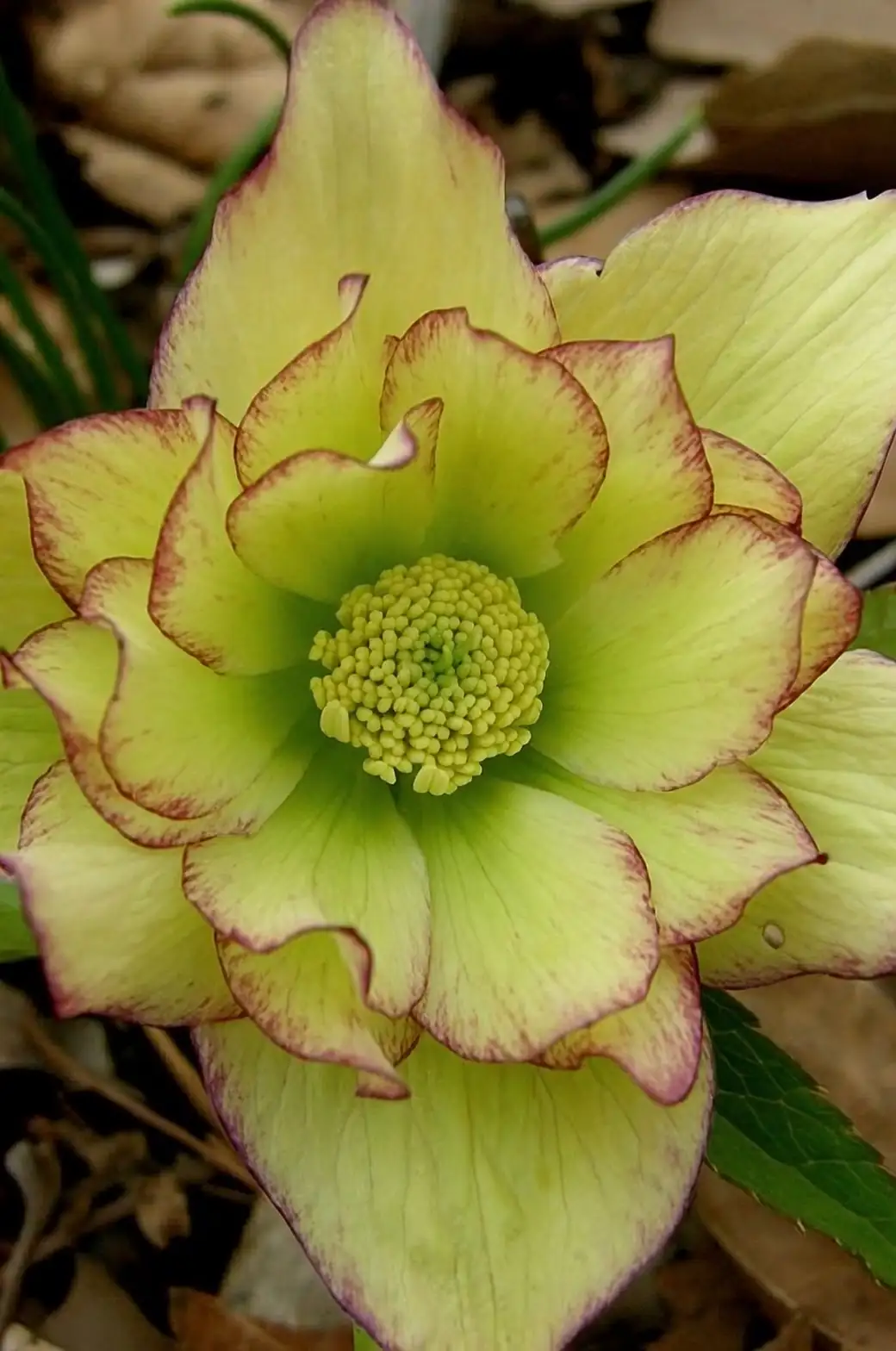
- Thriller: Helleborus (evergreen flowers hold court in cool shade)
- Fillers: Primula in magenta, violet, and deep blue (their yellow eyes harmonize)
- Spiller: Golden creeping Jenny to mirror the yellow eye
- Pot: Matte charcoal or deep indigo to dial up saturation
2) Sunrise Sorbet
- Thriller: Dwarf Japanese forest grass (Hakonechloa macra) or bronze carex for soft movement
- Fillers: Primula in coral, apricot, and lemon
- Spiller: Variegated ivy (Hedera helix) for classic drape
- Pot: Warm terracotta or honey-glazed to echo citrus tones
3) Woodland Glow
- Thriller: Japanese painted fern (Athyrium niponicum) for silvery fronds
- Fillers: Primula in sky-blue and white
- Spiller: Lamium ‘Beacon Silver’ to add light and texture
- Pot: Moss green or stone-look container to keep it woodsy
4) Berry Punch
- Thriller: Heuchera in burgundy or near-black foliage
- Fillers: Primula in ruby, cherry, and hot pink
- Spiller: Trailing viola or pansy in lemon or purple (cool-season ally for added bloom)
- Pot: Glossy black for modern drama
5) Moonlight Minimalist
- Thriller: Small boxwood cone (evergreen structure)
- Fillers: White primroses with golden eyes
- Spiller: Carex ‘Evergold’ repeating the yellow
- Pot: Smooth concrete or dove gray for quiet luxury
Pot Size, Spacing, and Planting
- Container depth: 8–12 inches works well; primroses are shallow-rooted but appreciate breadth.
- Spacing: 6–8 inches between plants; in a 12–14 inch bowl, tuck 5–7 primroses for lush coverage.
- Drainage: Always choose pots with holes. Add a mesh or coffee filter over holes to prevent mix loss—skip gravel layers.
- Planting depth: Keep the crown at the soil surface to prevent rot. Firm gently; don’t compact.
Potting Mix: Primrose-Perfect Recipes
Aim for a mix that holds even moisture yet drains freely, with a slightly acidic tilt.
- Classic Cool-Season Blend (by volume)
- 3 parts high-quality, peat-free potting mix or coir-based mix
- 1 part fine compost or leaf mold
- 1 part fine pine bark (adds structure, air, and gentle acidity)
- 1/2 part perlite or pumice for drainage
- Optional: A small pinch of elemental sulfur if your tap water is alkaline
- Ultra-Airified Shade Blend (great for heavy-handed waterers)
- 2 parts potting mix
- 1 part fine pine bark
- 1 part composted leaf mold
- 1 part perlite/pumice
At planting, mix in a small dose of slow-release fertilizer (cool-season formula) per label. Primroses prefer steady but light feeding—don’t overload.
Watering Cadence for Containers
Goal: Consistently moist, never soggy. Cool roots = happy flowers.
- The finger test: Water when the top 1 inch of mix feels dry.
- Spring rhythm: In cool weather, expect 1–2 waterings per week; in a warm, breezy spell, check daily.
- How much: Water until 10–15% drains from the bottom; empty saucers after 10–15 minutes.
- Pot materials: Terracotta dries fastest; glazed ceramic and plastic hold moisture longer.
- Technique: Water the soil surface, not the rosettes, to reduce leaf spots and rot. Morning watering is best.
Feeding Plan for Pot-Grown Primroses
- Liquid feed: Every 2 weeks at half-strength during active growth and bloom. A balanced formula (e.g., 10-10-10 or 5-7-5) works well.
- Alternate method: Weekly at quarter-strength for steadier nutrition.
- If you used slow-release granules at planting, reduce liquid feed frequency accordingly.
- Micronutrients: If leaves yellow between veins (especially in alkaline conditions), add an iron chelate drench.
- Flush monthly with plain water to prevent salt buildup.
Care and Grooming for Peak Performance
- Deadhead: Snip spent stems to prolong the display and reduce botrytis.
- Tidy leaves: Remove yellowing or damaged foliage to improve airflow.
- Temperature: Aim for 50–60°F (10–15°C) at night; protect from hot, dry air and midday sun.
- Humidity: Moderate to high is ideal; keep away from heaters and hot drafts.
- Repot/divide: Refresh pots yearly; divide clumps in early spring or fall to prevent crowding.
Overheating and Summer Strategy
Primroses are cool-season stars. When heat arrives:
- Shift pots to deeper shade and the coolest spot you have.
- Keep evenly moist; avoid waterlogging.
- Some may slow down or go semi-dormant—reduce feeding, maintain gentle moisture, and resume light feeding as temperatures drop.
Overwintering in Cold Regions
Hardy in USDA Zones 3–8 (some to Zone 2), but containers experience colder root temps than ground soil.
- Options:
- Move pots to a sheltered, unheated garage/cold frame with light.
- Heel the entire pot into the ground and mulch.
- Group containers together and insulate with leaves or straw.
- Water sparingly in winter—just enough to prevent complete dry-out.
Indoors for a Cool-Season Bloom
- Light: Bright, indirect light.
- Room: A cool window (ideally 50–60°F/10–15°C) away from heaters.
- Water: Keep evenly moist; excellent drainage is non-negotiable.
Safety Note
Primroses can be toxic to humans and pets (cats and dogs). Sap may irritate sensitive skin. Wear gloves if needed, and keep plants out of reach of children and animals.
Troubleshooting Quick Guide
- Yellowing leaves: Often overwatering/poor drainage, heat stress, or nutrient issues (consider iron if interveinal).
- Buds aborting: Heat or sudden dry-outs; move to cooler shade and stabilize moisture.
- Gray fuzz on flowers (botrytis): Improve airflow, avoid wetting foliage, remove spent blooms promptly.
- Pests: Aphids, mealybugs, whiteflies; in hot, dry stress, spider mites. Treat early with gentle methods and ensure good sanitation. Watch for slugs/snails outdoors.
A Simple Seasonal Rhythm for Pots
- Early Spring: Peak bloom—deadhead often, feed lightly, keep evenly moist.
- Late Spring/Early Summer: Shift to deeper shade as days warm; maintain moisture, reduce feeding if growth slows.
- Fall: Divide or repot crowded plants; top-dress with compost; resume light feeding as temps cool.
- Winter: Protect containers; keep cool and barely moist if semi-dormant.
Primrose in the Language of Flowers
Primroses have symbolized first love, youth, hope, and new beginnings for centuries. The very name Primula (“first”) nods to their early appearance after winter. In Victorian floriography, gifting primroses could telegraph “I can’t live without you”—a sweet sentiment rooted more in cultural storytelling than botany, yet one that fits the plant’s brave, season-opening spirit.
—
With a yellow eye as your compass, even the most exuberant primrose mix looks intentional. Choose a pot that flatters the palette, mix a moisture-retentive but airy soil, water with a steady hand, and feed lightly but regularly. Then let spring have its say—bold, bright, and beautifully contained.


