When winter finally loosens its grip and the garden exhales, primroses are often the first to speak. Their message? Hope, youth, and—if you’re reading in the language of flowers—first love. As the name suggests (Primula from Latin prima, “first”), these cheerful, low-growing perennials are the bright punctuation mark at the end of winter’s long sentence. In Chinese, they’re aptly called 报春花—literally, “the flower that announces spring.”
Here’s how a small spring bloom came to carry such a big romantic reputation—and how you can grow your own living love letter.
Why Primroses Came to Mean “First Love”: The Victorian Code

In the 19th century, flowers weren’t just pretty; they were prose. Victorians used floriography, a symbolic “secret language,” to communicate feelings considered too bold for polite conversation.
- The primrose’s key message: young love, devotion, and the urgent whisper “I can’t live without you.”
- Why this bloom? Timing. Primroses appear at the very start of the season, when everything feels new—an irresistible metaphor for first love and fresh beginnings.
- The look: simple, open, unguarded flowers in sunny hues—romance before it gets complicated.
Color nuances (as commonly interpreted)
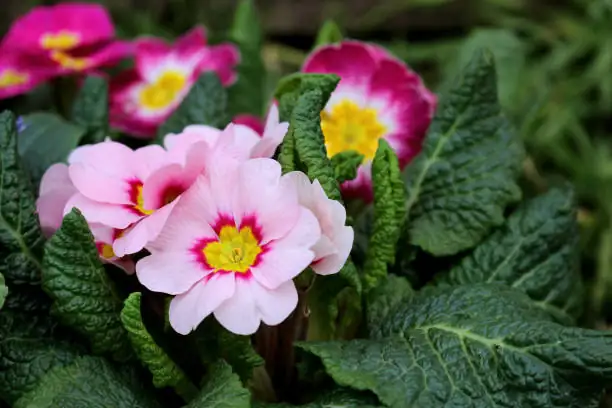
- Yellow: optimism and new beginnings
- Pink: affection and budding romance
- White: innocence and pure intentions
- Purple/blue: wonder and enchantment
Interpretations varied by source and era, but the primrose’s core meaning—first love and renewal—has proved remarkably consistent.
Timing Writes the Message: Early Bloomers, Early Hearts
Primroses don’t grandstand; they arrive quietly, just as the soil thaws. That early-spring punctuality is their poetry.
- Blooming season: early spring, often April–May depending on climate, for several lovely weeks.
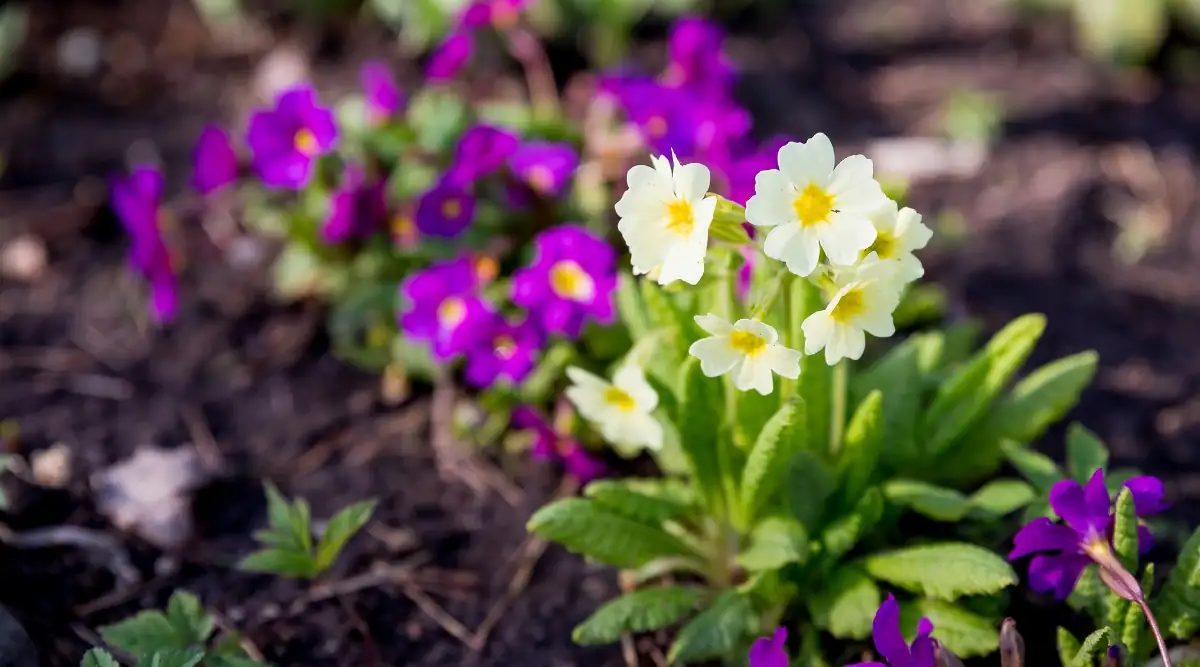
- Habit and form: low-growing, clumping perennials (about 15–30 cm/6–12 in tall, 20–50 cm/8–20 in wide) that form neat rosettes of crinkled, dark-green leaves.
- Flowers: umbel-like clusters held just above the foliage; each bloom around 2.5 cm (1 in) across with five lobes and often a bright yellow “eye.” Available in red, pink, orange, yellow, blue, purple, and white.
Primroses aren’t actually roses at all, of course—they belong to the Primulaceae family—but the nickname “first rose” captures how they feel in the garden: the first irresistible blush of the year.
A Flower with Passports: 报春花, Fairy Paths, and Primrose Day
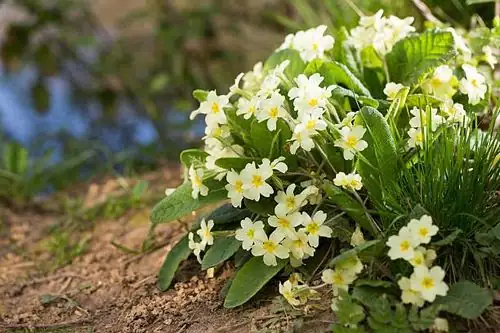
Across cultures, primroses carry centuries of charm.
- China: The common name 报春花 (bao chun hua) perfectly distills the plant’s character—“spring-announcing flower.” One glance at those early blooms, and the name makes instant sense.
- British and Celtic folklore: Primroses were linked with fairies and hidden pathways; large patches were said to signal thresholds to the unseen world. They were protective, hopeful, and a little magical—just like spring itself.
- Shakespeare’s “primrose path”: The bard used primroses to evoke youth and temptation—memorably, “the primrose path to dalliance.”
- Primrose Day (England, April 19): Each year, primroses are laid at the statue of Prime Minister Benjamin Disraeli, who adored the flower. The tribute underscores how this modest plant has woven itself into national memory. In Devon—where primroses grow in happy profusion—they’re honored as a county emblem.
Meet the Plant: Primula spp. at a Glance
- Family: Primulaceae (the primrose family)
- Genus: Primula (over 500 species worldwide)
- Origin: Native across the Northern Hemisphere, especially temperate regions of Asia, Europe, and North America; many species favor mountainous or woodland environments
- Style: Shade-loving, cool-season perennials perfect for woodland beds, under deciduous trees, rock gardens, containers, and bright, cool windowsills in bloom
Grow the Symbol of First Love
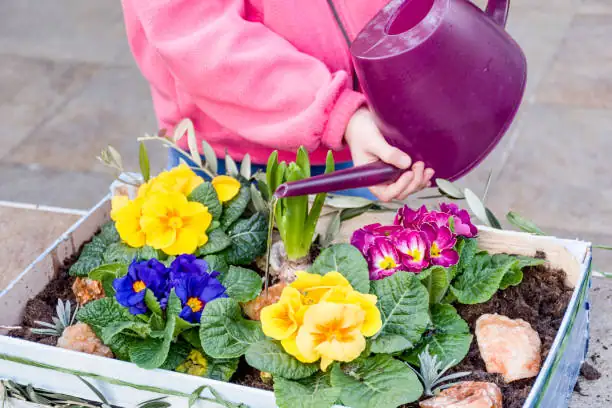
Primroses are beginner-friendly if you honor their two great loves: cool air and consistent moisture.
Light, temperature, and humidity
- Light: Partial shade to full shade; in cooler climates, they tolerate more sun—protect from harsh midday rays in warm regions.
- Temperature: Cool is best—around 10–15°C (50–60°F) at night and ideally below 27°C (80°F) by day.
- Humidity: Moderate to high is ideal; avoid hot, dry indoor air.
Soil and water
- Soil: Moist yet free-draining, rich in organic matter (leaf mold/compost), slightly acidic (pH around 5.5–6.5).
- Watering: Keep evenly moist but never waterlogged.
- In-ground: about 2.5 cm (1 in) of water per week during dry spells.
- Containers: water when the top 2.5 cm (1 in) is dry. Ensure excellent drainage to prevent crown/root rot.
Feeding and grooming
- Fertilizer: Half-strength liquid feed every two weeks during active growth and flowering; a balanced spring and fall feeding suits garden plants.
- Pruning: Deadhead to extend blooming; remove yellowing leaves for tidiness and airflow.
Propagation and repotting
- Division: Easiest and truest to type—do it in early spring or fall.
- Seed: Sow in late winter for a longer game.
- Repotting: Divide/refresh container plants annually to prevent overcrowding and tired soil.
Year-round rhythm
- Spring: Peak bloom—keep moist, feed lightly, and deadhead.
- Summer: Provide shade and relief from heat; some types slow down or go semi-dormant.
- Fall: Divide crowded clumps; top-dress with compost.
- Winter: Mulch outdoors in cold regions; indoors, keep plants cool in bright, indirect light, away from heaters.
Where they shine
- Woodland gardens and shaded borders
- Underplantings beneath deciduous trees
- Rock gardens and pond edges (some species love the extra moisture)
- Containers at the front door—so the season’s first greeting greets you back
Safety and Health
- Toxicity: Primroses are toxic to humans and pets (cats and dogs included). Sap can irritate sensitive skin. Keep out of reach, and wash hands after handling.
- Pests: Aphids, mealybugs, whiteflies; in hot, dry conditions, spider mites. Slugs and snails adore the foliage and flowers.
- Diseases: Leaf spots, powdery mildew, botrytis (gray mold), and root rots—usually preventable with good drainage, even moisture, and airflow.
Little Wonders and Botanical Curios
- A vast family: 500+ Primula species exist, with a steady stream of new hybrids and color forms.
- Built for matchmaking: Many primroses display heterostyly—“pin” and “thrum” flower forms that encourage cross-pollination.
- Water lovers: Candelabra primroses thrive in wetter soils near ponds and streams.
- Arctic ambassadors: Drumstick primrose (Primula denticulata) is notably cold-hardy, reaching down to USDA Zone 2.
Primrose Gifting: Modern Floriography in Bloom
Want to channel Victorian charm without the corset? Try these:
- A pot of soft-yellow primroses for a new beginning—a new home, a first day, a hopeful recovery.
- Pink blooms for a tender confession: the sweetest nod to first love.
- White primroses for innocence and a clean slate.
- Mixed colors to celebrate spring festivals and holidays, with the flower’s core message of renewal leading the way.
A final thought: the primrose holds its head high not because it towers, but because it arrives first. That’s why it means what it means. It’s the bright, honest heart of early spring—the moment love begins. And whether you call it primrose, Primula, or 报春花, it always says the same thing: spring is here, and so is hope.