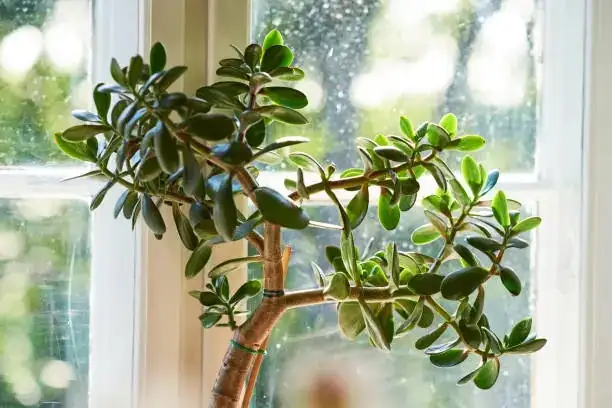
Imagine a miniature desert sculpture right on your windowsill: a jade plant’s bonsai-like trunk rising above striped Haworthia and satiny Echeveria rosettes, all set in a crunchy, mineral-rich “gritty” mix that makes watering a breeze. Crassula ovata—better known as jade plant, money plant, or friendship tree—was made for this kind of artful, drought-tough container. With bold structure, easy care, and serious longevity, it anchors mixed succulent designs that look modern, serene, and surprisingly luxurious.
Why jade is the perfect anchor
- Sculptural habit: With age, jade forms branching, trunk-like stems—instant “tree” overstory for rosettes below.
- Light and color: It thrives with 4–6 hours of strong light daily; edges blush red in brighter sun.
- Drought-smart: Thick leaves and stems store water; overwatering (not underwatering) is the usual risk.
- Winter magic: Cool nights, shorter days, and drier care can prompt clusters of starry white-to-pink blooms in winter.
- Long-lived and forgiving: Easy even for beginners, and wonderful for bonsai-style shaping.
Native to South Africa’s KwaZulu-Natal and Eastern Cape provinces, and Mozambique, jade is a natural in sandy, rocky settings—perfect inspiration for gritty, sculptural containers.
The mix that makes it work: gritty, airy, fast-draining
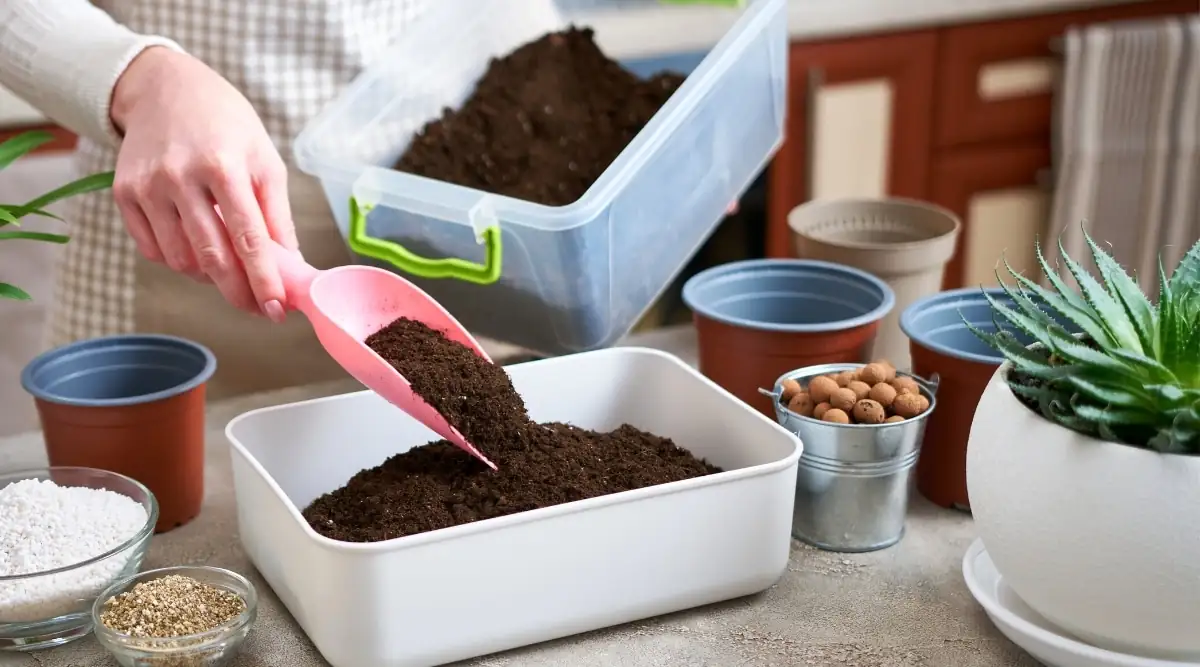
Jade, Haworthia, and Echeveria all appreciate excellent drainage—especially in the same pot.
- Baseline blend (simple and reliable)
- Cactus/succulent mix, or regular potting soil amended with perlite at ~2:1 (soil:perlite).
- Great for bright indoor spots and typical home humidity.
- Step-grittier (for heavy-handed waterers or humid homes)
- About 50% cactus mix + 50% mineral components (pumice, perlite, small crushed granite, calcined or expanded clay).
- Faster drying between soakings; roots get abundant oxygen.
- Pre-blended “succulent gritty” mixes (easy and sustainable)
- Often combine coconut coir/husk chips with mineral ingredients like pumice, grey granite, calcined/expanded clay, and perlite.
- Chunky structure = superb aeration and drainage for Crassula, Echeveria, and Haworthia.
Tips
- Always use containers with drainage holes; add pot feet so water doesn’t pool under the pot.
- Top-dress with 0.5–1 cm of decorative gravel (crushed granite, pea gravel, pumice). It dries the surface faster, protects rosettes from splash, and completes the stone-garden look.
- Water with a “soak and dry” rhythm: drench thoroughly, then wait until the mix is completely dry before watering again. In spring/summer, that might be weekly or less; in winter, sometimes monthly or less.
Light and placement playbook
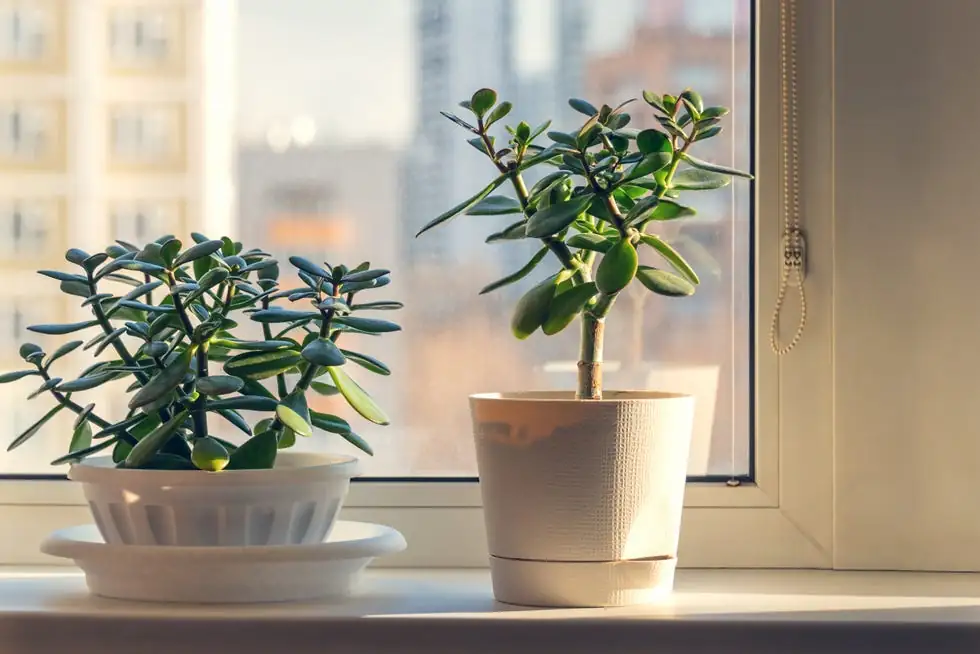
- Indoors: A sunny south- or west-facing window is ideal. Keep Echeveria closest to the glass (they crave the most sun), place jade just behind, and tuck Haworthia slightly to the side or under jade’s canopy for bright, indirect light.
- Outdoors (warm months): Give bright shade or filtered sun; acclimate gradually to prevent sunburn.
- Temperature: 18–24°C (65–75°F) is ideal; cool nights down to about 13°C (55°F) in winter help jade bloom. Not frost hardy—bring inside as temps approach 10°C (50°F).
7 sculptural container ideas with jade, Haworthia, and Echeveria
1) Bonsai desert tray
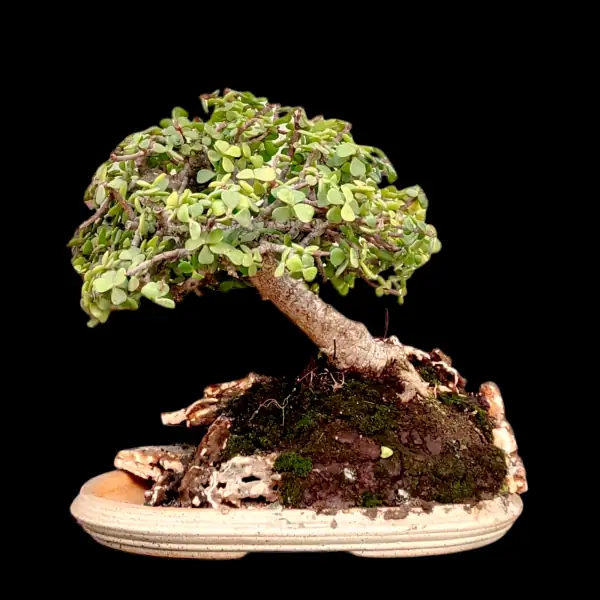
- Pot: Wide, shallow bonsai pot, unglazed clay; 30–40 cm wide.
- Soil: Step-grittier blend; top-dress with crushed granite and a few lava rocks for “boulders.”
- Plant palette:
- 1 Jade pruned to a tiered canopy (thriller)
- 2–3 Haworthia (e.g., H. fasciata or H. attenuata) as textural “shrubs”
- 2 small Echeveria (e.g., ‘Lola’ or ‘Perle von Nürnberg’) for soft rosettes
- Care cue: Let jade’s canopy cast soft shade on Haworthia; keep Echeveria in the brightest pockets.
2) Modern monochrome pedestal
- Pot: Tall, footed charcoal planter with an internal ledge or filler to reduce soil volume.
- Soil: Pre-blended gritty mix with pumice/perlite; ensure deep drainage.
- Plant palette:
- 1 Jade with a single, sculpted trunk
- 1 Haworthia ‘Big Band’ or similar for bold striping
- 1 Echeveria ‘Black Prince’ or other deep-toned rosette
- Style: Use black or basalt gravel; the dark-on-dark palette makes jade’s glossy leaves pop.
3) Sunny windowsill trough
- Pot: Long rectangle; 50–60 cm with multiple drain holes.
- Soil: Step-grittier blend.
- Plant palette (repeat in sequence):
- Jade “saplings” spaced like a mini allée
- Alternating Haworthia clusters and pastel Echeveria rosettes
- Tip: Keep rosette leaves from touching the rim; airflow prevents rot and keeps symmetry tight.
4) Pebble-garden centerpiece
- Pot: Round, low ceramic bowl; warm neutral glaze.
- Soil: Baseline blend plus extra pumice.
- Plant palette:
- 1 Jade, slightly off-center over a “dry stream” of pea gravel
- 2 Haworthia tucked at the bend of the stream
- 3–5 small Echeveria scattered like river-polished shells
- Accent: Place a flat “stepping stone” rock to double as a watering landing pad—pour water at its base to avoid wetting rosettes.
5) Red-edge glow bowl
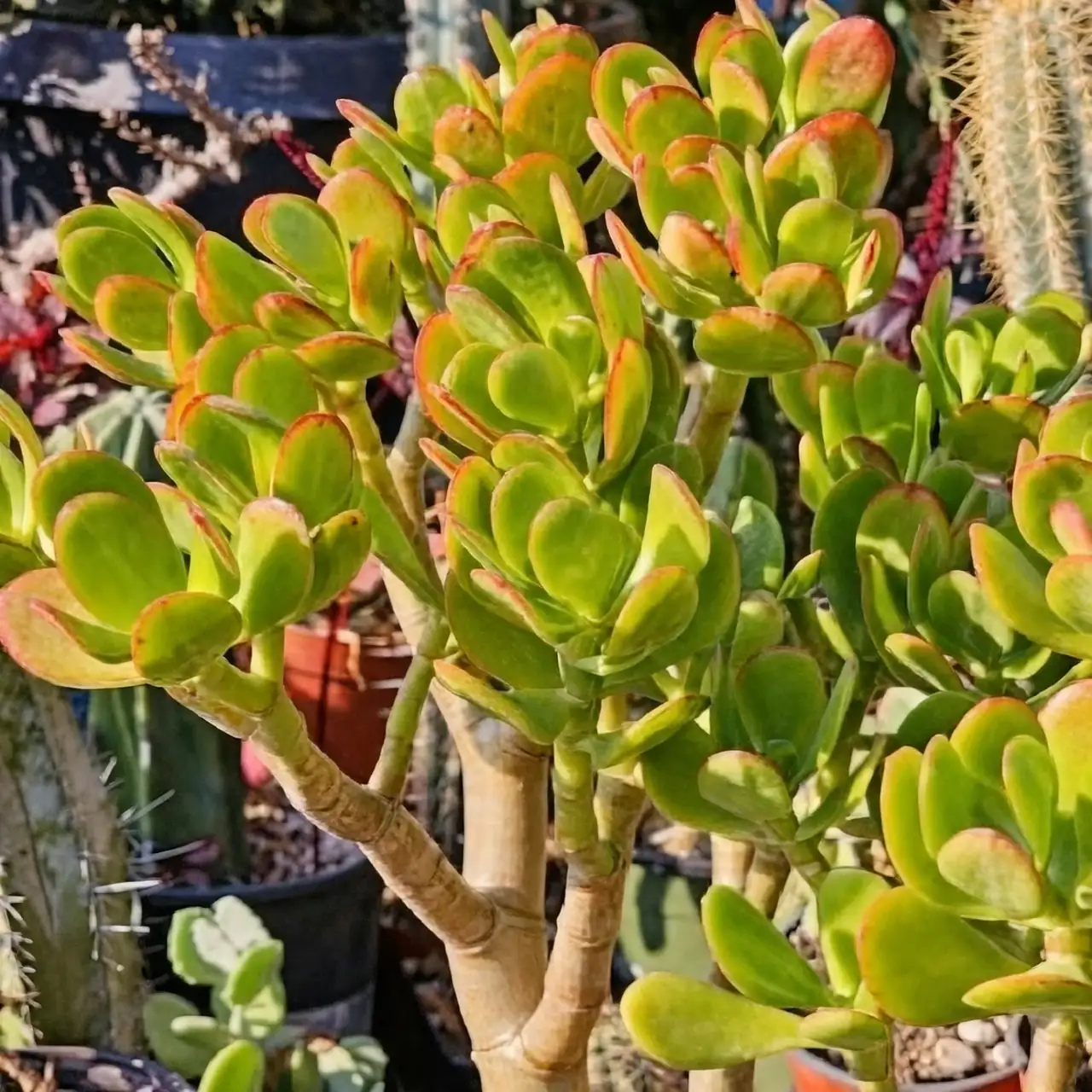
- Pot: Terracotta dish.
- Soil: Pre-blended gritty mix; terracotta speeds drying.
- Plant palette:
- 1 Jade encouraged to color up with strong light (for red leaf margins)
- 2 chalky-blue Echeveria (contrast)
- 1 compact, dark-green Haworthia for shade-depth
- Light note: This one loves a bright west window for that evening blush.
6) Minimalist “stone and trunk” duet
- Pot: Oval cement planter.
- Soil: Lean, mineral-forward mix (up to ~50% mineral).
- Plant palette:
- 1 older jade with a polished trunk line
- 1 Haworthia as a low, architectural counterpoint
- Design: Leave generous negative space; a single, handsome rock makes it museum-clean.
7) Work-from-home friendly
- Pot: Ceramic cache set with an inner nursery pot that drains freely (empty the outer vessel after watering).
- Soil: Baseline blend.
- Plant palette:
- 1 jade, lightly pruned to keep compact
- 1–2 Haworthia for forgiving, lower-light tolerance
- 1 small Echeveria at the brightest edge of the pot
- Placement: Near a bright window; rotate the pot every couple of weeks for even growth.
Styling moves that elevate the look
- Prune in early spring: Shorten lanky stems back to a side branch to encourage bushiness and strengthen jade’s trunk. Save trimmings for propagation.
- Carve “sightlines”: Limb up a lower jade branch to open a window onto a standout Echeveria rosette.
- Repeat textures: Echo Haworthia stripes with banded gravel or a ribbed pot.
- Color theory: Blue-gray Echeveria cools the scene; terracotta and red-edged jade add warmth.
Care rhythm for mixed succulent containers
- Watering
- Soak thoroughly; let the mix dry completely before watering again.
- Spring/summer: often weekly or less; fall/winter: much less—sometimes monthly.
- Aim water at the soil line; avoid pooling in Echeveria rosettes and splashing jade leaves.
- Feeding
- Light feeder: use a diluted cactus/succulent or balanced houseplant fertilizer every 2–4 weeks in spring/summer.
- Always water first, then fertilize; stop feeding in fall and winter.
- Repotting
- Jade likes being slightly root-bound; repot every 2–3 years when young, then every 4–5 years.
- Best in early spring; wait ~1 week to water and ~1 month to fertilize after repotting.
- Propagation
- Stem or leaf cuttings root easily. Let cuts callus a few days, then set on/in lightly moist, well-draining mix. Increase watering only after roots form (1–2 weeks).
Seasonal tweaks for display success
- Spring: Increase light and water; begin light feeding; prune and repot if needed.
- Summer: Peak growth; consider an outdoor “vacation” in bright filtered light; steady soak-and-dry.
- Fall: Taper watering; stop feeding; keep bright but let nights run cooler.
- Winter: Keep very bright and cool (around 13°C/55°F nights if possible); water sparingly. This rest period is when jade is most likely to bloom.
Troubleshooting in mixed pots
- Leggy jade, stretched Echeveria: They need more light. Move closer to a sunny window and rotate regularly; prune jade to reset structure.
- Mushy leaves or blackened roots: Overwatering/root rot. Unpot, remove soggy roots, and replant in fresher, grittier mix. Water less often.
- Pests: Mealybugs, scale, aphids, and spider mites can appear. Dab with rubbing alcohol on a cotton swab and repeat as needed. Improve airflow.
- Powdery mildew: Uncommon indoors but linked to stagnant air; increase light and ventilation.
- Pet safety: Jade is mildly toxic to cats, dogs, and horses if eaten (may cause vomiting, lethargy, coordination issues). Keep arrangements out of nibbling range; sap can irritate sensitive skin.
Hardiness and moving day notes
- Outdoors long-term only in USDA Zones 9–11. Elsewhere, treat as a houseplant or bring containers indoors before temperatures approach 10°C (50°F).
A note on symbolism and “flower language”
Jade carries a long-standing reputation for prosperity, friendship, and longevity—one reason it’s such a popular housewarming or business-opening gift. In feng shui, it’s often placed in the wealth corner of a room to invite abundance. As for “flower language,” jade’s winter blossoms aren’t traditionally the focus of coded meanings; rather, the plant’s enduring, tree-like presence and ease of propagation underlie its symbolism—lasting bonds, shared good fortune, and growth over time.
Quick shopping checklist
- Jade: Choose firm, plump leaves; avoid soft/mushy spots or heavy yellowing.
- Haworthia and Echeveria: Look for compact forms with crisp leaf edges and no crown rot.
- Pot: Must have drainage; consider shallow, wide forms for sculptural layouts.
- Mix: Start with a cactus/succulent mix, then add mineral grit (pumice, perlite, granite, calcined/expanded clay) for faster drying.
- Finishing touches: Gravel top-dress, a few well-placed stones, and pot feet for airflow.
Design like a desert breeze—clean lines, thoughtful textures, and a mix tailored to dry fast—and your jade-centered container will stay as striking as it is simple to care for. With each season, you’ll refine the silhouette, propagate a leaf or two, and watch your living sculpture mature into a tiny heirloom landscape.