

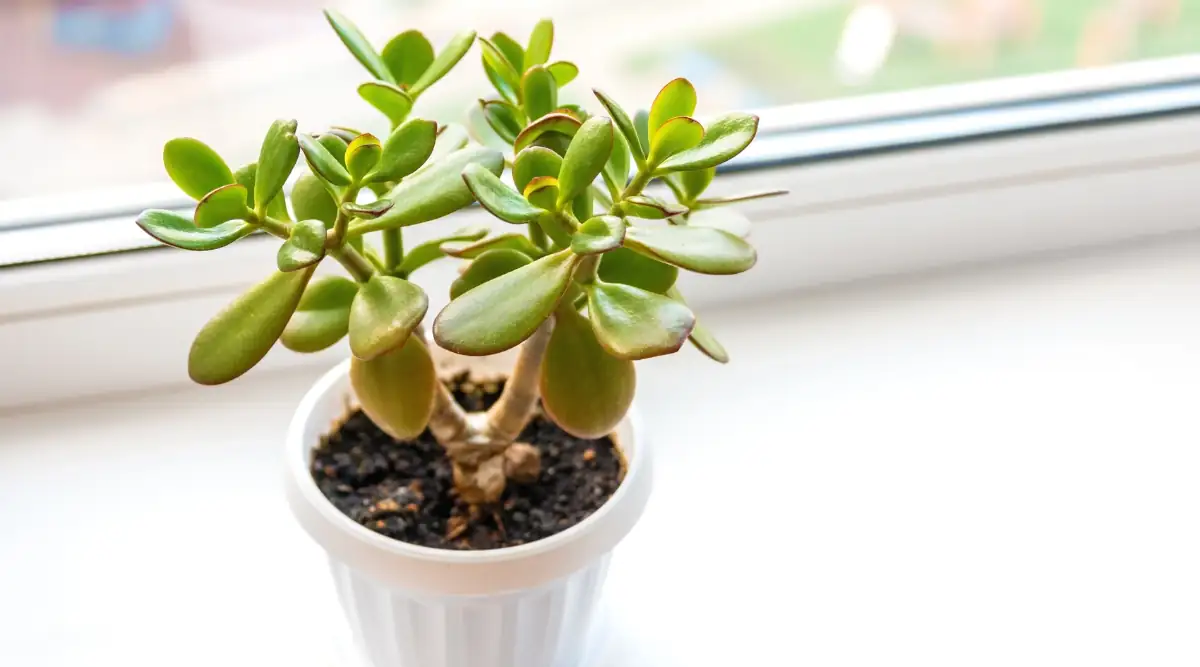
If you’ve ever pinched a leaf from a jade plant and wondered whether you could grow it into a brand-new little tree, the answer is an enthusiastic yes. Crassula ovata—the beloved jade plant, lucky plant, money tree, friendship tree—propagates so easily that many families end up with windowsills full of its glossy, coin-like leaves. The trick is confidence in the process: knowing when to choose a leaf versus a stem cutting, how long to let cut ends callus, when to expect roots, and how to water in those nerve‑wracking early weeks. Let’s make those steps second nature.
Meet Crassula ovata in 60 seconds
- A classic, long-lived succulent from South Africa and Mozambique, jade plant forms a stout, branching mini-tree indoors (typically 2–3 ft; bigger outdoors in warm zones).
- Thick, oval leaves store water; edges blush red in strong light. Mature plants can produce starry, sweetly scented white-to-pink winter blooms when days are short and nights are cool.
- Light: bright is key—aim for 4–6 hours daily. Younger plants like bright indirect; established plants enjoy some direct sun with proper acclimation.
- Temperature: happiest at 65–75°F (18–24°C), tolerates cool nights to about 55°F (13°C). Not frost-hardy.
- Soil: fast-draining succulent mix, or regular potting soil amended with perlite at about 2:1 (soil:perlite).
- Watering rhythm: soak thoroughly, then let the mix dry out completely. Less in fall/winter.
Leaf vs. stem cuttings: which should you choose?
Both work beautifully—the best choice depends on your goals and patience.
Stem cuttings (the fast-track mini-plant)
- What you get: an instant starter “branch” with a head start on shape.
- Speed: roots often appear in about 1–2 weeks; new top growth typically follows soon after in warm, bright conditions.
- Best for: filling a pot quickly, creating a fuller canopy, or shaping a bonsai-style plant.
- Confidence boost: higher success rate and quicker visible progress.
Leaf cuttings (slow and magical)
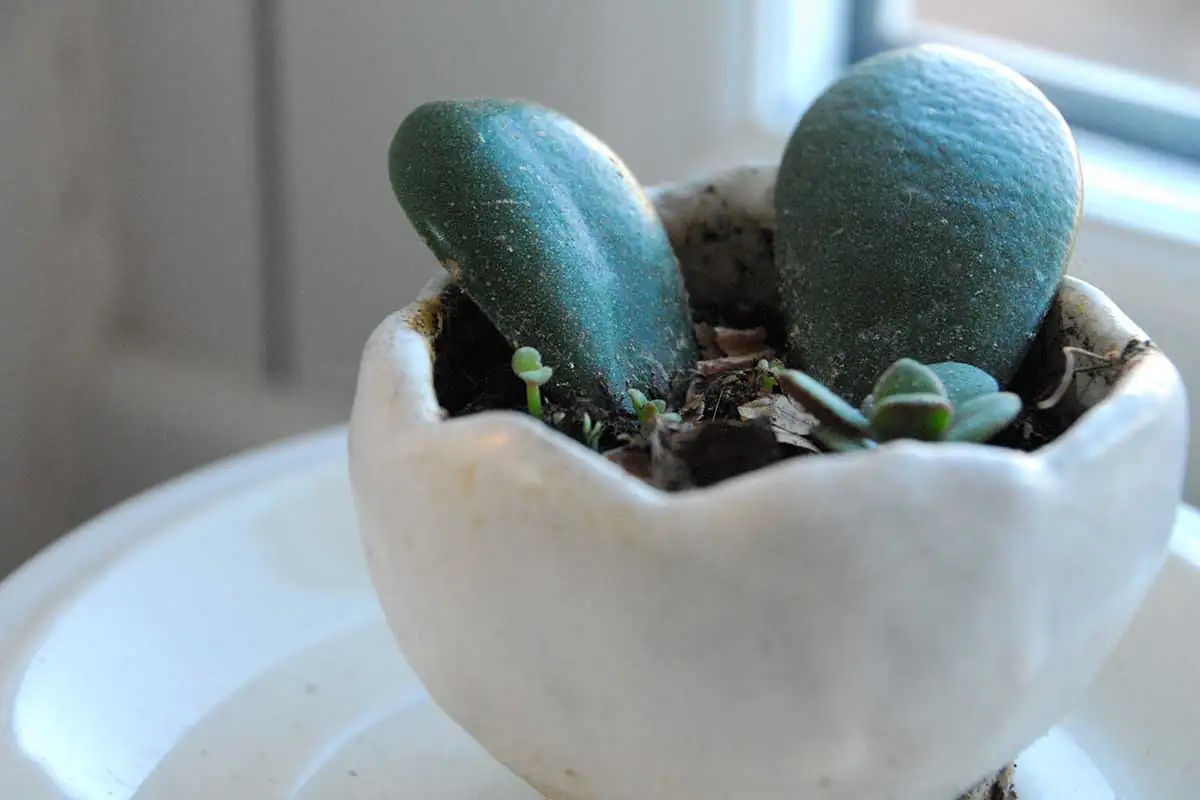
- What you get: a single leaf that roots and then produces a tiny rosette (baby plant) at its base.
- Speed: roots often in 1–3 weeks; a visible plantlet usually forms a few weeks later. It takes time to reach pot-worthy size.
- Best for: multiplying a favorite cultivar, practicing technique, or when you don’t want to prune stems.
- Confidence boost: seeing that first miniature rosette appear is pure plant-parent joy.
Pro tip: If you’re after a fuller look fast, root several stem cuttings together in one small pot. If you’re curious, run both experiments side-by-side—you’ll learn a ton watching how each behaves.
Tools and setup
- Clean, sharp shears or a knife
- Small pots with drainage
- Fast-draining mix: cactus/succulent soil or potting soil with perlite at ~2:1
- Optional: pumice for extra grit, stakes or pebbles to steady stems, plant labels
- Bright spot with strong indirect light and good airflow (avoid harsh midday sun until rooted)
Callusing: the non-negotiable step that prevents rot
When you cut a jade leaf or stem, think of the wound like a tiny doorway where rot could sneak in. Callusing closes that door.
- What it is: a dry, matte “scab” that forms over the cut end.
- Where to do it: airy, bright shade; avoid direct sun during this period.
- How long:
- Leaves: generally 2–5 days
- Stems: about 3–7 days (thicker pieces may need the full week)
- How to tell it’s ready: the cut surface looks dull and dry, not shiny or sticky. If humidity is high, give it a little extra time.
Stem cuttings: step-by-step
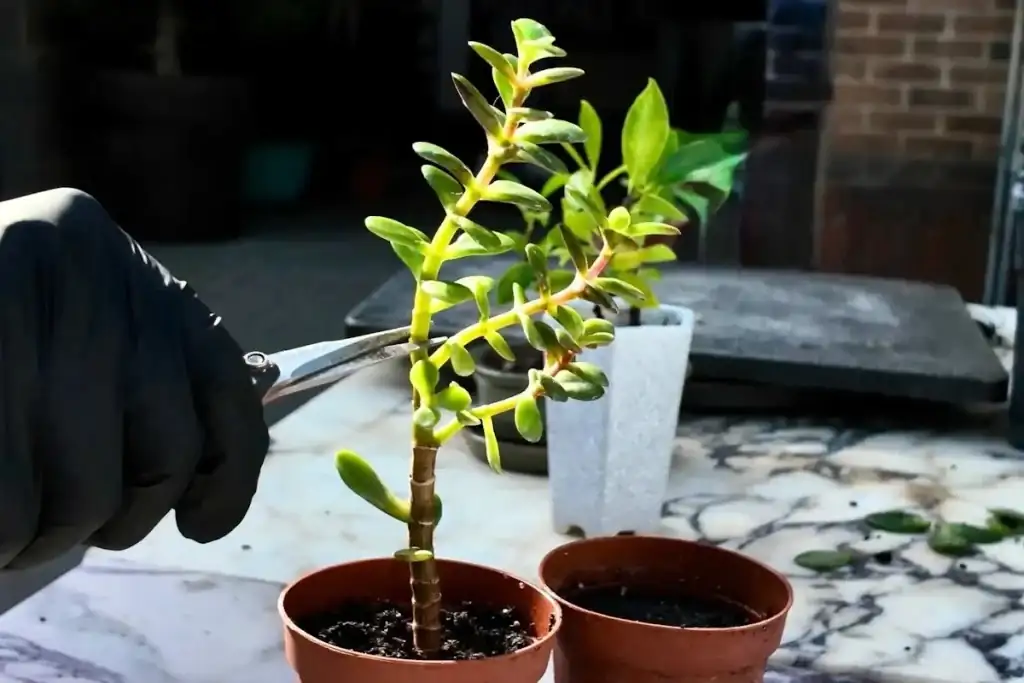
- Select and cut
- Choose a healthy, non-flowering tip about 3–4 inches (7.5–10 cm) long with plump leaves.
- Make a clean cut just below a node. Remove the lowest leaf pair to create a short bare section for planting.
- Callus
- Set the cutting aside to dry until the cut end has fully callused (3–7 days).
- Prepare the pot
- Lightly moisten a gritty mix (not soggy). Fill a small pot with drainage.
- Plant shallowly
- Insert the callused end just deep enough to stand (about 1–1.5 inches/2.5–4 cm). Use a pebble or stake to steady if needed.
- Light and warmth
- Give bright, indirect light and warmth (65–75°F / 18–24°C). Avoid intense direct sun until rooted.
- Early watering strategy
- Start with a barely moist mix and minimal watering. After potting, wait until the surface dries and at least 5–7 days have passed before giving a small perimeter sip.
- Keep the soil lightly moist—not wet—through the first 1–2 weeks. Think “humid crumb” rather than “mud.”
- After 7–14 days, do a gentle tug test. If there’s resistance, roots have formed. Transition to a true soak-and-dry cycle over the next couple of weeks.
- After roots
- Increase light gradually (a little morning sun is great), water deeply then let the potting mix dry completely, and resume light feeding in spring/summer.
Typical timeline
- Days 0–7: callusing
- Days 7–14: roots form
- Weeks 3–4: visible new growth; begin brighter light exposure and regular succulent watering
Leaf cuttings: step-by-step
- Choose the right leaf
- Gently twist to remove the entire leaf, including the tiny base where it joined the stem. Partial leaves will not root.
- Callus
- Air-dry 2–5 days until the cut edge is dull and dry.
- Position on soil
- Lay the leaf flat on lightly moist succulent mix, or prop the cut edge so it just kisses the surface. Space leaves so air circulates.
- Light and airflow
- Bright, indirect light and good airflow are key. Avoid domes or plastic covers—jade prefers drier air.
- Early watering strategy
- Do not soak. Lightly mist or drip water onto the soil adjacent to the cut edge when the surface dries. Avoid wetting the leaf itself.
- Keep the top layer barely moist, letting it dry between light sips.
- Growth milestones
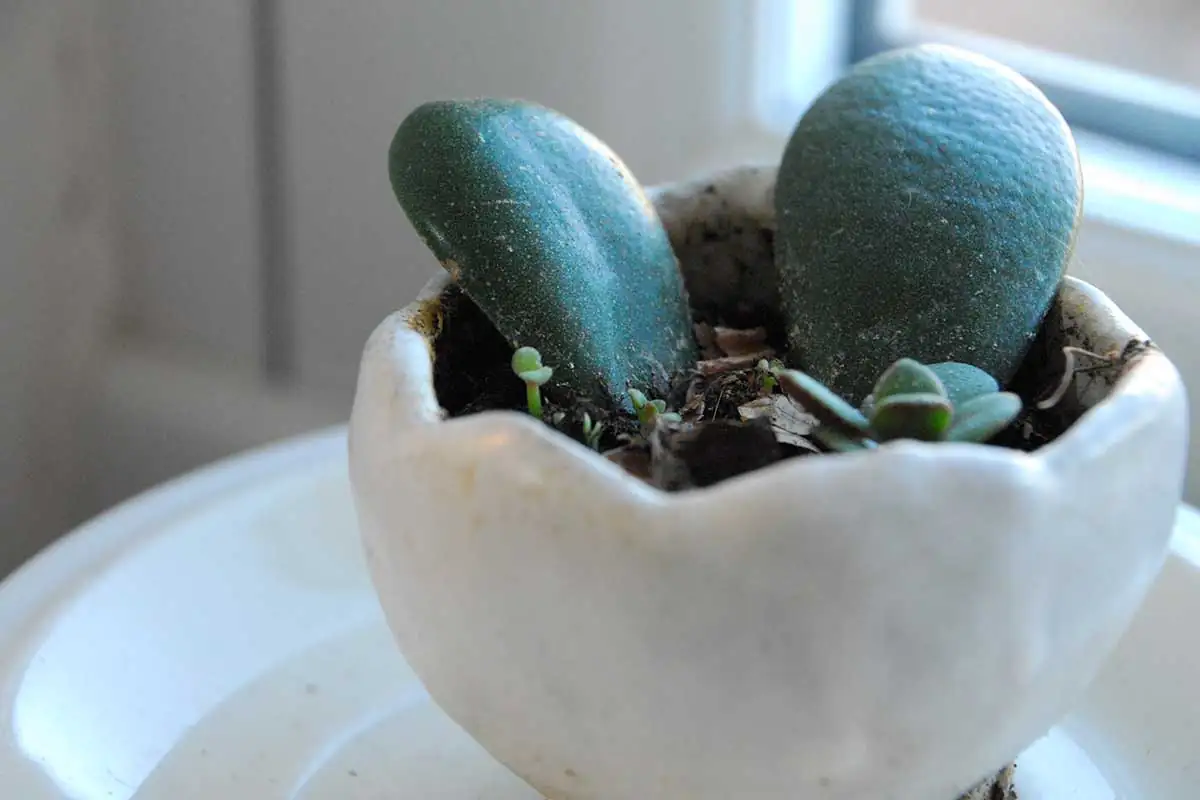
- Roots often appear within 1–3 weeks. Tiny rosettes (plantlets) typically follow in the next few weeks.
- Let the “mother leaf” feed the baby until it naturally shrivels. Transplant once the plantlet has several leaves and a small root system.
Early watering, demystified
The fastest way to lose a jade cutting is kindness with a watering can. Here’s a confidence-boosting framework:
- Pre‑moisten, don’t douse: Start with uniformly, lightly moist mix when you plant.
- Little sips, then pause: For 1–2 weeks, give tiny perimeter sips only when the surface dries. Skip if the mix still feels cool and slightly damp below the top ½ inch.
- Bottom-watering option: For stem cuttings, you can briefly bottom-water once roots are confirmed, then drain thoroughly.
- Avoid “humidity tents”: Succulents are not tropical cuttings—excess humidity = rot risk.
- Signs to watch:
- Too wet: blackening at the cut, mushy tissue, soil that stays cold and clammy.
- Too dry: cutting or leaf visibly shrivels and stays limp despite good light—offer a small drink and reassess.
Once rooted, shift to jade’s lifelong rule: water deeply, then let the mix dry out fully. In fall and winter, water far less.
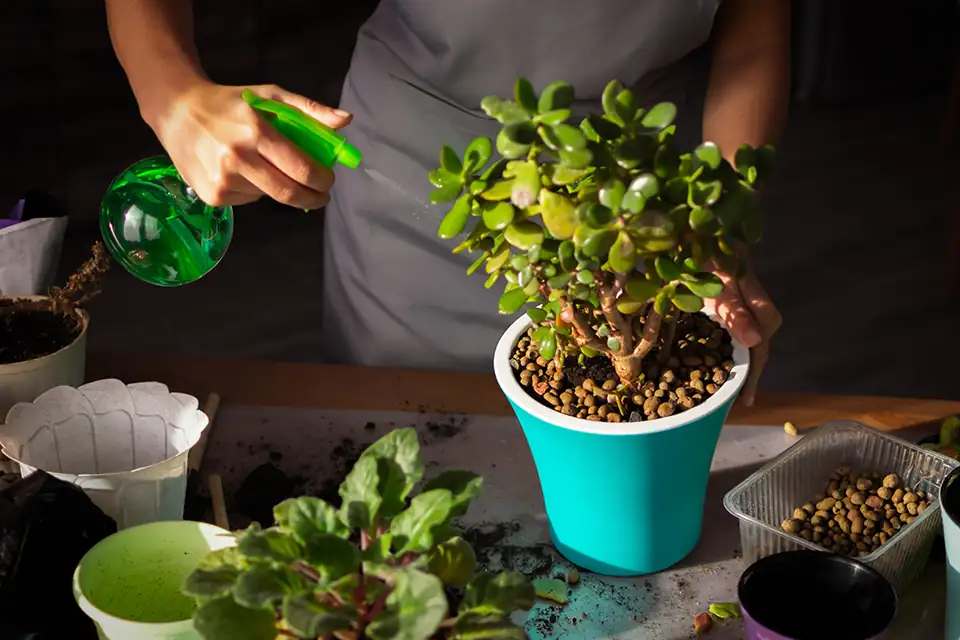
Light, temperature, and season
- Light: aim for 4–6 hours of strong light. For unrooted cuttings, use bright indirect light; introduce direct sun only after roots establish, and acclimate gradually.
- Temperature: 65–75°F (18–24°C) is ideal for rooting. Protect from cold drafts; jade is not frost-hardy.
- Best season: spring and summer. Warmth, long days, and brighter light speed rooting and recovery.
Mix, pots, and placement that set you up for success
- Soil: cactus/succulent mix, or ~2 parts potting soil to 1 part perlite for air flow and rapid drainage. Add pumice if you have it.
- Pot: small, well-draining container with a hole. Jade doesn’t mind being slightly snug.
- Placement: a bright south- or west-facing window is perfect once rooted; for summer, filtered outdoor light with gradual acclimation.
Troubleshooting quick guide
- Rot at the cut end
- Cause: overwatering or planting before a proper callus formed.
- Fix: cut back to healthy tissue, re‑callus longer, replant in fresher, drier mix.
- Cutting shrivels
- Cause: too dry or too hot/bright before roots formed.
- Fix: move to bright indirect light and give a light sip; ensure the mix starts slightly moist, not bone dry.
- No roots after 3+ weeks (stems)
- Cause: low light, cool temps, or mix too wet/too fine.
- Fix: increase brightness, keep warmth steady, and amend with more perlite/pumice.
- Sunburned leaves
- Cause: direct midday sun too soon.
- Fix: step back to filtered light, then ramp up gradually once rooted.
- Leggy new growth
- Cause: insufficient light.
- Fix: move to a brighter window; prune to encourage branching once well established.
Aftercare: shaping your future “mini tree”
- Pruning for structure: In early spring, tip-prune to encourage branching and a thicker trunk over time. Cut back to a side branch for a bushier silhouette.
- Repotting: Every 2–3 years for young plants; every 4–5 years for mature ones. Repot in early spring; wait about 1 week before watering and about 1 month before fertilizing.
- Feeding: Light feeder—use a diluted cactus/succulent or balanced houseplant fertilizer every 2–4 weeks in spring/summer. Skip in fall/winter.
- Outdoor vacations: In summer, a stint in bright filtered light can boost vigor. Acclimate slowly to avoid sunburn.
Safety, pests, and health
- Pets: jade is mildly toxic to cats, dogs, and horses if ingested (may cause vomiting, lethargy, poor coordination). Keep out of reach.
- Pests: mealybugs, scale, aphids, spider mites. Dab with a cotton swab dipped in rubbing alcohol and repeat as needed.
- Overwatering watch: soft, waterlogged leaves or stems signal root trouble—let the soil dry fully, improve drainage, and adjust watering.
Symbolism, “flower language,” and why it sticks
Jade plant’s reputation as a magnet for good fortune, friendship, and longevity is woven from cultural traditions rather than botany. In feng shui, it’s often placed in the southeast “wealth corner,” and its coin-like leaves and long lifespan make it a favorite housewarming or new-business gift. In Victorian floriography and similar “flower language” traditions, plants and blooms were assigned meanings to convey sentiments silently—more poetry than science. With jade, that sentiment endures: a thriving, decades-old plant shared among friends feels a lot like prosperity and loyalty made visible. As a bonus, mature, well-lit plants that experience cool winter nights and drier soil may bloom in winter—tiny starry flowers that many consider extra lucky.
Quick propagation calendar
- Spring: prime time—take cuttings, root fast, begin light feeding once established.
- Summer: steady rooting and rapid growth; give bright light and “soak and dry” watering after roots form.
- Fall: slow down watering as days shorten; hold off on heavy pruning.
- Winter: keep bright and cool, water very sparingly. Enjoy blooms if your plant is mature and conditions align.
Confidence comes from clarity. Let your cut ends callus completely, keep the early moisture minimal, and aim for bright, gentle light. Within weeks, you’ll see roots—and soon enough, you’ll be training a tiny grove of jade “trees” that can live for decades.


