

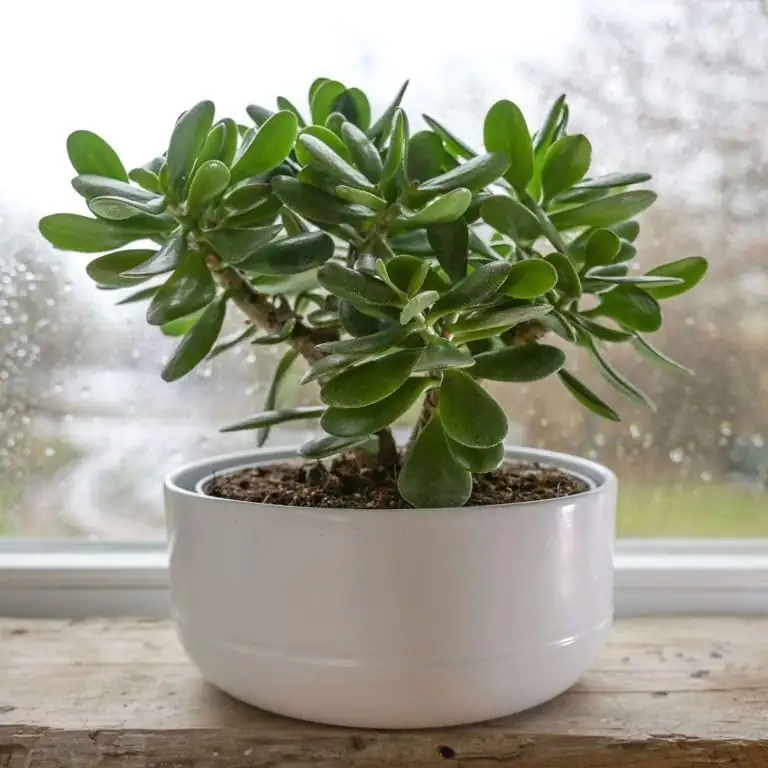
Think of the classic jade plant as a pocket-size tree you can actually style. With its glossy, oval leaves, naturally branching habit, and trunk that thickens handsomely with age, Crassula ovata is a dream for creating a bonsai look that behaves beautifully on windowsills and office desks. Below, you’ll find design-forward pruning, shaping, and pot-pairing strategies that keep your “mini tree” both chic and thriving.
Why jade shines as a desk bonsai
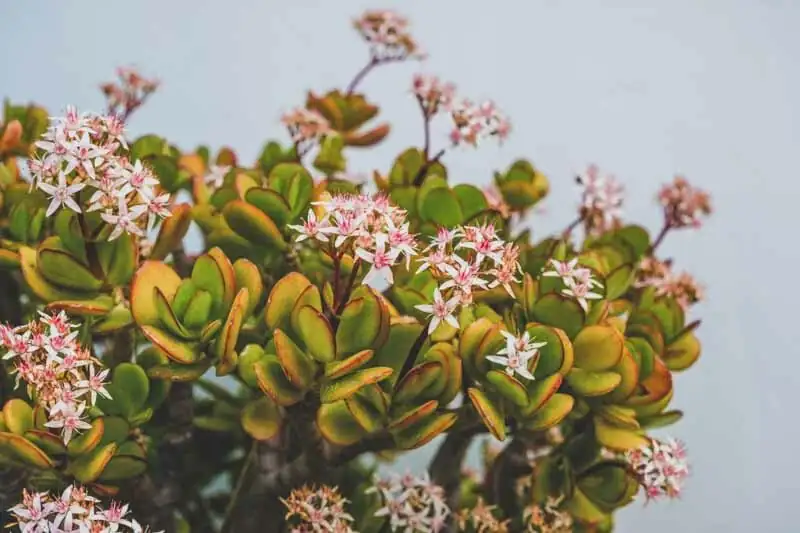
- Tree-like bones: Young stems are green and fleshy, then thicken and turn brown, forming a convincing trunk-and-branch silhouette over time.
- Forgiving nature: Drought-tolerant, low-maintenance, and long-lived—perfect for busy weeks.
- Light-friendly: Give strong light (4–6+ hours) and it rewards you with compact form and even a red leaf edge in brighter conditions.
- Winter magic: Mature plants can produce sweetly scented clusters of starry white-to-pink blooms in winter if given cool nights and slightly drier care.
Start with the right setup (for windowsills and desks)
- Light: A sunny south- or west-facing window is ideal. Low light makes jades leggy; bright is your secret to small leaves and tight internodes. If using a desk lamp or grow light, keep it bright by day but avoid late-night illumination in winter if you’re coaxing blooms.
- Temperature and air: 18–24°C (65–75°F) by day, with cooler winter nights around 13°C (55°F) to encourage flowering. Normal dry indoor air is perfect.
- Soil and pot: Use a fast-draining cactus/succulent mix, or 2:1 potting soil:perlite. Excellent drainage holes are non-negotiable.
- Watering: Soak thoroughly, then let the mix dry out completely. Typically weekly or less in spring/summer; monthly or less in winter. Never let water sit in a saucer.
- Feeding: Light feeder—use a diluted cactus/succulent or balanced fertilizer every 2–4 weeks in spring/summer. Stop in fall and winter.
Choose a bonsai style that flatters jade
Crassula ovata takes beautifully to “clip-and-grow” design. Try:
- Informal upright: The go-to desk classic—gentle movement in the trunk with tiered foliage pads.
- Twin-trunk: Start with a low fork to form two complementary stems with shared roots.
- Broom/clump: Multiple shoots radiating upward from a thickened base for a miniature tree grove effect.
- Compact canopy (for smaller cultivars like ‘Crosby’s Compact’): Dense pads and short internodes suit tiny pots.
Tip: Cascade and extreme wiring styles are less reliable because succulent branches are water-storing and can be brittle; softer, gradual shaping wins.
Trunk first, details later
A bonsai look starts with convincing taper and heft.
- Let the base mature: Allow the lower 10–15 cm (4–6 in) of the plant to grow relatively undisturbed for a season or two. Prune the upper portion to focus energy downward and fatten the trunk.
- Build taper by stages: Grow a leader, then cut back to a side shoot in early spring. Repeat over time to step-taper the trunk.
- Rotate for even light: Quarter-turn the pot weekly so the trunk thickens symmetrically.
Pruning that sculpts (without stressing)
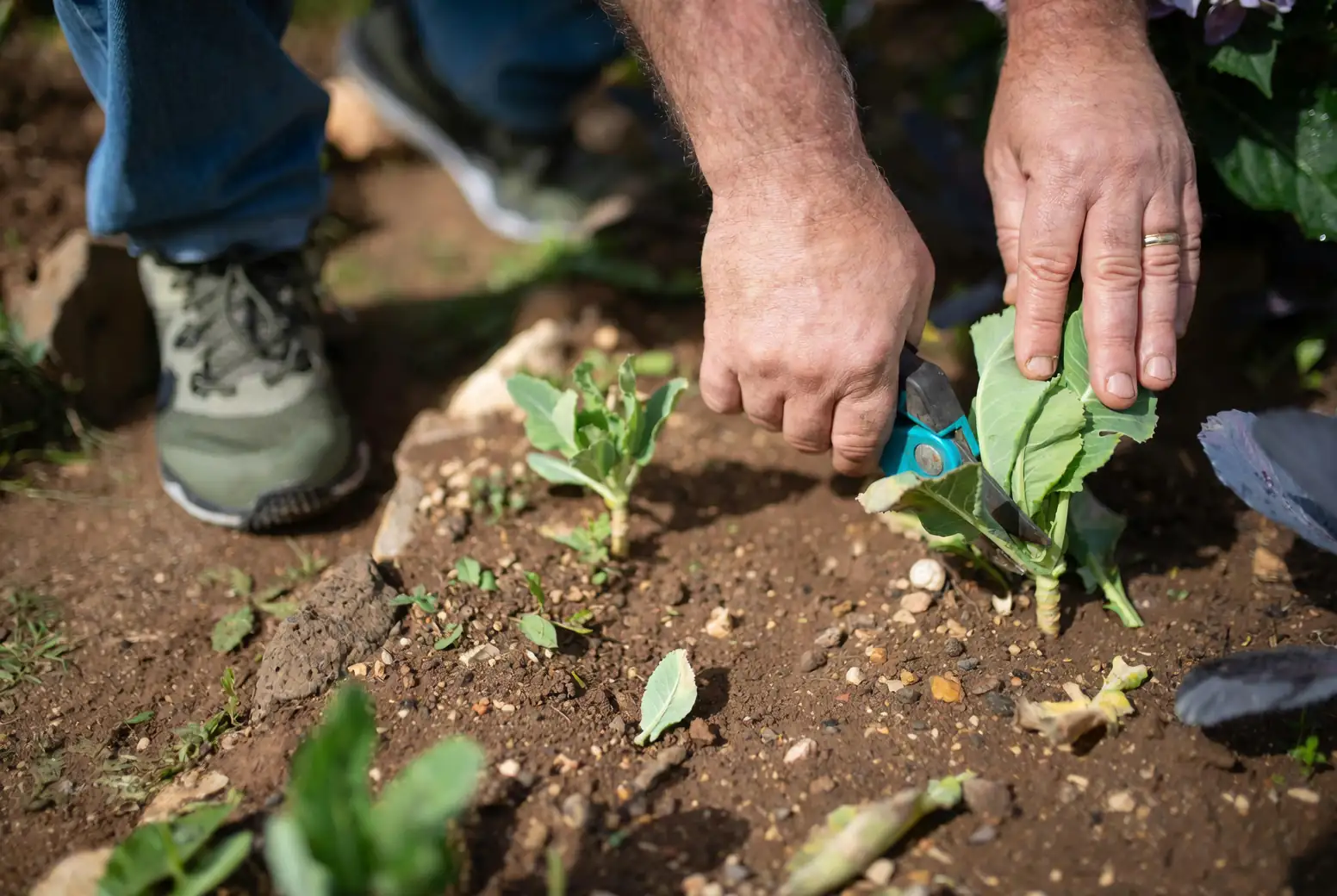
Time your big moves for early spring when growth resumes.
- The “two-leaf rule”: On a healthy branch, cut back to just above a leaf pair that points in the direction you want the new branch to grow.
- Encourage branching: Pinch or cut back the tip to activate side buds and create fuller pads.
- Clean cuts, clean tools: Wipe shears with alcohol. Jade calluses quickly; allow cuts to dry, and avoid misting cut surfaces.
- What not to do: Avoid defoliation; these leaves are your plant’s water batteries.
Bonus: Every pruning session is a propagation party—allow leaf or stem cuttings to callus for a few days, then root them in a barely moist, gritty mix.
Wiring without heartbreak (gentle is key)
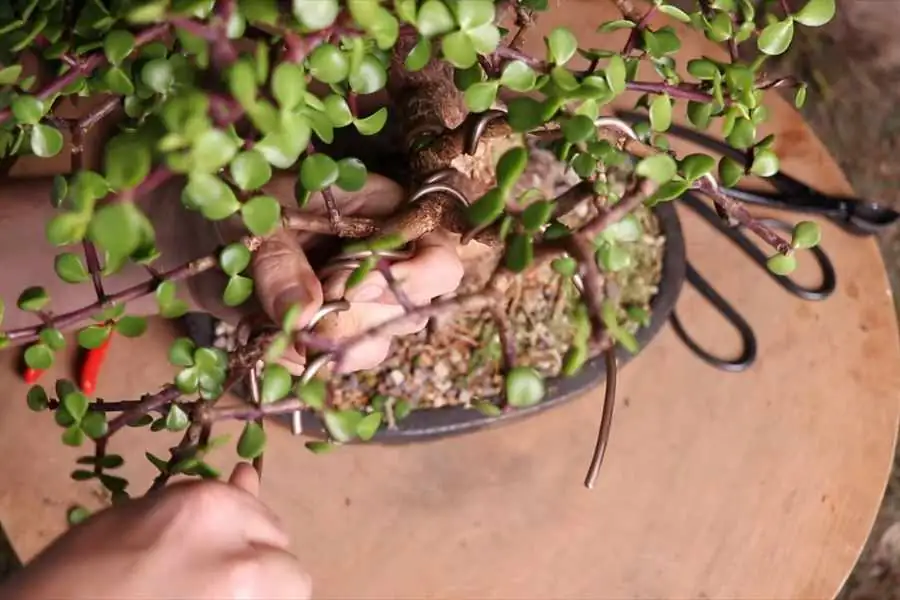
Jade responds best to minimal, mindful training.
- Favor clip-and-grow: Use pruning to set direction; it’s safer and often faster with succulents.
- If you wire, go soft: Use wide, soft aluminum wire and wrap loosely. You can also use raffia or paper tape under the wire to distribute pressure.
- Try guy-wires and weights: Subtle tension over weeks can lower a branch without biting in.
- Time it right: Slightly drier plants are a touch more flexible; check wired areas weekly and remove promptly to prevent scarring.
Pot pairing: design that makes the foliage pop
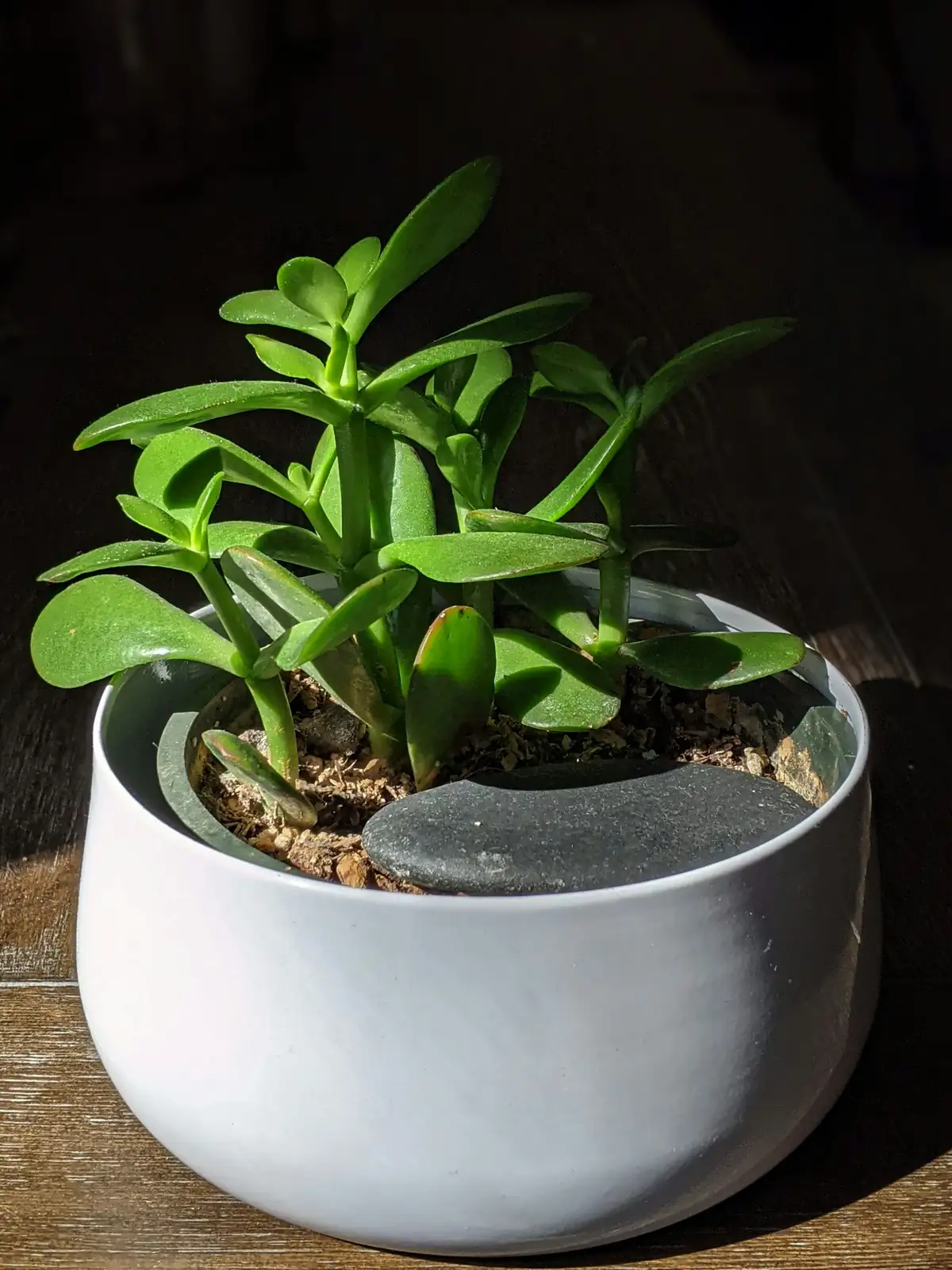
Think of the pot as the frame for your living sculpture.
- Shape and proportion:
- Informal upright: Rectangular or oval bonsai pots, low and wide for visual stability.
- Twin-trunk/clump: Soft oval or round pots to echo the composition’s flow.
- Depth rule of thumb: A shallow pot accentuates jade’s tree-like stance; depth roughly equal to trunk diameter at the base looks refined.
- Finish and color:
- Matte charcoal or graphite stoneware: Modern contrast to glossy jade leaves and red margins.
- Sandy buff or warm terracotta: Earthy warmth that complements the trunk and plays well with sun-reddened leaf edges.
- Cool celadon or pale teal glaze: Echoes the foliage and reads fresh on a white desk.
- Practical beauty:
- Always use drainage holes (add pot feet to lift the pot and prevent wet bottoms).
- Top-dress with 3–5 mm gravel or pumice—it finishes the look and keeps leaves clean when you water.
Cultivar cues for extra style
- ‘Crosby’s Compact’ (dwarf): Smaller leaves; ideal for miniature bonsai and tiny pots.
- ‘Hummel’s Sunset’: Golden-green leaves with red edges under bright light—stunning in charcoal or sand-toned pots.
- ‘Gollum’ and ‘Hobbit’: Tubular or spooned leaves create sculptural silhouettes—prune thoughtfully for balance; branches can be brittle, so limit wiring.
A minimalist care blueprint (desk edition)
- Light: 4–6+ hours of strong light daily; established plants enjoy some direct sun. Acclimate if moving to brighter spots.
- Water: Deeply, then wait until bone-dry. Much less in winter.
- Feeding: Lightly in spring/summer only. Water first, then fertilize to avoid root burn.
- Repotting: Every 2–3 years for young plants; 4–5 years for mature ones, in early spring. After repotting, wait 1 week to water and 1 month to fertilize.
- Seasonal tweaks:
- Spring: Prune and shape; resume light feeding.
- Summer: Peak growth; steady soak-and-dry rhythm; an outdoor stint in bright shade/filtered sun can tighten internodes—acclimate to prevent sunburn.
- Fall: Taper watering; stop fertilizing.
- Winter: Bright and cool, water very sparingly. To encourage blooms, give cool nights around 13°C (55°F) and avoid bright artificial light after dark.
Troubleshooting (and quick wins)
- Leggy growth: Needs more light. Move to a brighter window and prune stretched stems back to a strong leaf pair.
- Leaf drop: Most often watering stress—too much or too little—or a temperature dip. Check moisture and stabilize conditions.
- Pests: Mealybugs, scale, aphids, and spider mites are the usual suspects. Dab with a cotton swab dipped in rubbing alcohol and repeat weekly until gone. Improve airflow.
- Root rot: Overwatering or poor drainage. Unpot, trim mushy roots, repot in a faster-draining mix, and water less.
- Safety note: Mildly toxic to cats and dogs if chewed; keep out of reach. Sap can irritate sensitive skin.
The designer’s month-by-month styling plan (Year 1)
- Early spring: Repot if needed. Do your structural pruning: set trunk movement and primary branches. Start light feeding.
- Late spring: Pinch tips to spur secondary branching. Begin subtle guy-wiring if a branch needs lowering.
- Summer: Maintain silhouette with light pinching. Rotate weekly for even light and balanced pads.
- Early fall: Stop feeding; prune only if absolutely necessary. Aim for a clean outline.
- Winter: Display in brightest spot; water sparingly. If blooms are a goal, give cool nights and shorter days (no late-night lights).
Symbolism and “flower language”
Jade plants are enduring emblems of prosperity, friendship, and longevity—hence nicknames like “Money Plant” and “Friendship Tree.” In feng shui traditions, they’re often placed in the southeast (the so-called wealth corner) to invite abundance. While these meanings arise from cultural symbolism rather than botany, they deepen the pleasure of growing jade—especially when a mature plant rewards you with clusters of starry white-to-pink winter blooms, a sight many consider especially lucky.
—
With thoughtful pruning, gentle training, and a pot that flatters its form, Crassula ovata becomes a living sculpture—calm, evergreen, and perfectly at home on a sunny windowsill or the corner of your desk. Keep it bright, keep it dry, and enjoy watching your miniature tree refine year after year.


