

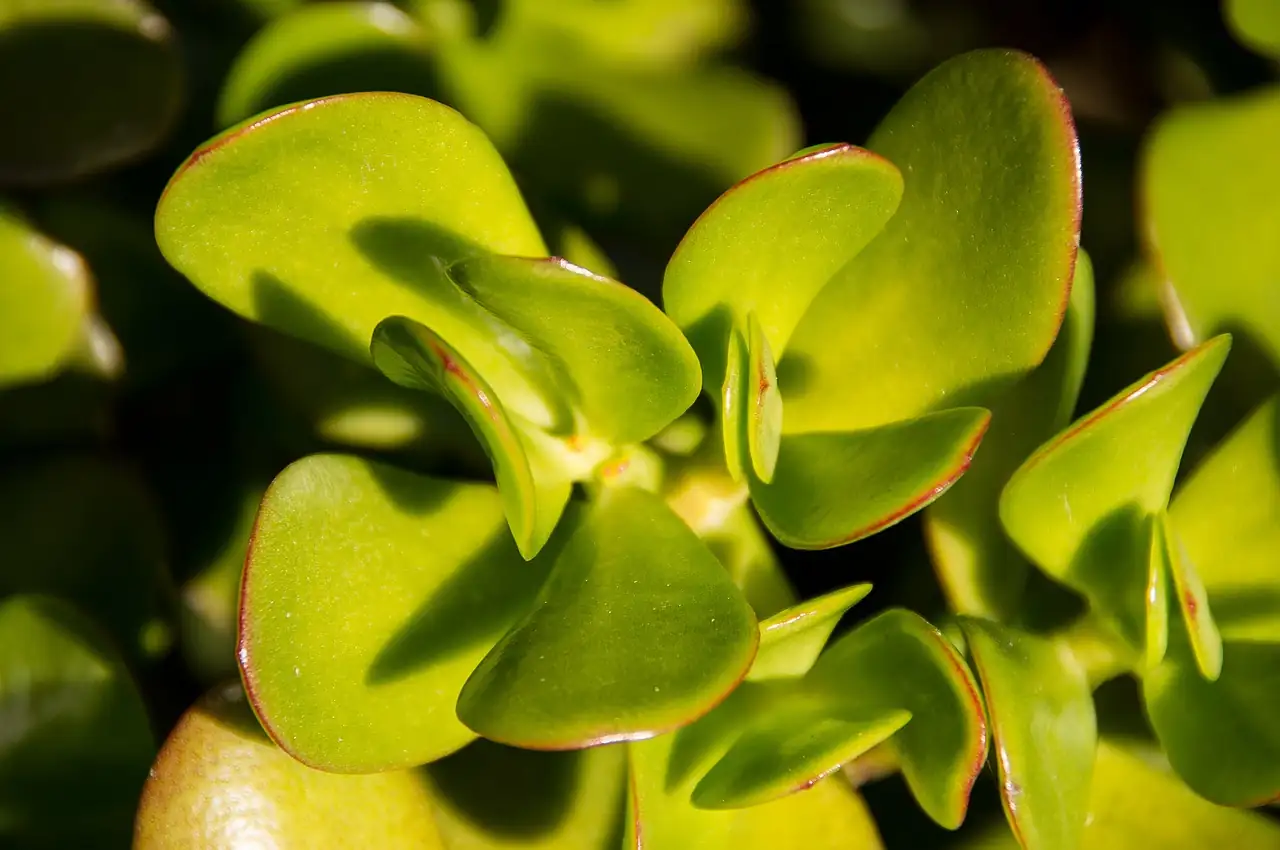
On a rocky outcrop in KwaZulu-Natal, where thicket vegetation knits together aloes, euphorbias, and spekboom, a small tree clings to stone and sun. It hoards light in coin-shaped leaves, shrugs off drought, and in winter lifts foamy clusters of starry white-to-pink blossoms to cold, blue skies. From these South African and Mozambican slopes, Crassula ovata—the jade plant—set out on a quiet, miraculous journey: a pocketable cutting that sailed across oceans, rooted in windowsills, and became the world’s favorite desk-sized “tree of good fortune.”
The jade plant’s story is equal parts geology and generosity: a shrub shaped by rock and heat, and by human hands that share, snip, and pass it along like a living heirloom.
H2: Birthplace: Rocky slopes, bright thicket, big sky
- Native range: Eastern Cape and KwaZulu-Natal provinces of South Africa, and Mozambique. In the wild you’ll find it on rocky hillsides and in valley thicket—sunny, stony, perfectly drained.
- Plant company: Aloes, euphorbias, and Portulacaria afra often grow nearby in this semi-arid mosaic.
- Local color: Known in South Africa by many names—“kerky bush,” “pink joy,” and in some indigenous languages by traditional names—its presence in the landscape is unmistakable: grey-green, gnarled, and timeworn, with bark that peels in horizontal strips as it ages.
This environment wrote its care manual: relentless light, brief sips of water, and cool, dry winters. No wonder it thrives in bright kitchens and office windows halfway around the world.
H2: Built for survival, dressed for charm
H3: What it looks like
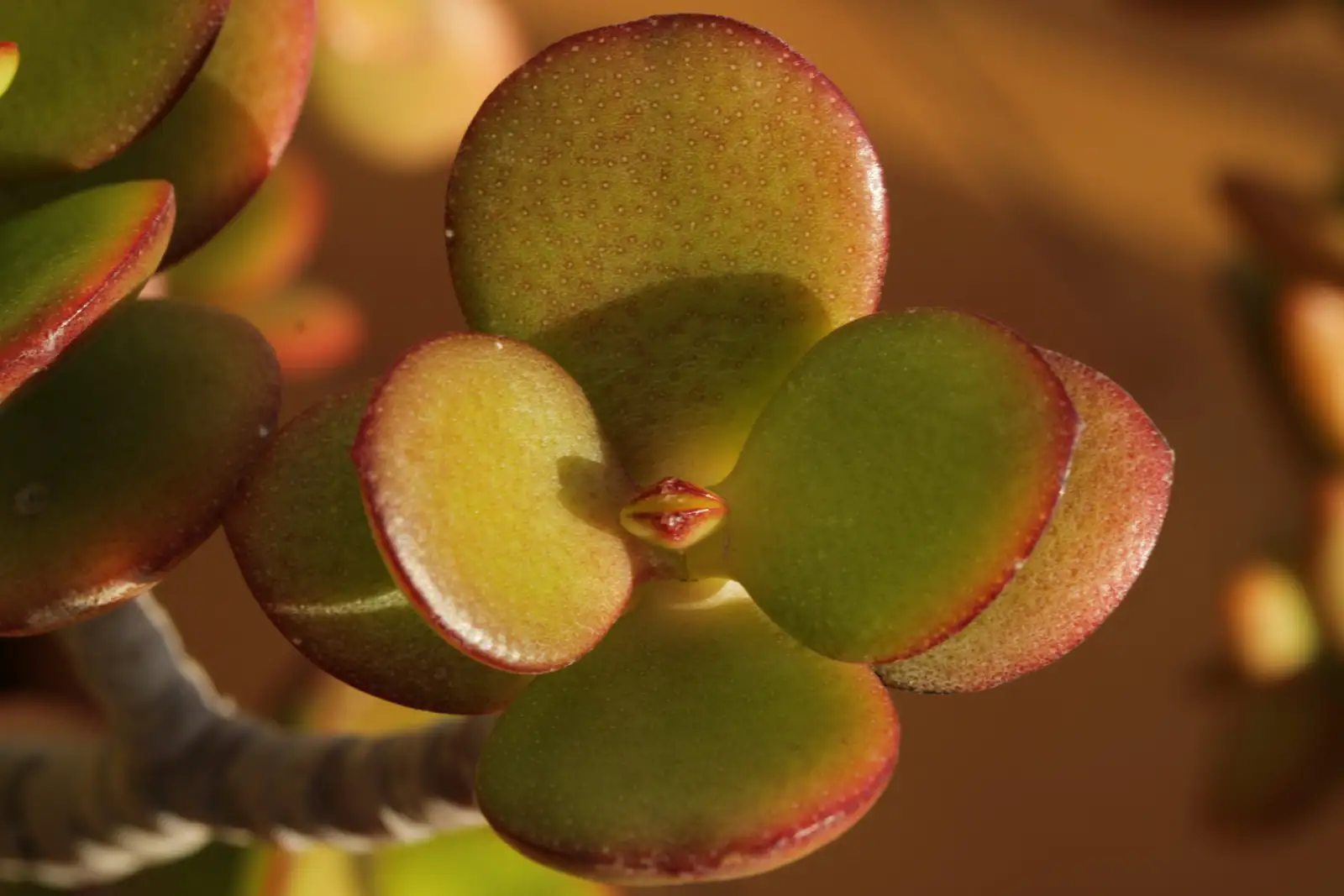
- Habit: An upright, rounded, strongly branched succulent shrub that can look like a miniature tree. Young stems are green and fleshy; with age they thicken, brown, and form a trunk-like base.
- Size: Indoors it typically tops out at 60–90 cm (2–3 ft). In suitable outdoor climates it can reach about 2.5 m (8 ft).
- Leaves: Thick, glossy, and obovate to wedge-shaped, about 3–9 cm long and 1.8–4 cm wide. Strong sun often paints a fine red edge—a natural sunscreen.
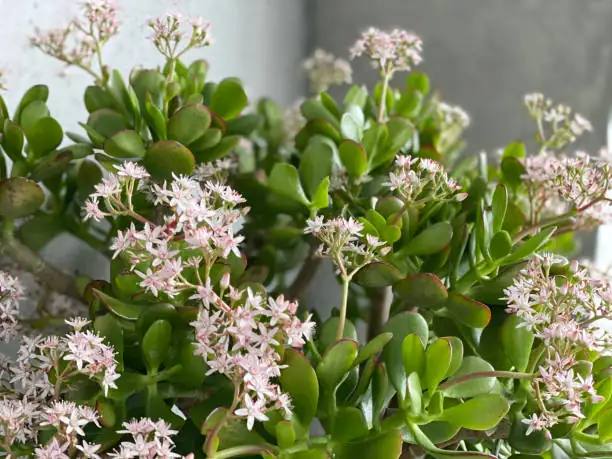
- Flowers: In winter, mature plants may carry sweetly scented, five-petaled, starry blooms (about 15 mm across) in rounded terminal clusters roughly 5 cm wide, colored white to soft pink.
H3: The season of stars
In its homeland, cool, bright, and dry winters cue flowering. Indoors, the same formula—shorter days, cool nights, and restrained watering—often coaxes those elusive winter fireworks.
H2: Traditional uses and meanings: From medicine to money luck
H3: Practical heritage
In parts of its native range, people historically made use of the plant in modest, practical ways:
- Roots: Consumed as food—but only after proper preparation.
- Leaves: Employed in traditional remedies.
H3: Symbols that stuck
The jade plant has been gifted for generations as a sign of friendship, endurance, and prosperity. The thick, glossy leaves resemble little jade coins—hence the avalanche of nicknames: Jade Plant, Money Plant, Money Tree, Dollar Plant, Friendship Tree, Lucky Plant. In feng shui practice, it’s often placed in the southeast “wealth corner” of homes or offices to invite abundance; whether or not you follow the tradition, the plant’s long life and steady growth make it a feel-good talisman.
A note on “flower language” and deeper meaning: While Western floriography rarely features succulents, the jade plant’s cultural “language” grew less from bouquets and more from its behavior—longevity, resilience, and the coin-like look of its leaves. Its message of prosperity and lasting friendship reflects the way it’s shared between generations and how easily a single cutting can multiply good fortune.
H2: A cutting crosses oceans: How jade became a global icon
Crassula ovata was described in England in the 18th century, and from there its horticultural life accelerated. It checked every box for the global nursery trade:
- Ships well as cuttings, roots quickly, and forgives neglect.
- Thrives in bright conservatories and later in sunny urban windows.
- Adapts beautifully to container life and even bonsai-style shaping.
By the 19th and 20th centuries, it spread from southern Africa into European collections and on to mild, Mediterranean-like regions and houseplant culture worldwide. Today, it’s the quintessential gift plant—a green wish for steady income and steady health—on café counters, start-up desks, and grandma’s sunroom. One note of name confusion: it shares the nickname “money tree” with Pachira aquatica, a completely different tropical species.
H2: Keeping a piece of the thicket on your desk
H3: Light and placement
- Aim for 4–6 hours of strong light daily. A sunny south- or west-facing window is ideal.
- Young plants appreciate bright indirect light; established plants often prefer some direct sun.
- Outdoors in summer: bright shade/filtered sun. Acclimate slowly to prevent sunburn.
H3: Temperature and humidity
- Comfort zone: 18–24°C (65–75°F) indoors.
- Cool nights: Down to about 13°C (55°F) help set buds in winter.
- Not frost-hardy: Protect when temps approach 10°C (50°F) or lower.
- Loves dry air; average indoor humidity is perfect.
H3: Soil and pots
- Use a fast-draining cactus/succulent mix, or blend regular potting soil with perlite at about 2:1 (potting mix:perlite).
- Containers with drainage holes are nonnegotiable.
H3: Watering rhythm
- Spring–summer: Water deeply, then let the mix dry out completely before watering again (often about weekly or less).
- Fall–winter: Water sparingly—only after the mix is fully dry, sometimes just once a month.
- Keep water off leaves where possible; never leave water in the saucer.
- Overwatering is the fastest way to lose a jade.
H3: Feeding
- Light feeder: Use a diluted cactus/succulent or balanced houseplant fertilizer every 2–4 weeks in spring/summer.
- Stop feeding in fall and winter.
- Water first, then fertilize to prevent root burn.
H3: Shaping and bonsai flair
- Prune in early spring to encourage branching and strengthen the trunk.
- Cut back to a side branch for a bushier silhouette; cuts callus quickly and new growth follows in warm, bright conditions.
H3: Propagation: generosity, botanically
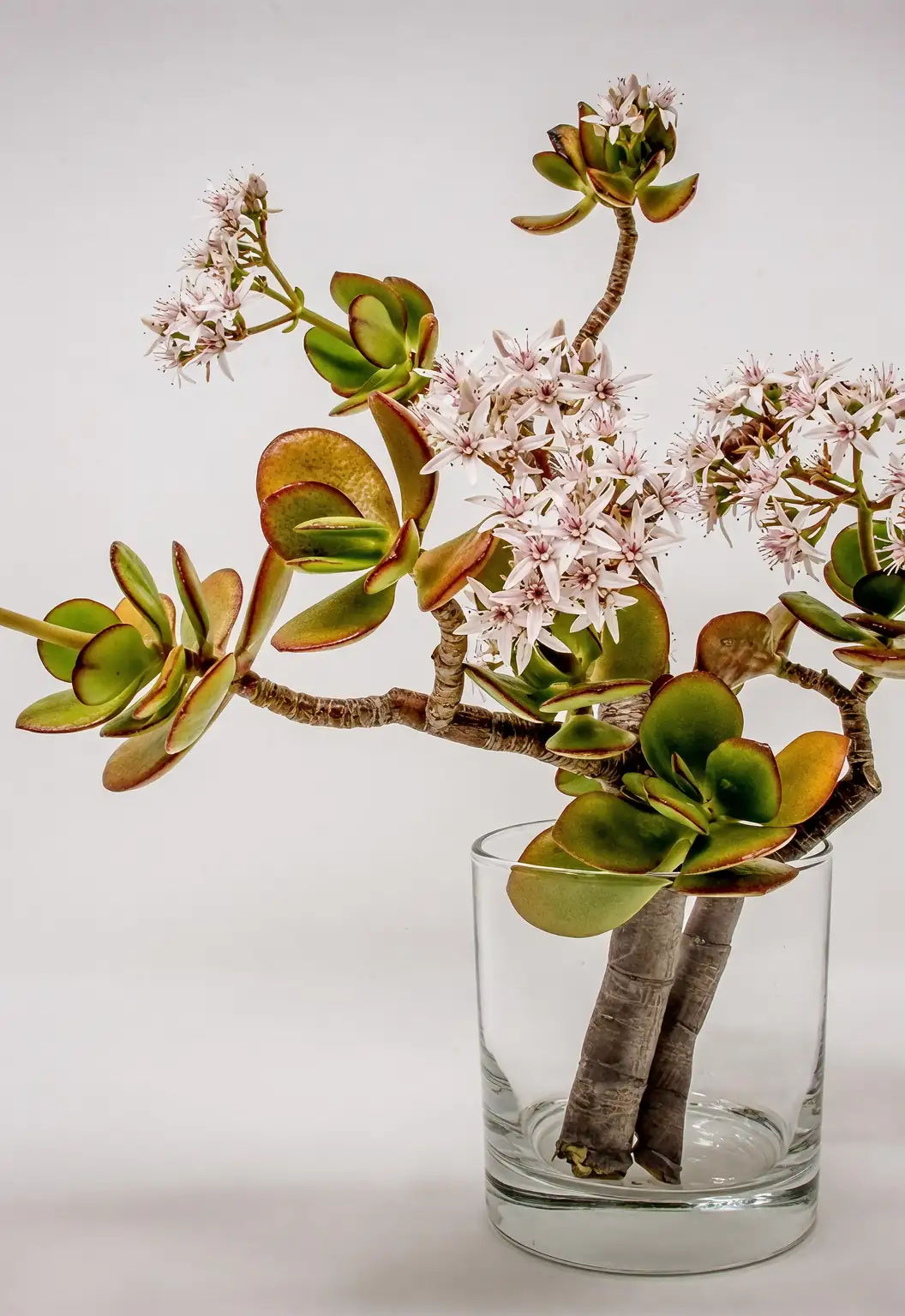
- Stems: Take a 7.5–10 cm (3–4 in) cutting, let it callus for a few days, then set into lightly moist, well-draining soil.
- Leaves: Detach a healthy leaf with its base intact, let it callus, then lay on the surface of barely moist mix.
- Keep warm and bright; go easy on water until roots form (typically 1–2 weeks), then increase gradually.
- Best season: spring to summer.
H3: Repotting
- Young plants: Every 2–3 years.
- Mature plants: Every 4–5 years or as needed—slight root-bound is fine and keeps growth compact.
- Repot in early spring; wait about a week to water, a month to fertilize.
H2: Troubleshooting and health
- Leggy, stretched growth: Needs more light—move closer to sun and prune back to encourage bushiness.
- Leaf drop: Commonly watering stress (too much or too little) or sudden cold; check moisture and stabilize temps.
- Pests: Mealybugs, scale, aphids, spider mites. Dab with cotton swabs dipped in rubbing alcohol and repeat weekly until clear.
- Diseases: Root rot from overwatering or slow-draining soil. Act fast—improve drainage and reduce watering. Powdery mildew is uncommon indoors but can pop up with poor airflow.
- Toxicity: Mildly toxic to cats, dogs, and horses if ingested (vomiting, lethargy, poor coordination). Sap may irritate sensitive skin. Keep out of reach.
H2: Fast facts worth sharing
- Family: Crassulaceae; Genus: Crassula; Scientific name: Crassula ovata.
- Nicknames: Jade Plant, Dollar Plant, Friendship Tree, Lucky Plant, Money Plant, Money Tree.
- Longevity: Can live for decades—often inherited and re-rooted across generations.
- Color trick: Strong sun brings out that handsome red leaf edge.
- Winter wonder: Indoor flowering is uncommon—when it happens, it’s considered extra lucky.
H2: FAQ: The essentials in a pinch
- How often should I water? Only when the potting mix is completely dry. Weekly or less in summer; sometimes monthly in winter.
- How do I get blooms? Give very bright light, keep it slightly snug in its pot, ease off watering in fall/winter, and provide cool nights around 13°C (55°F) with unbroken dark periods.
- Why is it dropping leaves? Usually watering extremes or a sudden temperature dip—check roots and soil, then adjust.
- Is it safe for pets? No—mildly toxic if chewed. Call your vet if symptoms appear.
H2: The enduring appeal
Crassula ovata’s rise from rocky African slopes to global “money tree” status isn’t a mystery—it’s a testament. Few plants pack so much optimism into such modest care: a tree you can keep on a windowsill; a forest’s patience in a pot. Every time a leaf takes root or a pruning sparks two new branches, the jade plant re-enacts its own origin story—resilient, generous, and quietly prosperous, wherever it lands.


