Clematis, the Queen of Climbers, is legendary for frothy curtains of bloom—but it’s also a straight-talker about soil. Get the pH and feeding right, and you’ll have a vine that performs like a headliner. Miss the mark, and it will whisper its complaints in pale leaves and timid buds. Here’s how to sort out lime tolerance vs. preference, dial in the right pH, top-dress smartly, avoid nitrogen traps, and read those early chlorosis signals—with simple, at‑home tests to keep you on course.
Lime tolerance vs. lime preference (and why it matters)
- Tolerant, not fussy: Many clematis are lime/calcium tolerant and thrive in neutral to slightly alkaline soils. They don’t demand lime universally, but they rarely mind it.
- Preference in one line: Aim for soil that’s fertile, well-drained, and around neutral to slightly alkaline. Calcium is useful structurally (cell walls) and supports steady growth, but “more lime” isn’t a universal cure.
- Species and cultivar wiggle room: While many garden hybrids are happiest near neutral or a touch sweet, some varieties are perfectly fine a bit on the acidic side. The safest, broadly applicable target is a gently “sweet” soil, not chalk-pit alkaline and not peat-bog acidic.
Target pH ranges (and how to think about them)
- Sweet spot for most gardens: pH 6.5–7.5
- Comfortable working range: pH 6.2–7.5 (with many cultivars performing best about 6.5–7.2)
- Containers: Aim for 6.3–7.2 to keep nutrients available and roots content
- When to adjust:
- If pH is <6.2 (too acidic): Growth can be lackluster; some lime-tolerant types show yellowing. Consider adding agricultural lime (dolomitic if you also want magnesium).
- If pH is >7.5 (too alkaline): Micronutrients—especially iron and manganese—can lock up, leading to interveinal chlorosis. Don’t add lime; instead, moderate alkalinity and focus on organic matter.
Pro tip: Hard, alkaline tap water can nudge pH upward over time—especially in pots. Rainwater is a terrific reset.
Easy at‑home soil testing you’ll actually use

You don’t need a lab bench. Choose one or two methods and repeat each season.
1) Color‑change pH kit (simple and reliable)
- Collect 5–10 small cores from the clematis root zone (2–6 in deep), mix in a clean container.
- Remove pebbles/roots, let the sample air‑dry, then follow kit directions.
- Read the color within the specified time window.
2) Slurry pH with strips or a calibrated meter
- Mix 1 part dry soil with 2 parts distilled water. Stir, rest 15–30 minutes, stir again.
- Test the clearish upper liquid with pH strips or a calibrated pH meter.
- Repeat for consistency; average your readings.
3) Container leachate check
- Water the pot thoroughly with distilled or rainwater.
- Collect the first leachate from the drainage holes and test pH with strips/meter.
- Recheck monthly during the growing season if you irrigate with alkaline tap water.
4) Quick-and-dirty “fizz” test (only a clue)
- A pinch of soil + a splash of vinegar: noticeable fizz hints at free carbonates (alkaline tendencies).
- A paste of soil + water + a shake of baking soda: fizz suggests acidity.
- Use as a rough signpost; confirm with a real pH test.
Re-test cadence: Check pH at planting, again after your first season of watering/fertilizing, and then annually. Pots merit more frequent checks.
Compost and top‑dressing: cool roots, steady nutrients
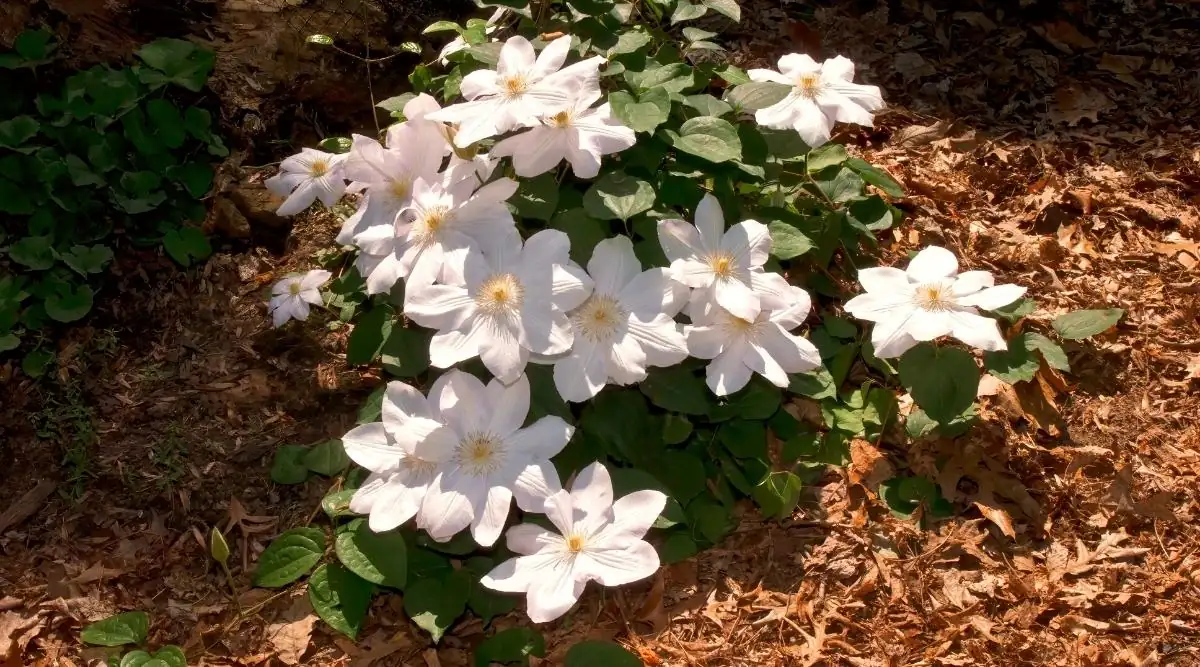
Clematis adore organically rich soil that stays evenly moist but never waterlogged. Top-dressing doubles as root sunscreen and as a nutrient slow‑release.
In-ground plants
- Spring (or fall) ritual:
- Lightly cultivate the soil surface to break crusting—avoid damaging shallow roots.
- Top-dress 1–2 inches of fine compost or well-rotted manure around (not on) the crown.
- Mulch on top to shade roots—leaf mold, shredded bark, or straw—leaving a 2–3 inch gap around stems.
- If pH is low: Work in a modest dose of agricultural lime per your test; apply in fall/winter so it integrates slowly.
- If pH is high: Skip lime. Rely on compost and, if needed, a gentle acidifying touch (elemental sulfur used sparingly, or more rainwater irrigation). Always re-test.
Containers
- Annual refresh: Scrape off and replace the top 1–2 inches with fresh compost-rich mix.
- Full reset every 2–3 years: Repot into a roomy, sharply draining blend—compost/leaf mold + peat or coco coir + coarse sand/perlite. Set the crown just a bit deeper than it was.
- Mulch the surface to keep the root zone cool, and shade the pot itself in summer.
Caution with manures and lawn clippings: They can be nitrogen-heavy. Go easy or compost thoroughly before use.
Feed for flowers, not just foliage
Clematis are hungry—but they’re connoisseurs. Too much nitrogen pushes leafy vines with fewer, shorter‑lived blooms.
- Baseline at planting: Mix in rich compost. For established plants, a balanced feed in early spring sets the table.
- During active growth:
- In-ground: Feed in early spring and again in early summer. When buds form, emphasize phosphorus/potash (a lower‑N, bloom‑leaning formula).
- Containers: Light but regular feeding (about every 2 weeks in season) works well. Switch to a bloom‑forward, lower‑N formula when buds are visible.
- What “lower‑N” looks like: A product where the first number (N) is lower than P and K—think something like 3‑5‑7, 4‑6‑8, or similar. Balanced 10‑10‑10 is fine early; pivot to bloom‑leaning as the season advances.
- Stop heavy feeding by late summer to let growth harden before cold.
Red flags for excess nitrogen:
- Rocketing green growth with few buds
- Softer, disease‑prone tissue
- Reduced bloom quality and duration
Reading chlorosis and other leaf signals
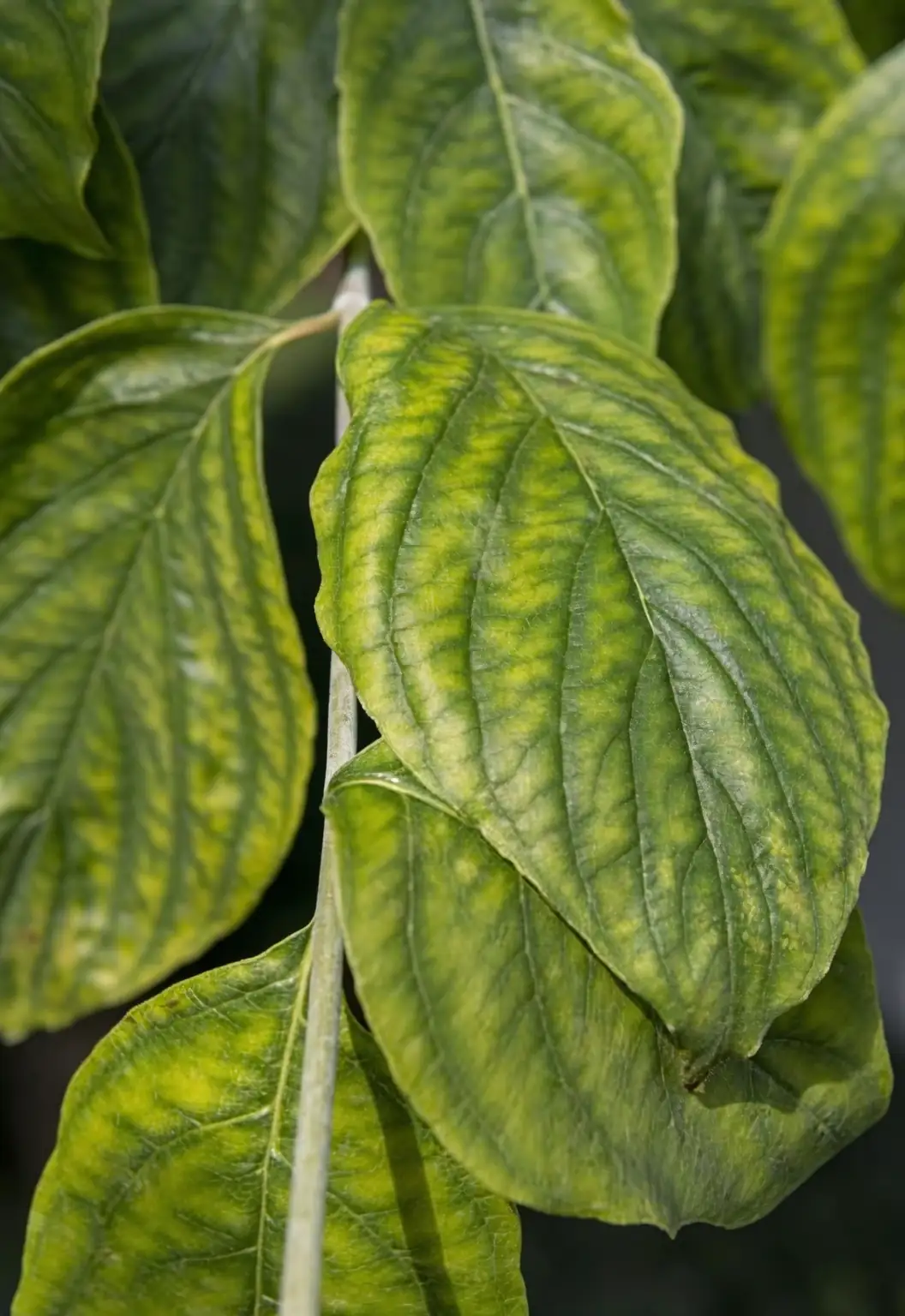
Clematis leaves are great communicators. Learn their language to correct problems early.
- Interveinal chlorosis on young leaves (veins green, tissue yellow)
- Likely cause: Iron or manganese lockout, often from too‑high pH or cold, wet roots.
- Fix: Improve drainage and warmth around roots; water with rainwater; correct pH toward 6.5–7.2. A chelated iron drench can provide a short-term cosmetic rescue while you correct pH.
- General yellowing on older leaves first
- Likely cause: Nitrogen deficiency or exhausted potting mix.
- Fix: Top‑dress with compost; add a balanced feed (not just high‑N); refresh container mix if compacted.
- Yellowing with limp, wilting behavior despite moist soil
- Likely cause: Waterlogging and airless roots; can also be compacted soil in containers.
- Fix: Improve drainage, reduce watering frequency, aerate or repot. Clematis hate soggy, stagnant conditions.
- Whole-stem collapse, blackened sections
- Suspect: Clematis wilt. Remove the affected stem down to healthy tissue (even to ground level). Keep the crown mulched; many plants reshoot.
- Edge scorch or rapid flop in heat
- Likely cause: Hot roots or erratic moisture.
- Fix: Deep, even watering; thicker mulch; shade the root zone (low companion plants, stones, or a mulch collar).
A simple, soil-first seasonal plan
- Early spring
- Test pH. Top‑dress with compost. Feed lightly (balanced), prune per group. Water deeply and evenly.
- Late spring to early summer
- Tie in brittle new stems. Switch to lower‑N, bloom-leaning feed as buds form. Keep mulched and evenly moist.
- Mid to late summer
- Maintain moisture; shade pot/root zone. Feed containers lightly every 2 weeks if actively growing. Watch for chlorosis; adjust pH/watering.
- Autumn
- Plant or transplant in mild climates; cuttings and layering are reliable. Reduce feeding; focus on drainage and airflow.
- Winter
- Keep pots just barely moist. Protect container roots from hard freezes. Prune Group 3 in late winter/early spring.
Quick troubleshooting cheatsheet
- Few flowers, plenty of leaves: Too much nitrogen or not enough light. Reduce N; ensure bright conditions (often 6+ hours with afternoon protection in hot summers).
- Persistent chlorosis despite feeding: Check pH and drainage; switch to rainwater; consider a temporary chelated iron drench while rebalancing soil.
- Yellowing in a container with peat‑heavy, old mix: Repot into a fresher, airier blend; feed modestly; don’t let pots sit in saucers of water.
- Plant seems “stuck” after heatwaves: Cool the root zone with mulch and steady moisture; avoid fertilizing hard in extreme heat.
Why “head in the sun, feet in the shade” still works
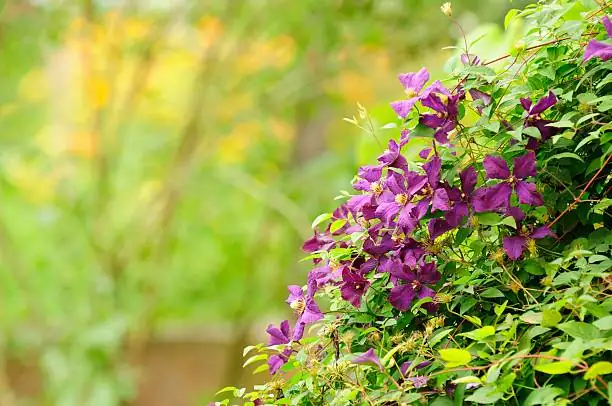
Bright vines bloom best, but cool, shaded roots keep the engine running smoothly. Use mulch, stones, or low companions to shade the soil—the plant’s “feet”—and you’ll smooth out moisture, temperature, and nutrient uptake.
A note on symbolism (flower language)
Clematis has long been linked with mental beauty, ingenuity, and aspiration—fitting for a vine that climbs toward the light. In 19th‑century floriography, gifting clematis could signal admiration for someone’s wit and intellect. Take these meanings as charming cultural snapshots rather than rigid codes; they tell us how people have historically read character into plants that reach upward with elegance.
The short take
- Target pH: 6.5–7.5 (neutral to slightly alkaline). Many clematis are lime tolerant; some handle slightly more acidic conditions.
- Top-dress yearly with compost, mulch to shade roots, and correct pH gently—no drastic swings.
- Feed modestly and consistently; pivot to lower‑N, bloom‑leaning formulas as buds form.
- Read leaves early: interveinal chlorosis points to pH/drainage issues; lush leaves with few flowers point to excess nitrogen.
- Use simple pH kits or slurry tests at home; recheck annually (more often in pots).
Get these fundamentals right, and your clematis will repay you—with months of showstopping bloom and the effortless poise of a true garden royal.