
Picture a rose in full flush, petals spilling like silk—and now, a filigree of clematis threading through its canes, sprinkling stars or bells in a counter-melody that keeps playing long after the first chorus fades. That’s the magic of pairing Clematis with roses. The secret to a tangle-free, disease-savvy duet? Choose hard-pruned, summer-into-fall bloomers—especially the Viticella and Texensis groups—sync their bloom calendars with your roses, maximize airflow, and train with a gentle hand. Here’s how to design a layered, long-season display that looks effortless and stays healthy.
Why Viticella and Texensis make the best rose-weavers
- Disease-tough and resilient: Small-flowered clematis (especially viticellas) are less prone to clematis wilt and other woes than many large-flowered hybrids.
- Long season on new wood: These Group 3 types flower on the season’s fresh growth—typically summer into fall—extending color after many roses’ main flush.
- Pruning harmony: Roses usually get pruned in late winter. Group 3 clematis want the same timing and a hard cut back to about 12–18 in (30–45 cm)—easy to coordinate.
- Manageable vigor: They weave rather than smother—unlike very vigorous types (e.g., montanas, many tanguticas), which can overwhelm a rose.
Also excellent: classic Jackmanii-type Group 3 clematis (e.g., ‘Jackmanii’, ‘Comtesse de Bouchaud’)—floriferous, forgiving, and rose-friendly.
Start with the right partners
Pick your rose with structure and airflow in mind
- Forms that shine: Pillar roses, open-habit shrub roses, and disciplined climbers are ideal. Train main canes as a loose fan to leave “air windows” for clematis to occupy.
- Repeat bloomers vs. once-bloomers: Repeat-bloomers pair beautifully with long-season viticellas; once-blooming old roses (gallicas, albas, centifolias) can be extended by a viticella or texensis that takes the baton in late summer.
- Prioritize disease resistance and an open framework to keep the duet airy and healthy.
Choose clematis that won’t hog the spotlight
Viticella standouts (Group 3, generally 6–10 ft / 1.8–3 m with support):
- ‘Etoile Violette’ – Rivers of velvety purple, classic rose partner.
- ‘Madame Julia Correvon’ – Claret-red, airy flowers; light and lacy.
- ‘Alba Luxurians’ – White petals tipped green; fresh with deep pink or crimson roses.
- ‘Purpurea Plena Elegans’ – Double dusky plum pompons; romantic and abundant.
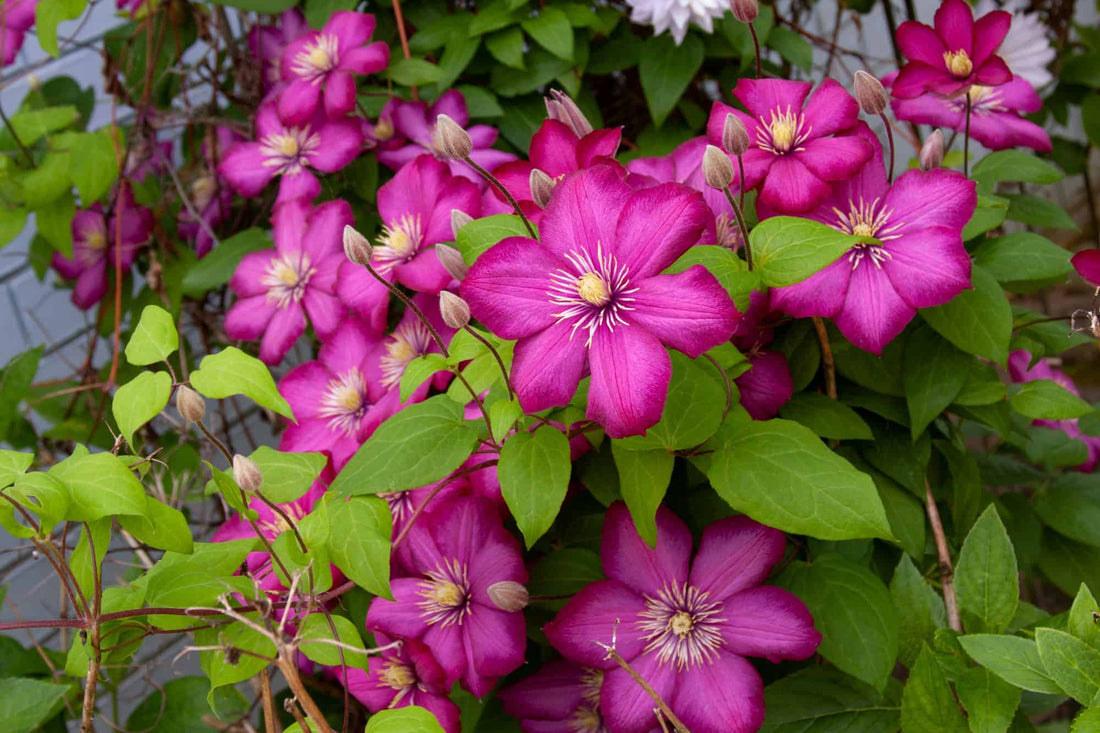
- ‘Kermesina’ – Strong magenta waves; great for a late-summer lift.
- ‘Venosa Violacea’ – Purple-and-white veined blooms that light up soft-colored roses.
Texensis and texensis hybrids (Group 3, generally 6–9 ft / 1.8–2.7 m):
- ‘Princess Diana’ – Tulip-shaped, rosy-pink; crisp with apricot or cream roses.
- ‘Duchess of Albany’ – Bright pink bells; playful yet tidy.
- ‘Gravetye Beauty’ – Deep crimson-pink trumpets; dramatic with blush roses.
Good Jackmanii-type companions (Group 3):
- ‘Jackmanii’, ‘Comtesse de Bouchaud’, ‘Gypsy Queen’, ‘Star of India’, ‘Victoria’—big-hearted bloomers, time-tested with roses.
Use with caution:
- ‘Polish Spirit’ (vigorous) can swamp modest roses—save it for tall ramblers or a pergola.
- Avoid montanas and many tanguticas on roses—they’re too rampageous.
Planting to prevent tangles from day one
- Distance matters: Plant the clematis 12–18 in (30–45 cm) away from the rose base to reduce root competition and give you room to work. Angle the clematis toward the rose.
- Set slightly deep: Plant clematis a little deeper than it sat in the pot (often with the crown about 2 in / 5 cm below the surface) to encourage strong resprouting if stems are damaged.
- Soil and moisture: Both enjoy fertile, well-draining soil that holds moisture—not waterlogging. Neutral to slightly alkaline suits many clematis well.
- Cool the roots: The classic rule—head in the sun, feet in the shade. Mulch generously and/or underplant with low, airy companions to shade clematis roots without choking airflow.
- Build a two-plane support: On a wall or fence, run two sets of wires—rose canes secured slightly behind, clematis guided slightly in front—so stems don’t wrestle for the same rungs.
Training and tie‑ins: the gentle choreography
Clematis climb by twining leaf stalks (petioles), and young stems can snap if yanked. A weekly five-minute “steer and tidy” prevents knots.
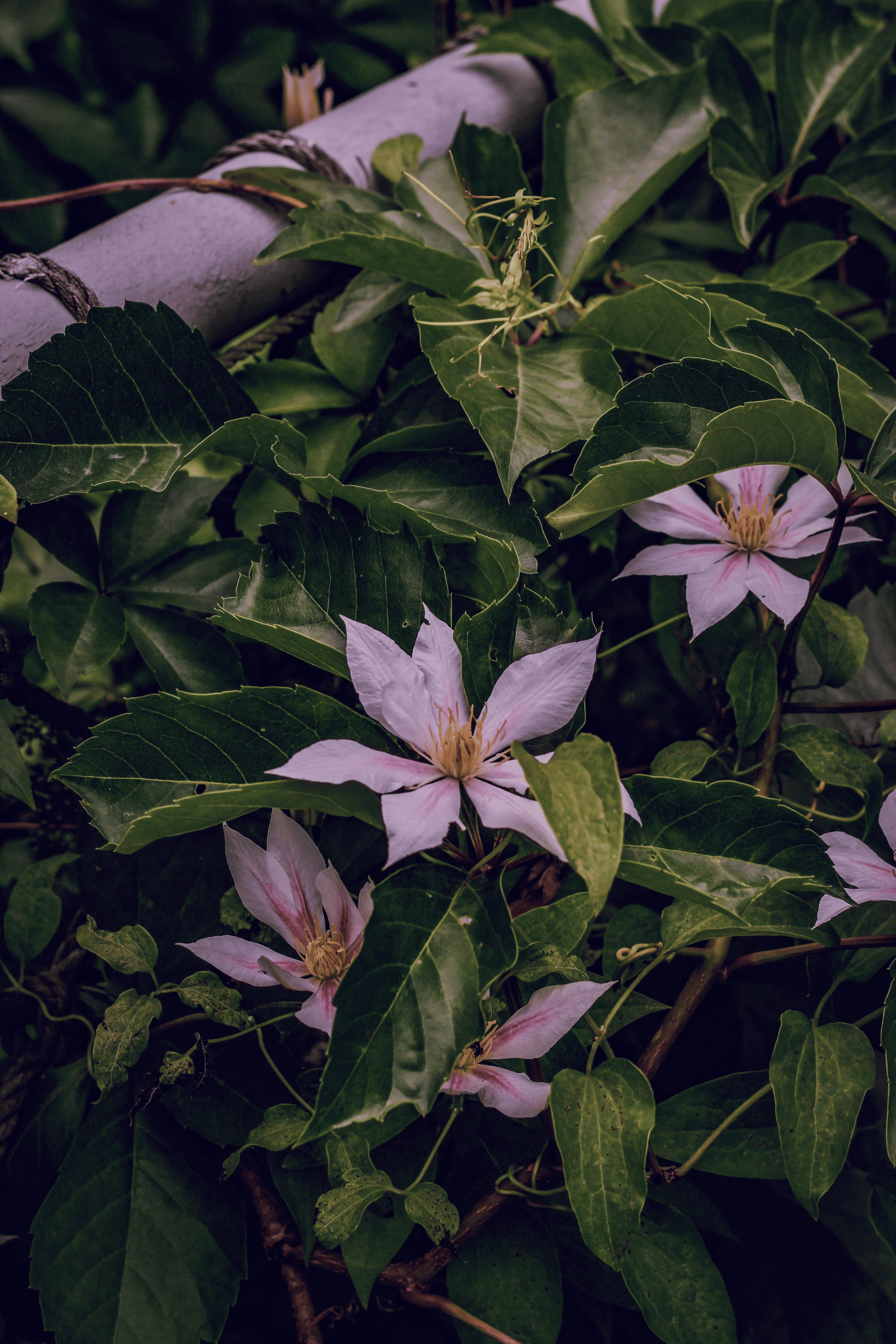
- Start early: As new clematis shoots extend, give them a light ladder—bamboo canes or discreet wires through the rose framework.
- Tie softly: Use soft jute, raffia, or stretchy plant ties in a loose figure‑eight. Never cinch; allow for growth.
- Place with purpose: Weave clematis into the outer third of the rose framework so flowers read clearly and air can move.
- Edit, don’t wrestle: If a shoot heads into the rose’s thorny interior, detach gently while still pliable and redirect. Early steering is easier than midseason surgery.
- Mind the mix: Thin out congested clematis stems each season to keep the duet open and reduce mildew and botrytis risk.
Pruning made simple (and synchronized)
- Rose pruning: Late winter/early spring—reduce, shape, and open the framework. Tie in laterals more horizontally to increase flowering.
- Clematis pruning (Group 3): At the same time, cut back viticella/texensis to about 12–18 in (30–45 cm), just above strong buds. This resets the display, simplifies training, and aligns with rose pruning.
- Midseason touch-ups: After the main rose flush, deadhead and lightly thin crossing stems. For clematis, remove spent blooms if you like, but many just keep flowering without fuss.
Air, light, and water: the health foundations
- Sun: Bright light to full sun boosts flowering; in hot summers, give some afternoon shade, especially in containers.
- Airflow: Space plants and thin growth to avoid stagnant, muggy pockets. Good ventilation reduces powdery mildew and gray mold.
- Watering: Keep soil evenly moist—never bone-dry, never soggy. Water at the base to keep foliage drier. Mulch helps buffer roots against heat and cold.
- Feeding: Mix in compost at planting. In ground, apply a balanced feed in early spring and again in early summer; when buds form, emphasize phosphorus/potash to support bloom. Avoid excess nitrogen—it fuels leaves, not flowers.
- Pests and diseases:
- Clematis: Watch for wilt (sudden stem collapse—cut back to healthy tissue and let it resprout), powdery mildew, botrytis, and leaf spots.
- Pests may include aphids, spider mites, slugs/snails, earwigs, caterpillars—manage early with hand-picking, barriers, water sprays, or insecticidal soap/oil as appropriate.
- Safety: Clematis sap can irritate skin; roses have thorns. Wear gloves.
Bloom-calendar design: color that rolls from spring to fall
Think like a conductor—stagger entries and crescendos.
- Once-blooming roses (early summer):
- Pair with a texensis (‘Princess Diana’, ‘Duchess of Albany’) to overlap the rose flush, then let a viticella (‘Etoile Violette’, ‘Madame Julia Correvon’) carry the show into late summer and fall.
- Repeat-blooming climbers and shrubs:
- Thread a single, long-season viticella (‘Venosa Violacea’, ‘Purpurea Plena Elegans’) through the framework for a steady companion that won’t outpace the rose.
- Color play:
- Harmonious: Blush or apricot roses with soft mauve ‘Etoile Violette’ or the green-tipped white of ‘Alba Luxurians’.
- High contrast: Deep crimson roses ignited by the pink trumpets of ‘Princess Diana’ or the raspberry red of ‘Gravetye Beauty’.
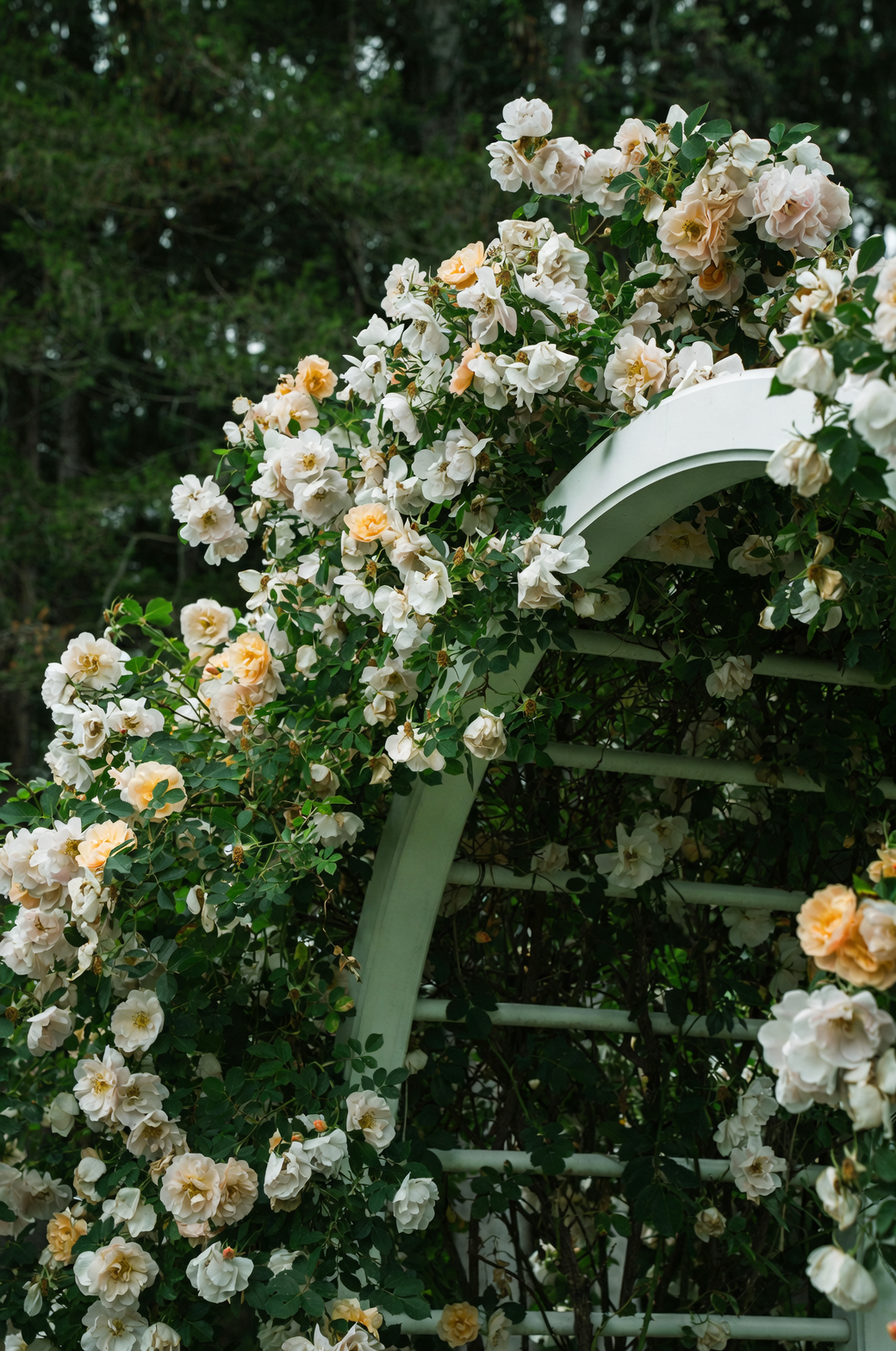
- Big features (arches, pergolas, tall pillars): You can layer two complementary Group 3 clematis on a robust rose—just keep airflow generous and vigor balanced.
Containers and small spaces
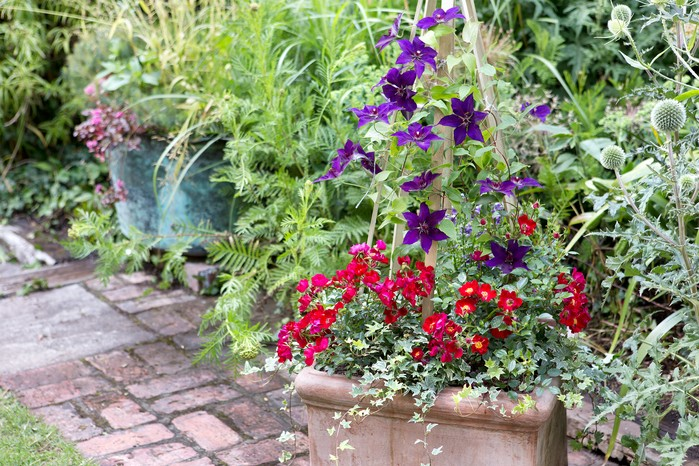
Yes, you can stage the duet on a patio.
- Choose a compact, upright shrub rose and a moderate viticella on a shared obelisk.
- Pot size: Large and deep (at least 18 in / 45 cm) with excellent drainage and a sturdy support.
- Summer care: Shade the pot, water consistently, and feed regularly through the growing season. In winter, protect the container from hard freezes.
Troubleshooting tangles and troubles
- The midseason knot: Don’t pull. Snip one or two sacrificial ties, backtrack a clematis shoot gently, and re-weave it to the outside.
- Wilted clematis stem: Cut to healthy tissue (even to ground level if needed). With clematis planted a bit deep, new shoots often emerge.
- Mildew clouds: Thin a few stems, water at the base in the morning, and improve air movement around the display.
- Not enough flowers: Boost light, confirm you pruned Group 3 correctly, moderate nitrogen, and keep moisture steady—clematis dislike drought.
A quick note on symbolism (花语)
Clematis is often associated with mental beauty, ingenuity, and aspiration—fitting for a vine that climbs and solves vertical puzzles with twining leaf stalks. Much of this “flower language” was popularized in Victorian floriography, where coded bouquets conveyed sentiments like admiration and wit; East Asian traditions also link the plant with purity and a “beautiful heart.” While charming context for a garden story, remember that symbolism varies by culture and era—let it enrich your design, not dictate it.
Smart shopping checklist
- Look for multiple strong shoots emerging from near/below soil level.
- Leaves should be mid- to deep-green, evenly spaced—skip plants with yellowing, mold, or pest signs.
- If possible, buy in bloom to confirm color and flower form.
- Match the cultivar’s hardiness and vigor to your climate and your rose.
- For clematis, confirm it’s a Group 3 (viticella, texensis, or Jackmanii-type) to simplify pruning with roses.
Designing clematis to weave through roses is part art, part good horticulture. Start with tough, hard-pruned Group 3 partners, set the stage for airflow, steer with the gentlest of ties, and let the bloom calendar roll. The result is a living tapestry—layered, season-spanning, and gloriously untangled.