Step beneath an arbor tangled with starry blooms, and you’re stepping into a living history. Clematis—the Queen of Climbers—has spent centuries traveling on ships, skirting hedgerows, and vaulting garden walls to become a global favorite. Its very name whispers its nature: from the Greek klēma, meaning vine or tendril, a hint at the wiry leaf-stalks that lasso any support they can find. What follows is a story-driven tour—from ancient East Asian hillsides brimming with species to the Victorian nursery that kicked off a hybrid whirlwind—plus a clear map of how today’s garden groups came to be.
From “klēma” to the wild heart of East Asia
Clematis belongs to the buttercup family (Ranunculaceae) and is a broad genus—about 380 species strong—native across temperate zones of the Northern Hemisphere. But the motherlode of diversity is unmistakably East Asian, with China and Japan as powerhouses of species richness (Korea too, though to a lesser degree). In forests, thickets, and mountain edges, you’ll find everything from bell-flowered woodland charmers to vigorous, sky-climbing ramblers.

- China contributes many of the parents behind today’s large-flowered stars (for example, species such as C. florida, C. patens, and C. lanuginosa).
- Japan adds its own elegant strains and forms, long admired and selected by gardeners before Europe caught clematis fever.
- Not all clematis are pure climbers—some, like members related to the Integrifolia Group, are more herbaceous and prefer to weave and lean rather than scale.
The classic clematis trick is pure botanical mischief: those aren’t petals you’re admiring but petal-like sepals, often four to eight of them, in whites, pinks, reds, purples, and blues. Many forms flaunt contrasting stamens, and some—especially in the Florida lineage—show off intricate, crown-like centers.
Europe opens the garden gate
Clematis was no stranger to Europe; the native hedgerow rambler Clematis vitalba had already earned the jaunty English nickname “Traveller’s Joy” and the whiskery “Old Man’s Beard.” But truly transformative horticulture came later, when East Asian species began reaching European nurseries in the 18th and 19th centuries.
- Early introductions from China and Japan brought larger, more dramatic flowers and a longer bloom window than most Europeans had seen on vines.
- Botanical gardens and intrepid plant collectors helped move seeds and living material westward, where nurserymen began to experiment.
And then, a spark: in 1862, a British nursery unveiled Clematis ‘Jackmanii’—the plant that changed everything.
The ‘Jackmanii’ moment: a purple banner that launched a boom
‘Jackmanii’ arrived with richly colored, velvety, long-lasting blooms and a garden-friendly habit. Bred from Asian and European parentage (notably including C. lanuginosa from China and C. viticella from Europe), it combined vigor, adaptability, and reliable summer flowering. Gardeners swooned; breeders doubled down.
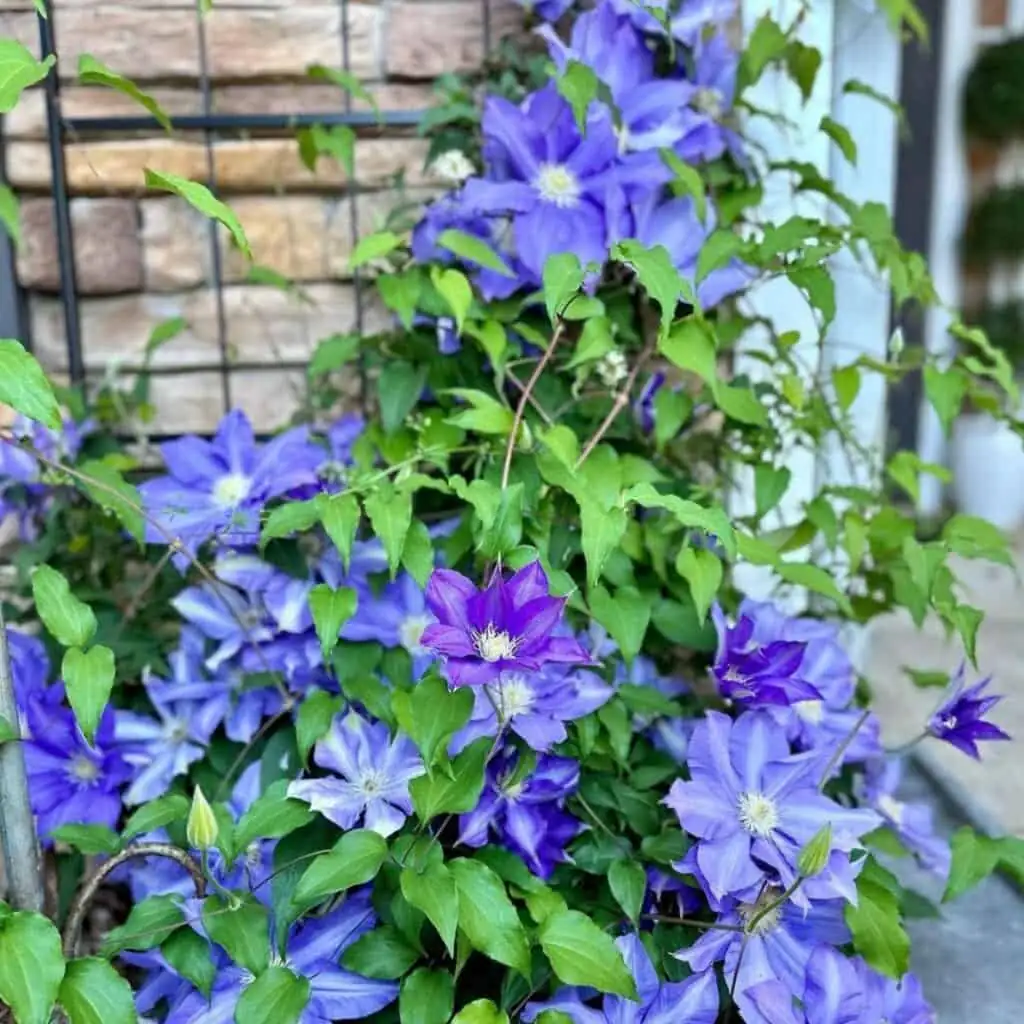
- ‘Jackmanii’ ignited a wave of crossing and selection that created the recognizable “large-flowered” clematis style—showy, saucer-like blooms on manageable climbers.
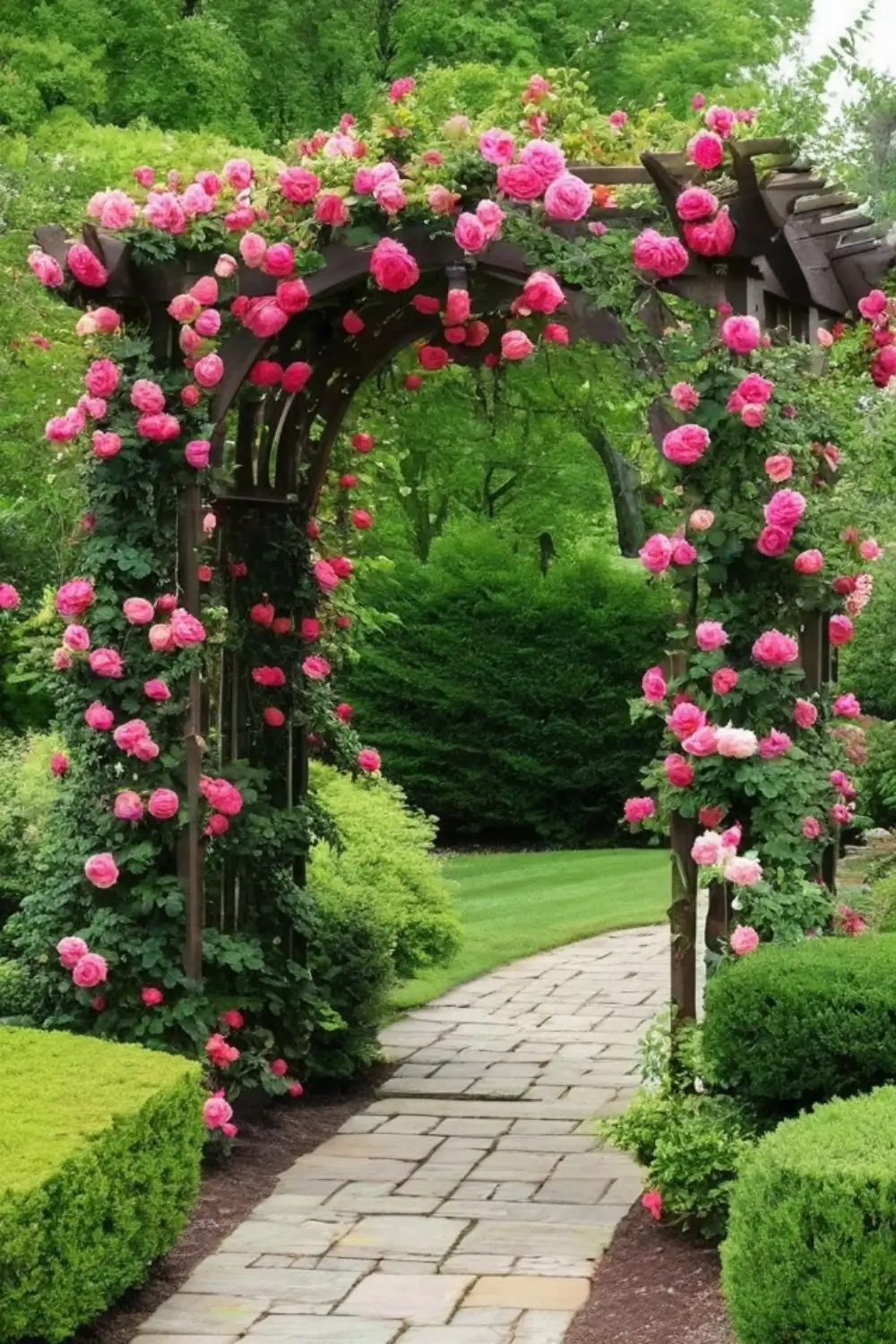
- From there, clematis reinvented itself for cottage gardens, rose arches, urban patios, and grand estates—where it was trained over walls, pergolas, and host shrubs for layered color.
Today, you’ll still find ‘Jackmanii’ on short lists of indispensable clematis—proof that a good plant can write its own century-spanning review.
How modern garden groups evolved (and why they matter)
As breeders and gardeners juggled species from China, Japan, Europe, and beyond, a practical, garden-facing classification emerged. These aren’t strict botanical ranks but useful horticultural “groups” that hint at bloom season, growth habit, and—crucially—how to prune.
- Atragene Group (early, often nodding bells): Includes forms derived from species like C. alpina and C. macropetala. Early spring bloom on old wood; delicate, ferny charm.
- Montana Group (vigorous spring cascades): Masses of scented, smallish flowers in spring; terrific for covering large supports. Prune lightly after bloom.
- Armandii Group (evergreen climbers from China): Glossy leaves, early spring bloom; less cold-hardy than many.
- Early Large-Flowered Group: Many descendants of East Asian parents (including C. patens and C. florida); late spring bloom on old wood with potential rebloom.
- Late Large-Flowered Group: Showy summer bloom mainly on new wood; many were shaped by the ‘Jackmanii’ era.
- Viticella Group (durable summer performers): Abundant, often smaller flowers in summer to fall; tough and forgiving.
- Integrifolia Group (herbaceous, non-climbing or lax): Great for weaving through borders or low supports; die back and return each year.
- Texensis Group (tulip- or bell-shaped flowers): North American flair meets hybrid vigor; summer into fall bloom.
These groups align with the three pruning rhythms that keep clematis effortless:
- Group 1 (spring bloomers on old wood): Minimal pruning—just tidy after flowering.
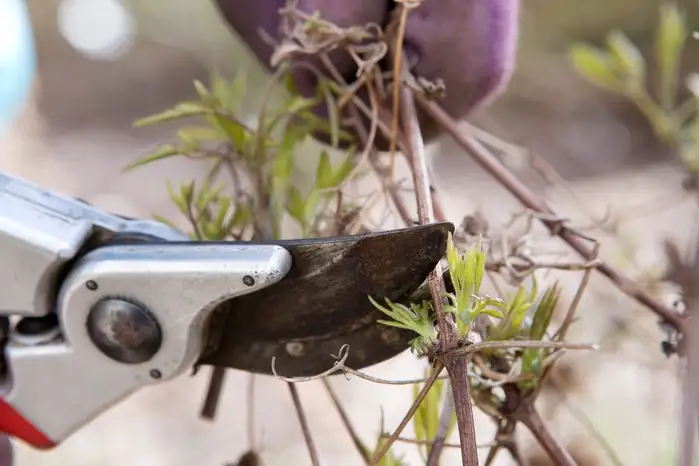
- Group 2 (large-flowered on old and new wood): Light trim in late winter/early spring; remove weak stems and shorten to strong buds.
- Group 3 (summer/fall on new wood): Hard prune in late winter/early spring to about 12–18 in (30–45 cm).
How clematis grows—and glows—in gardens
Think of clematis as a vine with a diva’s wardrobe but a craftsperson’s work ethic: give it structure and comfort, and it performs for months.
- Habit and size: Most garden clematis climb by twining leaf stalks, typically reaching 6–12 ft (1.8–3.7 m) with support; some stretch to 20–30 ft (6–9 m), while compact types stay 3–6 ft (0.9–1.8 m) and thrive in containers.
- Light: Bright light to full sun is best for abundance, with a gentle buffer from harsh afternoon summer sun—especially in pots.
- The golden rule: “Head in the sun, feet in the shade.” Keep the crown bright but cool the root zone with mulch, stones, or low companions.
- Soil and water: Rich, well-draining soil that holds moisture but never sits wet; steady watering (moist, not soggy); avoid drought.
- Hardiness: Many clematis handle USDA Zones 4–9, while some evergreen types prefer milder climates. Prolonged extreme heat stresses many varieties.
- Containers: Use a roomy pot with excellent drainage and a sturdy trellis. Shade the pot itself in summer; insulate in winter.
Pro tip: New shoots are surprisingly brittle. Tie in gently and often; it prevents those heartbreaking snaps.
A quick, confident care playbook
- Planting and feeding
- Plant slightly deeper than the nursery level to encourage strong resprouting if stems are damaged.
- Mix in compost at planting; feed in spring and early summer in-ground. In containers, feed every couple of weeks or use slow-release per label, shifting to a bloom-forward formula as buds form.
- Watering
- Water deeply when the top inch (2.5 cm) of soil begins to dry; never let pots sit in water. Increase in hot spells; reduce in winter so the rootball is just barely moist.
- Pruning by group
- Group 1: Tidy after bloom.
- Group 2: Light prune late winter/early spring; thin congested growth.
- Group 3: Cut back hard to 12–18 in (30–45 cm) late winter/early spring.
- Propagation
- Semi-ripe cuttings in late spring to summer root in 2–6 weeks under warm, airy conditions.
- Layering in early spring is simple and reliable.
- Seeds are slow and variable, often needing cold stratification.
- Health watch
- Clematis wilt (stems blacken and collapse) can strike fast—cut back to healthy tissue and the crown often resprouts.
- Ensure airflow to deter powdery mildew and gray mold; water at the base, not over leaves.
- Pests may include aphids, spider mites, slugs/snails, earwigs, and caterpillars—manage early with gentle, targeted methods.
- Safety
- Sap can irritate skin; ingestion can upset people and pets. Wear gloves if sensitive and keep out of nibblers’ reach.
The changing face of flowers: from bells to saucers to doubles
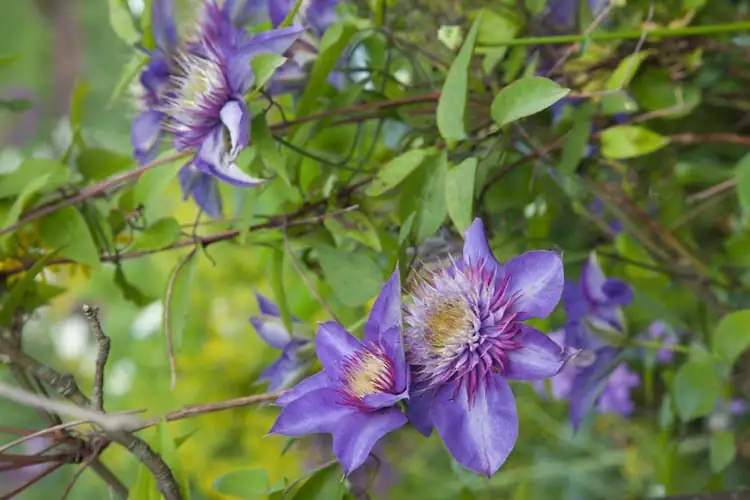
Clematis flowers can be demure bells or spectacular saucers over 10 in (25 cm) across. Doubles layer ruffles upon ruffles; others keep to clean, four- to six-sepal stars. Many lines bloom late spring into summer with a second flush, while others peak in summer through fall. With smart cultivar choice, you can choreograph a season-long relay—Atragene’s early bells, Montana’s May cascades, large-flowered June fireworks, and Viticella/Texensis color right into autumn.
Culture and meaning: what the “flower language” really says
Clematis has gathered symbolism that mirrors its habit and poise:
- Ingenuity, intelligence, and aspiration—apt for a plant that climbs with finesse rather than force.
- Purity and a “beautiful heart” are sometimes linked, with color nuances (white for purity, purple for dignity/admiration, pink for joyful admiration).
But a brief decoder is in order. The “language of flowers” bloomed in 19th‑century Europe, especially Victorian England, where handbooks assigned meanings for social signaling. It was playful, romantic, and never truly standardized; meanings varied by author and country. So take any single definition lightly—and enjoy the broader poetry of clematis as a symbol of elegant ascent and clever design.
A short timeline to walk under
- Ancient and early horticulture: East Asian gardeners select and cherish native species—the genetic wellspring of future hybrids.
- 18th–19th centuries: Chinese and Japanese clematis arrive in Europe. Nurserymen experiment; enthusiasm grows.
- 1862: ‘Jackmanii’ debuts and proves the perfect ambassador—rich color, summer bloom, good garden manners.
- Late 19th–20th centuries: The hybrid boom expands into early/late large-flowered strains, with parallel appreciation for vigorous Montana drapes, evergreen Armandii gloss, durable Viticella dazzlers, and herbaceous Integrifolia forms.
- Today: Practical horticultural groups guide pruning and placement; breeders continue to refine color, form, and disease resistance for gardens small and grand.
One last look up
Stand back and let your eyes climb. Whether you’re draping a pergola in May blossom, threading velvety stars through a rose, or coaxing a compact charmer up a balcony rail, clematis rewards a few simple courtesies—sunny heads, shaded feet, steady moisture, and the right haircut at the right time. The rest is theater: a centuries-long tale of vines and voyages, written in sepals, stamens, and skyward lines.