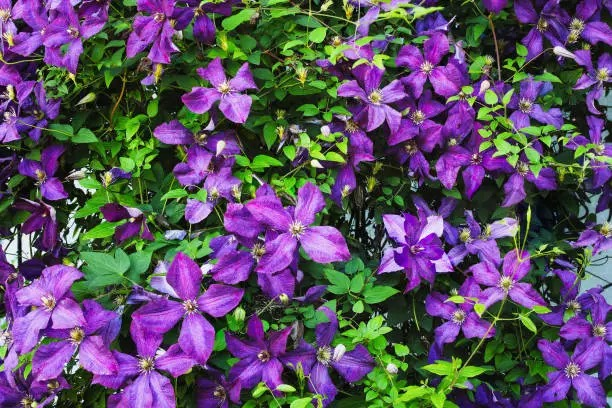
Clematis, the “Queen of Climbers,” can turn a trellis into a waterfall of bloom—until one day you find drooping stems, dusty leaves, or chewed petals. Don’t panic. With a quick read of the symptoms and a few fast moves, most plants bounce back beautifully. Here’s your rapid diagnostic guide for wilt, powdery mildew, Botrytis, aphids, spider mites, and slugs/earwigs—plus a simple IPM plan to get your vine glorious again.
The 60‑second clematis check: what to look for
- Clematis wilt (Phoma clematidina)
- Tell-tale: a previously healthy stem suddenly collapses; the stem or leaf stalk shows dark brown/black lesions. Leaves blacken, not just droop.
- Timing: often in warm, humid spells, commonly on large-flowered hybrids.
- Powdery mildew (Erysiphe)
- Tell-tale: white to gray “dust” on leaf surfaces; sometimes tiny black dots (fruiting bodies). Severe cases lead to leaf curl and slowdown, but rarely kill the plant.
- Timing: summer to fall; shaded, crowded plants at higher risk.
- Gray mold/Botrytis
- Tell-tale: fuzzy gray mold on petals, buds, or damaged leaves; buds brown and fail; outbreaks follow prolonged damp or poor airflow.
- Aphids
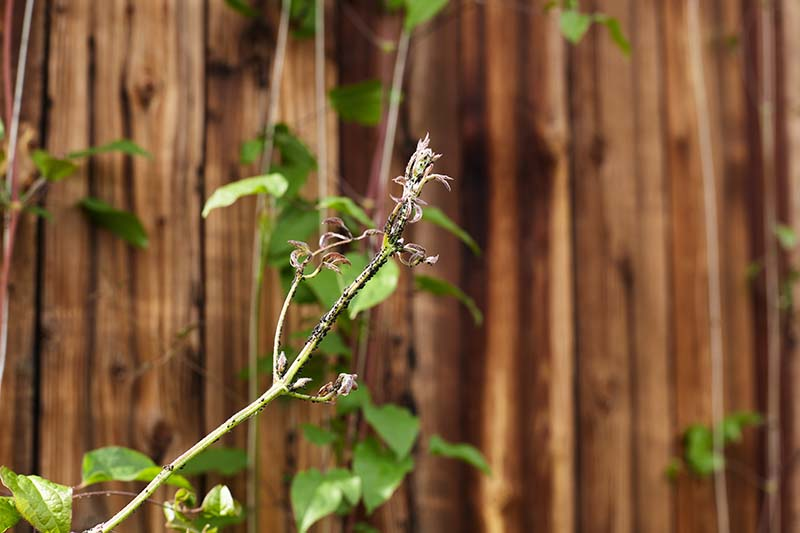
- Tell-tale: clusters on tender tips and buds; sticky honeydew and sooty mold; distorted new growth.
- Spider mites
- Tell-tale: fine stippling (pale speckling) on leaves, bronzing, and delicate webbing under leaves—worst in hot, dry spells.
- Slugs and earwigs
- Tell-tale: irregular holes and shredded petal edges overnight. Slugs leave silvery trails; earwigs often hide in flowers and chew at night.
Pro tip: True wilt shows blackened, cankered stems and fast collapse on one or a few shoots. Heat/drought “flagging” makes the whole plant droop midday but recover by evening after watering.
Immediate actions: same-day triage
- Cut to healthy tissue now
- For wilted or moldy stems, prune back into firm, green pith. Sometimes that means down to the crown. Bag and bin all debris; don’t compost.
- Clean pruners between cuts (70% alcohol or a 10% bleach dip).
- Water at the base only
- Keep soil evenly moist—never soggy. Soak thoroughly, then let the top inch dry before the next watering. Avoid wetting leaves and flowers.
- Improve airflow today
- Thin dense tangles; gently tie in stems to a sturdy support so they’re not rubbing.
- Move containers out of stagnant, muggy corners; give them bright light with afternoon shade in hot climates.
- Cool the roots, not the shoots
- Mulch 2–3 in (5–7.5 cm) to shade the root zone. Keep mulch off stems.
- Pause high-nitrogen feeding
- Until the plant is stable, avoid lush, sappy growth that invites pests and disease.
Targeted fixes by problem
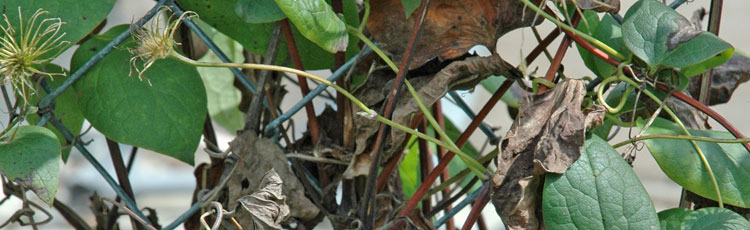
Clematis wilt (Phoma clematidina)
- Fast response
- Prune out every affected stem to clean, green tissue—often to ground level. Plants commonly resprout from below the soil line.
- Remove fallen leaves and spent petals from around the base.
- Culture that helps
- Water at the soil line; keep foliage dry.
- Keep roots cool and evenly moist; never waterlogged.
- Space for airflow; avoid cramped, shady corners.
- Many gardeners plant clematis a little deeper than it sat in the pot to encourage strong regrowth if stems are ever hit.
- Longer-term prevention
- Thin and train annually to prevent congestion.
- If wilt is chronic, consider more resistant small-flowered types (for example, some Viticella Group cultivars).
Powdery mildew (Erysiphe)
- Fast response
- Remove the most-dusted leaves and any leaf litter.
- Improve airflow immediately; avoid overhead watering.
- Follow-up
- Preventive sprays can help where mildew recurs: choose a product labeled for clematis and test first (some fungicides are phytotoxic).
- Reapply per label during risk periods. Cultural fixes (airflow, light, and steady—not soggy—moisture) remain your best defense.
Gray mold/Botrytis
- Fast response
- Snip off all fuzzy or mushy petals, buds, and leaves; clean up debris at the base.
- Increase light and ventilation; spread tied-in stems.
- Follow-up
- Keep blooms and foliage dry; water in the morning at the base.
- Avoid crowding with damp companions.
Aphids
- Fast response
- Pinch or wipe off clusters; hose tips in the morning with a sharp, targeted spray (allow foliage to dry quickly).
- Follow with insecticidal soap or horticultural oil, coating undersides of leaves and stems. Repeat in 5–7 days if needed.
- Follow-up
- Remove heavy ant activity (they farm aphids) by pruning ant bridges and using non-toxic ant barriers around pots.
Spider mites
- Fast response
- Early morning, blast leaf undersides to dislodge mites; repeat every few days while ensuring leaves dry rapidly afterward.
- Apply horticultural oil or insecticidal soap to leaf undersides; repeat as needed.
- Follow-up
- Reduce heat stress: bright light with afternoon shade in hot regions; keep roots moist but not waterlogged and avoid baking containers.
Slugs and earwigs
- Fast response
- Hand-pick at dusk/dawn. Use simple roll traps for earwigs (damp, rolled newspaper or corrugated cardboard) and remove in the morning.
- Deploy barriers around containers and young shoots (collars, tidy edges); keep mulch pulled slightly back from stems.
- Follow-up
- Nighttime patrols during wet spells; keep the area clear of dense, damp hiding spots.
A simple IPM plan to bounce back
- Weekly 3-minute check
- Scan tips, leaf undersides, and the base for spots, dusting, webbing, or chew marks. Catch problems small.
- Sanitation first
- Remove spent flowers and any fallen leaves; bin all infected material.
- Disinfect tools after pruning diseased stems.
- Smart watering
- Evenly moist soil/compost—never bone-dry, never soggy. Water when the top 1 in (2.5 cm) begins to dry, and always at the soil line.
- Keep containers draining freely; never let pots sit in saucers of water.
- Airflow and training
- Tie stems so they’re spaced and supported—clematis climbs with twining leaf stalks, and young stems snap easily.
- Thin congested growth yearly; remove a little density now if humidity is high.
- Nutrition and root comfort
- Feed during active growth but avoid excess nitrogen (it invites pests and reduces bloom quality). Emphasize bloom-friendly nutrition as buds form.
- Mulch to keep roots cool; shade the pot in summer if container-grown.
- Variety and placement
- Bright light to full sun for best bloom, with protection from harsh midday/afternoon summer sun—especially in containers.
- If wilt is a repeating issue, lean toward smaller-flowered, more tolerant groups and avoid tight, humid corners.
Timeline
- Today: Prune out disease, clean up, switch to base watering, improve airflow.
- 72 hours: Recheck for new lesions or pests; repeat soap/oil if needed.
- 30 days: Evaluate vigor and bud set; adjust feeding and training; thin any remaining congestion.
Keep the queen happy: culture that prevents most problems
- Head in the sun, feet in the shade: keep the vine bright and the root zone cool with mulch or low groundcovers.
- Moist but not soggy: clematis dislike drought and waterlogging. Excellent drainage is non-negotiable.
- Good airflow: especially in humid summers or when grown in containers, which can trap still, muggy air.
- Sturdy support and gentle hands: stems can be surprisingly brittle—tie in early and often.
- Prune by group: light tidy for early bloomers on old wood; light shaping for large-flowered rebloomers; hard prune to 12–18 in (30–45 cm) for summer/fall bloomers on new wood.
Safety note
Clematis contains irritant compounds; sap can cause skin irritation in sensitive people, and ingestion may upset pets or people. Wear gloves if you react to plant sap, and keep curious nibblers away.
A brief note on clematis “flower language”
In Victorian floriography, clematis symbolized mental beauty, ingenuity, and aspiration—spot-on for a climber that seems to think its way upward. Modern interpretations sometimes add purity or a “beautiful heart.” Treat these meanings as cultural poetry rather than botany; they’re a reminder to give your plant the conditions it “aspires” to—bright light, cool roots, steady moisture, and fresh air—and it will return the compliment with weeks of luminous bloom.
With quick diagnostics, clean cuts back to healthy tissue, base watering, and a little airflow magic, even a drama-prone clematis snaps back. Keep the routine simple, consistent, and breathable, and your Queen of Climbers will wear her crown again soon.