

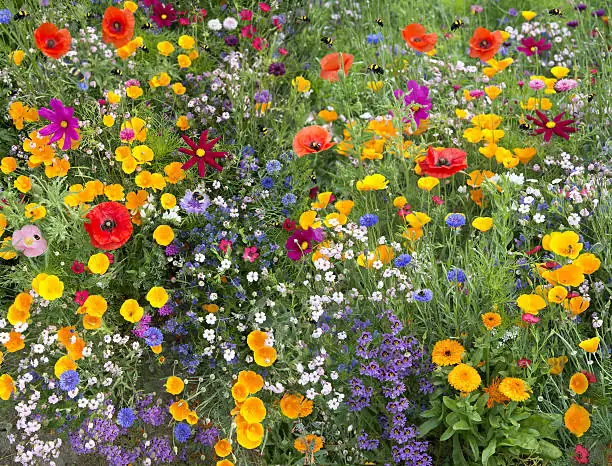
Imagine a sunlit border that never seems to run out of flowers, where bees and butterflies trace lazy figure-eights from spike to daisy and back again. That’s the magic of pairing Verbena officinalis (Common Vervain) with a modern palette of echinacea, salvia, yarrow, rudbeckia, gaura, and lavender. Designed well, this mix stretches the bloom season, layers vertical texture, and builds a reliable nectar buffet—all while looking effortlessly chic.
Meet Verbena officinalis (Common Vervain): the quiet star
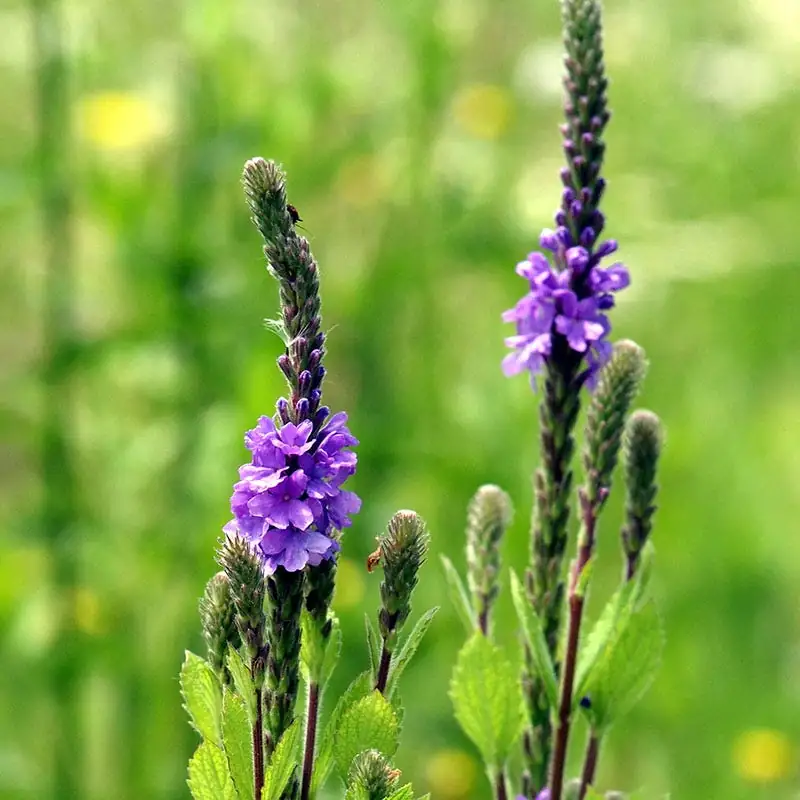
- Look: Airy, upright wands with tiny mauve to blue‑purple blossoms; square stems and toothed, sometimes lobed, dark-green leaves give a meadowy feel.
- Size: 30–120 cm tall (often around 70 cm in gardens), naturally light and see-through—perfect for threading between neighbors.
- Bloom: Late spring to early fall (often May–October), with a summer peak.
- Personality: Low-maintenance, pollinator-friendly, and adaptable in well-draining soil. It will self-seed politely when happy, keeping the look lively and natural.
- Best setting: Full sun (aim for 6–8 hours) and soils that don’t stay wet—vervain dislikes waterlogged winters.
Why vervain is the design-forward “connector” in mixed borders
- Extends your bloom window: Those slender spikes start early and linger late, bridging gaps between spring salvia and late-summer rudbeckia.
- Adds vertical texture without bulk: The fine, upright spires contrast beautifully with the broad daisies of echinacea and rudbeckia and the flat umbels of yarrow.
- Feeds pollinators consistently: Small, nectar-rich blooms support bees and butterflies through the season; pairing with long-flowering companions multiplies the food supply.
The perfect companions—and where to place them
Echinacea (coneflower)
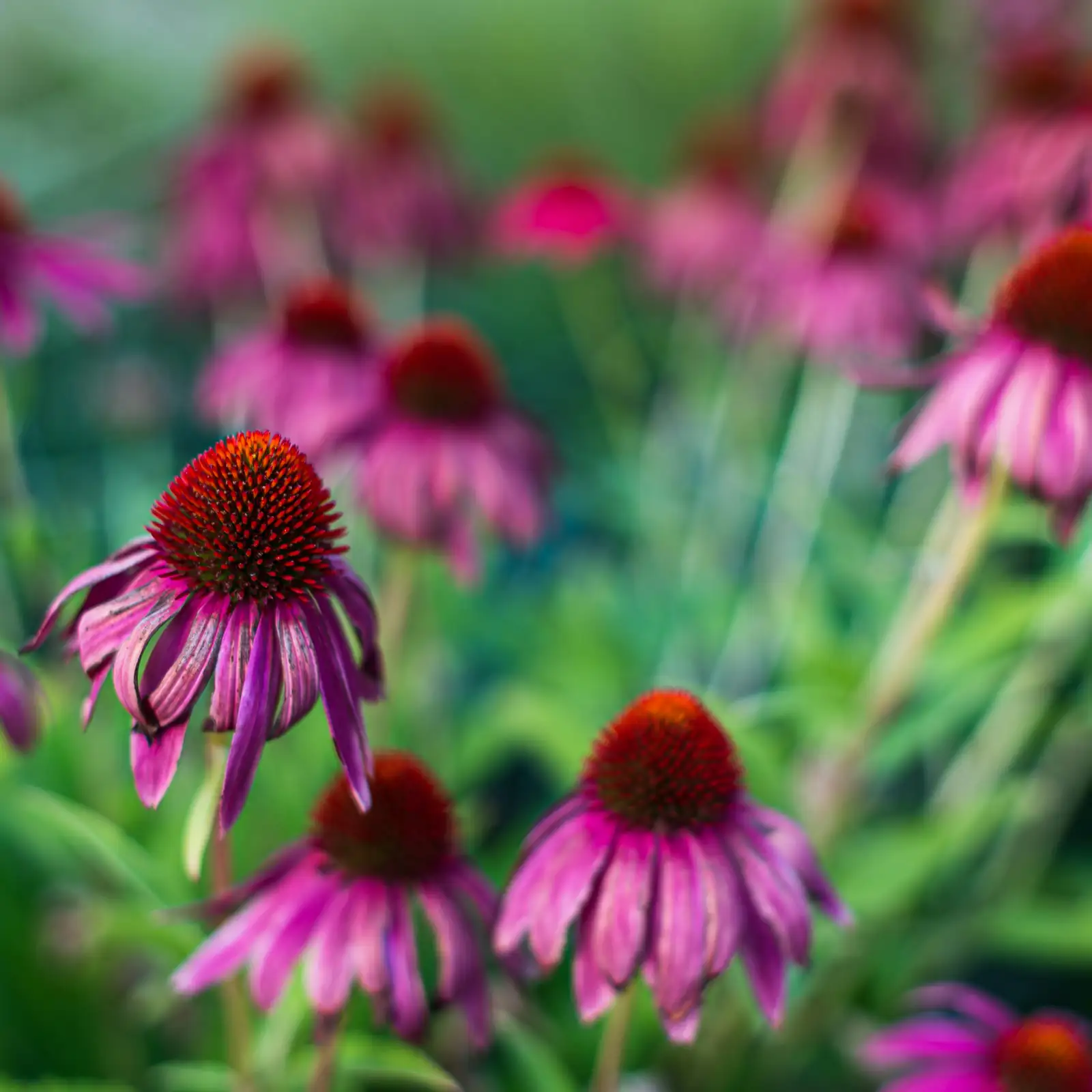
- Role: Bold, daisy-like anchors that give structure and saturated color mid- to late season.
- Design move: Tuck vervain in front and between echinacea clumps so its slender spikes “stitch” through the bigger blooms.
- Bloom timing: Mid–late summer; vervain fills in before and after.
- Spacing: Echinacea 40–50 cm apart; vervain 30–40 cm, interwoven.
- Palette ideas: Mauve-blue vervain with pink or white coneflowers for a cool-modern scheme; add a few orange cultivars near rudbeckia for a warm pivot.
Salvia (ornamental sage)
- Role: Early-to-mid-season spires that can rebloom with deadheading—great color echoes for vervain’s verticals.
- Design move: Create rhythm by alternating salvia and vervain along a path; their upright forms read like a dotted line.
- Bloom timing: Late spring into summer; responds to shearing for repeats.
- Spacing: 30–40 cm; run vervain just behind or amid to avoid a “flat” line of color.
- Palette ideas: Deep indigo salvia intensifies vervain’s lilac tones; silver-leaved salvias add luminous foliage.
Yarrow (Achillea)
- Role: Flat-topped umbels and ferny foliage—essential horizontal counterpoint to vervain’s spikes.
- Design move: Use yarrow as a “tabletop” that the vervain threads through; this silhouette layering adds professional polish.
- Bloom timing: Early to mid-summer, often continuing with deadheading.
- Spacing: 35–45 cm; weave vervain in loose triangles among yarrow clumps.
- Palette ideas: Soft apricots or pale yellows keep the mood airy; bold reds punch up a prairie-inspired mix.
Rudbeckia (black-eyed Susan)
- Role: Late-summer glow and strong daisy centers—ideal for energy at the season’s crest.
- Design move: Let rudbeckia form sunny drifts; vervain rises lightly at their edges to blur transitions.
- Bloom timing: Mid- to late summer into early fall.
- Spacing: 35–45 cm; interplant vervain where you want movement and depth.
- Palette ideas: Golden rudbeckia with mauve-blue vervain is a classic complementary pairing.
Gaura (wandflower)
- Role: Airy, dancing wands that echo vervain’s lightness—instant movement in the slightest breeze.
- Design move: Pair gaura and vervain in the middle ground to create a “veil” effect that unifies the bed.
- Bloom timing: Late spring to frost in many climates.
- Spacing: 40–50 cm; allow breathing room for the wands to sway.
- Palette ideas: White gaura brightens dusky purples; pink gaura leans romantic.
Lavender (Lavandula)

- Role: Fragrant edging and silver foliage that cools and clarifies the composition.
- Design move: Use lavender as a low, cohesive border; tuck vervain a step behind so spikes rise over the soft silver.
- Bloom timing: Typically early to mid-summer; vervain bridges before and after.
- Spacing: 30–45 cm for lavender; 30–40 cm for vervain behind the line.
- Palette ideas: Monochrome lavender-purple layers feel serene and timeless.
A layered planting plan (3 m x 1.2 m sunny bed)

- Back/middle:
- 5 echinacea in a loose zigzag (40–50 cm apart)
- 5 rudbeckia filling sunny gaps between echinacea
- Middle “veil”:
- 7–9 vervain scattered in triangles (30–40 cm apart)
- 5 gaura interspersed for movement
- Foreground/edge:
- A lavender ribbon (7–9 plants, 35–40 cm apart)
- 5 salvia sprinkled just behind lavender
- Punctuate with 3–5 yarrow clumps mid-front to create “tabletops” for the vervain to pierce
Result: A cohesive block of color and motion from May into October, with layered forms—spires, daisies, and flat umbels—that look intentional, not accidental.
Bloom calendar at a glance
- May–June: Salvia, lavender, yarrow wake up the border; vervain begins.
- July–August: Vervain peaks; echinacea and rudbeckia blaze; gaura floats through.
- September–October: Vervain and gaura keep feeding pollinators as rudbeckia trails off; yarrow may encore with deadheading.
Site, soil, and care synergy
- Sun: Full sun is best—6–8 hours keeps spikes strong and flowering steady.
- Soil: Well-draining, moderately fertile ground. Vervain is content in slightly acidic to neutral pH (about 5.8–7.2) and often thrives in limey soils.
- Water: Keep evenly moist while establishing; thereafter about 1.3–2.5 cm (0.5–1 in) per week in the growing season, adjusted for heat and rainfall. Let the top layer dry slightly between waterings; avoid soggy soil.
- Feeding: Light touch—balanced, slow‑release fertilizer in spring (optional light top-up mid-summer) or a blanket of compost at planting.
- Pruning: Deadhead vervain to prolong bloom; shear salvia after first flush; trim lanky growth lightly in season. Cut back vervain by about one‑third in late winter/early spring to encourage fresh, bushier regrowth.
- Wintering: Vervain is often perennial in warmer temperate zones and can be short-lived where winters are cold or soils stay wet. Ensure drainage; mulch lightly in colder regions without burying crowns.
Managing self-seeding and longevity
- Expect individual vervain plants to be short-lived (often 2–3 years), but self-sown seedlings will refresh the stand.
- To keep things tidy, deadhead most spent spikes; to naturalize, allow a few to set seed near gaps.
Containers and small-space riffs
- Vervain grows well in roomy containers with excellent drainage. Combine with compact lavender or low salvia and a single echinacea for height.
- Water container plantings more frequently in summer and avoid overhead watering late in the day.
- Refresh potting mix in spring; repot when rootbound.
Pests, diseases, and prevention by design
- Possible visitors: Aphids, spider mites, whiteflies, thrips, scale, leafminers.
- Controls: Strong water sprays, insecticidal soap, or neem as needed.
- Fungal risks: Powdery mildew or botrytis in still, humid conditions.
- Prevention: Generous spacing for airflow, full sun, and watering at soil level. Avoid waterlogging to prevent root rot.
Safety note
- Ornamentally low-risk. Traditional medicinal use exists, but avoid internal use during pregnancy.
- With pets, sensitivity varies across “verbena” species—discourage chewing and consult a vet if ingestion occurs.
Folklore, symbolism, and designing with meaning
- Associations: Peace, protection, loyalty, trust, justice; in Victorian flower language it could whisper “pray for me” or “you have bewitched me.”
- Origins: These meanings arise from centuries of ritual and folklore—Ancient Egyptians linked vervain with Isis; Romans with Venus; medieval Europe used it as a protective charm.
- Design cue: Use vervain as a gentle “protective” edge around seating or paths, or pair with white gaura and pale yarrow for a tranquil, contemplative palette that nods to its storied past.
Buying checklist
- Choose plants with fresh, deep-green foliage and firm, square stems.
- Avoid yellowing leaves, webbing, sticky residue, or powdery coatings on foliage.
- Check pot bottoms for healthy, non-mushy roots.
Propagation made easy
- Seed: Sow in spring after last frost, or start indoors 8–10 weeks prior.
- Cuttings: Take 10–15 cm softwood cuttings in late spring/early summer.
- Division: Split mature clumps in early spring or fall to renew vigor and fill gaps.
Three designer moves to elevate your vervain mix
- Repeat forms: Echo verticals (vervain + salvia) at intervals to create rhythm.
- Counterpoint: Set spikes against yarrow’s flat “plates” and echinacea’s bold disks for sculptural contrast.
- Shoulder seasons: Use lavender and salvia to open the show; let gaura and vervain close it—your border stays alive for months.
Threadlike spires, generous nectar, and a palette that glows from May to October—Verbena officinalis ties the whole composition together. Plant it once with the right cast, and you’ll wonder how your border ever held a tune without it.


