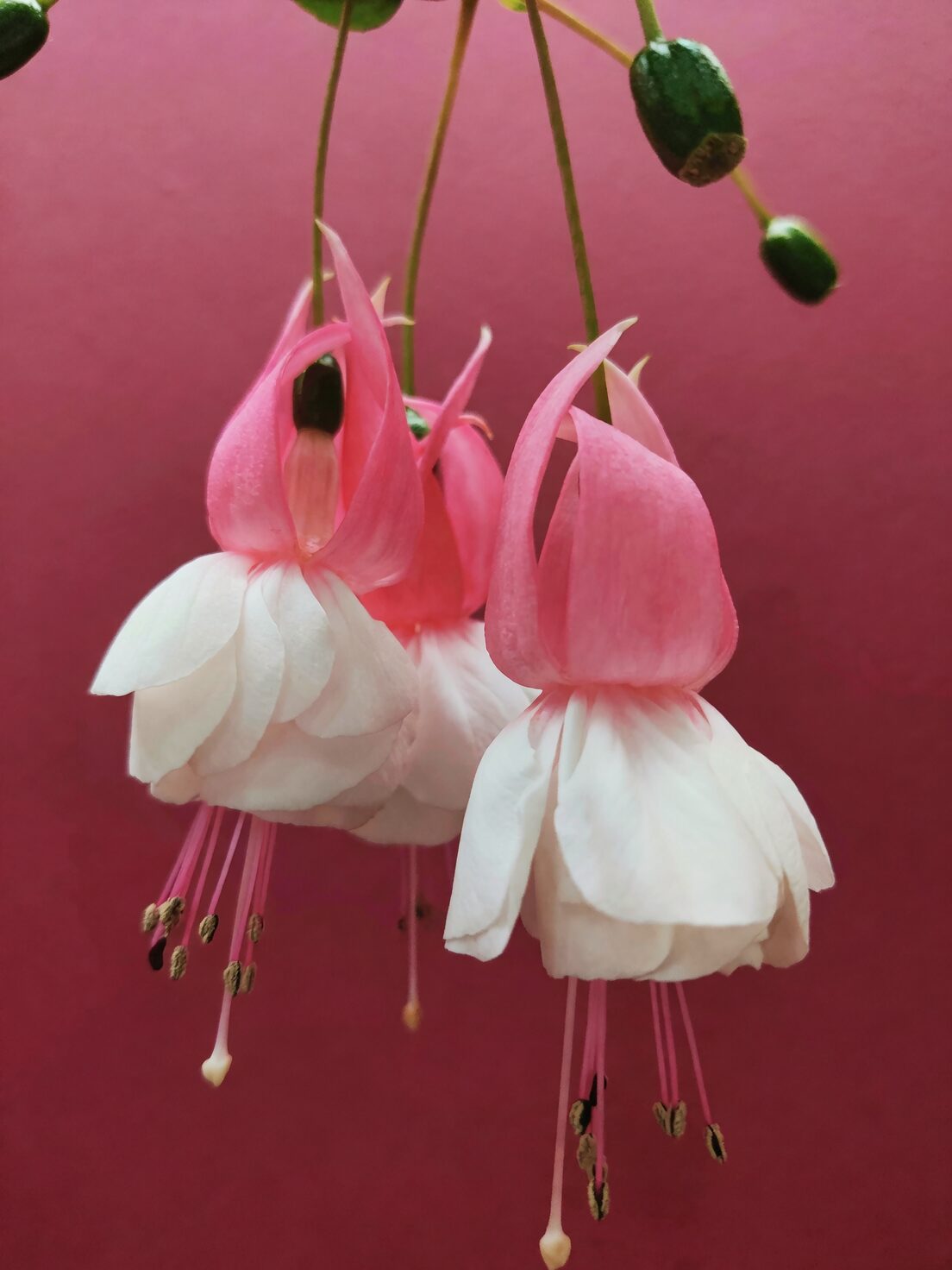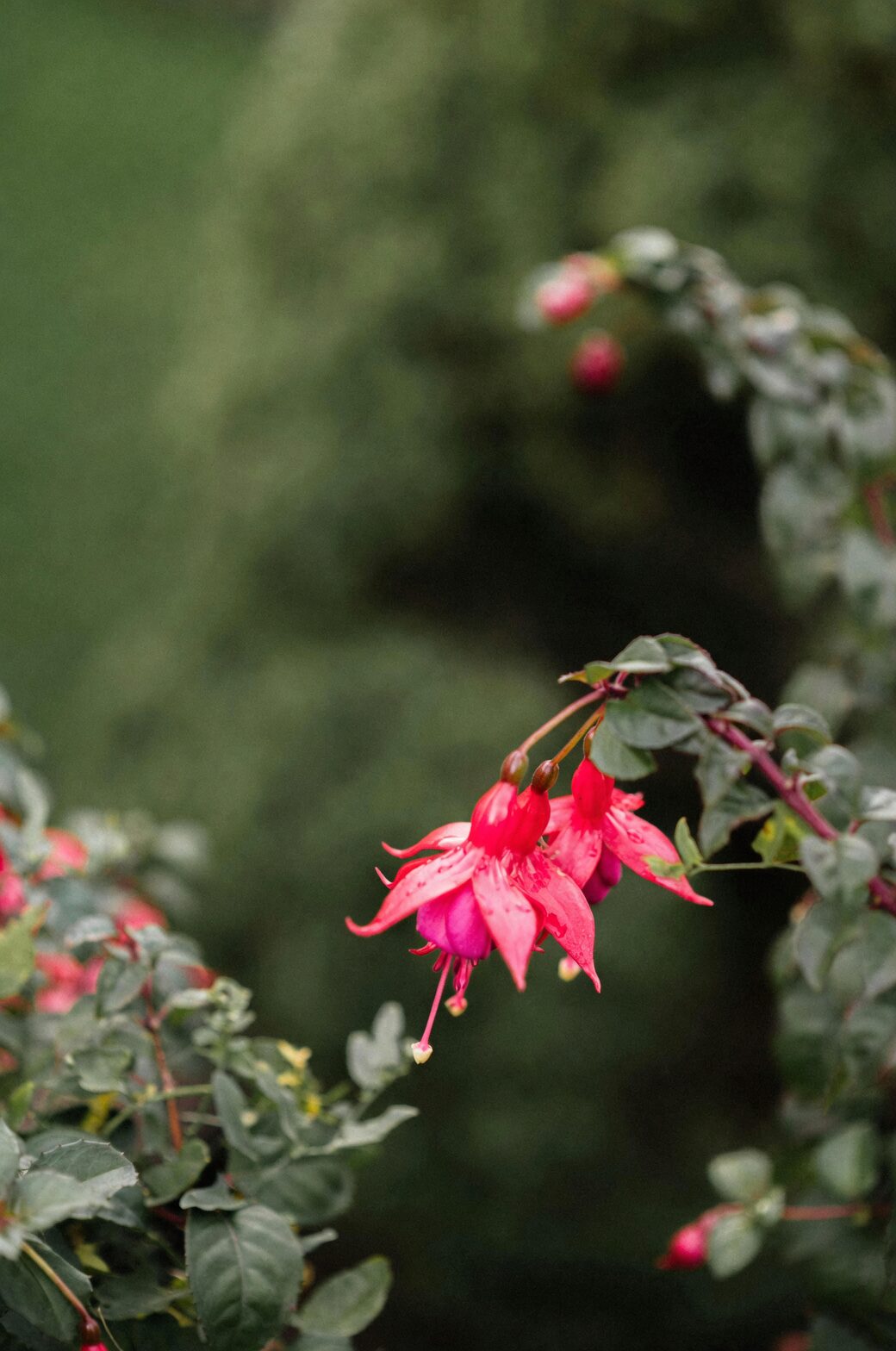


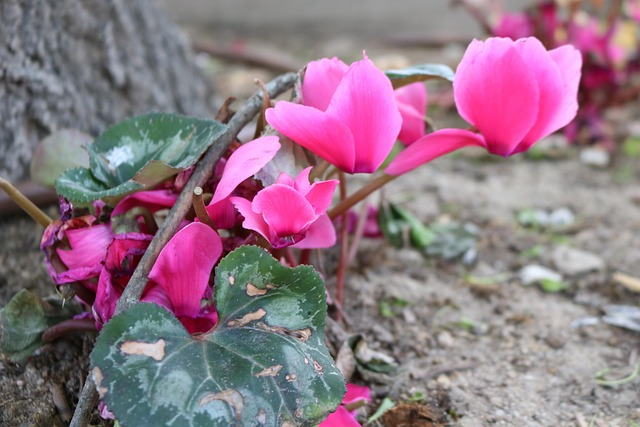
Cyclamen persicum brings winter butterflies to your windowsill: elegant, upswept petals floating above a mound of silver-marbled, heart-shaped leaves. It’s cool-loving, compact, and wonderfully long-blooming when much of the houseplant world is resting. If you share your home with curious pets, you can still enjoy this classic—safely—by understanding what’s toxic, where to place it, and how to respond calmly if there’s a nibble.
Meet your plant, briefly
- Also known as Cyclamen, Florist’s Cyclamen, Persian Cyclamen, Persian Violet, and Sowbread
- A tuberous perennial from Mediterranean regions
- Best indoors as a cool-season bloomer (typically November to March), with flowers in white, pink, red, and purple
- Likes bright, indirect light; cool days (60–70°F/15–21°C) and cooler nights (40–50°F/4–10°C)
Is Cyclamen toxic?
Yes—Cyclamen is toxic to pets and people. The whole plant contains irritating compounds called terpenoid saponins, with the highest concentration in the tuber (the rounded, underground storage organ). Ingestion can cause gastrointestinal upset; larger amounts are more dangerous, especially for animals.
Good news: you can prevent almost all issues with smart placement and basic precautions.
What pets might experience if they chew Cyclamen
Severity depends on how much and which part was eaten.
Common, usually mild signs (more likely after a small leaf or petal nibble):
- Drooling
- Vomiting
- Diarrhea
Serious signs (much more likely after chewing or digging up the tuber):
- Abnormal heart rhythm
- Seizures
- Collapse, in extreme cases
Cats and dogs are both at risk; dogs that like to dig in pots are the most likely to reach the tuber.
Calm, clear steps if your pet nibbles
- Gently remove any plant material from their mouth and offer fresh water.
- Check the pot: did they just nip a leaf or actually uproot the plant/tuber?
- Call your veterinarian or an animal poison control service for tailored advice.
- ASPCA Animal Poison Control Center (U.S.): 888-426-4435
- Do not induce vomiting unless a professional instructs you to do so.
- Monitor closely for 6–8 hours (longer if a tuber may be involved). Save the plant label or snap a photo to share with the vet.
With prompt guidance, most pets recover well—especially after small, above-ground nibbles.
Pet-safe placement that also keeps Cyclamen happy
Cyclamen thrives in bright, indirect light and cool, even temperatures—away from heat vents and hot, direct midday sun. Use that to your advantage when pet-proofing.
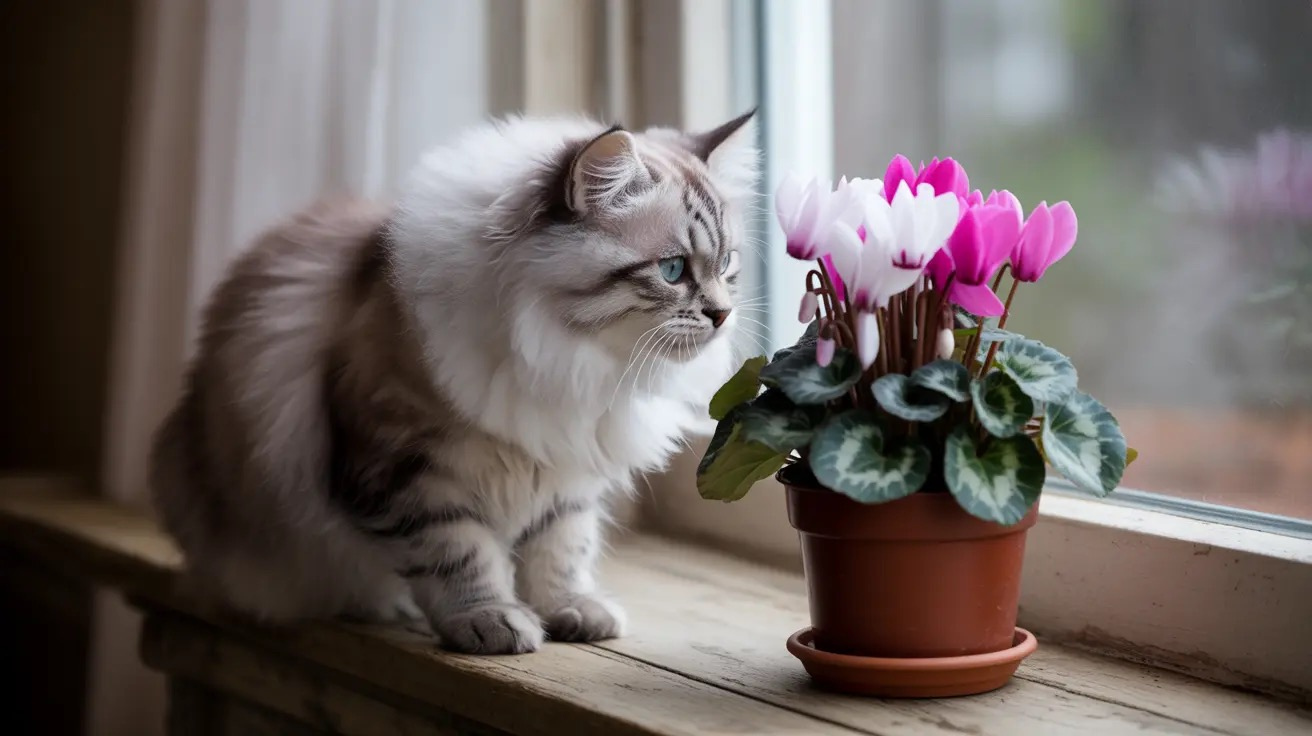
Where to place it
- High and bright:
- Sturdy shelves in a cool room (north- or east-facing windows are ideal)
- Inside a ventilated glass-front cabinet or display case that stays cool
- On a desk or dresser in a door-closed office or guest room
- Avoid:
- Warm, sunny south windows with hot direct sun
- Heater tops, radiators, or stuffy rooms (shortens bloom and invites rot)
- Low coffee tables or plant stands in high-traffic pet zones
Simple barriers that don’t stress the plant
- Use a heavy cachepot (decorative overpot) that makes tipping difficult; keep the nursery pot inside so drainage remains perfect.
- Add a ring of coarse, chunky gravel or decorative stones on top of the soil around—but not over—the crown. This makes digging less tempting while keeping the top of the tuber dry and exposed (important to reduce rot).
- Bottom-water: set the pot in a shallow tray of water for a few minutes, then drain thoroughly. Keeping the crown dry helps the plant and avoids splashy drama that can attract pets.
- For enthusiastic climbers, pair placement with pet training and enrichment (cat shelves, scratchers, puzzle feeders) to redirect curiosity.
Household notes
- During repotting or cleanup, supervise closely. Wash hands afterward and keep spent stems, leaves, and especially any broken tuber fragments out of reach.
- If displaying multiple holiday plants, give Cyclamen its own cool perch—far from pet beds, play areas, and feeding stations.
How much is “too much”?
- Tiny taste of a leaf or flower: often limited to drooling or a single vomit episode—call your vet for guidance and monitor.
- Multiple bites or any access to the tuber: treat as urgent. Call your vet or poison control immediately and follow their instructions.
Quick Cyclamen care that supports safety
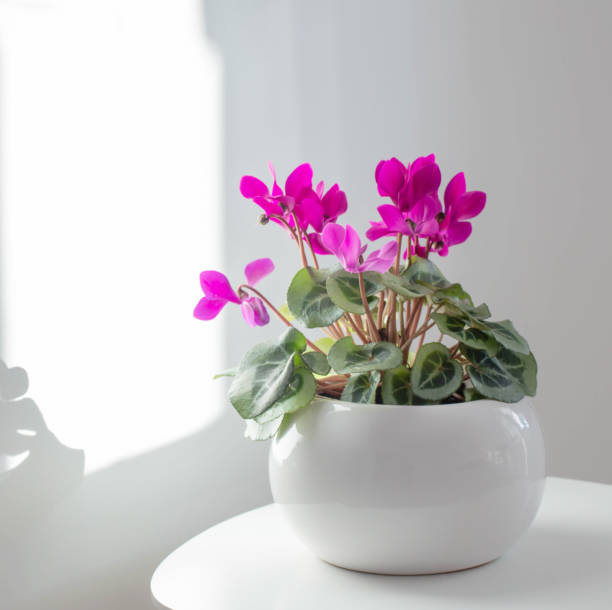
- Light: Bright, indirect; sheer-curtained windows are perfect.
- Temperature: Cool days (60–70°F/15–21°C), cooler nights (40–50°F/4–10°C). Heat shortens bloom and stresses the plant.
- Watering: When the top 1 inch (2–3 cm) feels dry. Bottom-water, then drain. Keep the crown (top of the tuber) dry.
- Humidity: Moderate to high is welcome, but ensure good air movement. A pebble tray boosts humidity without wetting foliage.
- Clean-up: Twist and gently pull spent flower stems and yellowing leaves from the base to prevent rot.
These same habits—cool, bright, crown-dry—also mean less mess and fewer pet temptations.
When to seek emergency care
Contact a vet or poison control immediately if you notice:
- Repeated vomiting or diarrhea
- Lethargy, tremors, or seizures
- Collapse or signs of heart rhythm changes
- Evidence that the tuber was chewed or uprooted
Bring a photo of the plant and estimate of how much was eaten. Early care improves outcomes.
Safe plant swaps if your pet is too curious
If you love winter blooms but your pet can’t resist your Cyclamen:
- Try non-toxic options for similar vibes and seasons, such as African violet (a different “violet” entirely) for soft blossoms on a compact plant.
- Mix in pet-safe foliage plants on lower shelves and keep Cyclamen higher up for seasonal color.
A gentle note on symbolism (flower language)
Cyclamen has a long cultural life around the Mediterranean. Its heart-shaped leaves and nodding, reflexed petals have been linked to sincere affection, devotion, and sometimes tender goodbyes. Like most flower language, these meanings grew from folklore, religion, and poetic tradition rather than botany. They’re lovely stories to accompany your plant through winter—just remember the real “message” your Cyclamen communicates is practical: keep me cool, bright, and out of paw’s reach.
Bottom line
- Cyclamen is toxic, especially the tuber, but you can still enjoy its winter show with thoughtful placement and a few barriers.
- Most small nibbles lead to mild tummy upset; tuber ingestion is the real concern and calls for swift veterinary guidance.
- Keep it cool, bright, and crown-dry—for a long, safe season of butterfly-like blooms.
Keep this number handy: ASPCA Animal Poison Control Center (U.S.): 888-426-4435. And keep your Cyclamen’s magic on the mantel, not on the menu.