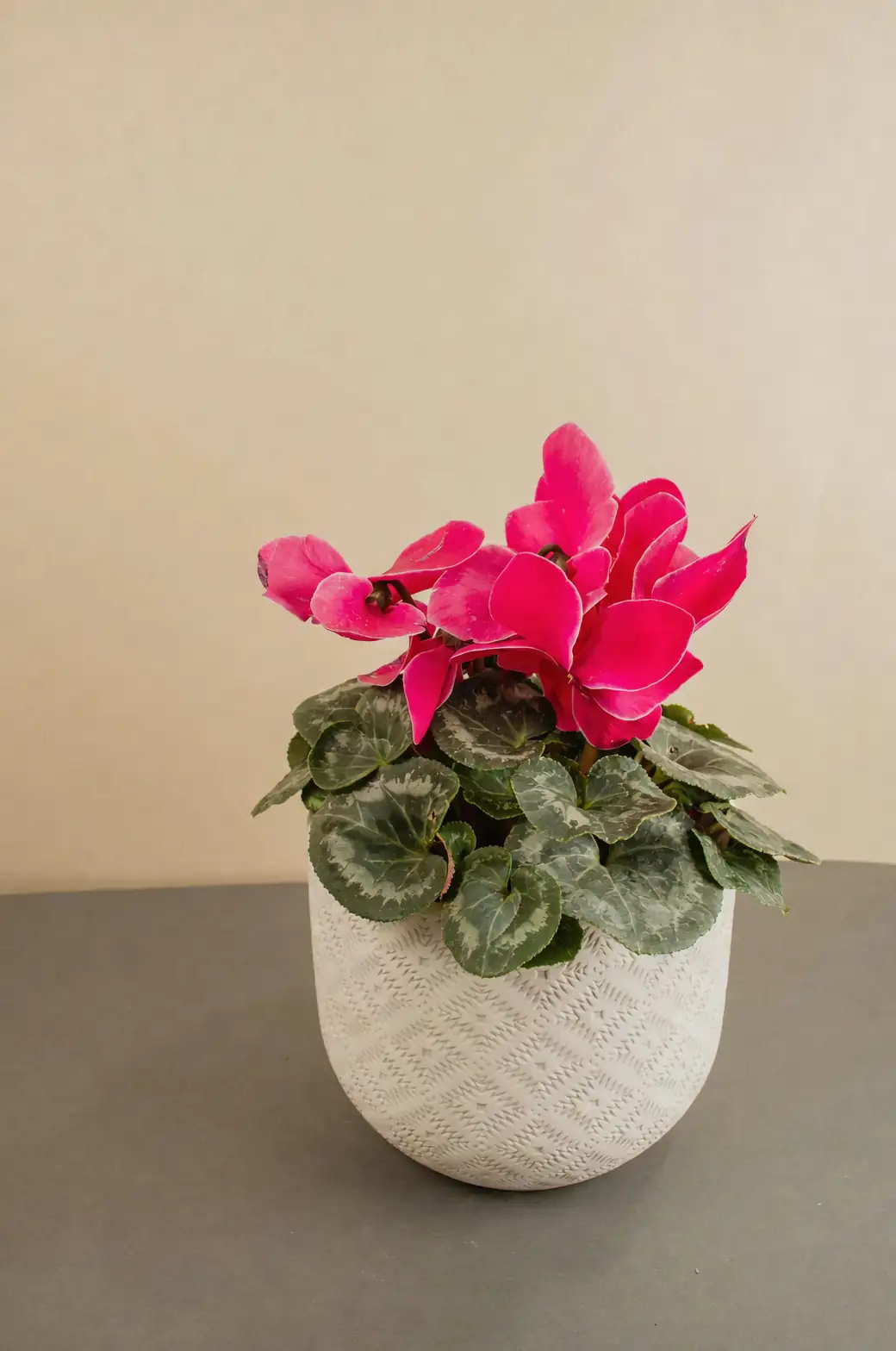
If winter ever needed a mascot, Cyclamen persicum would show up in a cape. Those heart-shaped leaves marbled in silver and the little “butterfly” flowers that flip their petals backward? Pure cheer when the rest of the plant world is snoozing. If you’re the type who wants to geek out on doing things from scratch—seed to bloom—this is your hands-on, practical course. We’ll cover how to choose and prep seed, the science of darkness for germination, a clear timeline from sowing to first flowers, and why slicing up that tuber is a last-resort move.
Meet Cyclamen persicum in 60 seconds
- Identity: Cyclamen persicum (a tuberous perennial in the Primulaceae family), also called Florist’s Cyclamen, Persian Cyclamen, Persian Violet, or Sowbread.
- Origin: Mediterranean regions including Greece, Syria, Lebanon, and nearby areas.
- Look: Compact mounds about 15–23 cm tall and wide, with heart-shaped, silver-marbled leaves. Slim stems carry reflexed-petal blooms in white, pink, red, or purple.
- Season: A cool-season star—typically flowers from fall through spring, with a peak mid-winter.
- Habit: Grows from a flattened, rounded tuber; after flowering, it naturally shifts toward a rest (dormant) phase.
Seed selection and prep: where success actually starts
Light and temperature matter later—but seed quality is your first gate.
How to tell when seed is ripe (for home harvesters)
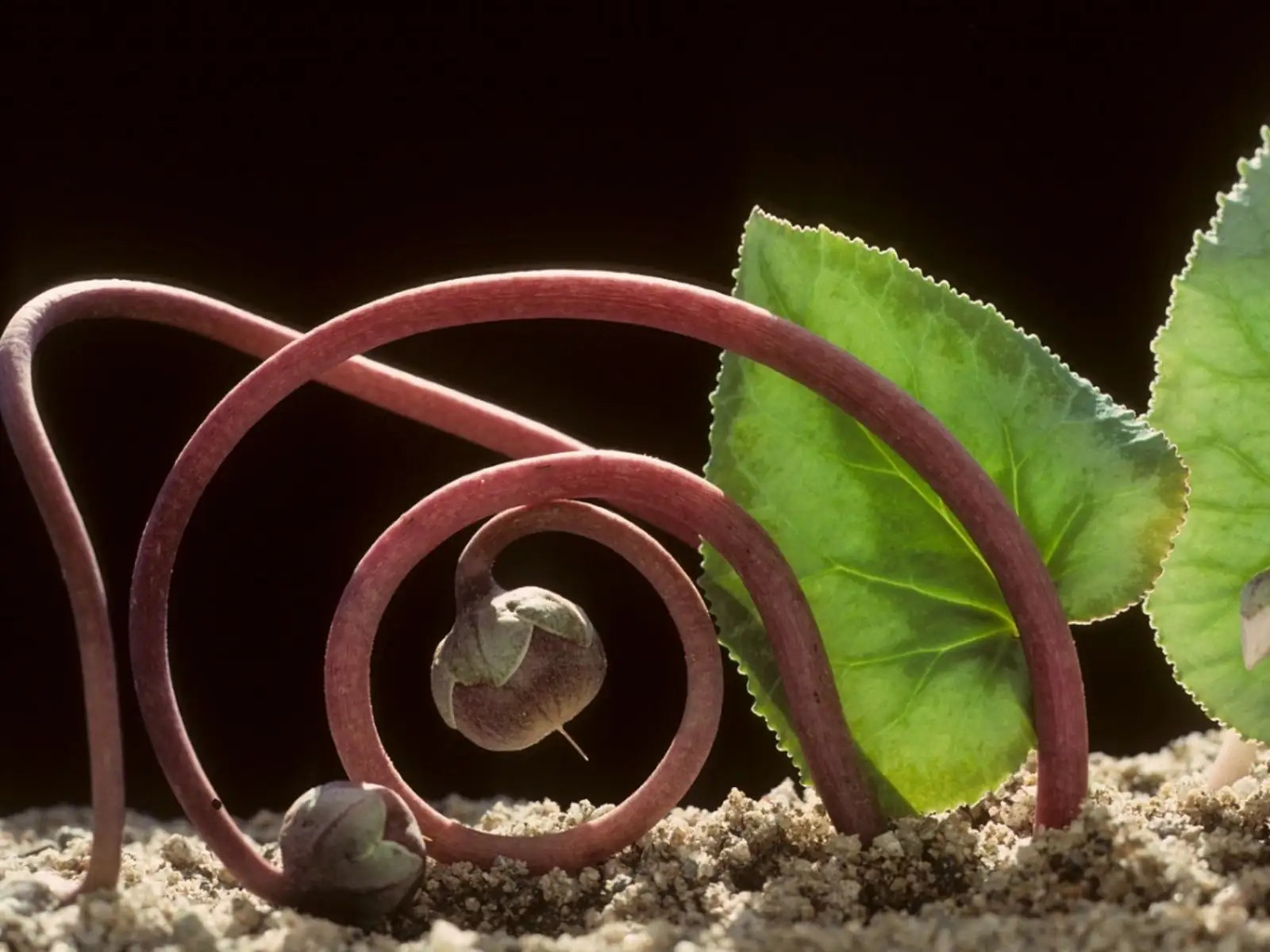
- Cyclamen flowers fade; then stems often curl and pull seed pods toward the soil.
- Pods are ready when the end where the style was just begins to peel and the pod feels slightly soft.
- Seeds are pale brown and sticky at first—ants love that sticky coating in nature and help disperse them.
- If not sowing immediately, let the seeds dry; store labeled in paper (not plastic unless bone-dry) to avoid mold.
Freshness counts
- Sowing immediately after ripening (often July–August in the Northern Hemisphere) gives best viability.
- Stored seed can still perform, but aim to sow by late summer to early fall for more uniform germination.
- Buying seed? Choose reputable suppliers, look for the most recent harvest, and avoid anything of uncertain age.
Pro tip: pre-soak seeds
- Soak in cool to tepid water for about 24 hours before sowing.
- Add a tiny drop of mild dish soap as a wetting agent—this breaks surface tension so seeds truly hydrate.
- Drain on a paper towel briefly before sowing.
Darkness for germination: the why and the how
Cyclamen persicum is classic “dark germinator.” Light can inhibit its germination through the phytochrome system—think of it as seeds reading their environment and “deciding” it’s safer to sprout in darkness under a protective layer of soil.
The setup
- Medium: A rich but very free-draining, slightly acidic mix (e.g., fine-textured seed mix with added perlite). Sterile is better to limit damping-off.
- Temperature: Cool is key—about 15–18°C (59–64°F). Warmer (>20°C / 68°F) often slows or patches germination.
- Sowing depth: Cover seeds by roughly 5–10 mm (¼–⅜ in) of fine mix or sifted medium to exclude light.
- Blackout: After watering in, cover the tray with an opaque lid, black plastic, or place it in a consistently dark spot. Check moisture weekly.
Watering during germination
- Keep evenly moist but never soggy. Bottom-watering helps maintain moisture without splashing the surface.
- Good air around the container matters; stagnant, humid air + warmth = fungal trouble.
Germination window
- Typical emergence: about 3–5 weeks (often in the 20–30 day range), but can be erratic.
- Don’t give up early—some seeds pop later, especially if temps fluctuated.
Once you see the seedling “hooks” breaking the surface, move the tray to bright, indirect light and remove any blackout cover.
Step-by-step sowing protocol
- Soak seeds 24 hours with a drop of dish soap.
- Fill a clean tray or small pots with sterile, free-draining seed mix; pre-moisten evenly.
- Sow seeds 1–2 cm apart; cover 5–10 mm with fine medium.
- Label with species, source, and date.
- Black out for darkness; maintain 15–18°C.
- Bottom-water as needed; avoid waterlogged media.
- When sprouts appear, shift to bright, indirect light, still cool, and continue bottom-watering.
Pricking out and potting-on
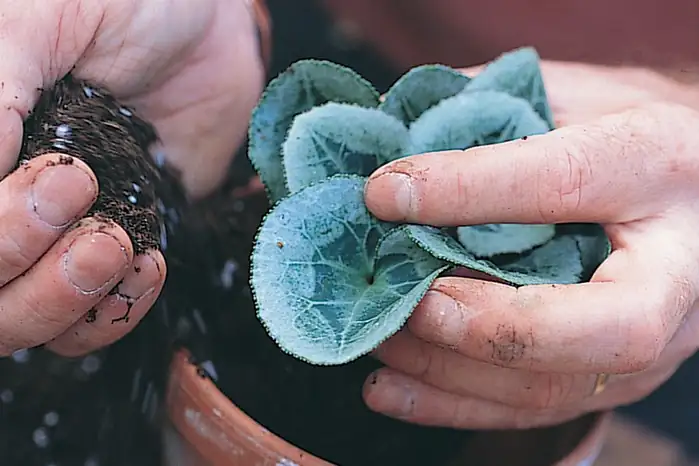
- First transplant: When seedlings have 1–2 true leaves and a visible nub of tuber forming.
- Handle by the leaves (not the stem). Place so the top of the tiny tuber sits just at or slightly above the surface—this helps prevent rot at the crown.
- Potting mix: Similar to the adult recipe—rich but fast-draining. Good airflow is your friend.
- Feeding: Begin a diluted liquid feed every 2–3 weeks during active leafy growth. Pause feeding at peak bloom and during dormancy.
The geek timeline: sow-to-bloom calendar (Northern Hemisphere)
- Late Aug–Sep: Sow in darkness at 15–18°C. Germination typically 3–5 weeks.
- Oct–Nov: Seedlings develop first true leaves. Shift to bright, indirect light; keep cool. Begin light feeding.
- Dec–Mar: Steady vegetative growth and tuber sizing. Maintain cool days (~15–21°C) and cooler nights (4–10°C). Even moisture; bottom-water.
- Apr–Jun: Rising warmth can slow growth. Keep them cool and airy; water carefully to avoid rot.
- Jul–Aug (first summer): Juveniles may lightly rest if heat is high. Water sparingly—don’t let tubers shrivel. This is also a good window to repot if needed; keep the top third of the tuber slightly exposed above the mix.
- Sep–Winter (Year 2): New leaves push strongly; buds may form in late fall. First flowers often appear in late fall to winter. Real-world home timeline: roughly 10–15 months from sowing to first bloom (faster under optimized, consistently cool conditions).
Watering strategy that keeps tubers happy
- During active growth and bloom: Water when the top 2–3 cm (about 1 inch) feels dry. Bottom-watering is strongly recommended so the tuber top stays dry.
- During dormancy: Water sparingly—just enough to prevent shriveling.
- Always let excess drain; never let pots sit in water for long periods.
Light, temperature, and placement once growing
- Light: Bright, indirect light. Avoid hot direct sun that scorches leaves.
- Temperature: Cyclamen loves cool—about 15–21°C days and 4–10°C nights. It struggles in sustained warmth, especially above ~20°C.
- Humidity: Moderate to high (50%+), with good air movement to deter botrytis and mites.
Why tuber division is risky (and often not worth it)
Dividing Cyclamen persicum isn’t like slicing a potato. Here’s why:
- Anatomy matters: The growth points (“eyes”) sit on the crown. Each division must include at least one viable eye, or it won’t grow.
- Rot risk skyrockets: Fresh wounds in a succulent, nutrient-rich tuber are magnets for pathogens (soft rots, root rots, and molds). Healing is slow in the cool, moist conditions cyclamen prefers, so infections get a head start.
- Fewer safety margins: Even if you dust cuts with sulfur, let them callus, and pot into crisp-draining mix, losses can be high. It’s simply a low-odds play compared to seed.
- Better options: Seed is the standard home method (and commercial growers increasingly use tissue culture). If you must divide, do it only during full dormancy, use sterile tools, ensure each piece has an eye, dust with fungicide, allow a dry callus period, and then water very sparingly at first.
Bottom line: Division is possible but tricky—expect casualties. Seed gets you more plants with far less drama.
Troubleshooting germination and seedlings
- No germination after 6–8 weeks:
- Too warm or too much light during the dark phase.
- Old or poorly stored seed.
- Medium dried out at the wrong time.
- Fix: Re-sow cooler, truly dark, consistent moisture, and use fresh seed.
- Seedlings collapsing (damping-off):
- Overly wet medium, warmth, poor hygiene, stagnant air.
- Fix: Sterile mix, cooler temps, better airflow, bottom-water, and don’t crowd.
- Yellowing leaves on juveniles:
- Often from overwatering or heat. Adjust watering and move to a cooler, bright spot.
Quick care once they bloom
- Keep them cool and bright (indirect light).
- Deadhead by gently twisting and pulling spent flower stems from the base—don’t snip above the crown.
- Pause feeding at peak bloom; resume lightly once you see fresh leafy growth.
- After flowering, respect the rest period: reduce water, keep cool, and wait for fall to rebuild momentum.
Safety note
Cyclamen is toxic to humans and pets (the tuber is the most potent part). Ingestion can cause drooling, vomiting, and diarrhea; keep plants out of reach.
A thoughtful word on symbolism (花语)
Around the Mediterranean, cyclamen has long symbolized sincere affection, deep love, devotion, and—at times—gentle goodbyes. Modern “flower language” charts amplify these ideas (red for love, white for purity, pink for enduring affection). Just remember: such meanings are cultural stories layered onto the plant, not botany. Let them enrich your gifting—but feel free to craft your own meaning as you grow from seed to bloom.
Key takeaways
- Start with fresh seed; pre-soak 24 hours with a drop of detergent.
- Germinate in true darkness at about 15–18°C; cover seeds 5–10 mm deep.
- Expect sprouts in 3–5 weeks; keep everything cool, bright (indirect), and airy afterward.
- Bottom-water and keep the tuber top dry to avoid rot.
- From sowing to first flowers: plan on roughly 10–15 months at home.
- Division of tubers is possible but risky—seed propagation is far safer and more rewarding.
Master the darkness, respect the cool, and you’ll turn tiny disks of potential into winter butterflies year after year.