

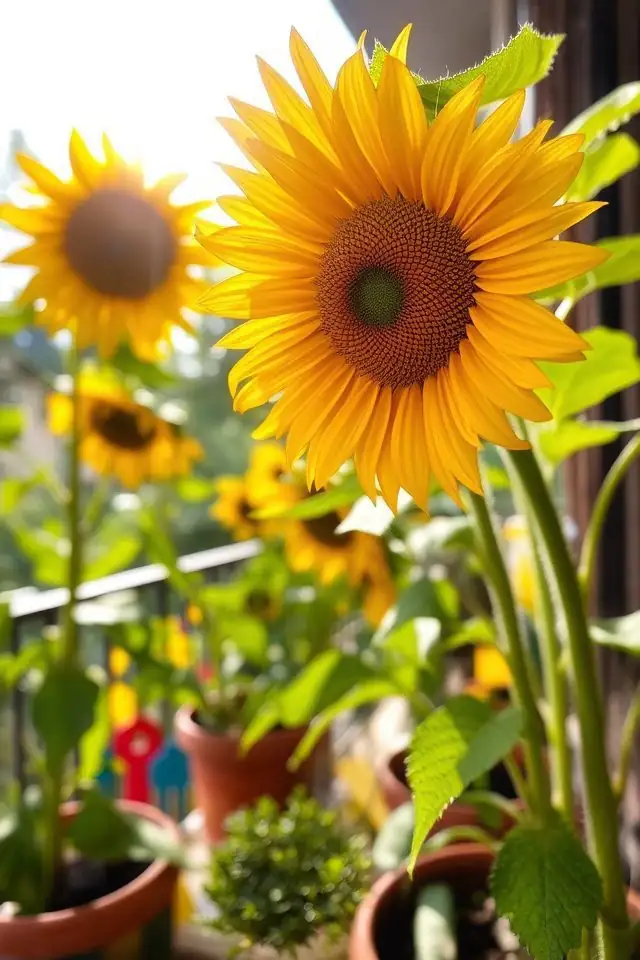
Step onto your balcony or into the garden, and meet a plant that doubles as a smile generator and a science teacher. Helianthus annuus—the classic sunflower—is a fast-growing, big-hearted annual that invites hands-on experiments. With a few seeds, a sunny spot, and a curious crew, you can time-lapse sun-following, tally hypnotic Fibonacci spirals, and chart how light shapes growth. Ready to turn your home into a mini sunflower lab?
Meet your sunny lab partner
- Scientific name: Helianthus annuus (family Asteraceae, genus Helianthus)
- Origin: North America
- What it’s like: Upright, fast, friendly to beginners, and loved by pollinators
- What it does: Young plants track the sun each day (heliotropism); mature, open blooms typically face east
- Sizes: Dwarfs for pots (30–60 cm / 12–24 in); many garden types 1.2–3.5 m (4–12 ft); rare giants even taller
- Flowers: Big, daisy-like heads (often 9.5–30 cm / 4–12 in across) with yellow ray florets and seed-forming centers
Tip: Choose compact, branching, or giant types to match your space and goals. Dwarf/container cultivars shine on balconies; big-seeded ‘Mammoth’ types are great if you want to snack or feed birds.
—
Set up your balcony (or backyard) lab
- Sunlight: Full sun is essential—aim for 6–8+ hours daily.
- Temperature: Sow once soil is above 10°C (50°F); best growth around 15–30°C (59–86°F). Protect from frost.
- Soil: Loose, fertile, and well-drained (pH 6.0–7.5). In pots, use quality potting mix + compost and perlite/sand.
- Water: Keep seedlings evenly moist. After that, water deeply, then let the top layer dry slightly. No soggy feet.
- Sowing: Direct sow 2.5–4 cm (1–1.5 in) deep after frost; germination in 7–10 days around 20–22°C (68–72°F).
- Containers: For compact types, a baseline pot is ~30 cm (12 in) wide and 40 cm (16 in) deep with excellent drainage.
- Feeding: In rich beds, often minimal. In pots or poor soil, feed during active growth; many growers use a balanced-to-slightly higher potassium “bloom” formula every ~10 days (follow label). Don’t overdo it.
Pro move: Succession sow every 10–14 days for waves of blooms (and repeated experiments). Many cultivars flower in 70–95 days; some dwarfs in 50–60 days.
—
Experiment 1: Time-lapse the sunflower’s daily dance (heliotropism)
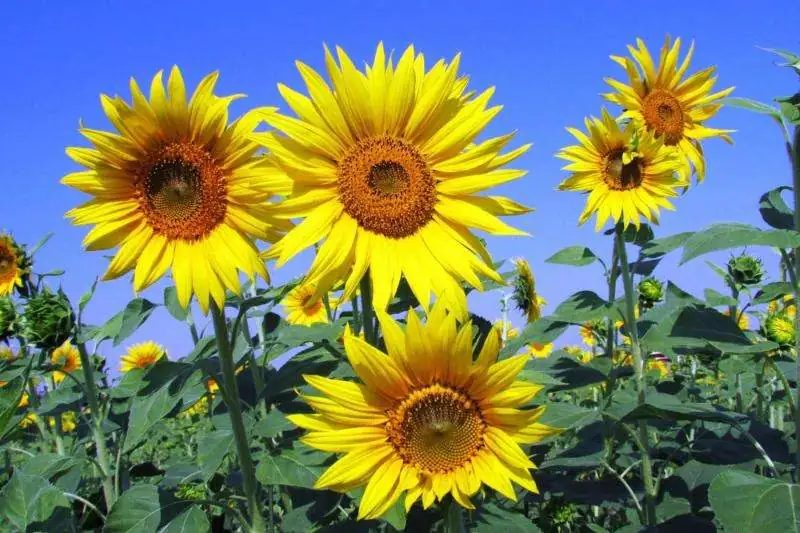
The question: Do sunflowers really follow the sun? Young plants do. Buds and immature heads track east-to-west by day and reset at night. Once the flower opens, it usually stops moving and faces east.
What you’ll learn
- How light and internal rhythms (the plant’s “clock”) guide movement
- When and why the dance stops
Materials
- 3–6 sunflower seedlings or young plants (same cultivar)
- Sunny space with an open east-to-west sky view
- Smartphone or tablet with time-lapse app, a tripod/clip, and a shade for the device
- Marker and compass app (or note sunrise location)
- Notebook
Steps
- Position plants: Place pots along a south-facing edge (north-facing if you’re in the Southern Hemisphere) where they get 6–8+ hours of direct sun.
- Mark orientation: With a marker, dot the rim of each pot at “east.” Mark a leaf’s tip, too.
- Time-lapse setup: Set your camera to capture 1 frame per 1–2 minutes from morning to evening. Shade the device to prevent overheating.
- Record Day 1: Film from sunrise to sunset. Log start/end times, temperature, and cloud cover.
- Night reset check: Take a photo just before dusk and again at dawn—the leaf/bud should swing back east overnight.
- Repeat weekly: Continue until the main head opens fully. Keep filming a few days post-opening.
What to expect
- Seedlings/buds pivot toward the sun during the day and reorient east overnight.
- After the flower opens, movement largely ceases and the head settles facing east—helping it warm up early and attract morning pollinators.
- Cloudy days show smaller movements; low or inconsistent light can cause droopy leaves and spindly stems.
Kid-friendly twist: Make a sunflower “clock.” On a sunny day, have kids point to where the head faces each hour and draw arrows on a paper dial.
—
Experiment 2: Count the spirals—Fibonacci fun in the flower head
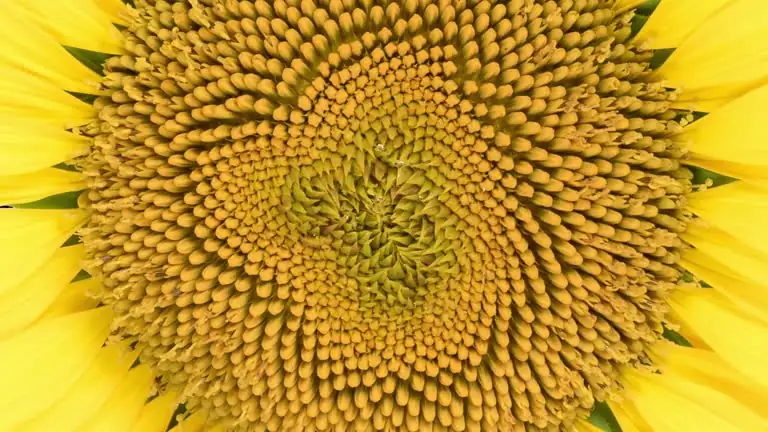
Sunflower seed patterns famously reveal counter-rotating spirals—often counted as consecutive Fibonacci numbers (like 21 and 34, or 34 and 55). It’s nature’s neat way to pack lots of seeds efficiently.
Note: Most heads show Fibonacci pairs; occasionally, counts deviate. That’s part of the fascination—counting becomes real citizen science.
What you’ll learn
- How to identify and tally spiral families
- Why this packing pattern boosts efficiency
Materials
- A mature sunflower head (or a high-res, straight-on photo)
- Washable marker or photo-editing app
- Optional magnifier
Steps
- Choose your head: A mature, evenly filled seed head is ideal. Very double-flowered ornamentals may have fewer seeds and are trickier to count.
- Decide directions: You’ll count two families of spirals—clockwise and counterclockwise.
- Trace spirals:
- Pick a seed near the center, then follow a spiral line by choosing the next nearest seed along that curve to the edge.
- Color one direction red and count every distinct spiral in that family.
- Switch to the opposite direction (color it green or blue) and count again.
- Tip from math exhibits: different “slopes” reveal different families; common tallies include 21, 34, or 55, depending on which spiral steepness you trace consistently.
- Record your pair: You’ll often end up with consecutive Fibonacci numbers (…13, 21, 34, 55…).
Why it matters
- Efficient packing: Arranging florets at angles related to the golden angle helps maximize seed number and uniformity.
- Real-world nuance: Variability happens—mutations, cultivar differences, or developmental quirks can produce non-Fibonacci counts. That’s still great data.
Extend the experiment:
- Compare two cultivars (e.g., a big-seeded type vs a branching cut-flower). Do the spiral counts differ?
- Graph spiral pairs across your succession-sown heads through the season.
—
Experiment 3: Chart growth vs. light—how much sun makes a difference?
Sunflowers adore sun. This experiment shows how plant form changes with light.
What you’ll learn
- How light quantity affects height, stem strength, leaf size, and flowering time
Materials
- 6–12 identical pots, same mix, same cultivar (dwarf types are great for balconies)
- Ruler/tape, string (to measure stem circumference), kitchen scale (optional)
- Sunlight log (hours of direct sun/day), notebook, weekly photo setup
Setup
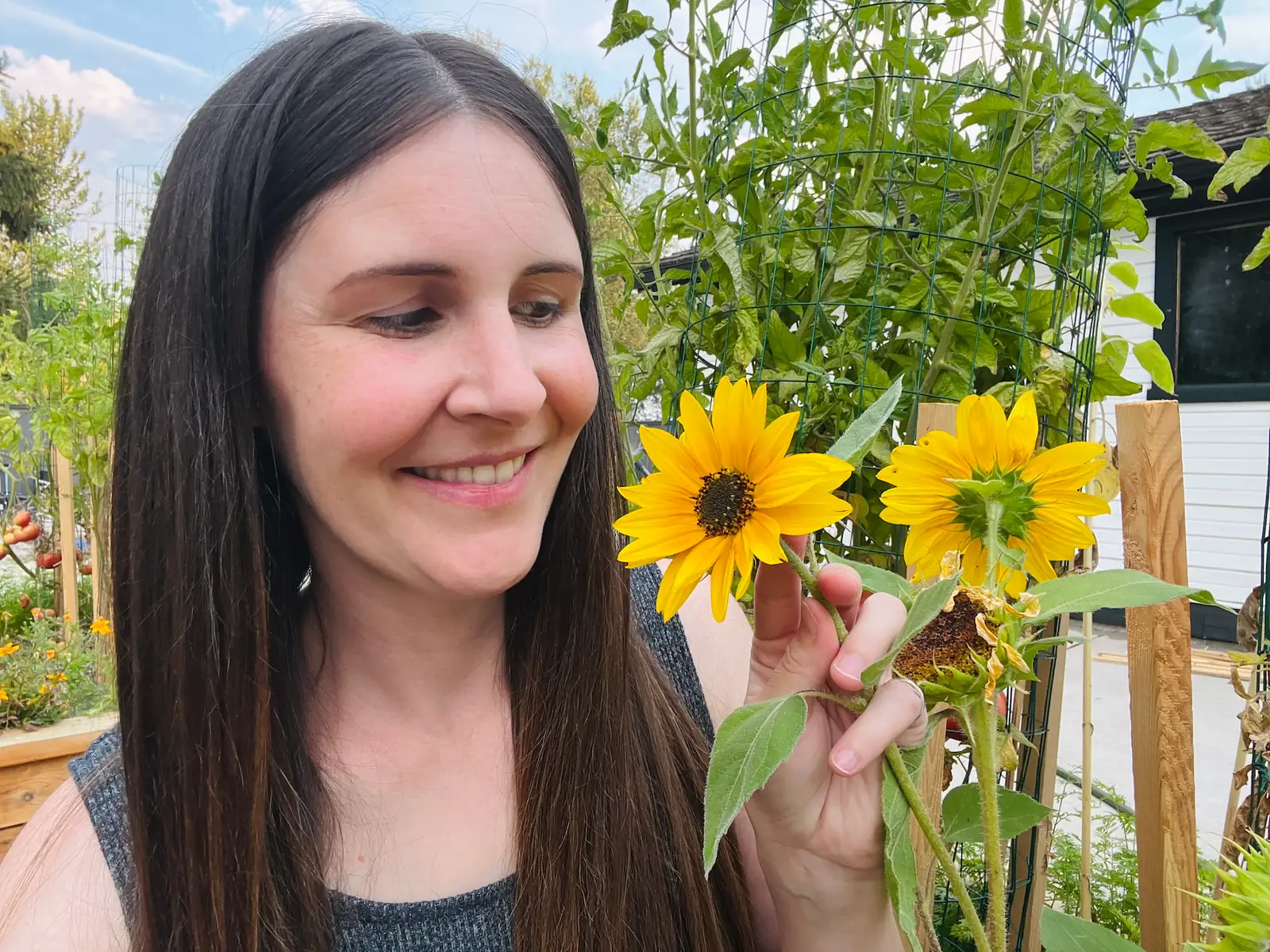
- Group A (Full Sun): 6–8+ hours of direct light/day.
- Group B (Partial Sun): 3–4 hours/day.
- Keep everything else the same: soil, watering schedule, and feeding.
Weekly measurements
- Height to the highest leaf
- Stem thickness: wrap string once around the stem 5 cm (2 in) above soil; measure string length to get circumference
- Leaf count and longest leaf length
- Days to first visible bud, days to first open flower
- Flower head diameter at full open
- Notes on leaning/lodging, pests, and any drooping
Expected results
- Full-sun plants: stockier stems, earlier buds, larger and more symmetrical heads.
- Partial-sun plants: longer internodes (stretchy), weaker stems, more leaf droop, and smaller or uneven heads.
- If you’re seeing droopiness in full sun too, check watering—sunflowers like deep drinks, then time to breathe. Avoid standing water, especially in saucers.
Advanced tweak: Rotate some pots 180° each morning to test whether young plants’ internal clock predicts movement even without consistent sun mapping. Compare with your time-lapse notes.
—
Care cheat sheet for thriving experiments
- Sun: Prioritize the sunniest place you have—balconies, beds, along fences, or a bright windowsill for dwarfs.
- Water: Even moisture for seedlings; later, deep water then allow the top layer to dry slightly. Don’t wet the flower head or let pots sit in water.
- Feeding: Minimal in rich beds; in containers, use slow-release at planting or periodic liquid feed during active growth. Avoid heavy over-fertilizing—it can weaken stems.
- Spacing/airflow: Good spacing and breeze help prevent mildew and leaf spots.
- Staking: Tall types appreciate shelter from wind and a sturdy stake.
- Pests and visitors: Aphids, spider mites, beetles, and sunflower moth larvae may appear; birds and squirrels love ripening seeds. Use gentle soaps or oils where appropriate; net heads you plan to harvest.
- Harvesting seeds: When the back of the head turns brown, cut and dry indoors; rub out seeds. Expect up to around 2,000 seeds on large heads.
- Safety: Generally non-toxic to people, dogs, and cats. As with most plants, nibbling lots of foliage can cause mild tummy upset.
—
Flower language, symbolism, and a quick history detour
- Symbolism: Sunflowers radiate warmth, loyalty, adoration, positivity, and the joyful “pursuit of light.” Many cultures link their east-facing maturity to welcoming the day.
- Flower language (floriography): The 19th-century fad of assigning meanings to blooms popularized sunflower messages of steadfastness and admiration. While not scientific, it reflects how people read the plant’s form—tall, bright, and resolutely facing light—as a metaphor for devotion and optimism.
- Legends and art: A romantic Greek tale of the nymph Clytie yearning for the sun god Helios is often evoked to explain “sun-following.” It’s poetic rather than botanical—but it’s stuck in our cultural imagination. Artists from Van Gogh to school-age sketchers have celebrated that golden disk.
- Human partnership: Domesticated in North America more than 5,000 years ago, sunflowers went to Europe in the 1500s, surged as an oil crop in Russia, and are now grown worldwide. They’re also a national symbol in Ukraine.
—
Quick troubleshooting (for your lab notebook)
- Droopy leaves or uneven heads? Usually not enough direct sun or inconsistent light; also check watering rhythm.
- Powdery leaves? Improve airflow, water at the soil line, and remove badly affected foliage.
- Tiny pests clustering on stems? Likely aphids—rinse with water or use insecticidal soap.
- No seeds on fluffy doubles? Many double-flowered ornamentals set fewer viable seeds by design—great for looks, not for snack bowls.
—
Kid-approved sunflower extras
- Make a pollinator census: Count bee visits to east-facing blooms on sunny mornings vs afternoons.
- Sunflower ruler: Mark your child’s height next to a tall stalk each week. Who grows faster this month?
- Kitchen science: Roast a handful of mature seeds, or turn saved seeds into a simple sunflower “butter.”
—
Your seasonal game plan
- Spring: Sow after last frost and warm soil; keep evenly moist; start light feeding when growth kicks in.
- Summer: Maximize sun; water more in heat, especially as buds form; stake tall types; keep experiments rolling with succession sowing.
- Autumn: Enjoy late blooms; harvest seeds when the back of heads browns.
- Winter: Plants complete their annual cycle—save seeds, scrapbook your data, plan next season’s trials.
Sunflowers reward curiosity. Whether you’re filming a daily dance, tracing spiral mathematics, or proving just how much sunshine a plant can turn into cheer, Helianthus annuus makes your balcony a laboratory of light—and your family co-discoverers in the brightest kind of science.


