Sunflowers have a way of turning the garden into a summer party—and then, just when the show wraps, they hand you a snack. If you’ve grown Helianthus annuus (the common sunflower), this is your kitchen-friendly roadmap from “is this head ready?” all the way through drying, roasting, seasoning, and storing crisp, craveable seeds—plus the essential food-safety notes that keep your harvest delicious.
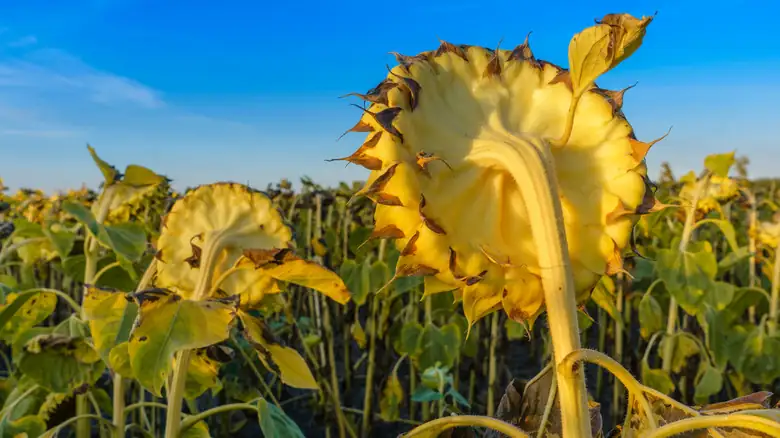
The right moment to harvest: read the back of the head
Think of the back of the sunflower head as your ripeness gauge. You’re looking for:
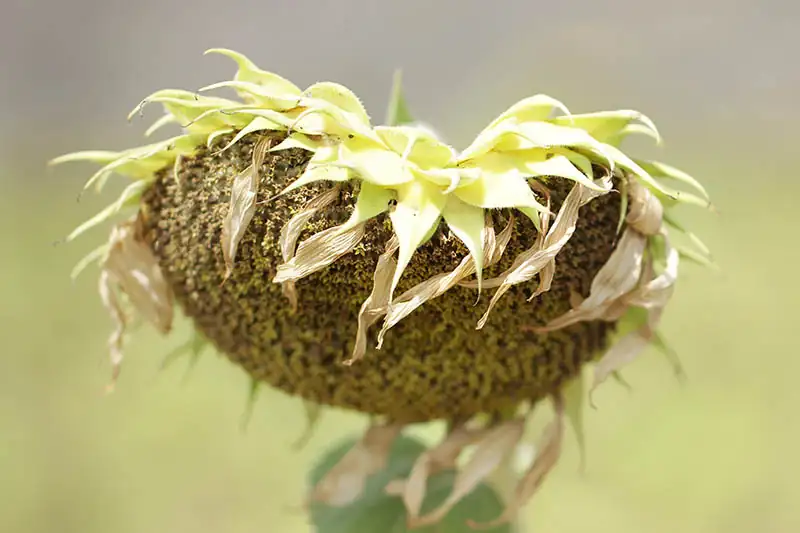
- Back of the head turning from green to yellow-brown, then brown
- Petals withered and fallen
- Head naturally drooping under its own weight
- Seeds plump, well-striped (or solid black, depending on variety), and firm
- Rub test: brush a thumb across the head; mature seeds loosen relatively easily
Tip: Seeds usually ripen from the outer ring inward, so it’s normal if the very center lags or never fully matures. Double-flowered or highly ornamental forms may set fewer viable seeds.
Beat the birds (and squirrels) to it
Wildlife loves sunflower seeds as much as we do. A few simple protectors:

- Slip a breathable paper bag, organza gift bag, or mesh over the head once you see the back yellowing. Tie loosely around the stem.
- Netting over a patch helps if you’re growing for a bigger harvest.
- If pests (or weather) threaten, harvest slightly early and finish drying indoors.
Cut and dry: two good paths
You can dry seeds on the plant or indoors. Choose what suits your weather and wildlife pressure.
Option A: Dry on the plant (best flavor, most hands-off)
- Leave heads to mature until the back turns deep brown and seeds loosen.
- Protect with a bag or mesh to deter birds.
- When ready, cut with clean pruners 20–30 cm (8–12 in) below the head.
Option B: Cut and hang indoors (great control, fewer losses)
- When the back is yellowing and petals have dropped, cut the head with 20–30 cm (8–12 in) of stem.
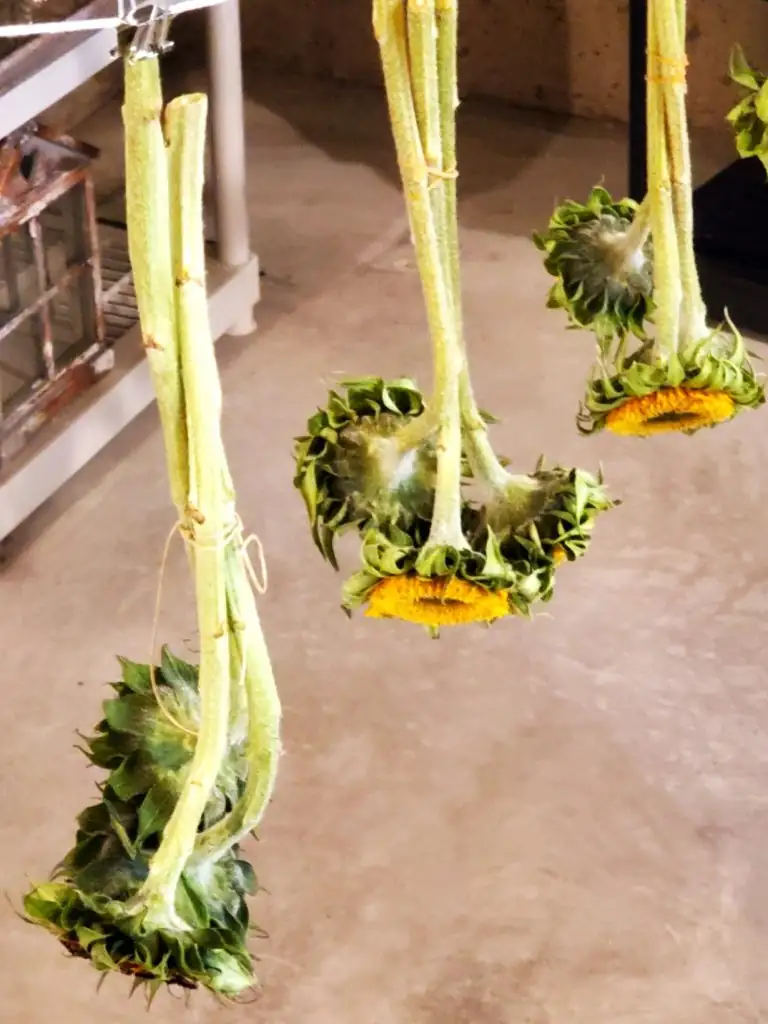
- Tie and hang upside down in a warm, dry, airy spot (about 21–27°C / 70–81°F) for 4–7 days.
- Slip a paper bag over each head (poke a few vents) to catch falling seeds and keep dust off. Avoid plastic—trapped moisture can cause mold.
Strip and clean: the oddly satisfying part
- Rub the face of the head firmly over a large bowl or bucket. Seeds will release along with some chaff.
- Winnow: pour seeds between bowls outdoors to let light chaff blow off, or rinse in a colander and pat dry thoroughly.
Now choose your path:
- Saving to plant: dry seeds in a single layer for 1–2 weeks in a cool, airy spot. Store in a labeled, airtight jar in a cool, dark place. Note that hybrid sunflowers won’t grow “true” from saved seed.
- Roasting for snacking: proceed once seeds are well-drained and surface-dry.
Roasting basics: in-shell or hulled
You can roast seeds in their shells (classic crack-and-snack) or roast hulled kernels. Hulling at home is tedious; most home cooks roast in-shell, or they buy already-hulled kernels for quick seasoning.
In-shell, salted and savory
For even seasoning, soak first. Choose your salt level per 1 quart (1 liter) of water:
- Lightly salted: 1 tablespoon (15 g) salt, 4–8 hours
- Classic ballpark: 1/4 cup (60 g) salt, 8–12 hours or overnight
- Bold & briny: 1/3 cup (80 g) salt, 8–12 hours
Drain very well and pat dry.
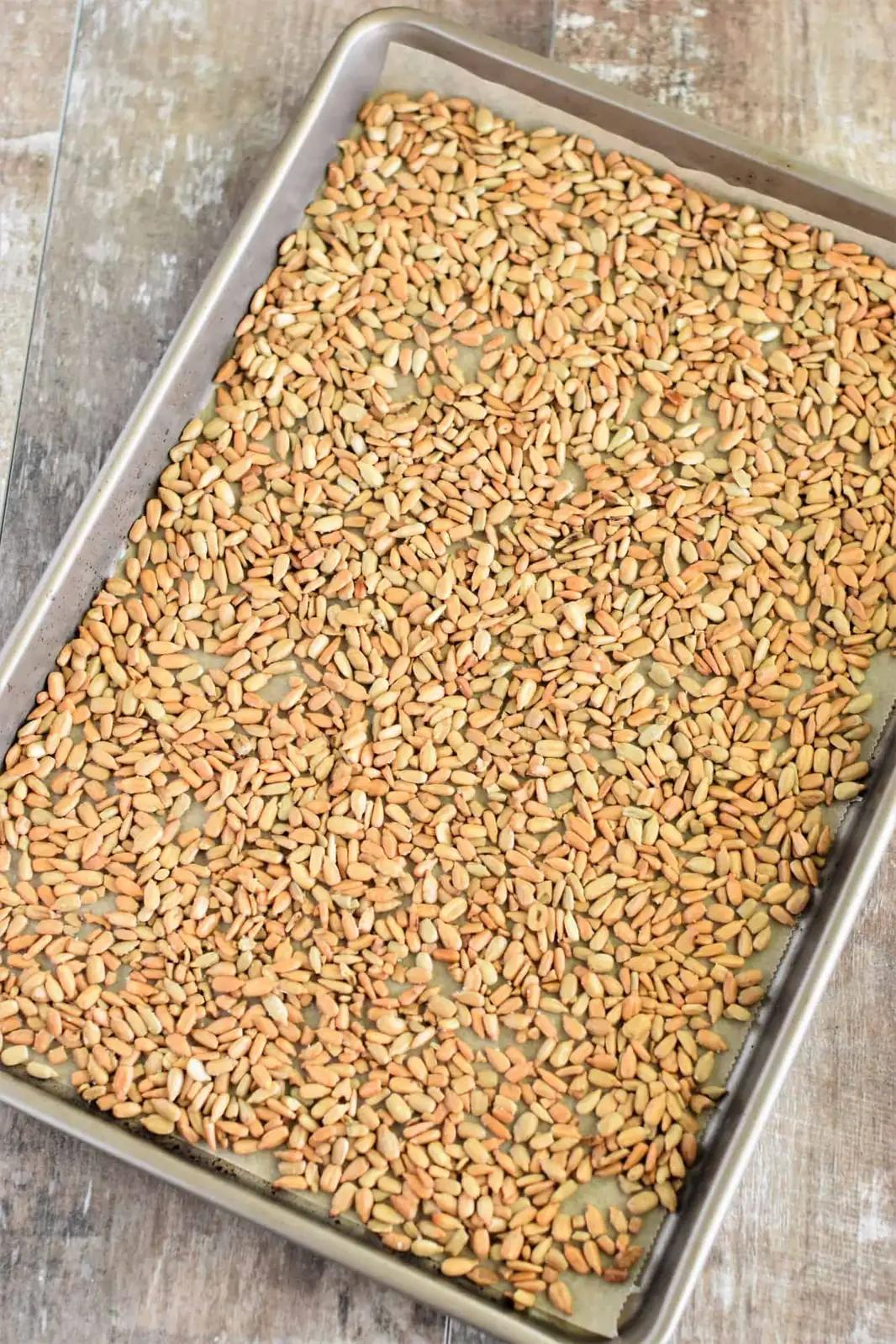
- Roast at 150°C (300°F) for 30–45 minutes, stirring every 10 minutes.
- They’re done when shells are dry and lightly golden and the kernel inside is crisp. Cool a few seeds, crack, and taste-test.
No-soak route: Toss dry, clean seeds with 1–2 teaspoons oil per cup, sprinkle with salt and spices, and roast as above (they’ll cook a bit faster).
Hulled kernels (quick, ultra-crisp)
- Toss with 1–2 teaspoons neutral oil per cup (to help seasonings stick).
- Roast at 165°C (325°F) for 10–15 minutes, stirring once. Remove when pale golden and fragrant.
- Or pan-toast in a dry skillet over medium heat for 5–8 minutes, shaking often.
Seasonings that love sunflower seeds
Think of sunflower seeds as tiny canvases—nutty, toasty, and eager for flavor.
Savory ideas
- Chili–lime: chili powder, fine salt, a kiss of sugar, lime zest after roasting
- Everything bagel: sesame, poppy, dried garlic, dried onion, flaky salt
- Smoky paprika + black pepper + garlic powder
- Za’atar + lemon zest
- Ranch dust: dried dill, parsley, chives, garlic/onion powder, fine salt
Sweet ideas
- Maple–cinnamon: drizzle with maple syrup and a pinch of cinnamon and salt; return to the oven 2–3 minutes to set
- Vanilla–cardamom sugar
- Cocoa–espresso sugar with a touch of flaky salt
Pro tips
- Add delicate herbs, citrus zest, and heat-sensitive spices after roasting so they stay bright.
- For sticky glazes, line the tray with parchment and stir once halfway so nothing clumps.
Storage that keeps the crunch
Sunflower seeds are rich in oil, so protect them from heat, air, and light.
- Always cool fully before sealing to avoid condensation.
- Airtight container, away from light.
- Roasted, in-shell or hulled:
- Pantry: 2–4 weeks
- Refrigerator: up to 3 months
- Freezer: 6–12 months
- Raw seeds:
- Refrigerator: 3–6 months
- Freezer: 1 year+
- Rancidity check: if they smell like old paint or taste bitter/soapy, they’re done—compost or discard.
Quick food-safety and sourcing pointers
- Drying matters: moisture invites mold. If seeds feel leathery or you see gray fuzz/musty smells, discard.
- Cool before storing: warm seeds sealed in a jar can sweat and spoil.
- Pesticides: don’t eat seeds from plants treated with systemic insecticides or from florist/ornamental beds with unknown chemical use.
- Contaminated sites: sunflowers are studied for phytoremediation. If grown to “clean” soil or water, don’t eat those seeds.
- Allergens and sodium: sunflower seeds are generally safe, but seed/nut allergies exist. Salted seeds add up—offer unsalted for kids and pets.
- Oil + fresh garlic/herbs: skip storing this combo at room temperature. Use dried seasonings for shelf-stable mixes, or refrigerate and eat within a few days.
- Bird vs. people snacks: keep batches separate. Birds should get plain, unsalted seeds.
Troubleshooting your harvest
- Empty or underfilled shells: harvested too early. Next time, wait for a browning back, droop, and easy seed release; note the center often matures last.
- Chewy, not crunchy: under-roasted or rehydrated in storage. Re-crisp on a tray at 150°C (300°F) for 5–10 minutes and cool again.
- Off flavors: rancid oils from age/heat/light. Discard and store future batches in the fridge or freezer.
- Wormy or webby seeds: sunflower moth larvae can invade heads. Trim away damaged zones; heavily infested heads are best composted.
A tiny nod to meaning
Sunflowers picked up their sunny symbolism—warmth, loyalty, adoration—in Victorian floriography and modern pop culture as much as in botany. The Greek tale of Clytie gazing at Helios often gets linked, romantically, to sun-following blooms. In real life, young sunflowers do track the sun (heliotropism), then mature heads settle to face east, warming quickly to greet pollinators. Either way, it’s a fitting backstory for a flower that ends in a bowl of bright, generous snacks.
From garden to snack bowl
North American by origin and universally at home in bright gardens, Helianthus annuus makes it easy to grow beauty you can eat. Watch for the back-of-head browning, dry smart, roast to your preferred crunch, season boldly, and stash them well. One big head can gift you thousands of bites—golden proof that the season’s sunlight was well spent.