
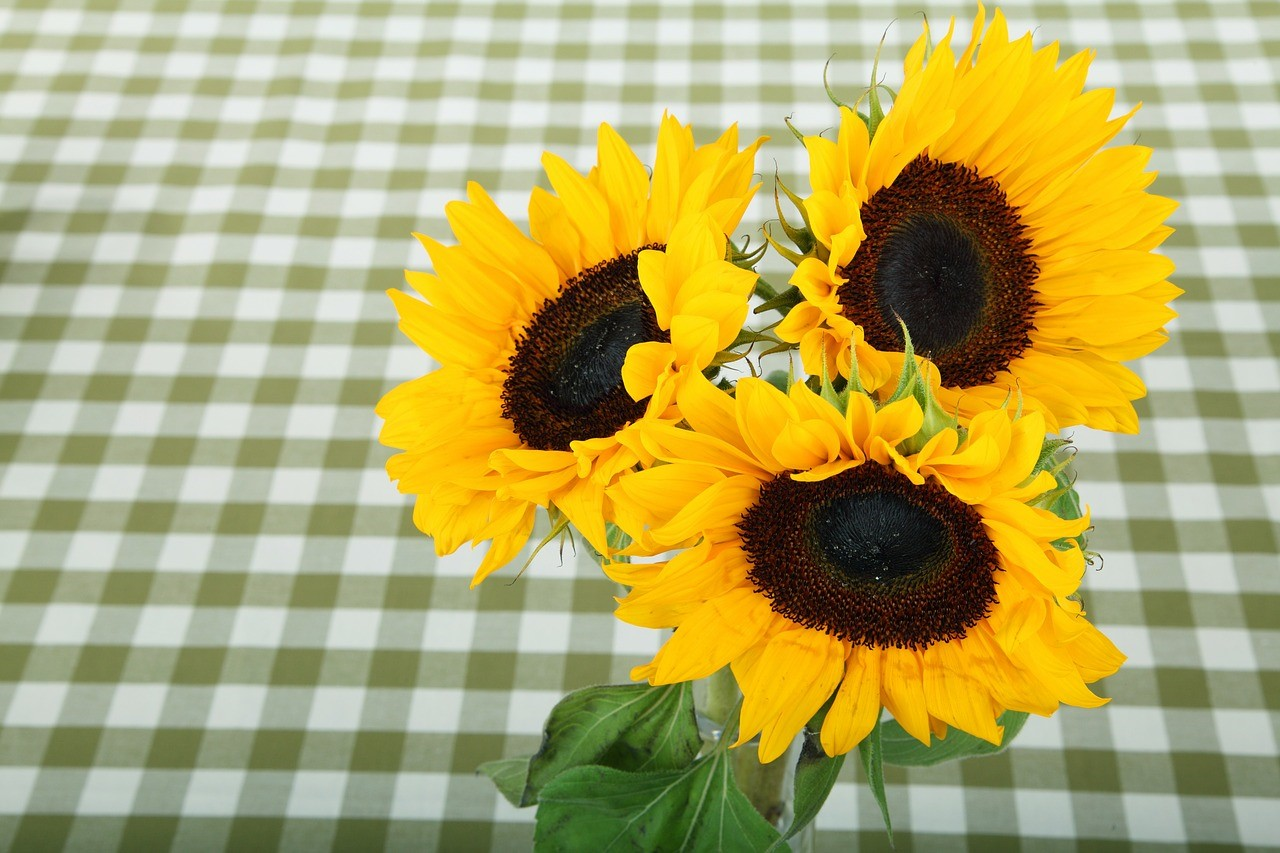
Sunflowers bring instant auditorium-level applause to any room—big, beaming faces, sturdy stems, and that unmistakable burst of gold. But any florist will tell you: without a few pro tricks, they can shed pollen on the table, droop at the neck, or drink a vase dry overnight. Here’s a lively, field-tested guide to choosing the right Helianthus annuus for mess-free beauty and conditioning stems so they stand tall for days.
Meet the cut-sunflower: what makes it tick
- Botanical basics: Helianthus annuus (sunflower) is a fast-growing, upright annual in the Asteraceae family, native to North America. Young plants practice heliotropism (they track the sun); once flowers open, they generally settle facing east.
- Cut-flower chops: With proper conditioning, most cut blooms hold beautifully for roughly 7–10 days in the vase.
- Why pollen matters: Traditional sunflowers shed visible pollen as the central disk florets mature—charming outdoors, messy indoors. Pollenless and/or double-flowered cultivars solve this, keeping tabletops and clothing clean.
Choose like a florist: cultivars that behave in the vase
The right genetics do half the work for you. Think in two lanes: branching vs. single-stem, and pollenless vs. pollen-shedding.
Pollenless is priceless
- What it means: Breeders have selected lines whose disk florets don’t release pollen, so you get clean, tidy centers and far less mess in arrangements.
- Why florists love them: No pollen stains, longer “clean” display window, and easier mixing in bouquets with light-colored blooms and fabrics.
- Good to know: Double or heavily petaled “pompon” types also shed less visible pollen, even when not fully pollenless.
Branching vs. single-stem—pick for your workflow
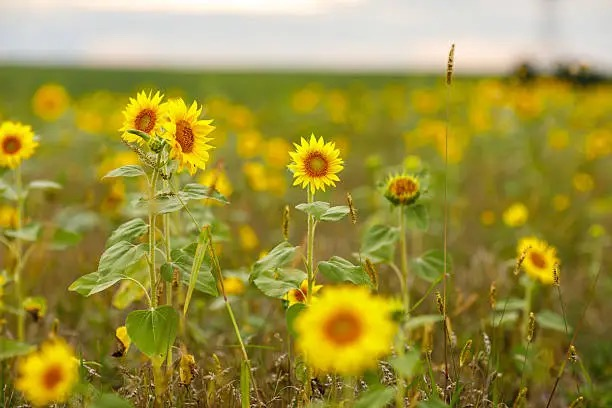
- Branching (multiple blooms per plant)
- Pros: Many harvestable stems over weeks; great for garden-style arranging; smaller, more bouquet-friendly heads.
- Notes: Choose lines specifically bred for cuts—ideally flagged as pollenless branching when available. Give space (about 18–24 in / 45–60 cm), and pinch once to encourage a well-balanced canopy of stems.
- Single-stem (one stem, one flower)
- Pros: Speed, uniformity, straight stems, and predictable head size—perfect for production or tight design recipes.
- Notes: Many florist favorites are pollenless. To keep stems slender and heads bouquet-sized, plant fairly close (about 4–6 in / 10–15 cm apart) and sow successions every 7–10 days in spring and early summer.
Tip: Head size matters. For mixed bouquets, aim for mid-size heads—often in the 4–7 in (10–18 cm) range—rather than giant, heavy plates. You can “dial down” head size with closer spacing and cultivar choice.
The perfect harvest moment
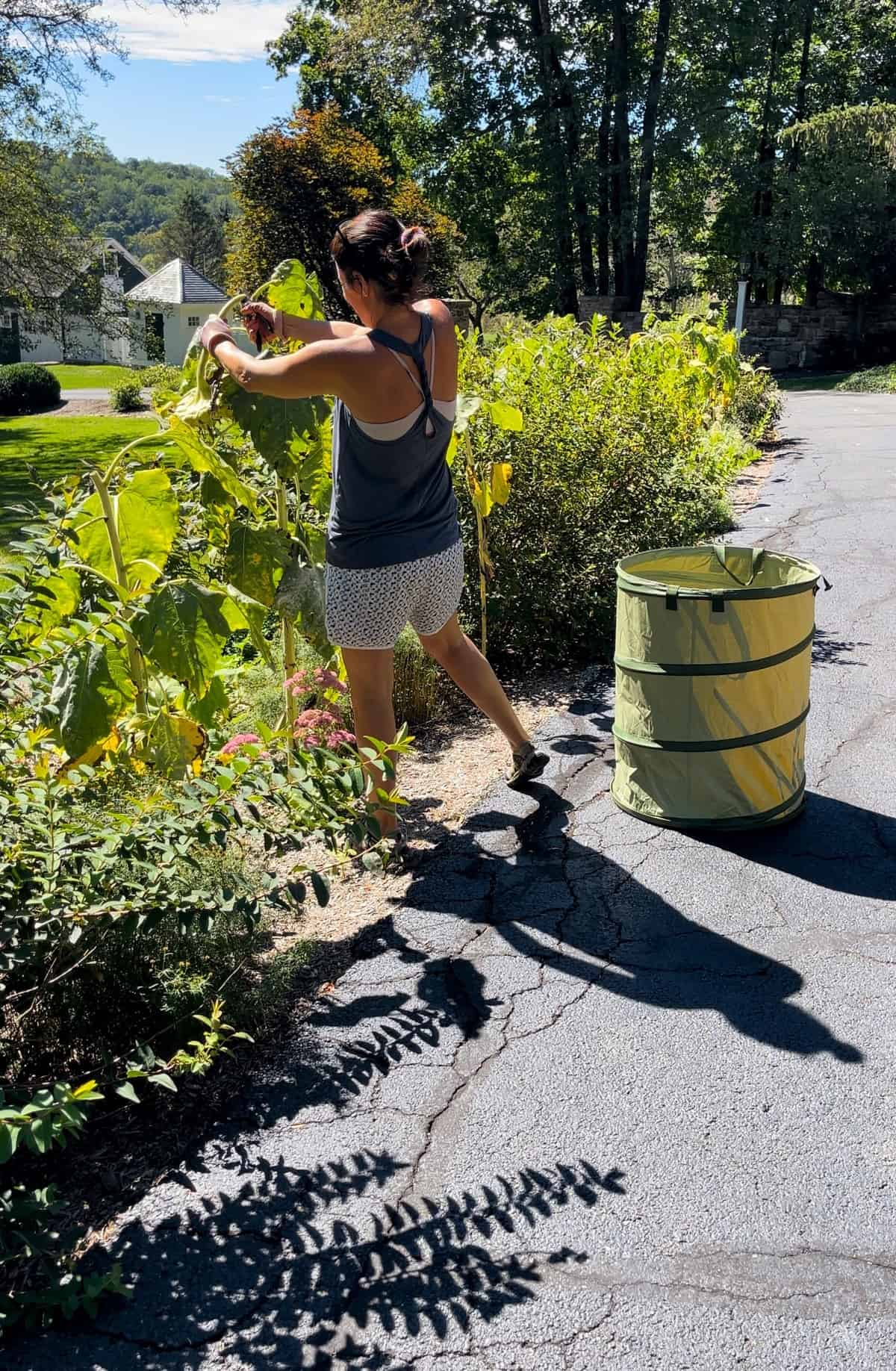
Cut timing is everything. Harvest too early and petals may not lift; too late and pollen spills.
- Time of day: Early morning, when stems are fully hydrated and cool.
- Stage: Cut at “just cracking color”—the first ring of ray petals is lifting free from the disk, but the flower isn’t fully open. For immediate event work, 1–2 rings of rays open is fine.
- Tools: Use sharp, clean snips; sanitize between batches.
- Where to cut:
- Single-stem: Take the longest, usable stem you need.
- Branching: Cut just above a leaf node to encourage more side shoots.
Field tip: Keep a clean bucket at your side so stems go straight into water within seconds of cutting.
Strip, sip, and set: a fast florist conditioning protocol
Think of this as a sunflower spa day—remove what decays, feed what drinks, and keep it all pristine.
1) Clean buckets, clean vases
- Wash with hot, soapy water; rinse.
- Sanitize: a quick dip in a mild bleach solution (for example, 1 teaspoon unscented household bleach per quart/liter of water), then air-dry.
2) Leaf stripping
- Remove all foliage that would sit below the water line—typically the bottom two-thirds to three-quarters of leaves. This slashes bacterial growth and keeps water clear.
3) The first drink
- Recut 1–2 cm (½–¾ in) off the stem ends at a 45° angle.
- Hydrate in warm water (about 100–110°F / 38–43°C). Warm water moves up xylem faster, helping re-firm necks.
- Optional rescue for soft necks: A brief hot-water dip (10–20 seconds in near-boiling water) followed by immediate warm hydration can help stop sap blockage. Then leave to rest in a deep bucket for several hours.
4) Use a commercial flower preservative
- Best practice for vase life: Always add a professional preservative (it balances sugar, acid, and a biocide) to reduce slime and extend the clean, upright window.
- No preservative on hand? Change water daily, keep it cool, and add a simple home mix per quart/liter: 1 teaspoon sugar + 1 teaspoon lemon or lime juice + ¼ teaspoon unscented household bleach. Stir until fully dissolved.
5) Set to rest
- Hold conditioned stems in a cool, dim spot with good airflow for 4–12 hours before arranging. Keep away from direct sun, heat, and ripening fruit.
Arranging without droop or mess
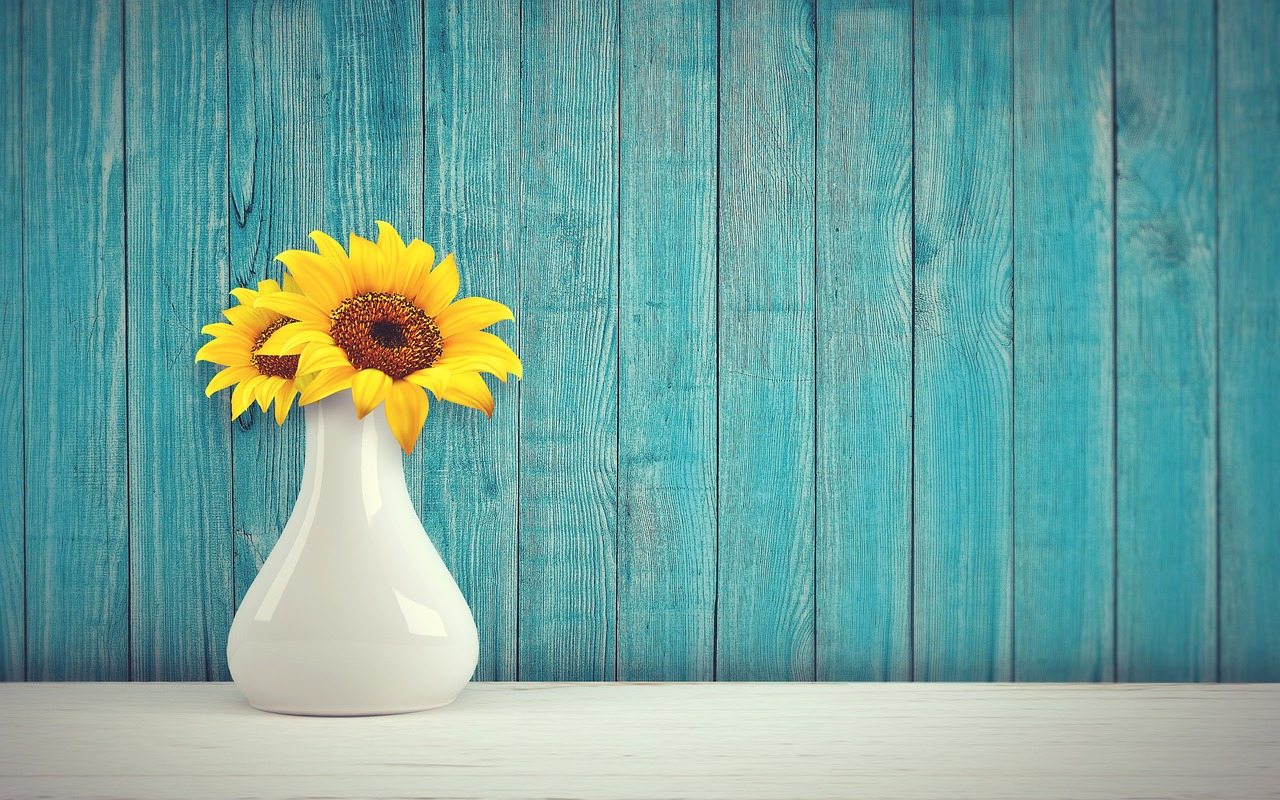
Sunflower stems are enthusiastic drinkers and big-headed by nature. Give them good mechanics and they’ll behave like pros.
- Pick the right vessel
- Heavy-bottomed, low-to-medium-height vases provide counterweight for large faces.
- Use a chicken-wire cradle or a tape grid across the vase rim for crisp control.
- For hand-tieds, cut stems shorter than you think—you’ll gain posture and reduce head wobble.
- Control the light
- After arranging, keep displays out of harsh, one-sided light to minimize phototropic bending toward a window. Even light equals straighter necks.
- Keep it clean
- Top up with clean, cool water daily (with preservative), and recut stems every 2–3 days.
- Remove any leaves that slip below the water line—today’s tidy is tomorrow’s clear vase.
- Pollen management
- Grow pollenless or double-flowered varieties whenever possible.
- If you must use pollen-bearing blooms, harvest early (before heavy pollen shed) and gently tap out loose pollen outdoors before arranging light fabrics or linens nearby.
Design pairing ideas:
- Pair mid-sized sunflowers with grasses, grains, and textural seed heads for a golden, late-summer story.
- For a modern look, cluster three to five heads at varying heights, then collar with eucalyptus, rudbeckia, or zinnias.
- Color-play beyond classic gold: mix lemon, bicolor, or russet-toned selections for sophisticated palettes.
Field-to-vase habits that pay off
Even if you’re buying stems, it helps to know what creates florist-grade quality.
- Sun first, always: Full sun (6–8+ hours) builds strong stems and even flower development.
- Steady moisture, never soggy: Water deeply, then let the top layer dry slightly; stress during bud formation can shrink heads.
- Spacing strategy:
- Branching: 18–24 in (45–60 cm) for airflow and access.
- Single-stem: 4–6 in (10–15 cm) to keep stems usable and heads bouquet-sized.
- Succession sowing:
- Single-stem: every 7–10 days in spring/early summer for a steady flow.
- Branching: every 3–4 weeks for staggered flushes.
- Pinching: Skip on single-stem types; do pinch appropriate branching cultivars once to encourage multiple, longer stems.
- Hygiene outdoors: Water at the base (not over the heads), provide airflow, and remove problem foliage promptly to avoid mildew and leaf spots.
Troubleshooting quick fixes
- The “sleepy” neck
- Recut and rehydrate in warm water with preservative; rest in a deep, cool bucket for several hours. If still soft, try a brief hot-water dip before warm hydration.
- Cloudy, smelly water
- Dump it, scrub the vase, recut stems, and replace with fresh preservative solution.
- Heads too big for the design
- Cut stems shorter, use a sturdier vase, or cluster heads for balance. Next crop, tighten spacing or choose smaller-headed cultivars.
A note on symbolism (and the real story behind “sun-following”)
Sunflowers are beloved emblems of warmth, loyalty, adoration, and the joyful pursuit of light. The romance goes way back: the Greek tale of the nymph Clytie—pining for the sun god—has long been linked with sun-following blooms. Botanically speaking, the “sun-following” is true for young plants; once flowers open, they generally face east. That eastward gaze helps them warm early, inviting pollinators and, in our homes, greeting us like a roomful of friendly suns.
Quick checklist: mess-free, stand-tall sunflowers
- Choose pollenless (ideally branching if you want volume) or double-flowered types for clean work.
- Harvest at first petal lift, early in the morning.
- Strip leaves well; sanitize buckets and vases.
- Hydrate warm, rest cool, use a commercial preservative.
- Arrange with sturdy mechanics, keep out of harsh, one-sided light.
- Change water frequently and recut every 2–3 days.
Handled this way, Helianthus annuus isn’t just a burst of cheer—it’s a disciplined, long-lasting focal that plays beautifully with others and leaves the table as spotless as it found it.