
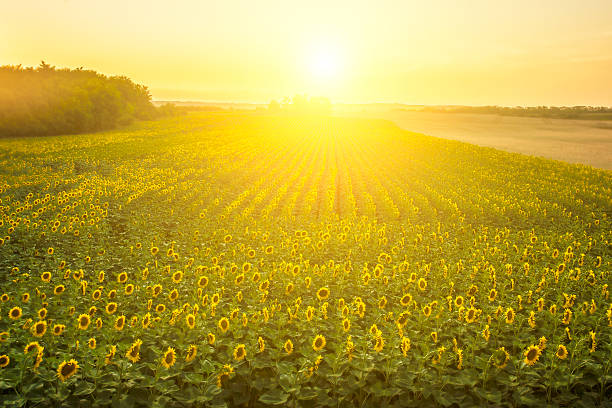
Imagine a field of golden faces waking with the dawn, swiveling like a crowd at a parade. It looks like magic—or myth. In truth, Helianthus annuus, the common sunflower, is a masterclass in plant engineering: young heads track the sun, open blooms lock east, warm mornings lure more pollinators, and the seed head packs florets using elegant math. Let’s bust the big myths and see the simple science with a few easy “mental diagrams.”
Meet Helianthus annuus at a glance
- Family: Asteraceae (the daisy family)
- Origin: North America
- Habit: Fast-growing annual with sturdy, hairy stems and broad, heart-shaped leaves
- Flower heads: Big, daisy-like capitula—ray florets form the “petals” (usually bright yellow), disk florets in the center make the seeds
- Size: From 30–60 cm (12–24 in) dwarfs to 1.2–3.5 m (4–12 ft) garden types; giants can top 9 m (30 ft)
- Personality: Beginner-friendly, drought-tolerant once established, and a magnet for pollinators when sited in full sun
Myth-busting heliotropism: what moves, when, and why
Myth 1: “Sunflowers face the sun all day, every day.”
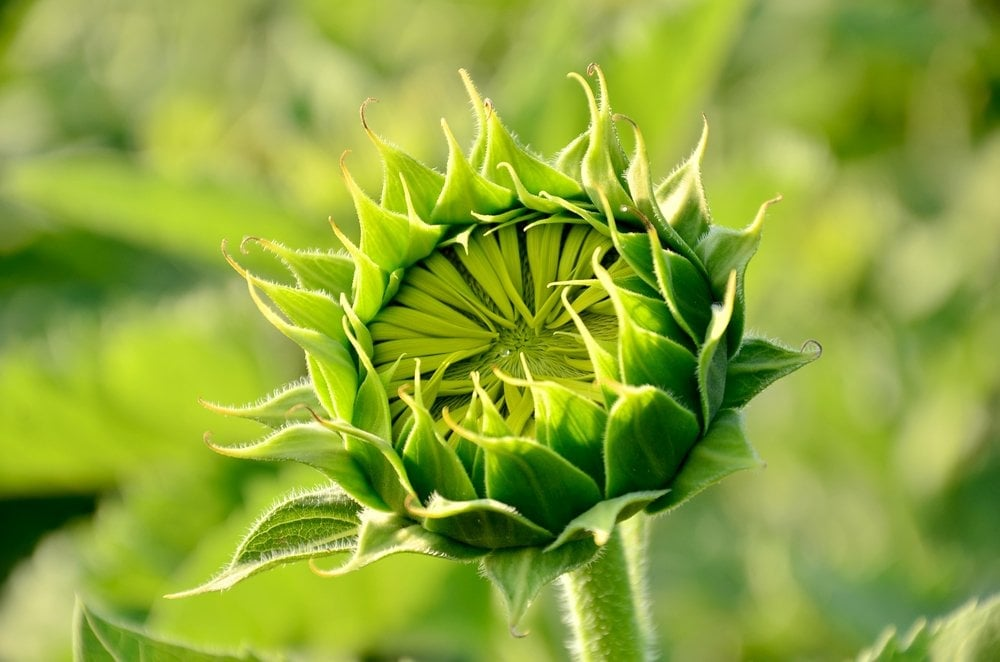
- The twist: Only the youngsters do. Buds and immature heads follow the sun from east to west during the day and “reset” at night. Once the flower opens, movement largely stops and the head typically fixes facing east.
What’s actually moving?
Think of the sunflower stem as a gentle, living bimetallic strip.
- The growth engine:
- Daytime: One side of the stem grows slightly faster than the other, turning the head to follow the moving sun.
- Nighttime: Growth patterns flip, turning the head back toward the east before sunrise.
- The timer: An internal circadian clock keeps the rhythm going even on cloudy days—young plants “anticipate” dawn.
- The hardware: In sunflowers, the motion is growth-mediated (not a hinge). Microscopic changes in cell elongation on opposite sides of the stem create the slow, graceful arc.
Easy visual: Draw a circle for the head and a vertical stem. Shade the “east” side of the stem blue and the “west” side red. In the morning, the blue (east) side has slightly different growth than the red side; by afternoon the pattern reverses. Overnight, growth points you back east, ready for sunrise.
So why do open blooms settle east?
- As the flower opens and seeds begin to develop, stems stiffen and growth slows. The head “locks” in position—and the winning direction is usually east.
- That eastward lean isn’t cosmetic. It gives the flower a morning head start.
Why east-facing flowers get more pollinators
Picture two identical blooms. One greets sunrise; one looks west. Which warms sooner? The east-facing head.
- Warmer mornings:
- East-facing blooms heat up faster after dawn.
- Warmer heads make more inviting landing pads for early-rising pollinators (think bees warming their flight muscles).
- Real-world payoff:
- Earlier warmth means earlier scent release and nectar accessibility in many composites.
- Studies have shown east-facing sunflower heads attract substantially more morning pollinator visits—reportedly up to about five times more than west-facing heads—boosting seed set.
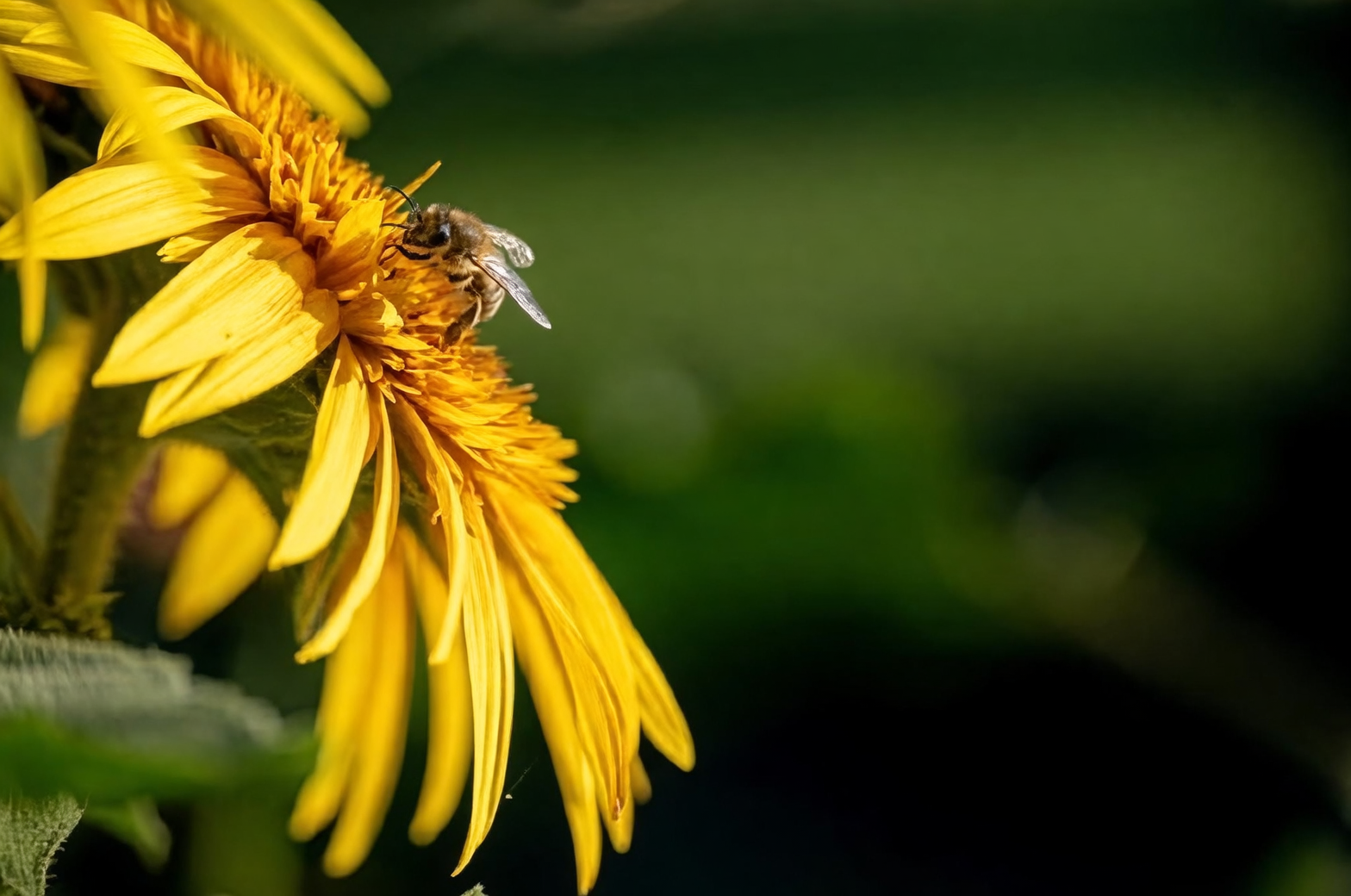
Easy visual: Sketch two sunflowers. Draw a small sun at “east,” and add little thermometer icons on each head. The east-facing head reaches “warm” first; add lots of bee doodles there.
The mesmerizing math of sunflower spirals
Stand in front of a mature head and you’ll see two families of spirals curving in opposite directions. Those interlacing arcs are classic Fibonacci spirals, and they’re more than pretty.
- The packing problem:
- The plant is placing hundreds to thousands of tiny disk florets in the smallest space with minimal gaps.
- The simple rule:
- New florets are positioned at a nearly constant angle from the last one—the “golden angle,” about 137.5°.
- That angle evenly distributes points around a growing circle without clumping.
- What you see:
- Count the spirals in one direction and then the other. You’ll often find neighboring Fibonacci numbers (e.g., 34 and 55, or 55 and 89).
- Why it works:
- The golden angle ensures near-perfect packing as the head expands, producing that tight, efficient seed grid.

Easy visual: Imagine placing dots on a spiral record. Each new dot lands 137.5° around from the last and a tiny bit farther from the center. Keep going—suddenly, the famous sunflower pattern appears.
Grow your own heliotropism-and-spiral lab
Try this mini citizen-science project at home.
- Track the sun:
- Direct-sow seeds after frost in full sun.
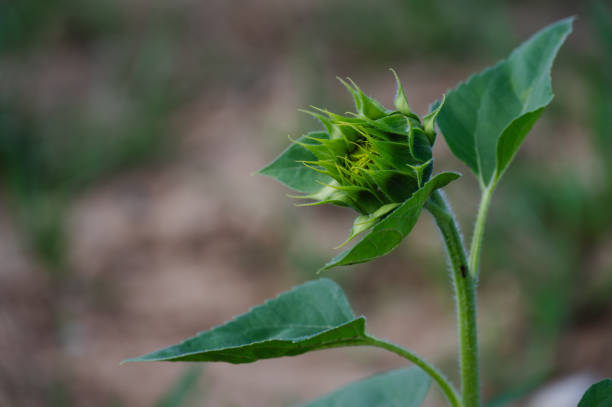
- When buds appear but before petals open, mark the head’s edge with a dab of nontoxic paint at “12 o’clock.”
- Take morning, noon, and late-afternoon photos from the same spot for a few days. Watch the mark rotate as the head follows the sun.
- Catch the “east lock”:
- Keep photographing as the flower opens. Movement should slow and orientation settle around east.
- Map the spirals:
- On a mature head, lightly count the visible spiral arms to the left and right. See if your counts are neighboring Fibonacci numbers.
- Pollinator check:
- On a sunny morning, note the number of pollinator visits in 5-minute windows to east- vs. west-facing blooms (if you have both). You’ll notice the early-morning preference fast.
Quick growing guide for standout blooms
- Sunlight: Full sun is non-negotiable—at least 6–8 hours of direct light. In low light, stems weaken and heads develop unevenly.
- Soil: Loose, well-drained, and fertile is best (pH ~6.0–7.5). A deep, loosened root zone suits the taproot.
- Water: Keep seedlings evenly moist. Once established, water deeply, then let the top layer dry slightly. Increase frequency during bud formation and flowering; avoid soggy soil and wetting the flower head.
- Temperature: Warm-season annual. Sow when soil is above 10°C (50°F). Best growth around 15–30°C (59–86°F). Protect from frost.
- Feeding: In rich garden soil, often minimal. Containers or poor soils benefit from a slow-release feed or periodic liquid fertilizer; don’t overdo it or stems may flop.
- Sowing and timing: Direct sow 2.5–4 cm (1–1.5 in) deep after frost. Germination is common in 7–10 days around 20–22°C (68–72°F). Many cultivars flower in 70–95 days; compact pot types can bloom in 50–60 days.
- Support: Stake tall varieties and give them shelter from strong winds.
- In pots: Choose compact cultivars. As a baseline, 30 cm wide x 40 cm deep (12 x 16 in) works for many dwarfs; go bigger for larger types.
- Pests and diseases: Watch for aphids, spider mites, beetles, and sunflower moth. Fungal issues include powdery/downy mildew, rust, and leaf spots. Prevention: strong sun, airflow, well-drained soil, and watering at the base.
Bonus use: Beyond their sunny faces, sunflowers feed wildlife, yield edible seeds and oil, and have even starred in phytoremediation research to help draw certain pollutants from soil or water.
Symbolism and “flower language,” thoughtfully
Sunflowers have worn many meanings: warmth, loyalty, adoration, and the joyful pursuit of light. A Greek tale of the nymph Clytie pining for the sun god Helios is often retold to explain sun-following flowers—romantic, but not the mechanism. Modern “flower language” (花语) largely blossomed in the Victorian era, assigning emotional codes to blooms. It’s a cultural layer, not a botanical one. The deeper truth behind the symbol? A biological choreography—light, timekeeping, growth, warmth, and pollinators—working together so a plant can thrive in a single bright season.
TL;DR: The sunflower’s smart routine
- Young heads track the sun daily via circadian-tuned, side-to-side stem growth.
- Open blooms settle facing east, warming quickly at dawn.
- Toasty morning heads are pollinator magnets, boosting visits and seed set.
- The seed head’s hypnotic geometry follows the golden-angle rule, producing Fibonacci spirals for ultra-efficient packing.
Give Helianthus annuus full sun and steady-but-not-soggy care, and you’ll grow not just a flower—but a live demo of plant physics, timekeeping, ecology, and mathematics in one beaming face.