
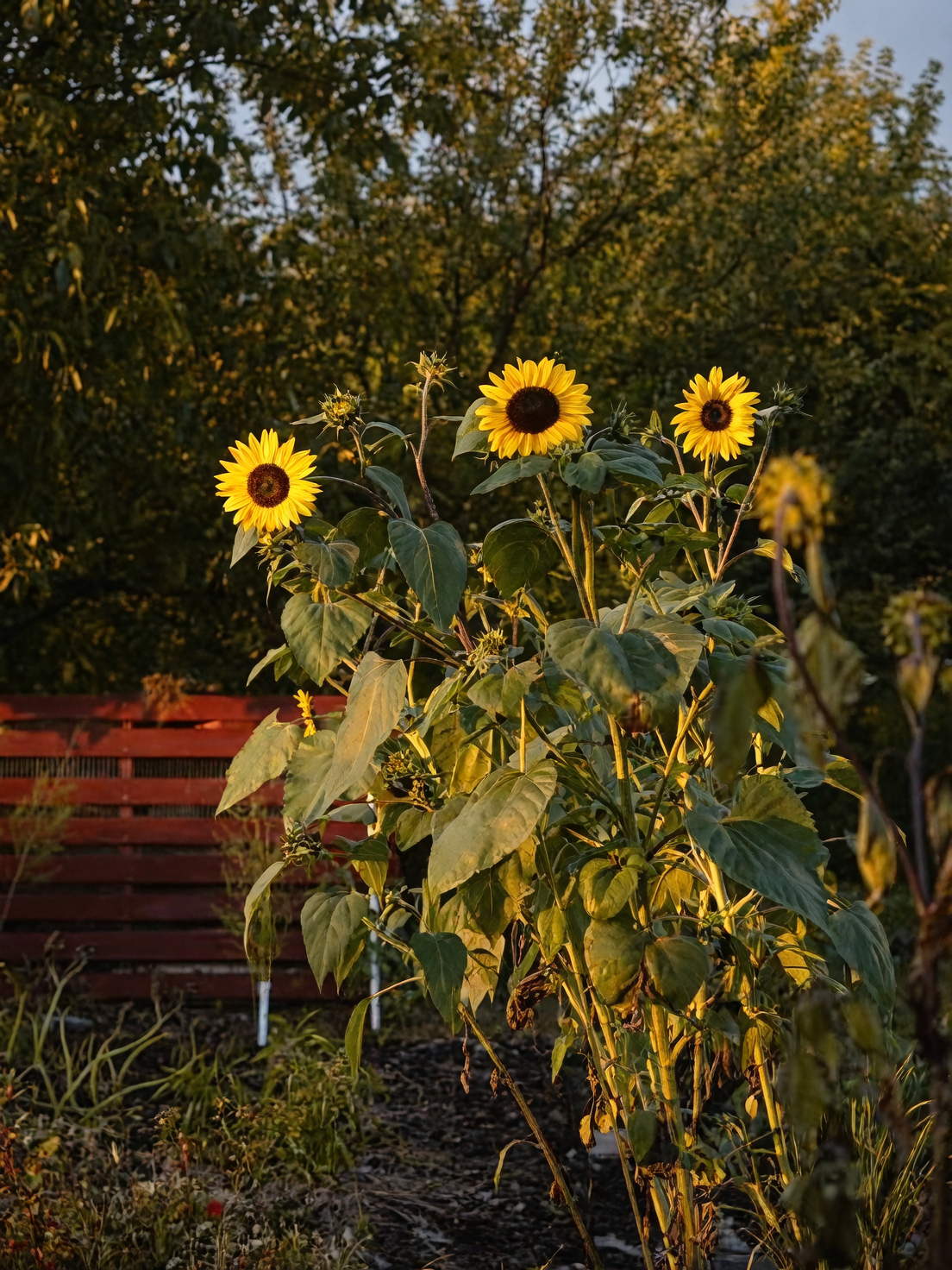
Sunflowers are optimists in plant form—fast-growing, sun-chasing, and generous with blossoms, seeds, and pollinators. But even these sunny giants can hit rough patches. If your Helianthus annuus is looking spotty, webbed, or mobbed by sap-suckers—or if birds and squirrels are lining up like it’s a buffet—this IPM-driven troubleshooting guide will help you diagnose fast and act smart.
First things first: set your sunflowers up for success
IPM (Integrated Pest Management) starts with prevention. Sunflowers love:
- Full sun: 6–8+ hours of direct light daily. Weak light = weak stems and uneven heads.
- Warmth: best growth roughly 15–30°C (59–86°F). Protect from frost.
- Well-drained soil: loose, fertile, and never waterlogged. Aim for pH 6.0–7.5.
- Steady moisture, not soggy: water deeply, then let the top layer dry slightly; keep it consistent during bud and bloom.
- Breathing room: space plants for airflow to discourage mildew and rust.
- Ground rules: water at the base (keep foliage and heads dry), stake tall types, and avoid nitrogen overload that invites pests and disease.
Your IPM toolbox (use in this order)
- Cultural prevention: sun, spacing, sanitation, watering at soil line, crop rotation, and resistant/appropriate cultivars.
- Monitoring: scout twice weekly in warm weather; check undersides of leaves with a hand lens; tap suspect leaves over white paper to spot mites; watch for ants (they often herd aphids).
- Mechanical controls: blast aphids with water, pinch off infested leaves, deadhead badly damaged blooms, bag or net seed heads.
- Biological allies: lady beetles, lacewings, syrphid fly larvae, parasitoid wasps; predatory mites for spider mites. Microbial tools like Bt (for caterpillars) and Beauveria bassiana (for aphids) can help.
- Targeted products only if needed: insecticidal soap, horticultural oil, and labeled fungicides. Always follow the label and local regulations. Protect pollinators: apply at dusk, avoid spraying open blooms, and never drench plants in bloom with broad-spectrum insecticides.
—
Pests: what’s bugging your sunflowers?
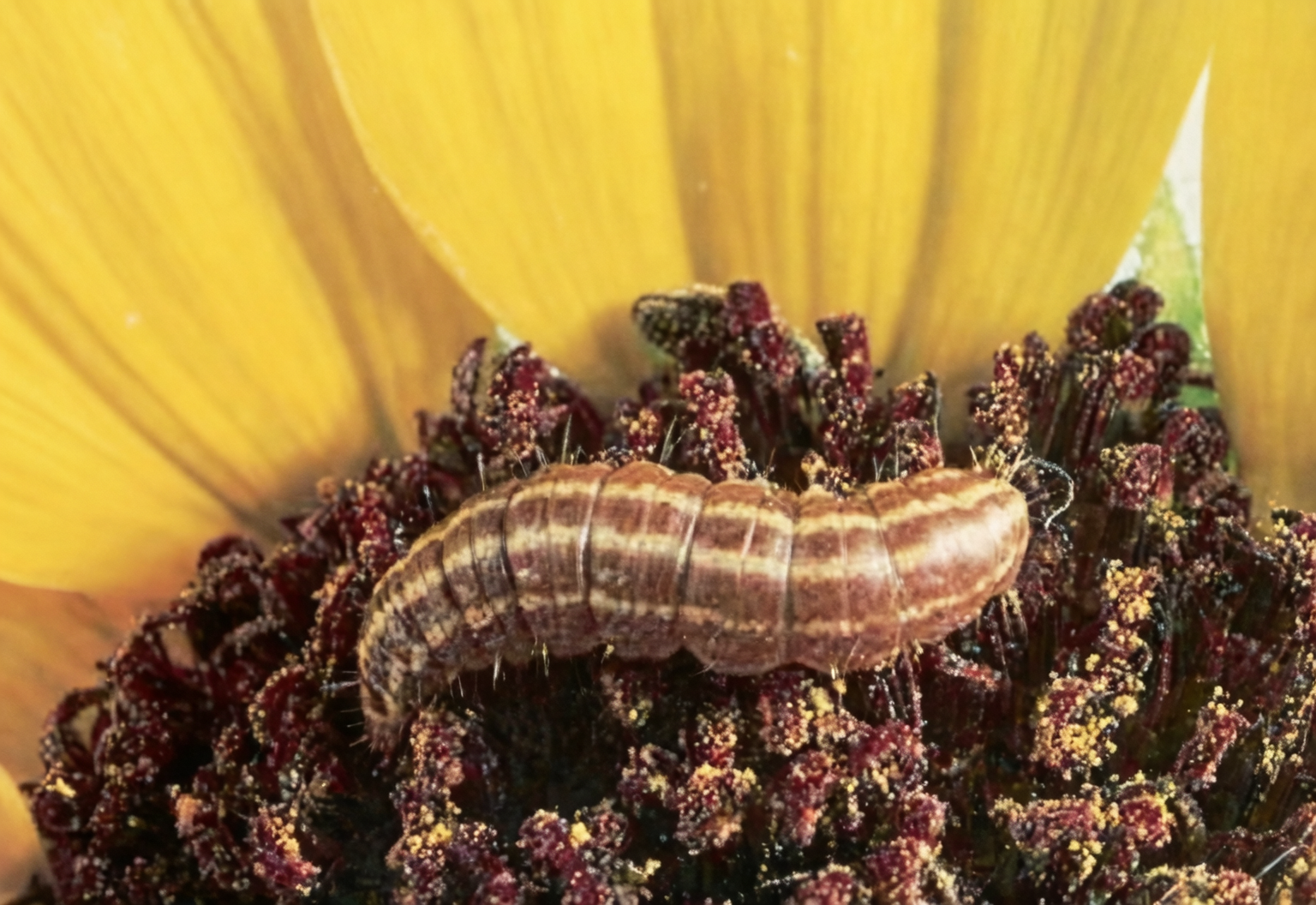
Sunflower moth larvae (the seed-head saboteur)
- What you’ll see
- Webbing, frass (sawdust-like droppings), and brown boring in the florets and developing seeds.
- Ragged, ruined centers even when rays look fine.
- Small gray-tan moths hovering at dusk as heads begin to open.
- Timing
- Adults target fresh blooms to lay eggs; larvae hatch and burrow into florets/seeds quickly.
- Scout
- Start at first color and early bloom. Gently part florets; look for tiny larvae and frass.
- Act
- Cultural: succession sow to spread risk; remove and destroy badly infested heads; keep beds clean post-harvest.
- Mechanical: bag individual heads just as ray florets begin to loosen (see netting section) to block egg-laying.
- Biological: spray Bacillus thuringiensis var. kurstaki (Btk) at early bloom and repeat in 5–7 days while new eggs are hatching. Thoroughly wet the disk florets. Time at dusk to spare pollinators.
- Last resort: spinosad can work on larvae, but use sparingly, at dusk only, and avoid spraying open blooms relied upon by bees.
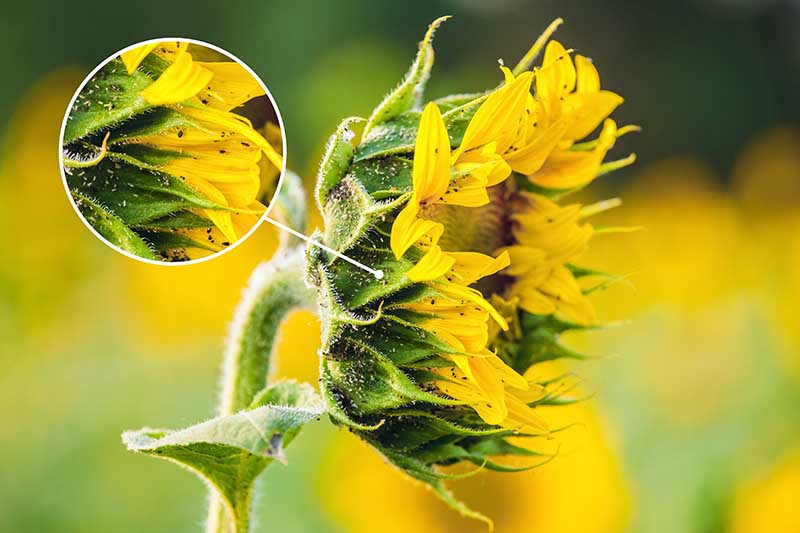
Aphids (sap-suckers with sticky calling cards)
- What you’ll see
- Clusters on tender stems, undersides of leaves, or backs of buds. Leaves curl, pucker, or yellow; honeydew and sooty mold may appear.
- Ants farming them is a giveaway.
- Scout
- Check new growth twice weekly, especially in warm spells and on container plants.
- Act
- Cultural: avoid excess nitrogen; keep plants evenly watered; manage nearby ant trails.
- Mechanical: a strong water jet knocks them off—repeat every few days.
- Biological: lady beetles, lacewings, and hoverfly larvae gorge on aphids. Beauveria bassiana–based sprays can assist.
- Products: insecticidal soap or horticultural oil (good coverage, especially undersides). Apply in the evening, and repeat in 5–7 days. Keep sprays off open flower disks to protect pollinators.
Spider mites (thriving in hot, dusty conditions)
- What you’ll see
- Fine stippling that turns leaves bronze; dusty feel; delicate webbing on undersides and between veins.
- Tap a leaf over white paper—moving “specks” confirm mites.
- Scout
- Focus on lower, older leaves during hot, dry weather; inspect twice weekly.
- Act
- Cultural: reduce dust (lightly rinse foliage early day so it dries fast; keep heads dry); avoid water stress.
- Biological: introduce or conserve predatory mites (e.g., Phytoseiulus, Neoseiulus).
- Products: insecticidal soap or summer horticultural oil, well-timed and well-covered on leaf undersides. Avoid pyrethroids—they often flare mite outbreaks.
—
Diseases: spot, decide, and act early
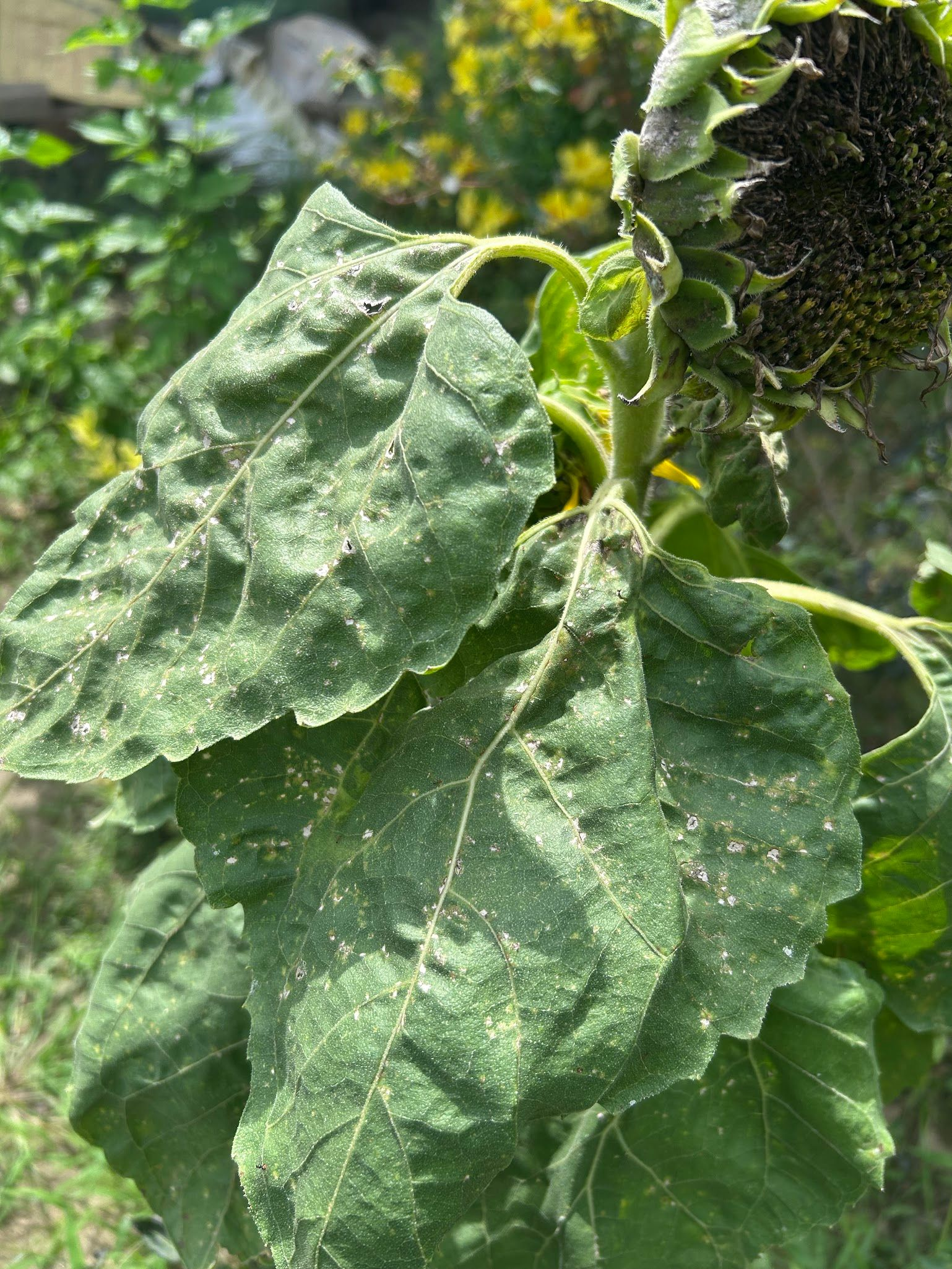
Powdery mildew (powdery white film)
- What you’ll see
- White, talc-like patches on upper surfaces; leaves may yellow and distort. Often appears in late summer when nights are humid and days are dry.
- Prevention
- Max sun and airflow; water at soil level; don’t crowd; avoid pushing lush growth with heavy nitrogen.
- Act
- Remove worst leaves to reduce spore load.
- Consider biofungicides (e.g., Bacillus-based) or labeled sulfur/potassium bicarbonate products. Start at first flecks and repeat per label. Avoid sulfur in high heat and on sensitive varieties.
Downy mildew (cool, wet weather’s calling card)
- What you’ll see
- Pale-yellow to light-green mottling on topside; downy, gray-white growth along veins beneath.
- Seedlings may be stunted and distorted; severe cases can dwarf plants.
- Prevention
- Plant in well-drained soil; avoid overwatering; rotate out of sunflower and related hosts for 3–4 years where issues occur; remove infected seedlings promptly.
- Act
- Improve drainage and airflow immediately.
- Use labeled fungicides appropriate for downy mildews if the problem escalates. Treat early and follow intervals.
Rust (orange freckles that multiply fast)
- What you’ll see
- Tiny orange-brown pustules (rub off onto fingers) mainly beneath leaves; yellow halos above; severe cases defoliate plants.
- Prevention
- Full sun, spacing, and keeping foliage dry are your best defenses. Sanitize debris at season’s end.
- Act
- Remove heavily spotted leaves early.
- Use labeled copper or sulfur products preventively when conditions favor rust or at first pustules; repeat per label with good coverage.
Tip to tell powdery from downy: Powdery sits like flour on top (often both sides) and thrives in dry-day/humid-night cycles; downy hides on undersides in cooler, wetter stretches and pairs with yellow blotches above.
—
Outsmarting birds and squirrels: smart netting and bagging
You can love wildlife and still keep a share of seeds. The trick is timing and the right mesh.
When to protect
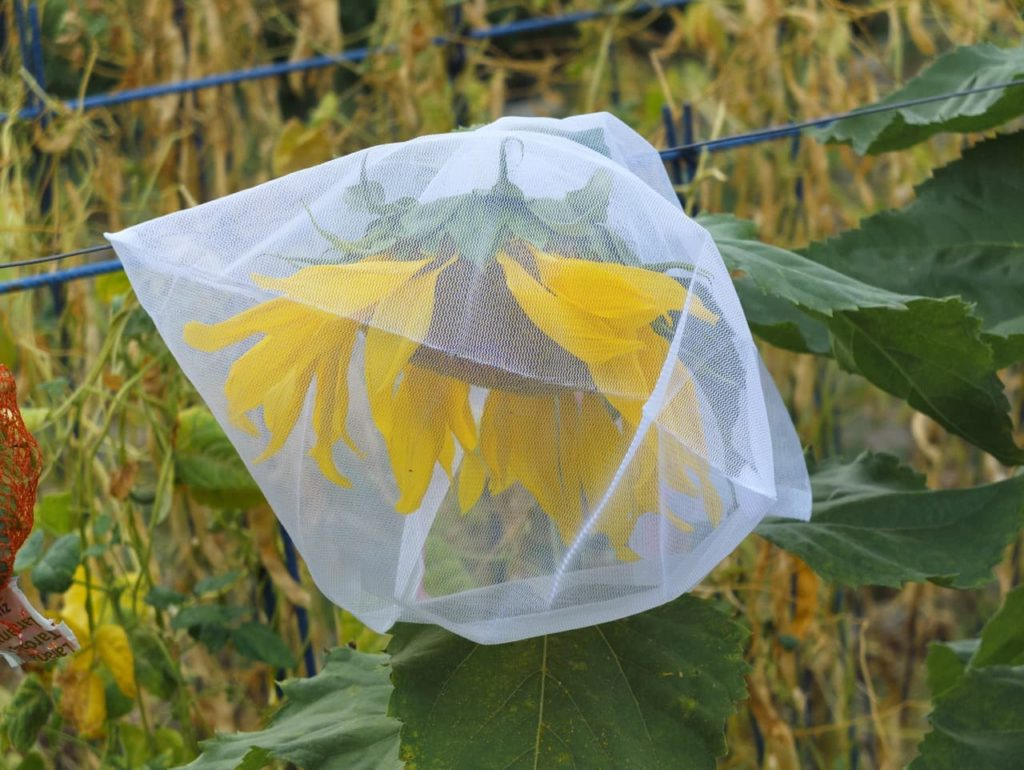
- For seed harvest: let pollinators work first. Once petals start to drop and seeds are setting (the back of the head still green), cover heads.
- For cut-flower types or pollenless cultivars: whole-plant netting is optional; you may not need head bags if you’re not saving seed.
- Harvest cue: when the back of the head turns brown and seeds are plump and striped, it’s go-time.
What to use
- Individual head bags:
- Organza produce bags or breathable paper bags: great for birds; also blocks many insects. Choose light-colored, breathable fabric; secure loosely behind the head.
- Fine mesh exclusion bags: excellent against both birds and larger insects; ensure airflow to prevent rot.
- Whole-plant netting:
- Bird netting with ~1.3–1.9 cm (0.5–0.75 in) mesh keeps birds off but not squirrels.
- Squirrels chew most plastic netting. Use hardware cloth (about 0.6–1.3 cm / 0.25–0.5 in) to make simple cages around prized heads.
- Build it smart:
- Create a small hoop or tomato-cage frame so netting doesn’t abrade petals or trap moisture against the disk.
- Secure with soft ties; check after wind or heavy rain.
Backup deterrents
- Rotate visual scare tools (reflective tape, scare-eye balloons) and move them every few days.
- Keep nearby feeders stocked to distract, or leave a sacrificial sunflower patch unnetted for wildlife.
Note: Netting entire plants during full bloom reduces pollination and seed set. Bag heads after good pollinator activity unless you plan to hand-pollinate.
—
A season-long IPM calendar for Helianthus annuus
- Pre-plant (spring)
- Choose sunniest spot; loosen soil deeply for the taproot; ensure drainage.
- Space for airflow; select cultivars matched to your goals (cut flowers, seed size, containers).
- Direct sow after frost once soil is >10°C (50°F). Succession sow every 10–14 days for a longer show.
- Early growth
- Water evenly; avoid splashing foliage. Scout weekly for aphids, flea beetles, and early mildew.
- Stake tall varieties before storms make it urgent.
- Bud to bloom (summer to early autumn)
- Increase watering frequency in heat; keep heads dry.
- Scout twice weekly for sunflower moth activity at dusk; begin Btk at early bloom if pressure is expected.
- Watch for mites in hot, dusty spells; manage dust and stress.
- Start bagging heads for seed once petals begin to drop and seeds are setting.
- Late season/harvest
- Harvest seeds when the back of the head turns brown; cut and finish drying somewhere airy and dry.
- Remove heavily diseased foliage; compost hot or dispose if pathogens are severe.
- Clean up stalks and leaf litter to break pest and disease cycles.
—
Cut flowers, seed, and sanity
- Vase life: many sunflowers last ~7–10 days with preservative. Cut when rays just open and disk florets haven’t advanced far.
- Seed saving: leave enough time for pollination before bagging; giant heads are heavy—support with stakes so bags don’t chafe.
- Wildlife diplomacy: harvest what you need, then leave a few heads for birds at season’s end.
—
A quick note on sunflower symbolism
Sunflowers are widely read as emblems of warmth, loyalty, and the joyful “pursuit of light”—in part because young plants literally track the sun (heliotropism) before mature heads settle facing east. As with most 花语 (flower language), these meanings are cultural poetry rather than botany, but they resonate: few garden sights brighten spirits like a row of golden disks turning dawn into a daily celebration.
—
Fast diagnostic cheat sheet
- Webbing and frass in the head: sunflower moth larvae → bag heads, Btk at early bloom.
- Sticky leaves with ants and curling tips: aphids → water jet, beneficials, soap/oil.
- Bronzed, stippled leaves with fine webbing: spider mites → reduce dust/stress, predatory mites, soap/oil.
- White powdery film on leaves: powdery mildew → airflow, remove spots, sulfur/bicarbonate options.
- Yellow mottling above with downy growth beneath: downy mildew → drainage, rotation, early fungicide if needed.
- Orange-brown pustules that rub off: rust → keep leaves dry, remove first spots, copper/sulfur as labeled.
Give sunflowers the sun and airflow they crave, keep moisture steady and foliage dry, and respond early with gentle, targeted tactics. Do that, and your Helianthus annuus will repay you with towering stems, bold blooms, and a harvest you won’t have to share—unless you choose to.