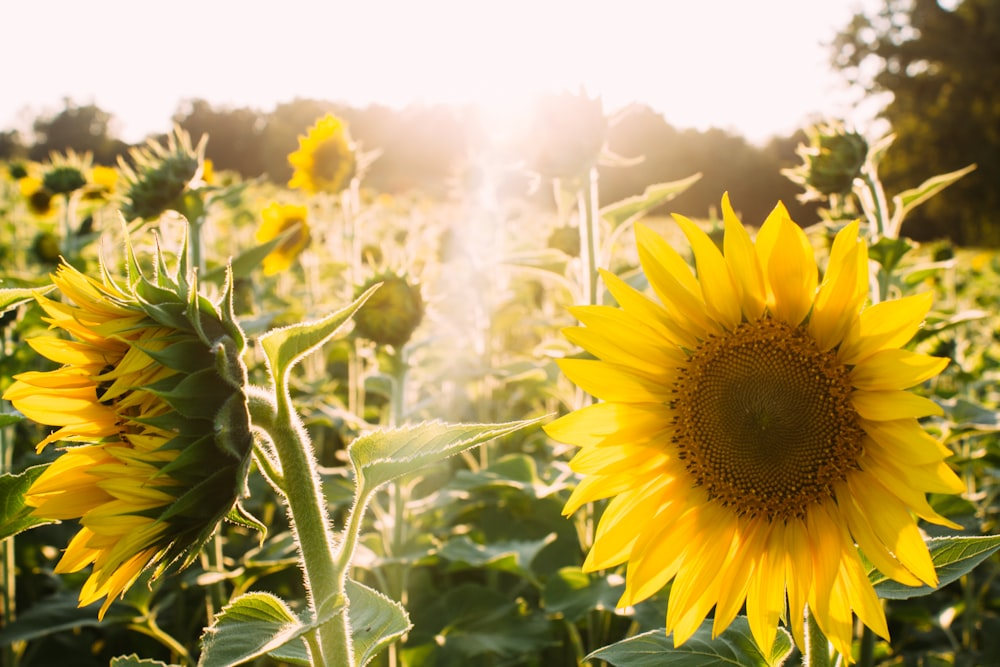
Sunflowers don’t ask for much—just your sunniest spot, a bit of elbow room, and a watering rhythm that matches their growth. In return, Helianthus annuus surges upward on sturdy, hairy stems and crowns the season with big, golden faces. Whether you’re sowing a row of giants along the fence or popping dwarfs on a balcony, this guide walks you through full-sun placement, watering by stage, mixes that keep roots happy, staking tall types, and a simple season-by-season routine for sturdy, bloom-packed plants.
Meet Helianthus annuus at a glance
- Common names: Sunflower, Annual/Common/Ornamental Sunflower
- Family: Asteraceae (daisy family); origin: North America
- Habit: Fast-growing, upright annual with a deepening taproot
- Size: Dwarfs 30–60 cm (12–24 in); garden types 1.2–3.5 m (4–12 ft); record giants can top 9 m (30 ft)
- Bloom: Summer to autumn; many heads last ~7–10 days—succession sowing keeps the show rolling
- Sun-tracking: Young plants follow the sun (heliotropism); mature, open heads typically face east
Sun first: placement, spacing, and wind
Full sun is non-negotiable—aim for 6–8+ hours of direct light daily. Skimp on sun and you’ll see weak stems, drooping leaves, and lopsided heads.
- Best spots
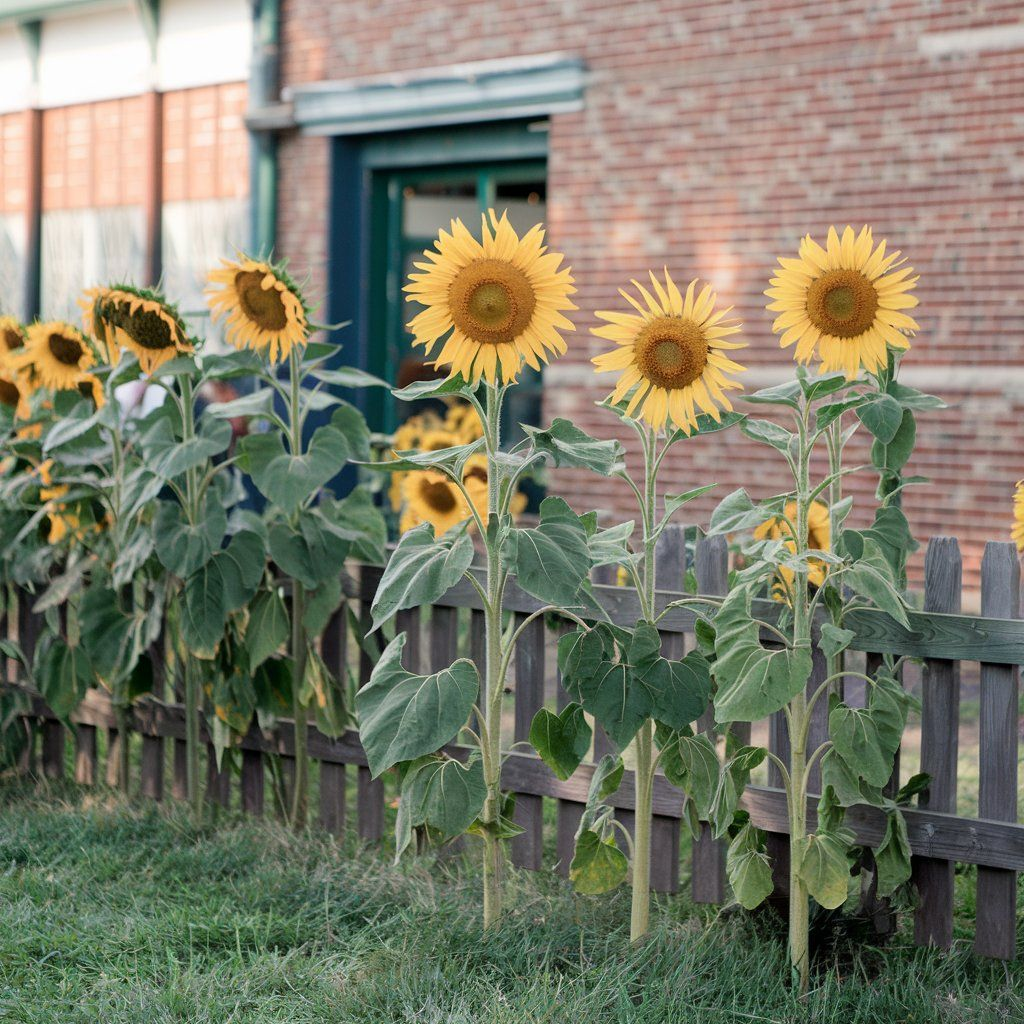
- Garden: Open beds, borders, along fences (great for wind shelter)
- Small spaces: Patios, balconies, or a very sunny windowsill (choose dwarf/compact types)
- Orientation tip: Because open heads tend to face east, plant where that face will be visible—great along west-facing patios so blooms look back at you.
- Wind and staking: Tall types appreciate a windbreak (fence, hedge) plus early staking in breezy sites.
- Spacing (guideline)
- Dwarfs/compact: 20–30 cm (8–12 in)
- Mid-size garden types: 30–45 cm (12–18 in)
- Giants/large-head varieties: 60–90 cm (24–36 in)
- Keep good airflow to discourage disease.
Soil and potting mixes that make stems sturdy
Sunflowers are adaptable but shine in loose, fertile, well-drained soil with a deep, loosened root zone and a pH of ~6.0–7.5.
- In-ground prep
- Loosen soil at least 30–40 cm (12–16 in) deep for the taproot.
- Mix in compost or leaf mold for fertility and structure.
- Heavy clay? Work in coarse sand or fine gravel plus organic matter to improve drainage.
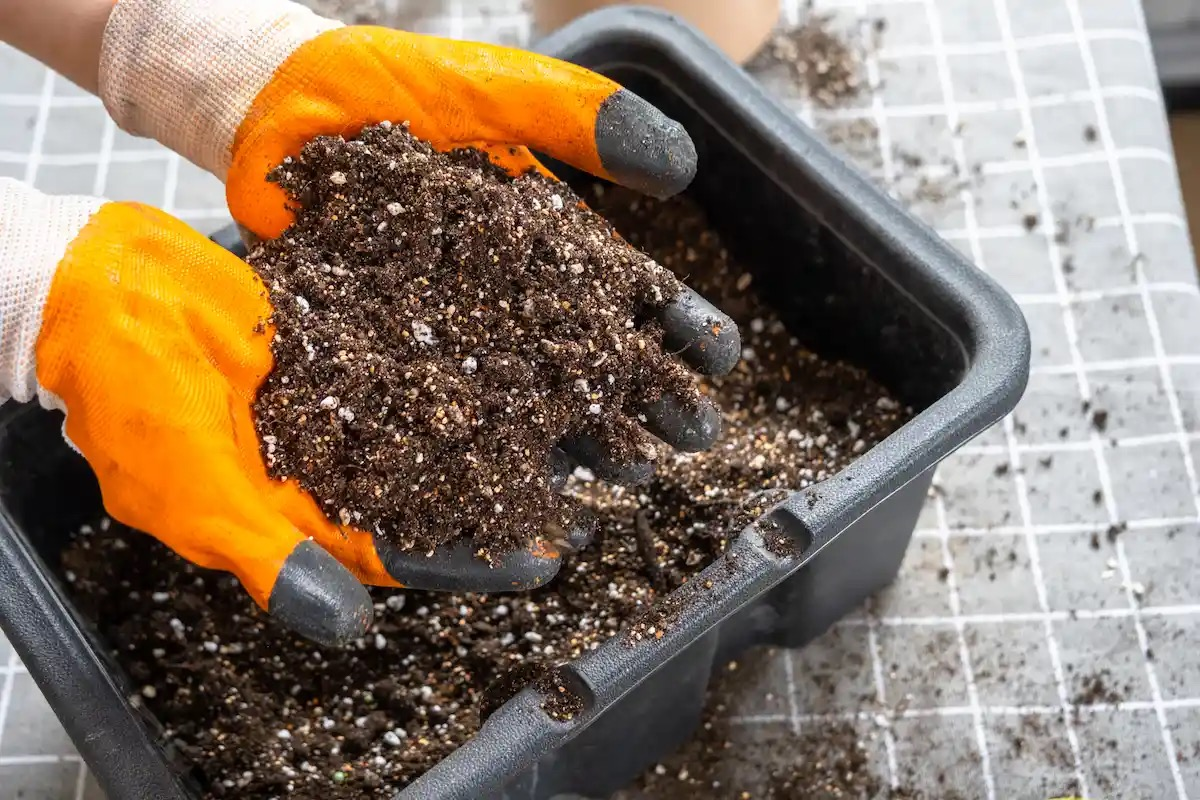
- Container mix (free-draining is key)
- 2 parts quality potting soil
- 1 part compost or leaf mold
- 1 part perlite or coarse sand
- Use pots with generous drainage holes and never let them sit in saucers of water.
- Pot size
- Dwarfs/compact: often thrive in 10–15 cm (4–6 in) pots
- Many compact-to-medium types: at least 30 cm (12 in) wide and ~40 cm (16 in) deep
- Taller cultivars need larger, heavier containers to prevent tipping.
Watering by growth stage (your season-long rhythm)
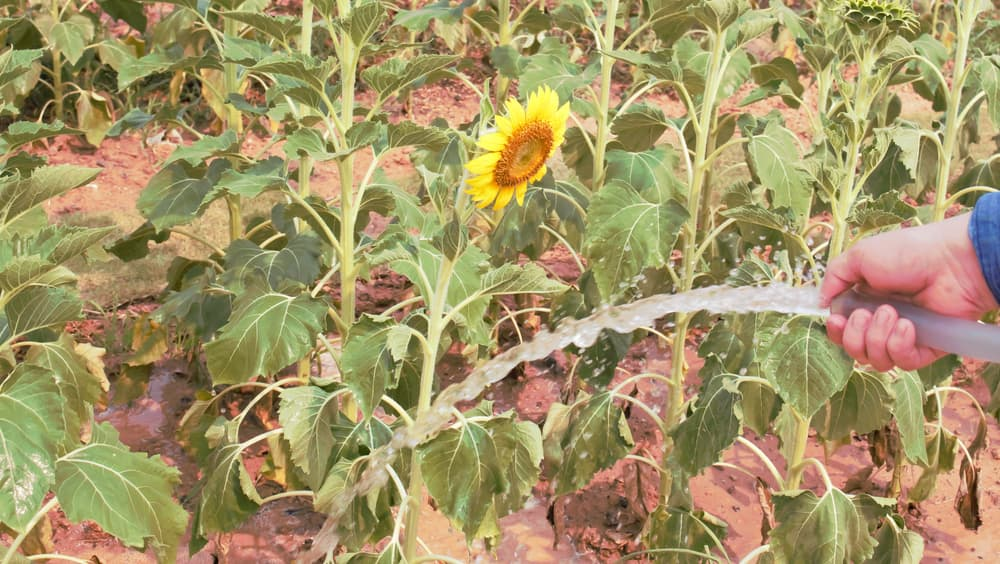
Sunflowers like steady moisture—never soggy. Water deeply, then let the top layer of soil dry slightly before the next drink.
- Seed/seedling (germination to 3–4 true leaves)
- Keep evenly moist so seeds sprout and roots anchor. Don’t let the surface crust.
- Vegetative surge (rapid height gain)
- Water deeply to encourage deep roots; allow the top few centimeters to dry between waterings.
- In-ground: adjust to weather; in heat waves, check more often.
- Bud to bloom (forming buds through flowering)
- Maintain consistent moisture for fuller blooms and sturdier stems.
- Always water at the base; avoid wetting flower heads.
- Late season (cooling temps, seed fill)
- Gradually reduce watering as temperatures drop and plants wind down.
Container note: Pots dry fast in summer—check daily in hot spells. Never leave containers standing in water; it yellows lower leaves and invites root issues.
Feeding for strength, not flops
- In fertile garden soil: Often minimal extra feeding is needed.
- In poor soil or containers: Feed during active growth.
- Option A: Mix a slow-release fertilizer at planting.
- Option B: Use regular liquid feed at label rates; many growers switch to a balanced-to-slightly higher-potassium “bloom” feed every ~10 days in pots.
- Caution: Over-fertilizing can cause weak, sappy growth and floppy stems. When in doubt, go lighter.
Sowing, transplanting, and pinching
- When to sow: After last frost once soil is above 10°C (50°F). Ideal germination is around 20–22°C (68–72°F).
- How deep: 2.5–4 cm (1–1.5 in); thin to final spacing once established.
- Germination: ~7–10 days under warm, evenly moist conditions.
- Days to bloom: Many garden types flower in ~70–95 days; some dwarf pot varieties bloom in ~50–60 days.
- Transplanting: Because of the taproot, handle gently. If starting early, use biodegradable pots to minimize shock when planting out.
- Pinching and pruning
- Single-stem types: Usually no pruning.
- Pinch suitable cultivars to encourage branching and multiple blooms.
- For one huge central flower, remove side shoots once buds are visible.
- Deadhead to prolong flowering—unless you’re saving seeds.
Pro tip: Succession sow every 10–14 days for a parade of flowers from midsummer into fall.
Staking tall types (and keeping giants upright)
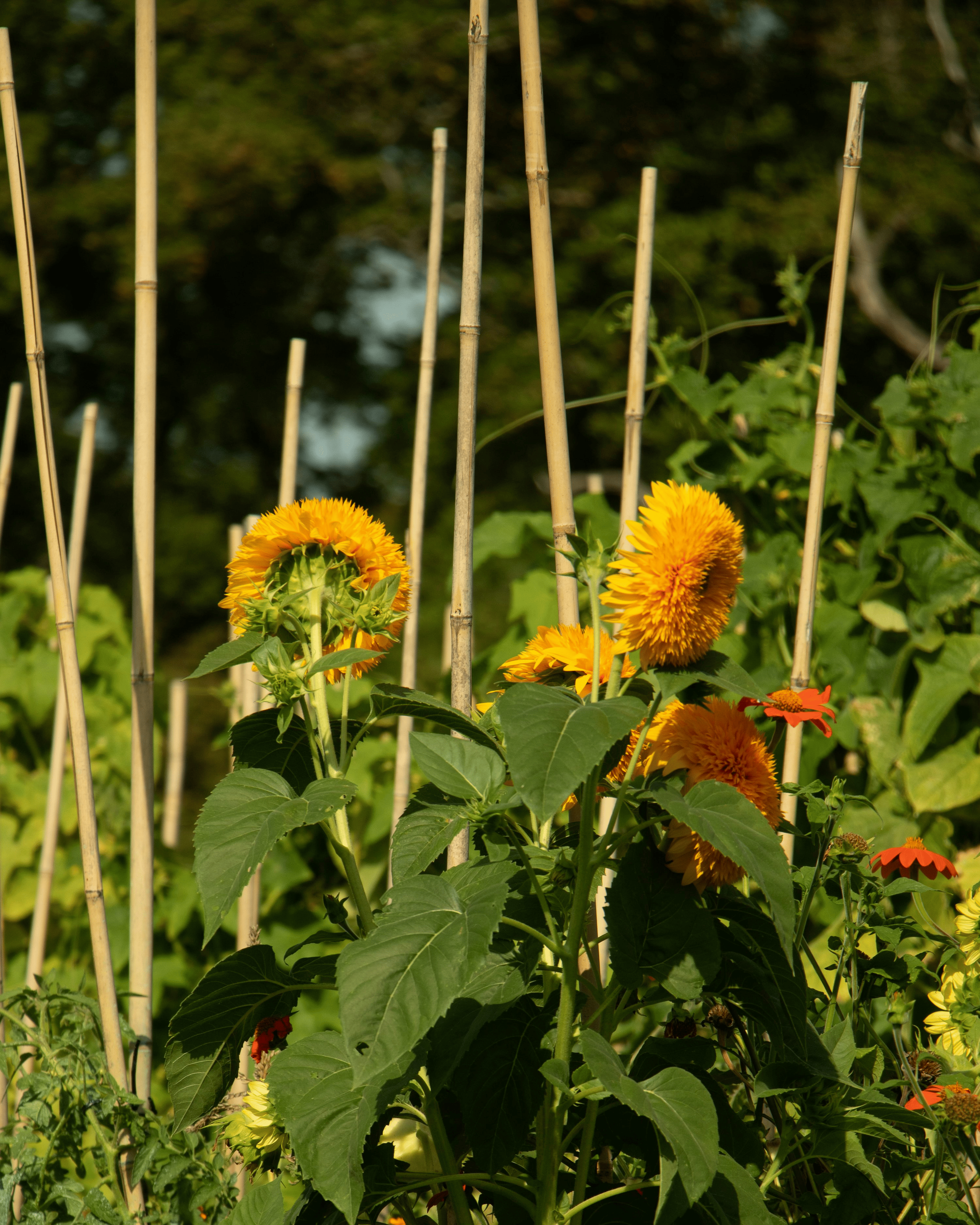
- Install stakes early, before wind or weight necessitates rescue.
- Hardware that works
- 1.8–2.4 m (6–8 ft) bamboo canes, wooden stakes, or rebar for garden types
- Soft ties, garden tape, or cloth strips; make a loose figure-8 to avoid chafing.
- Technique
- Drive the stake 20–30 cm (8–12 in) into the ground, just outside the root zone.
- Add extra ties as the plant grows; support just below the developing head.
- Along fences, use discreet ties to the structure for stealth support.
- For giants and large-headed seed types, consider a second stake or a triangle of canes.
A season-by-season routine
- Spring
- Direct sow after frost; keep seedbeds evenly moist.
- Begin light feeding once plants take off.
- Thin to final spacing for airflow and sturdy stems.
- Summer
- Full sun every day; deep, regular watering in heat.
- Stake tall varieties early; add ties as needed.
- Feed container plants on schedule.
- Keep succession sowing to extend bloom time.
- Cut for the vase when ray petals just lift from the disk.
- Autumn
- Taper watering as nights cool.
- Harvest seed when the back of the head turns yellow-brown to brown.
- Leave some heads for birds or save seed for next year.
- Winter
- Annuals complete their cycle; remove spent plants, tidy debris.
- Store saved seeds (cool, dry, rodent-proof) and plan next season.
Pests, diseases, and hungry visitors
- Pests: Aphids, spider mites, beetles, sunflower moth (larvae damage seeds).
- Critters: Birds and squirrels love ripening heads—use netting or paper bags over maturing heads if you plan to harvest.
- Diseases: Powdery/downy mildew, rust, leaf spots, Sclerotinia (white mold), Fusarium wilt.
- Prevention first
- Sun, spacing, and airflow
- Water at the base (keep leaves/heads dry)
- Well-drained soil; avoid constant wetness
- Remove infected leaves promptly
- Use insecticidal soaps, horticultural oils, or labeled fungicides as locally permitted.
Cut flowers and seed harvest
- For the vase
- Harvest early in the day when the first ray petals are lifting but not fully extended.
- Strip lower leaves, recut stems under water, and use a floral preservative.
- Expect ~7–10 days of vase life from many types.
- For seeds
- Wait until the back of the head turns brown and seeds are plump with striped hulls.
- Cut the head with a length of stem, hang to finish drying, then rub out seeds.
- Dry thoroughly before storing; roast for snacking or save for sowing and wildlife.
Indoors and small-space success
- Choose dwarf/compact cultivars for containers and windowsills.
- Light: As close as possible to a bright, south-facing window; sunflowers do not tolerate low light.
- Water: Check frequently in warm rooms; keep the mix moist but never waterlogged.
- Growth tip: A noticeable day–night temperature difference can help plants grow stockier and sturdier.
Troubleshooting quick fixes
- Drooping leaves or uneven heads
- Most often a light problem—move to full, direct sun and keep moisture steady.
- Yellowing lower leaves on potted plants
- Check drainage; don’t let pots sit in water.
- Leggy seedlings that flop
- Increase direct light; thin to reduce crowding; brush gently by hand daily to encourage sturdier growth.
- Few or no seeds on fluffy doubles
- Many double-flowered types set seed poorly; hand pollination may help, but grow seed varieties for reliable harvests.
Safety, symbolism, and the “flower language” of sunflowers
- Safety: Generally considered non-toxic to humans, dogs, and cats (as with many plants, large quantities may upset stomachs).
- Symbolism and flower language
- Sunflowers have long symbolized loyalty, adoration, warmth, and positivity—“living sunshine.”
- Roots of the idea: Young plants literally turn toward the sun (heliotropism), and mature flowers greet the day facing east, which helps them warm quickly and attract pollinators. Culturally, stories like the Greek nymph Clytie—ever yearning for Helios—reinforce the theme of steadfast devotion.
- Takeaway: The charm is both poetic and practical—their sun-seeking nature is real, and the “language” we read in it celebrates constancy and joy.
Great cultivars to try
- For towering drama and seeds: ‘Mammoth Russian’, ‘Mammoth Grey Stripe’
- For branching, multicolored displays: ‘Autumn Beauty’, ‘Velvet Queen’
- For soft pastels and pollinators: ‘Lemon Queen’
- For containers and kid-friendly pots: ‘Teddy Bear’ (fluffy doubles), compact pollenless types for clean indoor arrangements
Ready, set, sunshine
Give Helianthus annuus all the direct sun you can, keep the root zone loose and free-draining, water with the season (more as buds form, less as fall cools), and stake the sky-scrapers before they wobble. Add a few succession sowings, and you’ll have a steady wave of gold—plus seeds for you and the birds—to carry summer’s light straight through to autumn.