

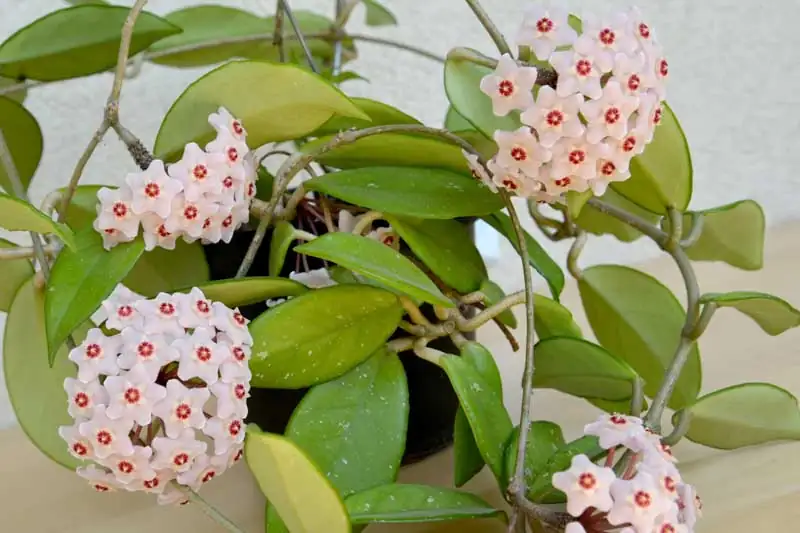
A Journey from the Wild: Hoya carnosa’s Transformation from Forest Epiphyte to Cherished Houseplant
In the lush, verdant forests of tropical and subtropical Asia, a humble yet spectacular plant found its roots—both literally and figuratively. The Hoya carnosa, commonly known as the Wax Plant, has an intriguing tale that begins high in the canopies of the Asian wilderness and winds its way into the cozy corners of homes across the globe. Let’s delve into the captivating history and evolution of this beloved evergreen vine.
Origins: The Wax Plant in the Wild
Picture a dense, warm forest, with beams of light piercing through the canopy. In this tranquil setting, the Hoya carnosa thrives as an epiphyte or lithophyte, clinging to the surfaces of trees and rocks. Its thick, glossy leaves and semi-succulent nature allow it to withstand dry spells, while its roots draw moisture and nutrients from the humid environment around it.
Native to regions stretching from southern China to parts of Southeast Asia and the western Pacific, this plant has adapted to a range of conditions, showcasing its resilience. Its ability to grow in challenging environments has been a key factor in its transformation into a household favorite.
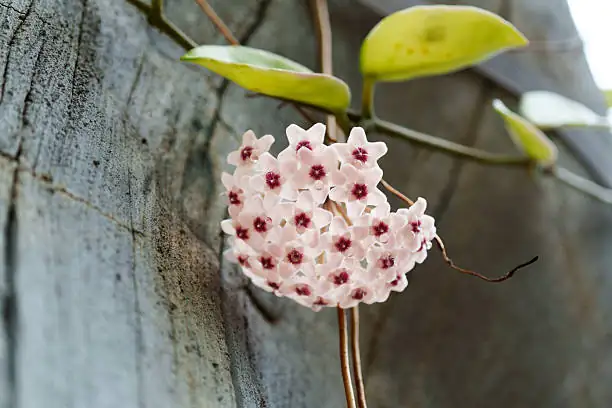
From Forest to Front Room: The Cultivation Journey
The journey of Hoya carnosa from forest dweller to indoor star began over 200 years ago. During the Victorian era, when glasshouses were in vogue, the Wax Plant captured the imagination of plant enthusiasts with its alluring waxy foliage and sweetly scented star-shaped flowers. These blooms, often described as “too-perfect-to-be-real,” became a symbol of elegance and sophistication.
Today, Hoya carnosa graces many a windowsill and hanging basket, prized not only for its beauty but also for its forgiving nature. As long as its roots aren’t kept soggy, this plant is typically happy to grow and even thrive indoors. It’s a testament to the plant’s adaptability and popularity across different climates and cultures.
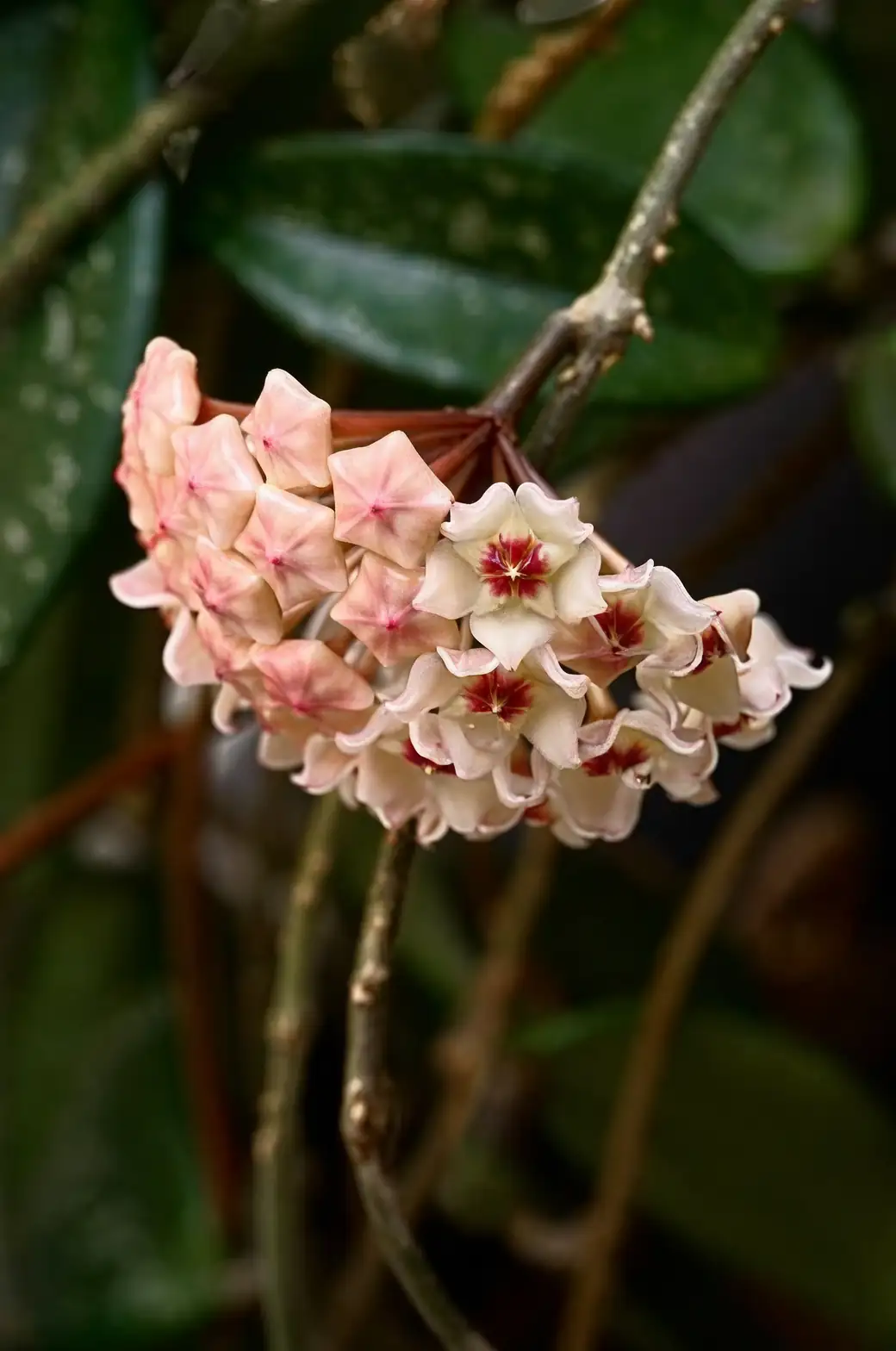
A Symphony of Symbols: The Flower Language of Hoya carnosa
In the language of flowers, Hoya carnosa is often associated with lasting affection and devotion. This symbolism is deeply rooted in its botanical characteristics—the plant can live for decades, reblooming from the same flower spurs year after year. This enduring nature mirrors the steady, unwavering bond of love and friendship, making it a cherished gift between family and friends.
The flower clusters, with their star-like appearance, also symbolize protection and prosperity. In many cultures, plants that bloom repeatedly are seen as harbingers of continuity and fortune.
Cultivating the Perfect Indoor Hoya
For those looking to bring a little piece of the forest into their homes, Hoya carnosa offers a delightful challenge. Here are some tips to ensure your Wax Plant thrives:
- Light: Bright, indirect light is ideal. While it tolerates partial shade, more light often encourages flowering. A spot near an east-facing window is usually perfect.
- Watering: This semi-succulent vine prefers to dry out between waterings. It’s best to water thoroughly, then let the topsoil dry out before watering again.
- Temperature and Humidity: Keep it warm—between 16–29°C (61–85°F) is ideal. Moderate to high humidity will replicate its native environment, so consider a humidifier or pebble tray in drier climates.
- Soil and Potting: A well-draining, airy mix is crucial. Think orchid bark mixed with perlite and potting soil. And remember, Hoya carnosa often blooms better when its roots are slightly snug in their pot.
- Pruning and Propagation: Minimal pruning is needed, mainly to shape or remove dead growth. For propagation, stem cuttings taken in spring are a great way to share the plant’s beauty with friends.
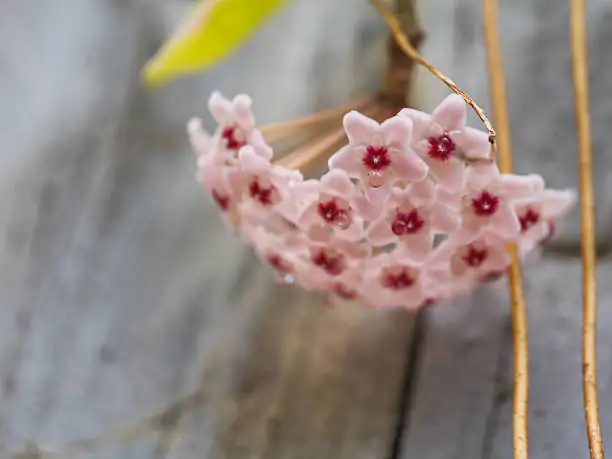
The Wax Plant’s Role in Modern Homes
Beyond its ornamental appeal, Hoya carnosa is valued for its air-purifying abilities, though the real-world impact can vary. Its resilience and low-maintenance nature make it an excellent choice for both novice and seasoned plant enthusiasts.
In conclusion, the story of Hoya carnosa is a testament to the plant’s adaptability and timeless charm. Whether climbing high in its native forests or adorning our homes, this Wax Plant continues to enchant with its glossy leaves and fragrant blooms, making it a perennial favorite for generations. So, next time you look at this beautiful vine cascading from its pot, remember the rich history and journey it has undergone to grace your home.


