

Meet the Sensitive Plant: Nature’s Bashful Performer
Imagine a plant that blushes and shies away at the slightest touch. Meet Mimosa pudica, often called the “Sensitive Plant” or “Touch-Me-Not,” a botanical marvel that captivates all who encounter it. Native to the Caribbean and South and Central America, this member of the Fabaceae family is a living curiosity, renowned for its quick, dramatic responses to touch and its whimsical nighttime behavior.
Fascinating Features of the Sensitive Plant
The Bashful Leaf-Folding Act
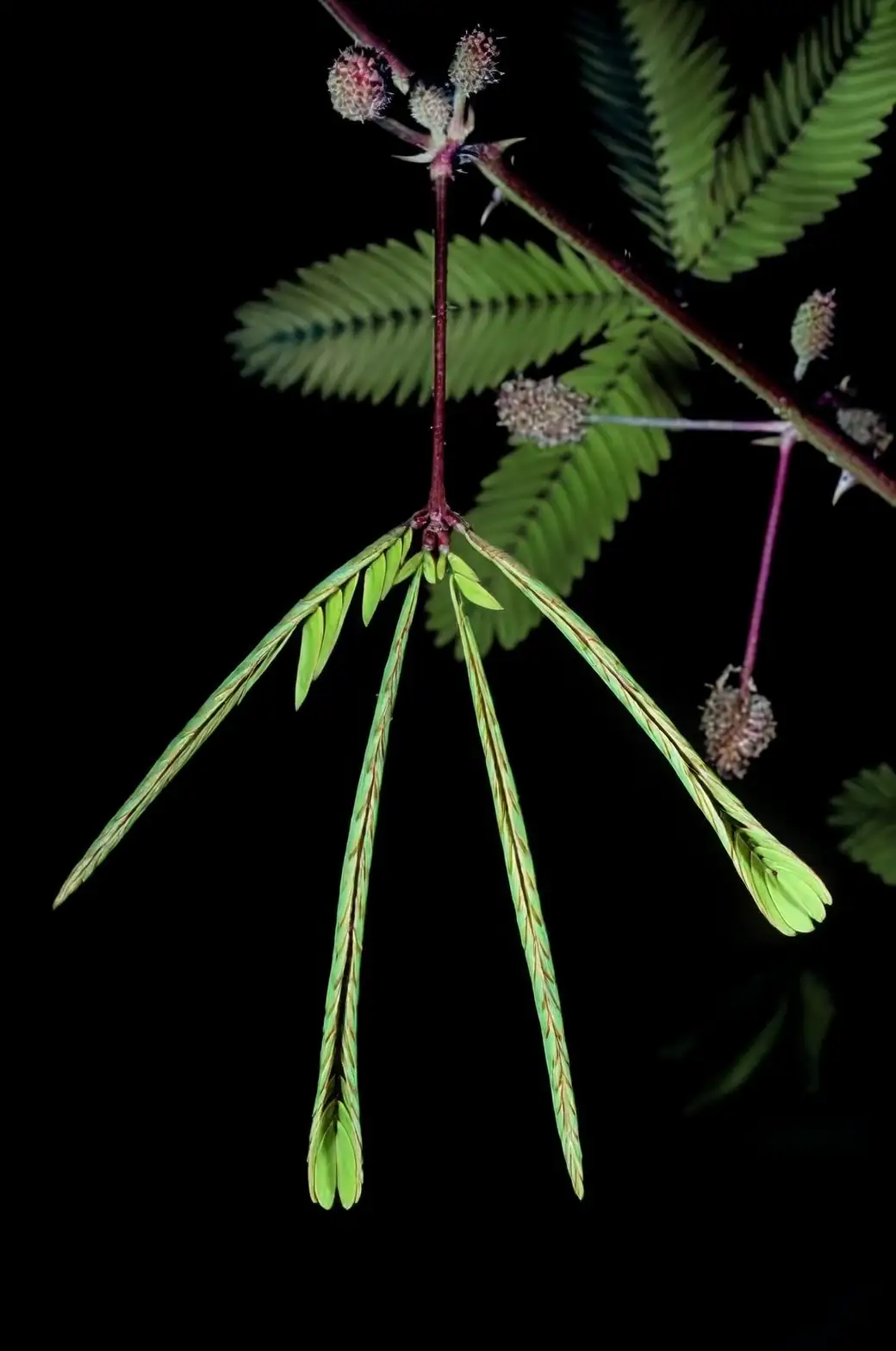
At the heart of Mimosa pudica’s charm is its famous leaf-folding trick. Picture this: a gentle caress or even a sudden gust of wind, and its fern-like, feathery leaves fold inward and droop as if bashful. This rapid movement, known as thigmonasty, is more than just a party trick. It may serve as a defense mechanism, deterring herbivores by making the plant appear less appetizing or exposing its thorny stems. Just a word of caution—this performance costs the plant energy, so it’s best not to overdo the poking and prodding.
Sleepy Time: The Nyctinastic Dance
As dusk falls, Mimosa pudica performs another enchanting act. Its leaves close up, entering a slumber of sorts, only to awaken and unfurl with the first rays of daylight. This movement, called nyctinasty, is akin to the plant’s version of tucking itself in for a good night’s rest. It’s a gentle reminder of the plant’s sensitivity to its environment, adapting its posture as light conditions change.

A Plant with Personality
The Blooming Beauty
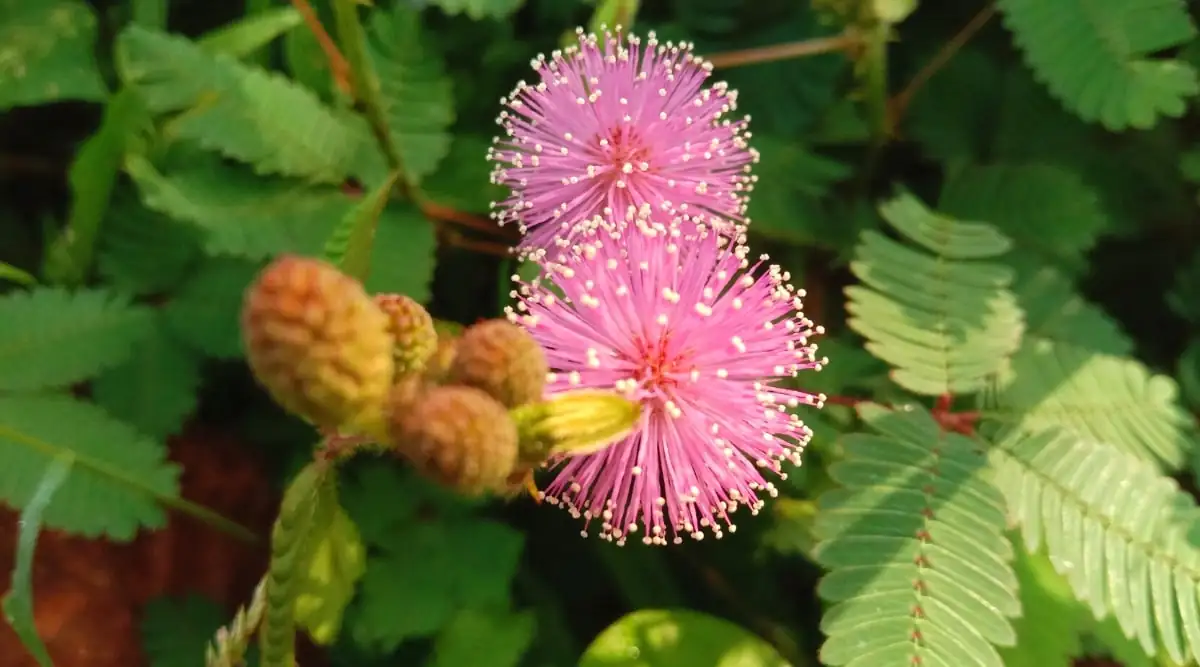
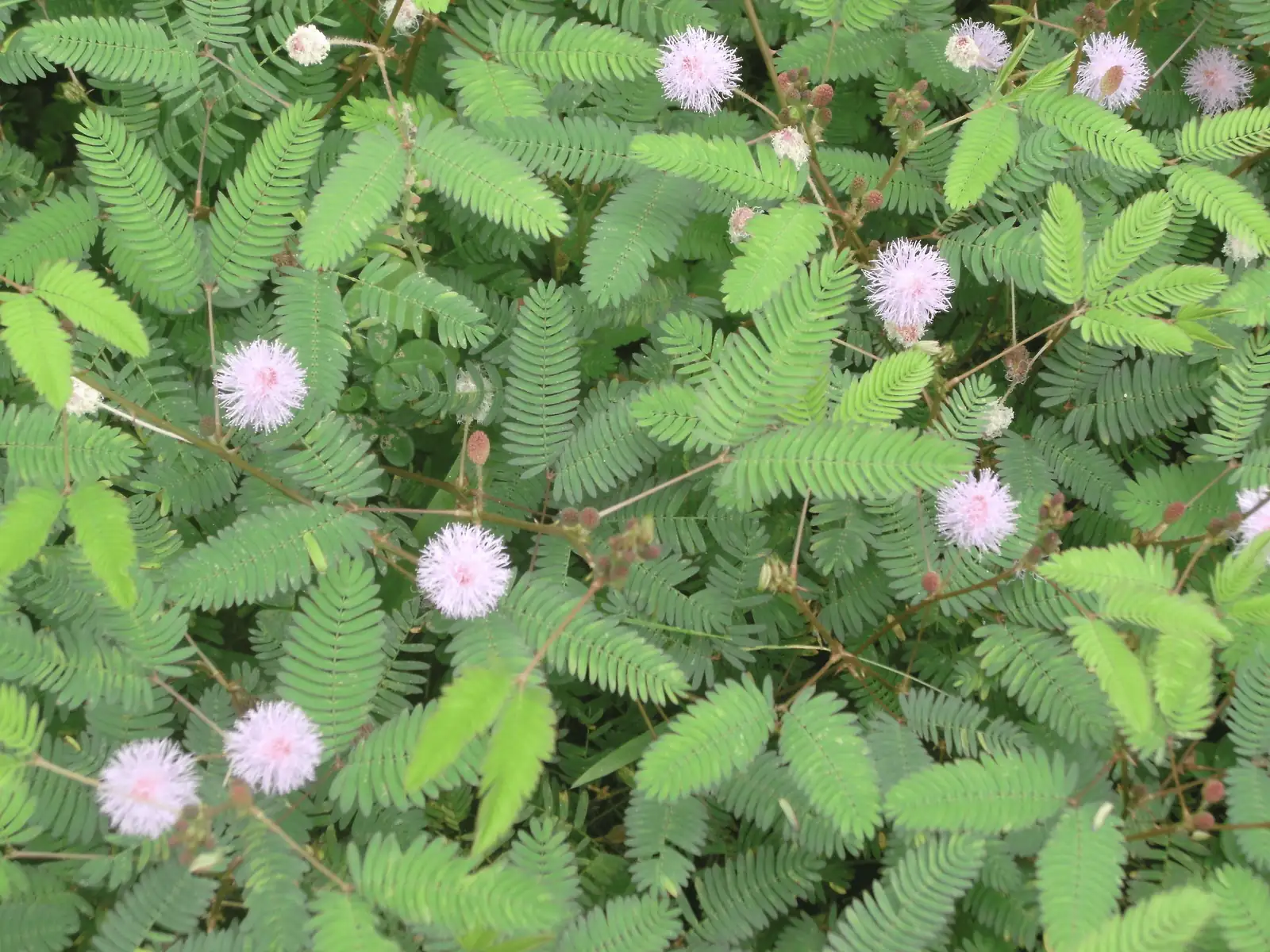
Despite its bashful nature, the Sensitive Plant doesn’t shy away from showing off its beauty. During the summer months, it produces adorable, round pink pom-pom flowers. These fluffy blossoms not only add a splash of color but also complement the plant’s unique personality, making it a delightful addition to any garden or windowsill.
The Nitrogen-Fixing Wonder
As a member of the pea family, Mimosa pudica has another trick up its sleeve. It forms symbiotic relationships with root bacteria, enabling it to capture nitrogen from the air. This natural ability makes it not just a decorative plant but a contributor to soil health, a characteristic that has even seen it explored for phytoremediation in contaminated soils.
Growing Your Own Sensitive Plant
Light, Water, and Care
Cultivating this captivating plant is relatively straightforward. Mimosa pudica thrives in bright light, ideally basking in at least eight hours of daylight. It prefers well-draining soil that remains consistently moist but not waterlogged. During its active growth phase, regular watering is key, while feeding it with a balanced fertilizer supports its vigor and blooming.
A Word of Caution
While the Sensitive Plant is generally trouble-free, it’s not without its challenges. It can fall prey to pests like spider mites, especially in dry indoor air. Moreover, its seeds can spread aggressively in warm climates, so if you live in such areas, it’s wise to grow it in containers and manage its seed production carefully.
Symbolism and Cultural Significance
Mimosa pudica’s shy demeanor has inspired its symbolism in various cultures. Representing shyness, sensitivity, and politeness, it’s often gifted as a playful reminder to be gentle and considerate. Its scientific name, “pudica,” meaning “bashful,” perfectly captures its essence and the tender emotions it evokes.
Fun Facts and Fascinations
- The Sensitive Plant’s movements aren’t limited to touch—it reacts to shaking, temperature shifts, and other sudden stimuli.
- Its rapid movements have made it a classic subject for scientific studies on plant behavior and stimulus response.
- In traditional medicine, it has been used for various folk remedies, although these uses should not replace professional medical advice.
Conclusion
Mimosa pudica, with its playful personality and unique traits, offers a window into the dynamic world of plants. Whether you’re a seasoned gardener or a curious observer, this plant is sure to entertain and educate, reminding us of the intricate wonders of the natural world. So, the next time you encounter a Sensitive Plant, give it a gentle touch and watch as it dances in response—a true performer in the garden theater.


