

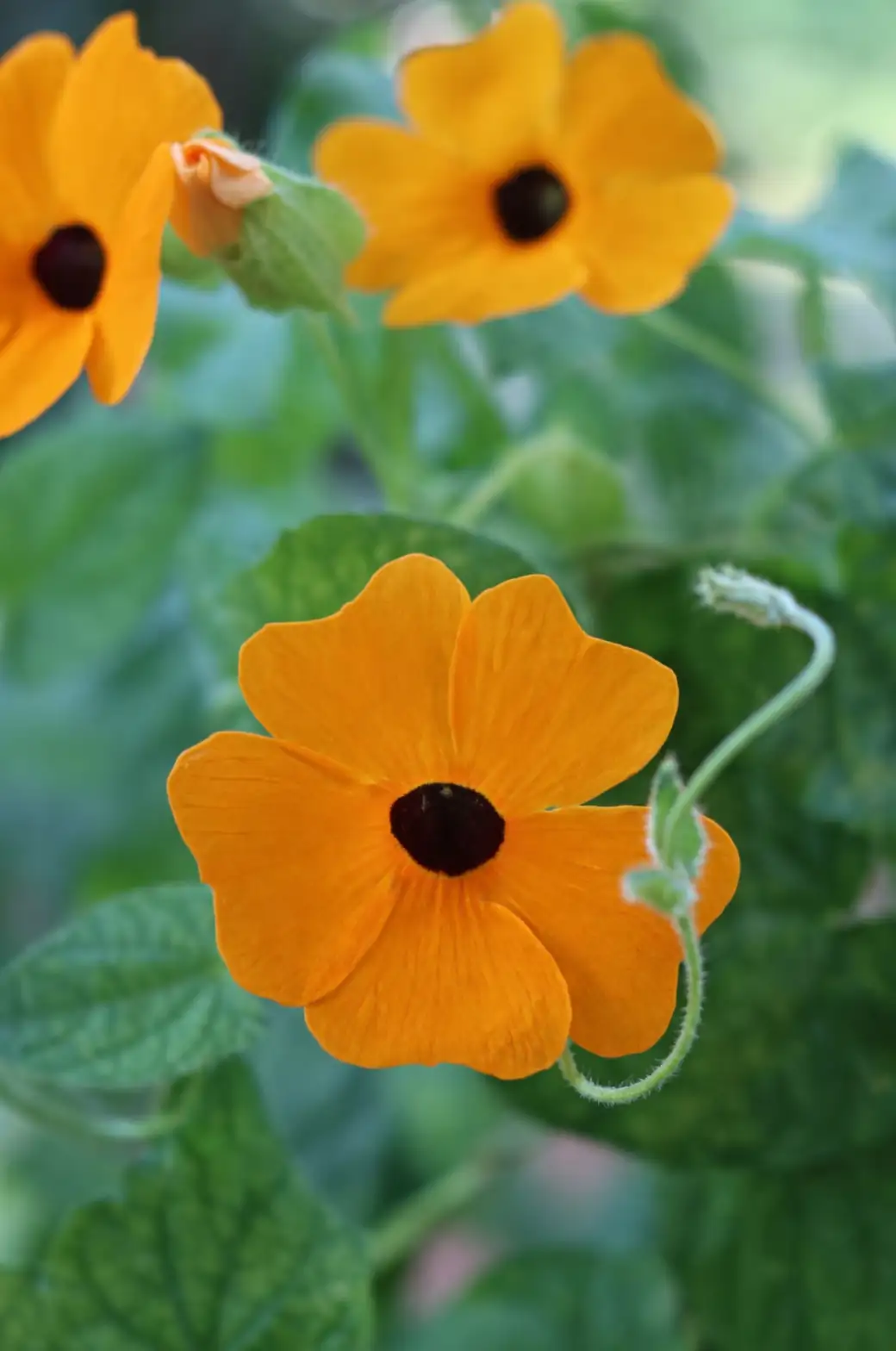
Imagine a vine that seems to smile back at you with its vibrant blooms, each brightly colored petal arranged around a strikingly dark center. This is the charm of Thunbergia alata, better known as the Black-eyed Susan Vine. Native to the tropical realms of East Africa, this lively plant is a gardener’s delight, offering vertical splendor and cheerful hues from late spring through fall. If you’ve been dreaming of a garden abundant with these delightful blooms year-round, look no further. Let’s dive into the step-by-step process of propagating this twining beauty using seeds and cuttings.
Propagating Black-eyed Susan Vine from Seeds
Growing Thunbergia alata from seed is a rewarding journey that begins with a little preparation and a lot of anticipation. Here’s how to set the stage for a flourishing garden:
Step 1: Pre-Soak the Seeds
Before you sow, give your seeds a head start by soaking them in warm water for 1–2 days. This helps to soften the seed coat, making it easier for young shoots to emerge.
Step 2: Sow Indoors
For a head start on the growing season, start the seeds indoors about 6–8 weeks before the last expected frost. Plant each seed roughly 6 mm (1/4 inch) deep in a well-draining potting mix. Keep the soil consistently moist but not waterlogged.
Step 3: Maintain Warmth and Light
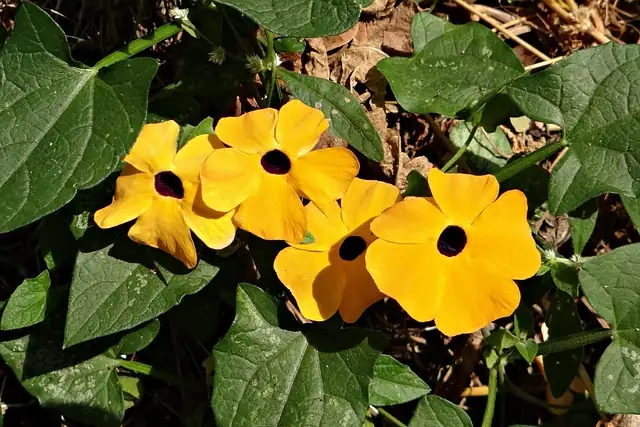
Place your seed trays in a warm location, ideally around 21–27°C (70–80°F), and ensure they receive plenty of light. Germination typically takes 10–21 days, a period where patience is key.
Step 4: Transplant Outdoors
Once the threat of frost has passed and nighttime temperatures are reliably above 10°C (50°F), your seedlings are ready to transition outdoors. Choose a sunny spot with well-draining, nutrient-rich soil, and give them plenty of room to spread and climb.
Propagating from Cuttings
For those who love a little hands-on gardening, propagating the Black-eyed Susan Vine from cuttings is another excellent method. This approach allows you to reproduce the exact characteristics of the parent plant, ensuring consistency in your garden.
Step 1: Select and Prepare Your Cutting
In the fall, choose a healthy stem approximately 10–15 cm (4–6 inches) long. Ensure it has a few sets of leaves, but remove the lower leaves to prevent them from rotting in the soil.

Step 2: Root the Cutting
Plant the cutting in a pot filled with a moist, well-draining potting mix. You might consider dipping the cut end in rooting hormone to encourage faster root development, though it’s optional.
Step 3: Provide Optimal Conditions
Place the pot in a warm, bright location but out of direct sunlight. Keep the soil moist to support root growth, and within a few weeks, you should notice new growth, signaling successful rooting.
Step 4: Transplant and Enjoy
Once your cutting has developed a robust root system, it’s ready to be transplanted to its permanent home. Ensure it has support to climb, such as a trellis or fence, to showcase its twining habit beautifully.
Creating a Lush Garden Year-Round
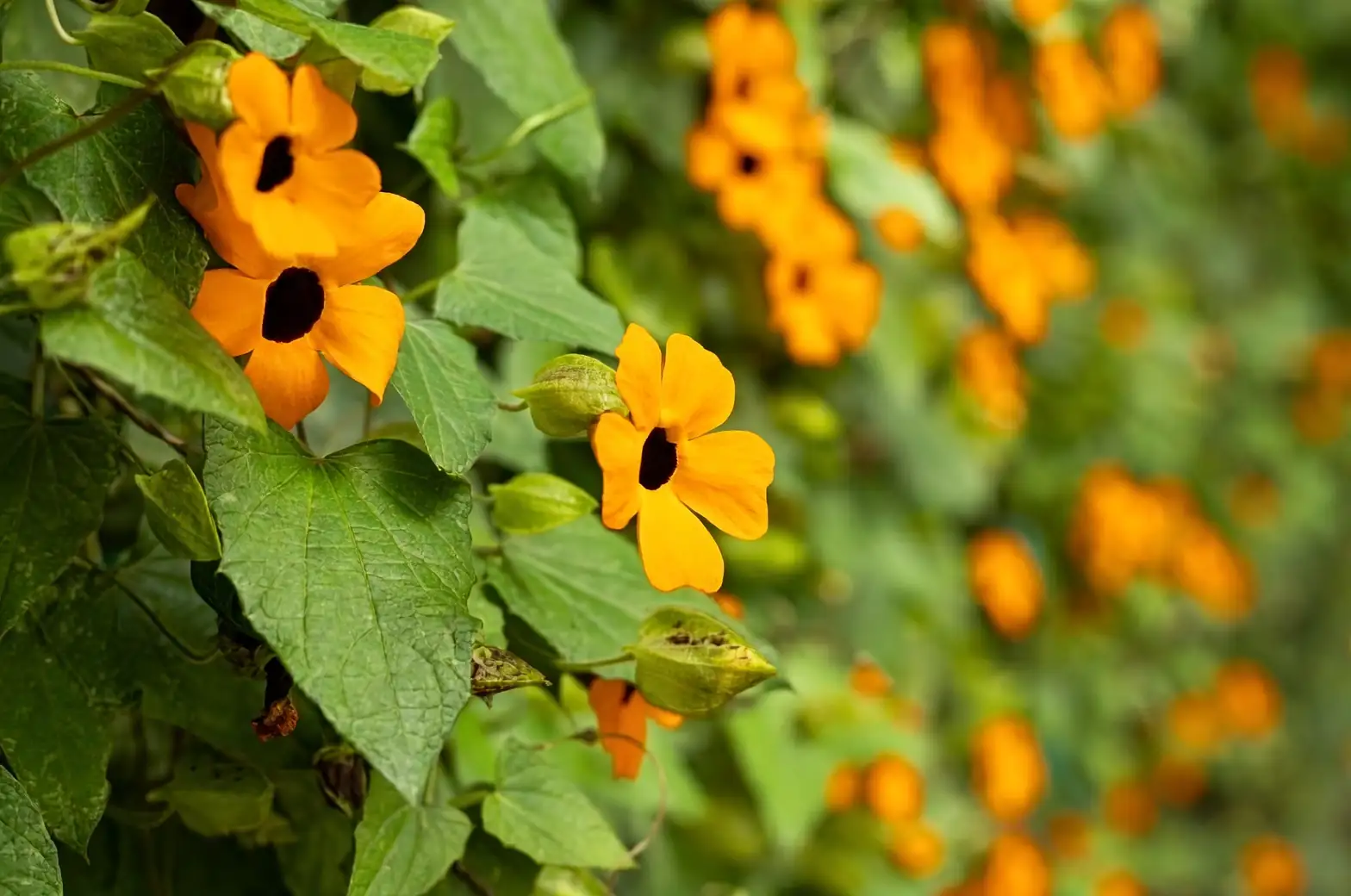
Black-eyed Susan Vine isn’t just about easy propagation—it’s also about adding vibrant, vertical color to your garden. Whether cascading from a hanging basket or climbing up a trellis, this vine offers endless possibilities for creating dynamic garden scapes.
Care Tips for Continuous Blooms
- Sunlight: Aim for full sun exposure, about 6+ hours daily, to encourage prolific flowering.
- Watering: Keep the soil evenly moist. In containers, you may need to water daily during hot spells.
- Feeding: Use a balanced fertilizer every 4–6 weeks, switching to a phosphorus-rich formula as buds form to boost blooms.
Overwintering Tips
In USDA Zones 10–11, Thunbergia alata can be a tender perennial, providing beauty year after year. In cooler regions, consider bringing your plant indoors during winter, ensuring it has bright light and warmth to thrive.
Symbolism and Joyful Growth
Beyond its beauty, the Black-eyed Susan Vine symbolizes cheerfulness, encouragement, and resilience—qualities that mirror its own vibrant and enduring nature. As each bloom opens with its “little dark eye,” it seems to offer a cheerful nod to the gardener, a reminder of the joy found in nurturing life.
So, whether you’re a seasoned gardener or a green-thumbed beginner, the Black-eyed Susan Vine offers a canvas for creativity and growth. With these propagation techniques, your garden can be a tapestry of color and life, delighting the senses season after season.


