

Discovering the Delightful Quirks of the Black-eyed Susan Vine
Imagine a plant that not only adds a splash of vibrant color to your garden but also climbs, twirls, and dances its way up trellises, creating a tapestry of lush foliage and cheerful blooms. Meet the Black-eyed Susan Vine, scientifically known as Thunbergia alata. This tropical charmer hails from the warm regions of East Africa and has captivated gardeners worldwide with its unique quirks and dazzling displays.
The Mystery of the “Black Eye”
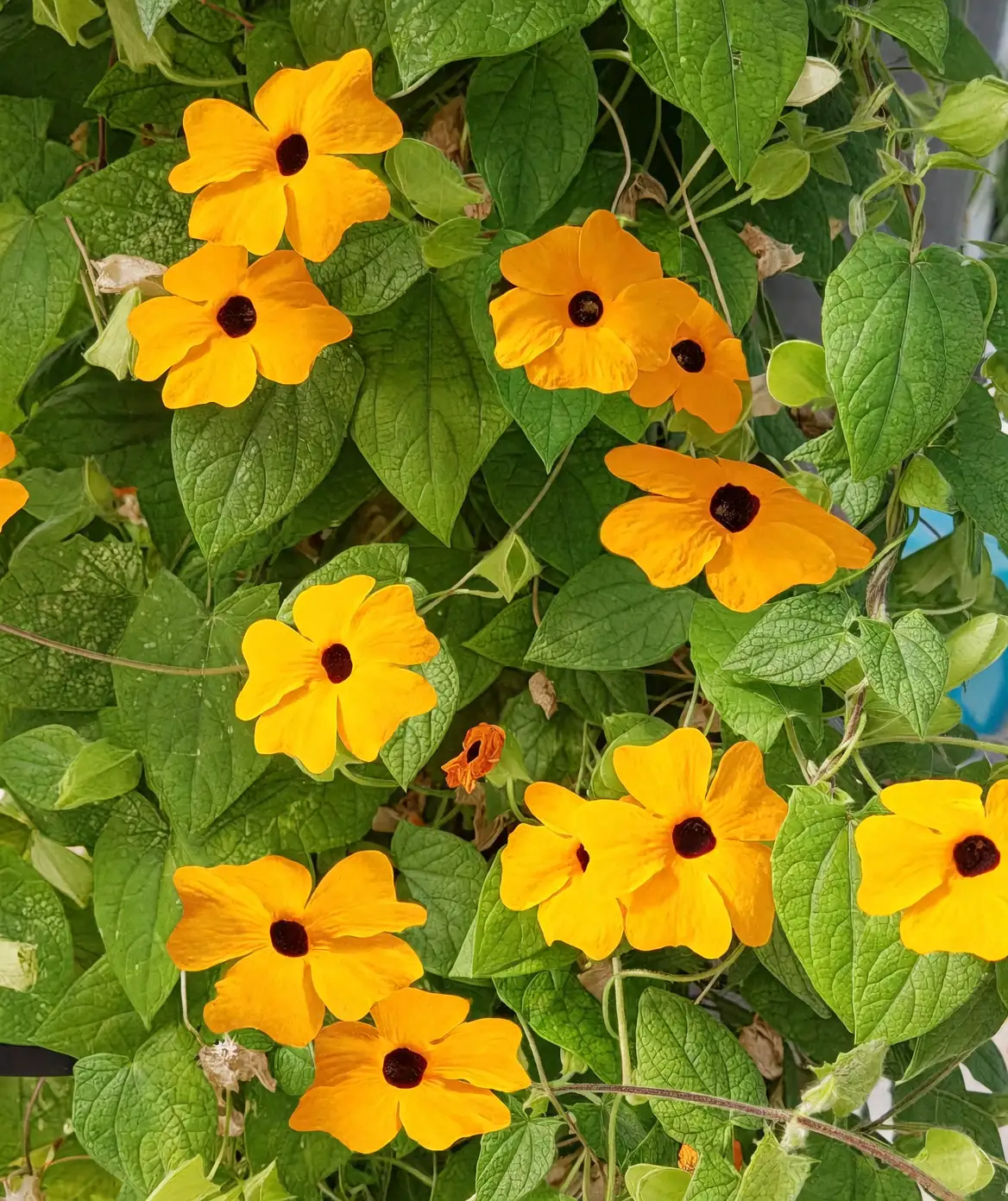
Have you ever wondered about the intriguing name “Black-eyed Susan Vine”? While it shares a nickname with the more famous prairie wildflower Rudbeckia hirta, these two plants are as different as night and day. The vine’s “black eye” is actually a striking dark purple-brown throat at the center of its trumpet-shaped flowers. This dramatic feature contrasts beautifully with petals that come in a palette of fiery oranges, sunny yellows, crisp whites, blushing pinks, and even bold reds. It’s like a garden party where each flower is dressed to impress!
A Climber with Flair
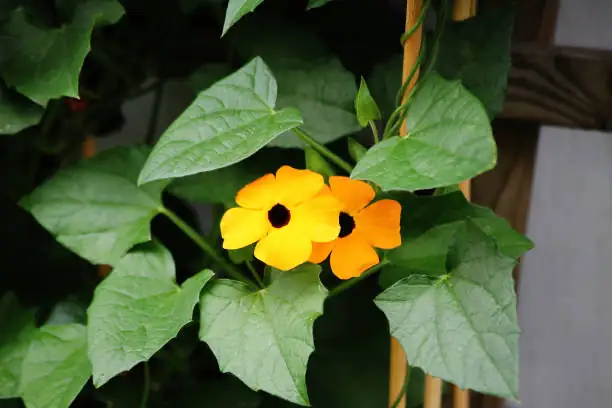
The Black-eyed Susan Vine doesn’t just sit pretty. It climbs with enthusiasm, wrapping its twining stems around anything it can find. Unlike some vines that cling with tendrils, this one prefers to spiral upwards, making it perfect for adding vertical interest to your garden. Whether you have a trellis, fence, or even a humble balcony railing, this vine is ready to perform its acrobatic feats, reaching heights of 3 to 8 feet in a single season. In warmer climates, it can grow even taller, making it a perennial favorite for creating quick, lush privacy screens.
Ideal Growing Conditions
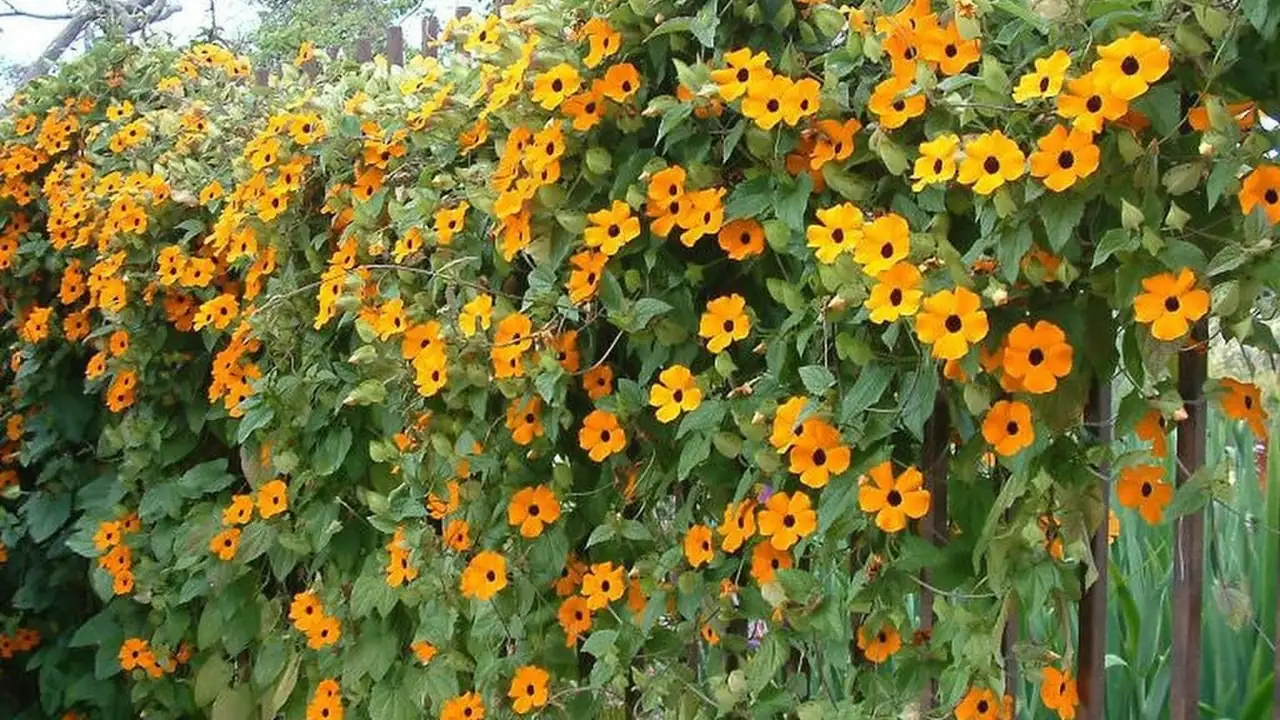
This vine is a sun-worshipper at heart. To see it thrive and bloom prolifically, aim to plant it where it can bask in at least six hours of direct sunlight daily. In areas with scorching afternoon heat, a little shade can help reduce stress. It loves warm temperatures, ideally between 70 and 80°F, and doesn’t tolerate frost, making it a tender perennial in USDA Zones 10–11 and an annual elsewhere.
Plant it in rich, well-drained soil, and keep it evenly moist without letting it get soggy. A mulch layer can help conserve moisture, especially in container settings, where it might need more frequent watering. If you’re nurturing this vine indoors, provide bright light and monitor for indoor pests like spider mites or whiteflies.
Easy Care, Big Rewards
One of the best aspects of the Black-eyed Susan Vine is its beginner-friendly nature. It’s forgiving of occasional neglect and rewards gardeners with a long bloom period, stretching from late spring to fall. To keep the flowers coming, consider feeding it a balanced fertilizer every 4–6 weeks, switching to a bloom-focused formula when buds start forming.
Pinching back the tips can encourage bushier growth, and although pruning isn’t essential, it can help maintain its tidy appearance. It can be propagated easily from seeds or stem cuttings, making it an accessible choice for gardeners looking to expand their plant family.
Fun Facts to Charm Your Friends
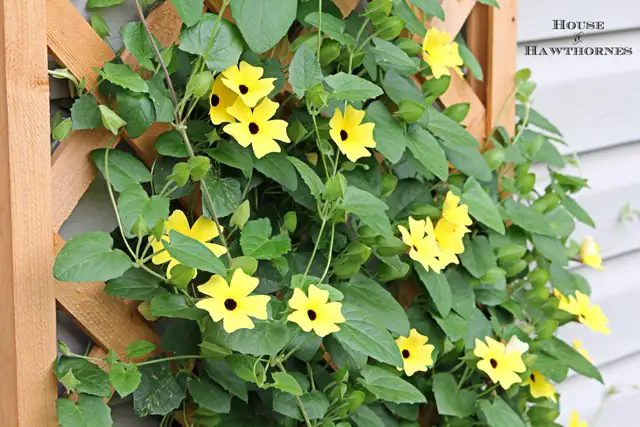
- Despite its name, the “black eye” is more of a deep purple-brown than true black.
- In frost-free climates, it can self-seed and spread, adding a touch of wild charm to your garden.
- The seeds have a distinctive textured appearance, making them easy to recognize once you’ve collected them.
- The vine’s heart-shaped leaves are soft and lightly hairy, adding textural interest to its visual appeal.
More Than Just a Pretty Face
Beyond its ornamental allure, the Black-eyed Susan Vine holds symbolic meaning. Its bright, smiling blooms are often associated with cheerfulness, resilience, and encouragement. It’s as if each flower is offering a little nod of positivity, urging you to embrace the beauty of the moment.
In conclusion, the Black-eyed Susan Vine is a delightful addition to any garden, offering beauty, ease of care, and a touch of whimsy. Whether you’re a seasoned gardener or a novice, this vine promises to bring joy and color to your outdoor spaces, and perhaps a bit of mystery with its enchanting “black eye.” So why not invite this lively twiner to your garden party and watch it steal the show?


