Unveiling the Charm and Quirks of Hollyhocks (Alcea rosea)
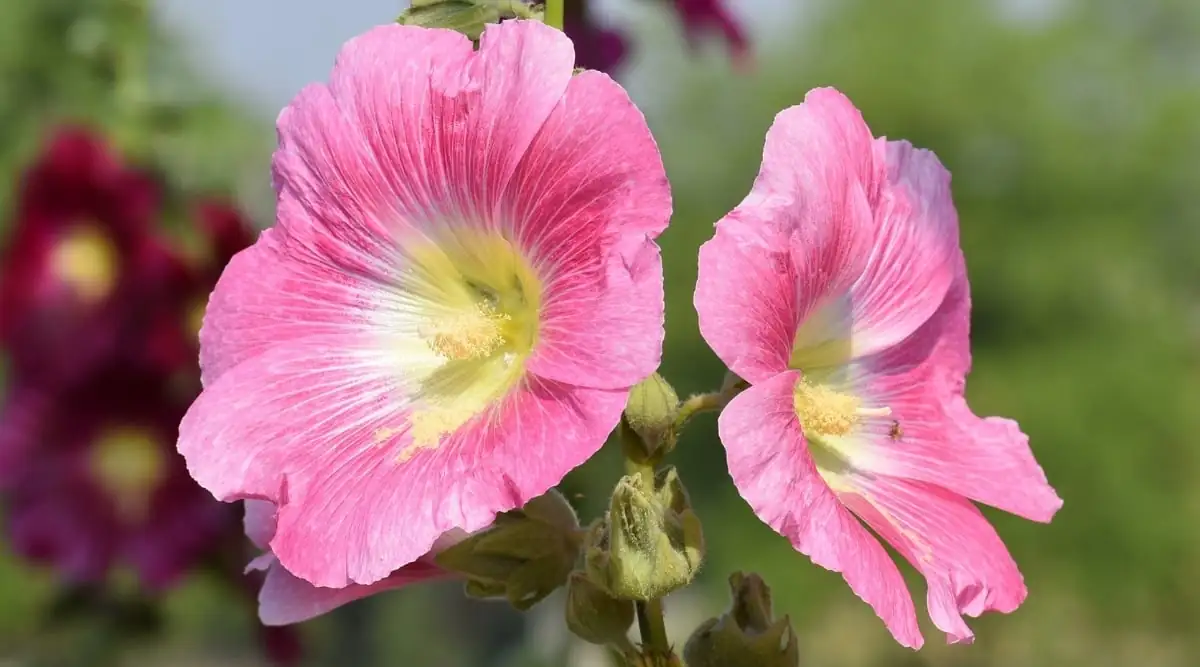
Imagine strolling through a sunlit garden where towering spires of vibrant blooms sway gently in the breeze. These are hollyhocks, the quintessential cottage garden flower. Known for their striking height and delightful array of colors, hollyhocks (Alcea rosea) are more than just a pretty face; they carry stories and quirks that make them fascinating to any garden enthusiast.
Tall Tales and Historical Nicknames
Did you know that hollyhocks are often referred to as the “outhouse flower”? This quirky nickname harks back to a time when these towering plants were strategically planted to disguise unsightly outhouses. Their lofty height, often reaching up to 8 feet, provided not just beauty but also a touch of privacy and charm to even the most utilitarian garden corners.
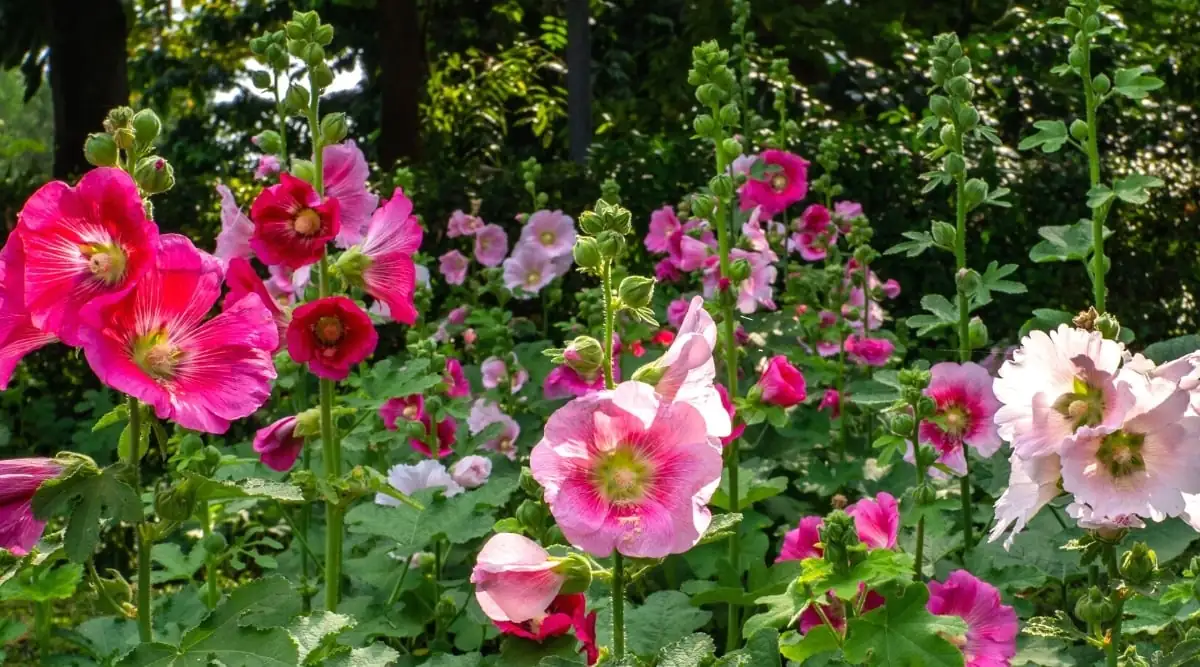
The origins of the name “hollyhock” are as enchanting as the plant itself. Some lore suggests the name comes from the Old English words “holi” (holy) and “hoc” (mallow), while another tale ties them to the Crusaders who supposedly brought the seeds back from the Holy Land, using the plant’s leaves to soothe their horses’ hocks. Whether these tales are fact or folkloric fancy, they add a layer of mystique to the hollyhock’s historical tapestry.
A Garden’s Vertical Marvel
Hollyhocks are the vertical wonders of the plant world. With their strong, upright growth habit, they make for perfect “back of the border” plants. Their blooms, which open progressively from the bottom to the top of the stalk, create a colorful cascade that lasts from mid-summer into late summer, sometimes even flirting with early fall in milder climates.
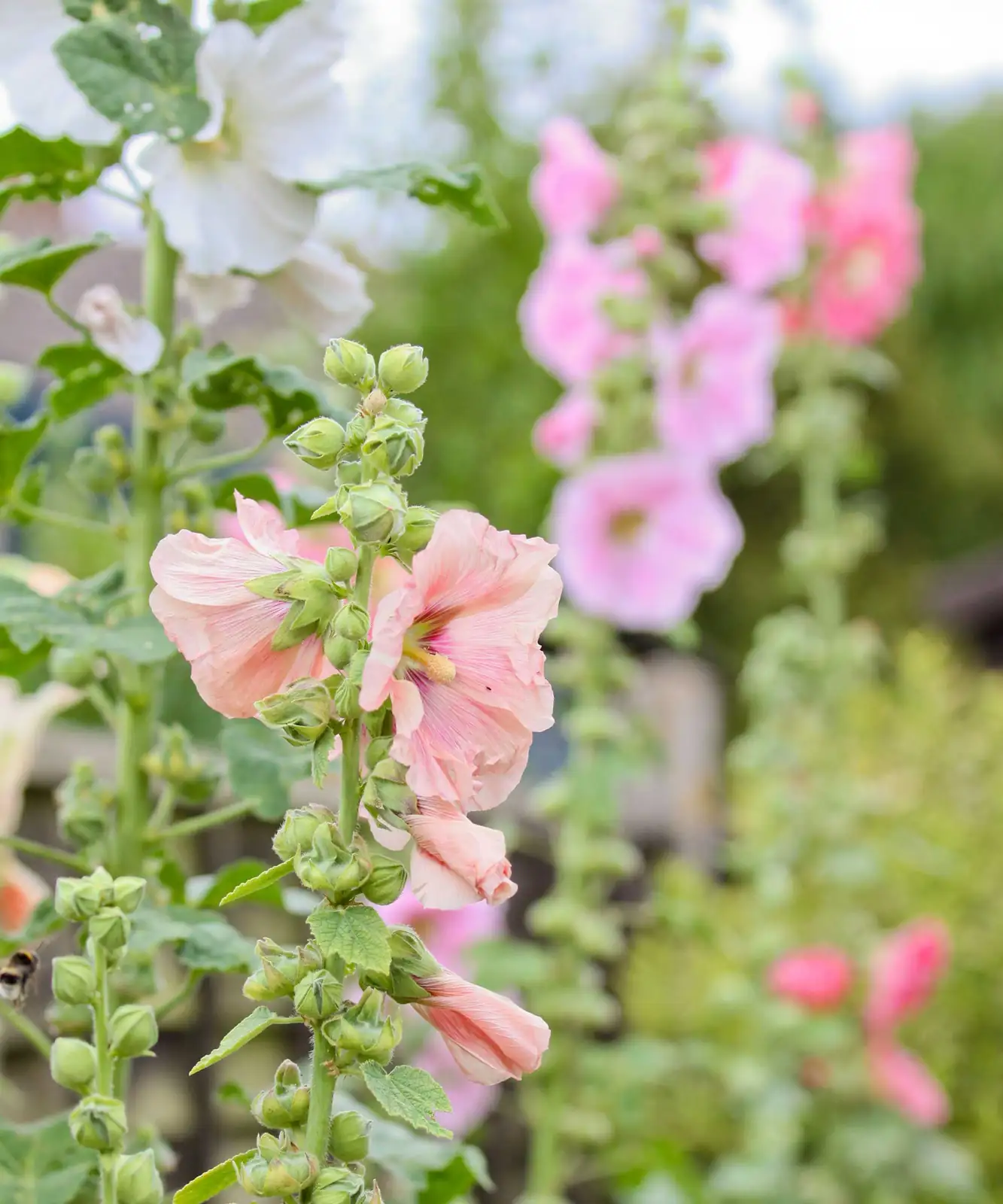
These biennials begin their life cycle with a leafy rosette in their first year, saving their spectacular floral display for the second. However, modern cultivars have introduced varieties that can bloom in their first year, much to the delight of eager gardeners. And thanks to their prolific self-seeding habit, hollyhocks can often appear to be perennial, popping up year after year as if by magic.
Quirky Uses and Fun Facts
Beyond their ornamental appeal, hollyhocks have been known to dazzle in other ways:
- Culinary Charm: While their flavor is mild, hollyhock petals can serve as a colorful garnish, adding a splash of whimsy to salads.
- Crafty Creations: With a bit of imagination, these flowers can be transformed into doll-like figures, using open flowers for skirts and buds for heads—an enchanting project for children and adults alike.
- Natural Indicators: The pigments in hollyhock flowers can shift with changes in soil pH, acting as a natural litmus test for your garden.
- Old Remedies: Historically, hollyhock roots were used in soothing preparations, in line with the tradition that inspired the confection we now know as marshmallows.
A Pollinator’s Paradise
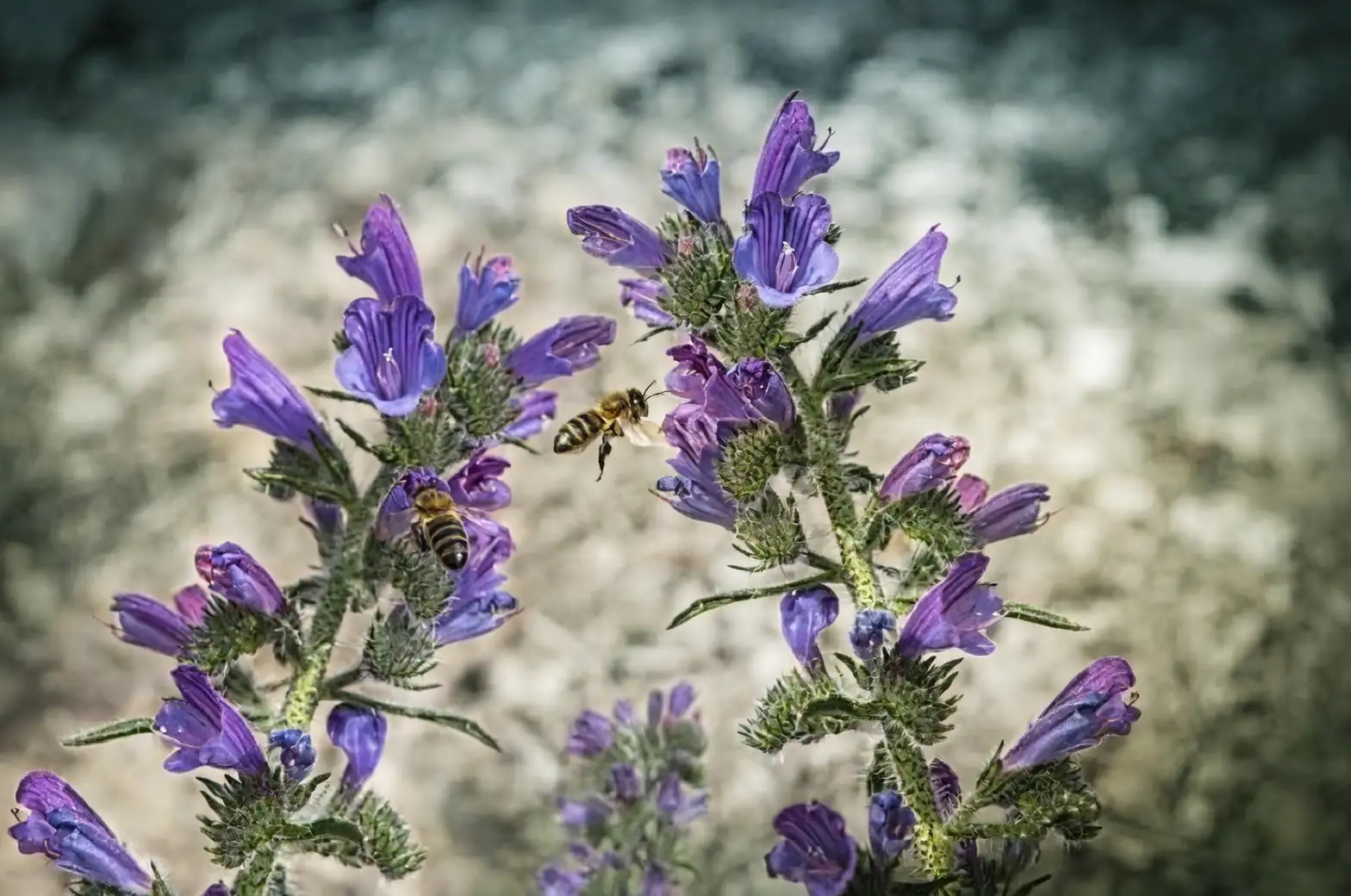
Hollyhocks are not just a feast for the eyes; they are a haven for pollinators. Bees, butterflies, and hummingbirds find their tall, nectar-rich blooms irresistible. The plant is particularly beloved by painted lady butterflies, whose caterpillars use hollyhocks as host plants.
Tips for Thriving Hollyhocks
To ensure your hollyhocks reach their full glorious potential, follow these friendly tips:
- Sunlight and Soil: They thrive best in full sun with rich, well-draining soil. Incorporate compost to boost their health and flowering.
- Watering Wisdom: Water at the base to keep leaves dry and reduce the risk of rust—a common fungal disease.
- Spacing and Staking: Provide ample space (about 18–24 inches apart) to ensure good airflow, and stake taller plants to prevent wind damage.
- Fertilization: A balanced fertilizer a couple of times during the growing season can enhance their blooms, but avoid overdoing nitrogen, which can lead to more leaves than flowers.
Symbolism and Folklore
In Victorian flower language, hollyhocks symbolized ambition and fruitfulness, often planted near front doors to signify a household’s prosperity. Their towering presence was a floral nod to the idea of reaching for the sky and achieving one’s dreams. This symbolism resonates with the plant’s ability to grow tall and proud, turning even the most modest garden into a vibrant tapestry of life.
Hollyhocks, with their timeless beauty and quirky history, invite us to see gardens not just as collections of plants, but as living stories. Whether you’re planting them to add height to your garden, using them in crafts, or simply enjoying their colorful blooms, hollyhocks bring a touch of magic and a dash of history to any landscape. So why not let these floral giants bring their charm and cheer to your garden? 🌸