

Welcome to the delightful world of Streptocarpus ionanthus, better known by its charming alias, the African Violet. These captivating houseplants have long enchanted plant enthusiasts with their velvety leaves and vibrant blooms. Join me as we take a fun and engaging exploration of what makes African Violets truly stand out in the plant kingdom.
The Allure of the Velvet Touch
Have you ever brushed your fingers against the leaves of an African Violet? If so, you’ve experienced their signature soft fuzziness—a tactile delight akin to petting a kitten. This velvety texture isn’t just for show; it’s a clever adaptation. The tiny hairs on the leaves help the plant manage moisture and temperature, acting like a natural climate control system. Imagine them as tiny umbrellas, protecting the leaves from harsh sunlight and retaining humidity in their native East African habitat.
This fuzz also acts as a shield against pests. Picture a tiny bug attempting to navigate the fluffy terrain—it’s like trying to walk through a thicket of cotton candy! The fuzz makes it difficult for pests like spider mites to get a foothold, thus keeping your plant safe and sound.
A Symphony of Color
Step closer, and you’ll discover the vibrant blooms that hover like tiny bouquets above the rosette of leaves. African Violets are a feast for the eyes, offering a palette from rich purples to soft pinks, fiery reds, and snowy whites. Some blossoms even flaunt ruffled or frilled petals, adding an extra dash of drama to their presentation.
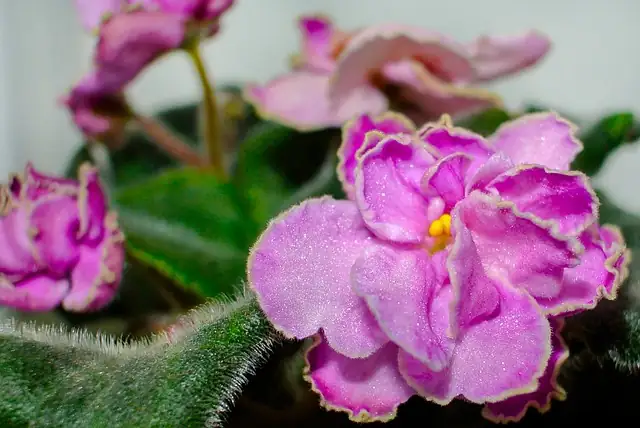
These flowers can bloom year-round, given the right conditions. They’re like the reliable friend who always brings joy to the party, never missing an opportunity to brighten your day. Keep them in bright, indirect light, and your African Violet will thank you by bursting into bloom whenever it feels the love.
The Ideal Roommate
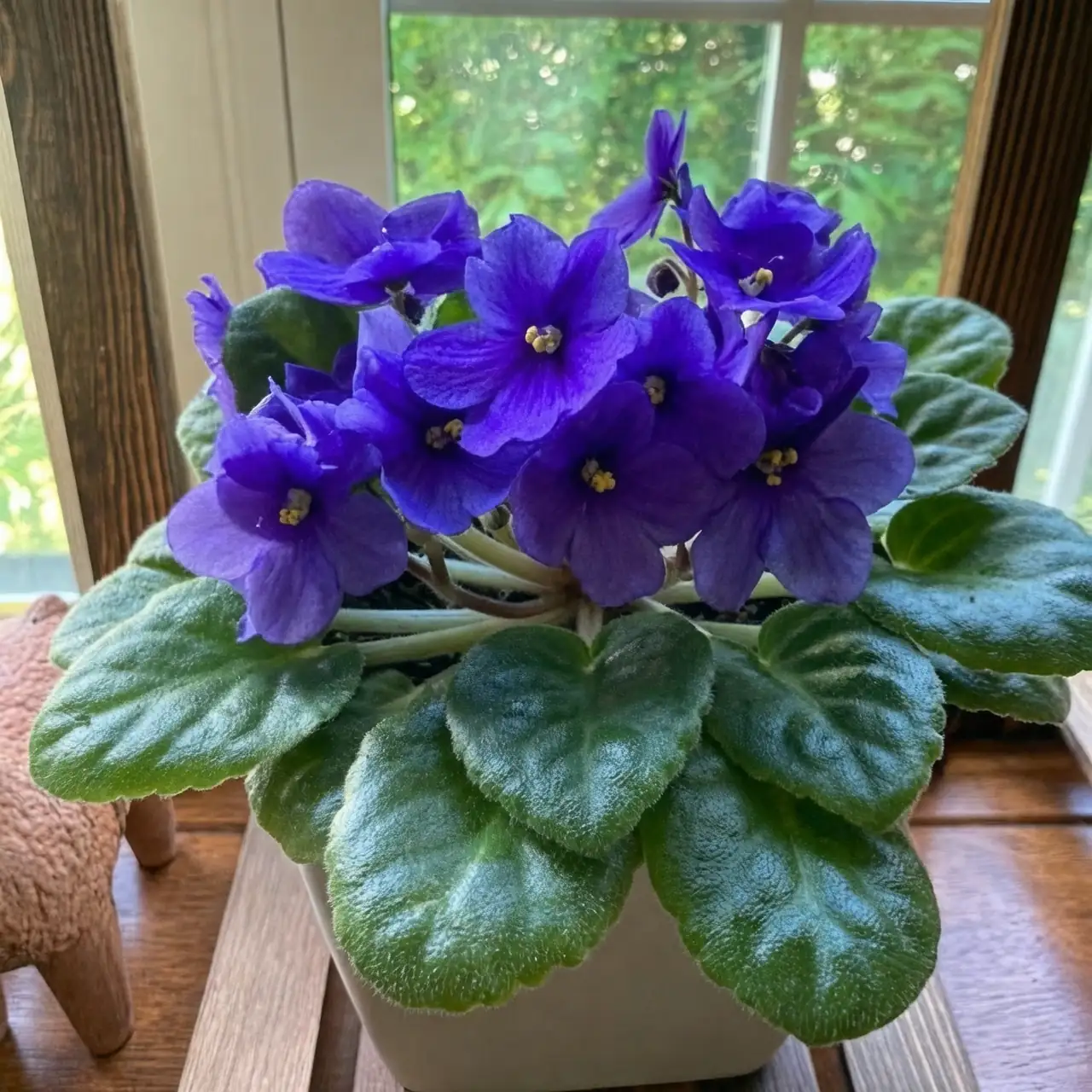
African Violets are the perfect plant companions for small spaces. They’re compact, growing just about 7.5 cm (3 inches) tall and spreading up to 20 cm (8 inches) wide. Tuck them into snug pots—often between 7.5 to 10 cm (3 to 4 inches) across—and they’ll thrive, content in their cozy homes.
Their easy-care nature makes them ideal for both beginners and seasoned green thumbs. Just remember the golden rules: keep them warm and avoid overwatering. A soggy African Violet is an unhappy one, so aim for even moisture, perhaps using the popular bottom-watering method to keep those fuzzy leaves dry.
A Blooming Legacy
African Violets have a rich history, once the darlings of British windowsills and now beloved worldwide. Despite their official reclassification from the genus Saintpaulia to Streptocarpus, their identity as African Violets remains as endearing as ever.
These plants are more than just pretty faces. In the language of flowers, they symbolize faithful love, devotion, and enduring beauty. Gifting an African Violet is like giving a living testament to gentle comfort and warmth—a perfect gesture for someone special.
Care Tips for a Happy Violet
- Light: Bright, indirect light is best. Avoid direct sun, which can scorch the leaves.
- Water: Keep the soil evenly moist but never soggy. Utilize bottom-watering to prevent water from sitting on the leaves.
- Temperature: Maintain a cozy environment between 16–24°C (61–75°F).
- Humidity: Moderate humidity (40-60%) keeps them happiest. Consider a pebble tray for extra moisture without wetting the leaves.
- Fertilization: A balanced liquid fertilizer during the growing season supports frequent blooming.
Fun Facts
- African Violets can bloom indoors for extended periods when conditions are stable.
- Their fuzzy leaves can develop spots if water droplets linger, another reason why bottom-watering is favored.
- While they’re now classified as Streptocarpus, many still fondly refer to them as Saintpaulia.
Whether you’re a seasoned plant parent or a curious newcomer, African Violets offer a delightful blend of beauty and intrigue. Their velvety leaves and bright blooms make them an irresistible addition to any plant collection, promising years of faithful companionship and floral splendor. So, why not invite one into your home today? Your windowsill will never be the same!


