

Creating Harmonious Garden Beds: The Best Companion Plants for Irises
Imagine stepping into your garden on a bright spring morning. The air is crisp, the sun is gently warming your face, and there before you is a carnival of colors—your irises, with their rainbow hues, are stealing the show. But what if we could enhance this masterpiece by carefully selecting the right companions for your irises? Let’s dive into the world of garden harmony and explore the best plants to pair with these perennial stars.
Understanding Irises: The Garden’s Rainbow
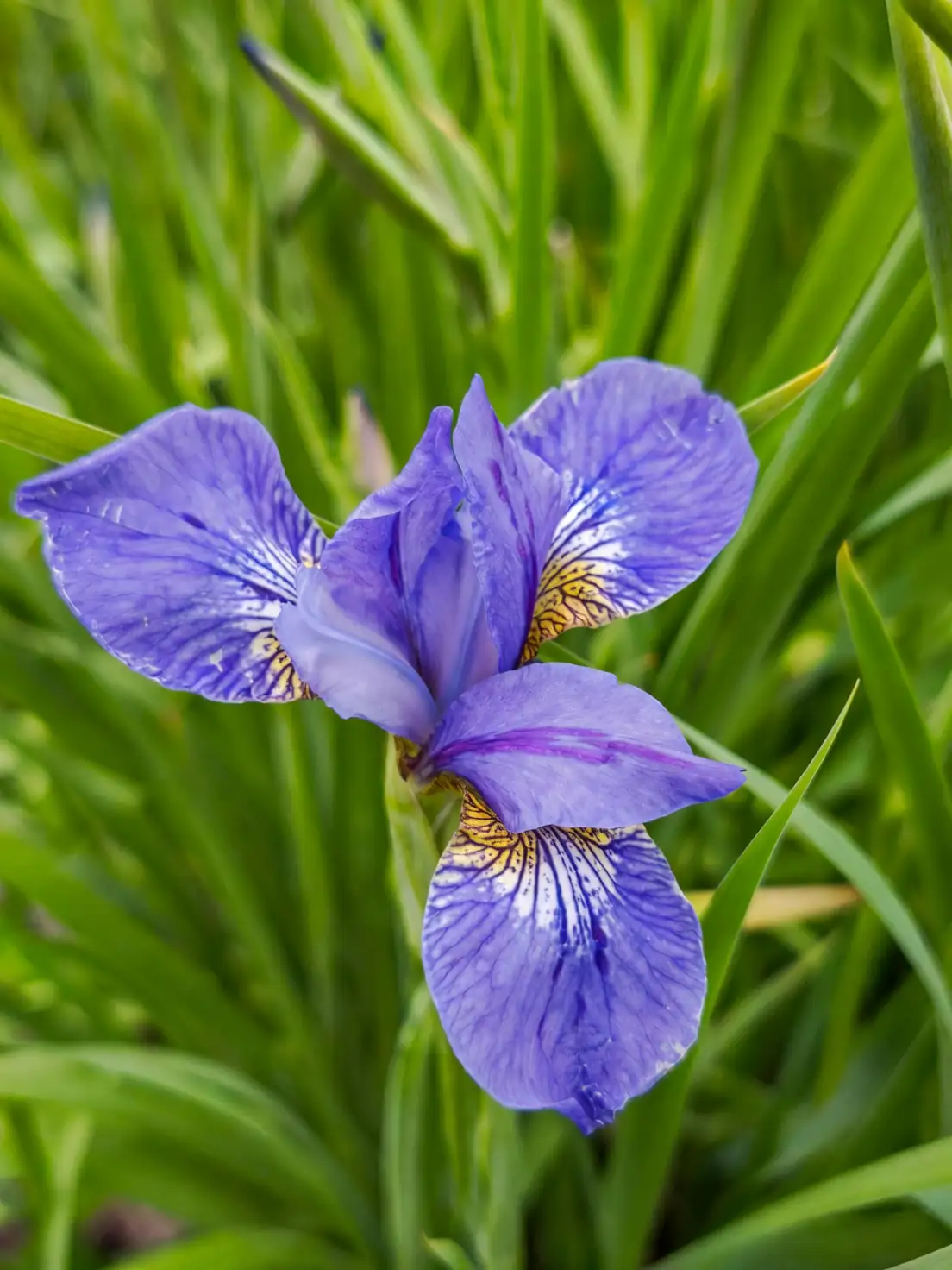
Irises, named after the Greek goddess of the rainbow, are known for their stunning palette of colors and unique, elegant blooms. With over 300 species spanning the Northern Hemisphere, these beauties range from the Mediterranean’s bearded irises to the Siberian irises of Central Europe and Russia. Their six-petal blooms—three upright “standards” and three cascading “falls”—are like nature’s watercolor painting.
These perennials thrive in full sun and well-draining soil, making them perfect candidates for most gardens. Let’s explore which plants you can pair with irises to create a garden that’s as harmonious as it is beautiful.
Shrubs that Shine with Irises
When planning your garden, consider the backdrop first. Broadleaf evergreens like boxwood and juniper provide a lush canvas against which the irises’ colors pop. Their small, rounded leaves contrast beautifully with the iris’s tall, sword-shaped foliage. Blooming shrubs such as rhododendrons and azaleas share the same soil preferences, ensuring that your garden remains cohesive and vibrant throughout the season.
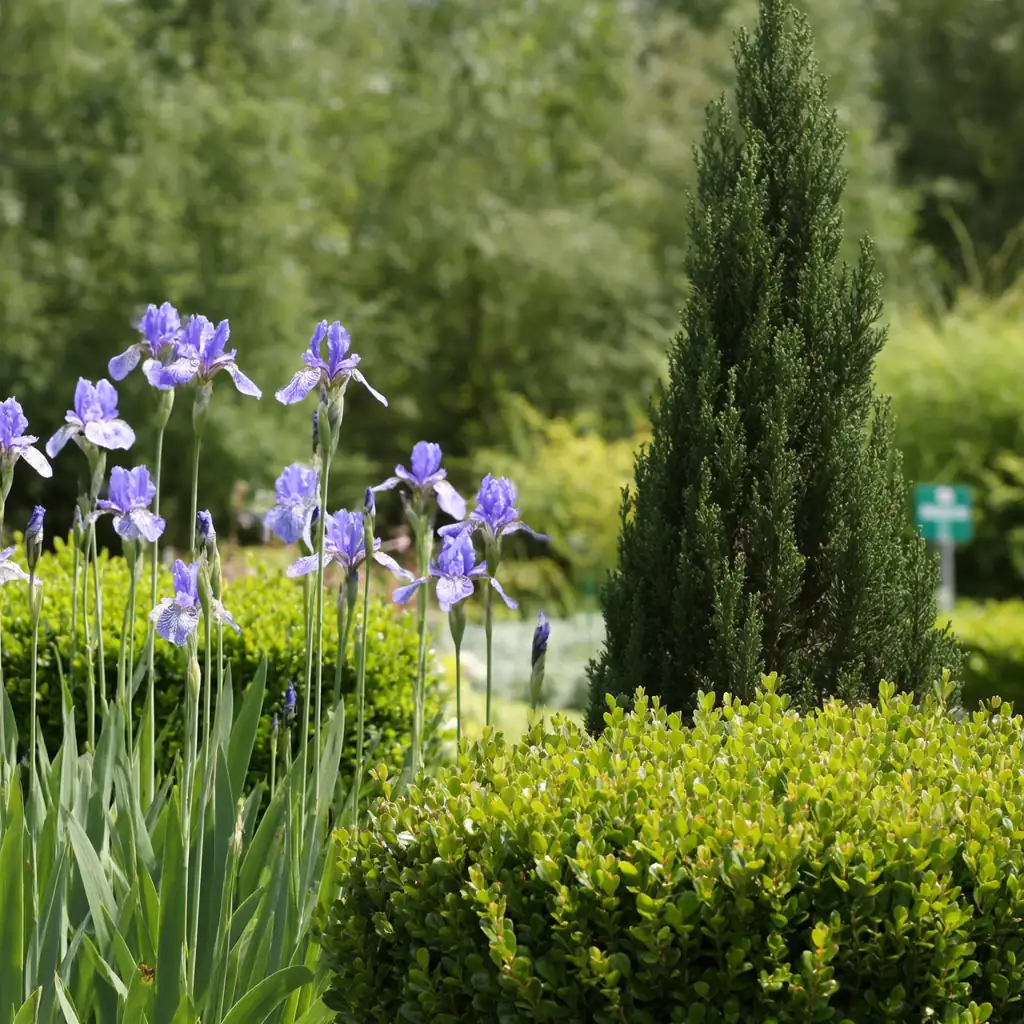
For a burst of color that complements your irises, consider pairing them with blooming shrubs like:
- Dogwood
- Shrub Roses
- Hydrangeas
- Forsythia
- Viburnum
These shrubs not only provide visual interest but also extend the blooming season beyond the iris’s prime.
Perennial Partners: Adding Texture and Color
Finding perennials that can dance alongside irises is easier than you might think. Opt for herbaceous or semi-woody selections that share the same love for full sun and well-drained soil. Here are some top picks:
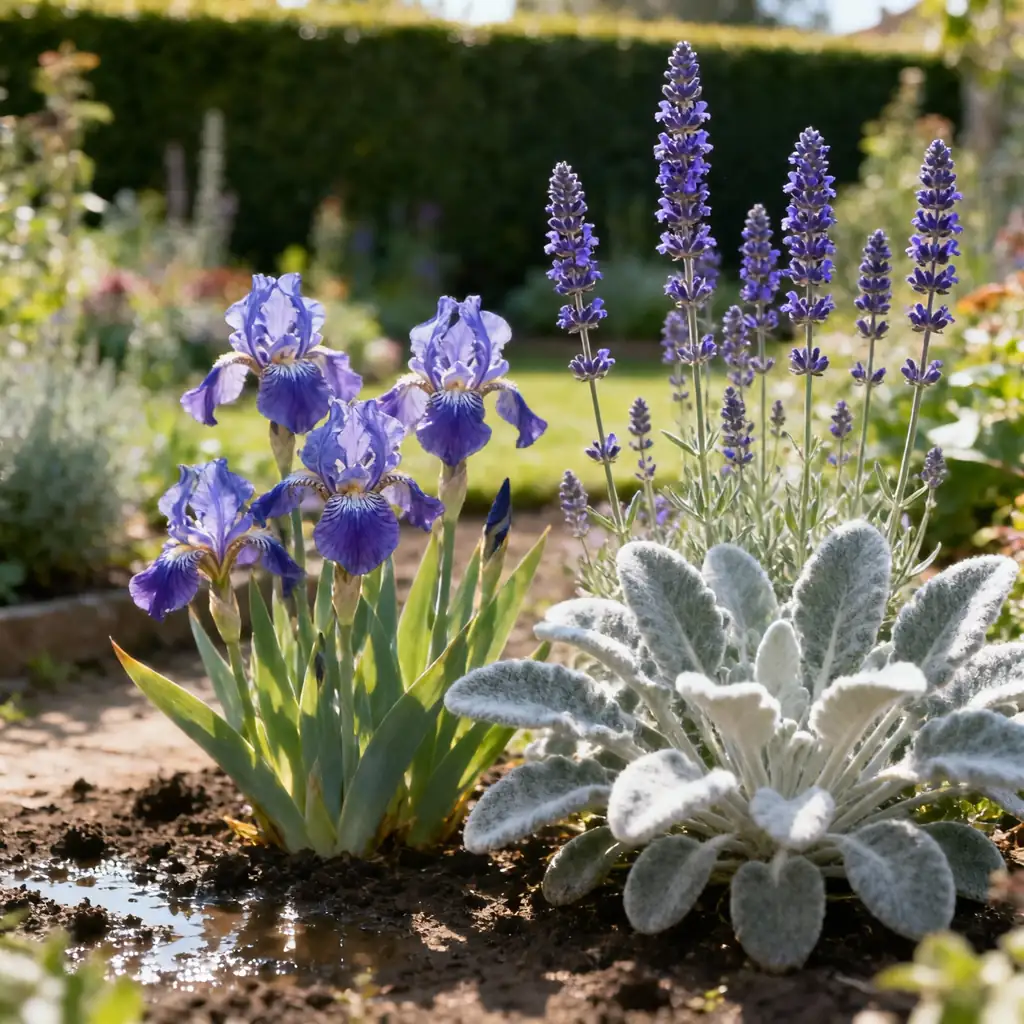
- Russian Sage: With its silvery foliage and lavender-blue spikes, it creates a dreamy, ethereal quality.
- Lamb’s Ear: Its soft, fuzzy leaves provide a tactile contrast and a calm, muted backdrop.
- Coreopsis: Known for its cheerful yellow flowers, it adds a dash of sunshine to your garden bed.
- Alliums: These sculptural, globe-like blooms add architectural interest and pair well with the iris’s elegant form.
Ground Covers: Setting the Stage
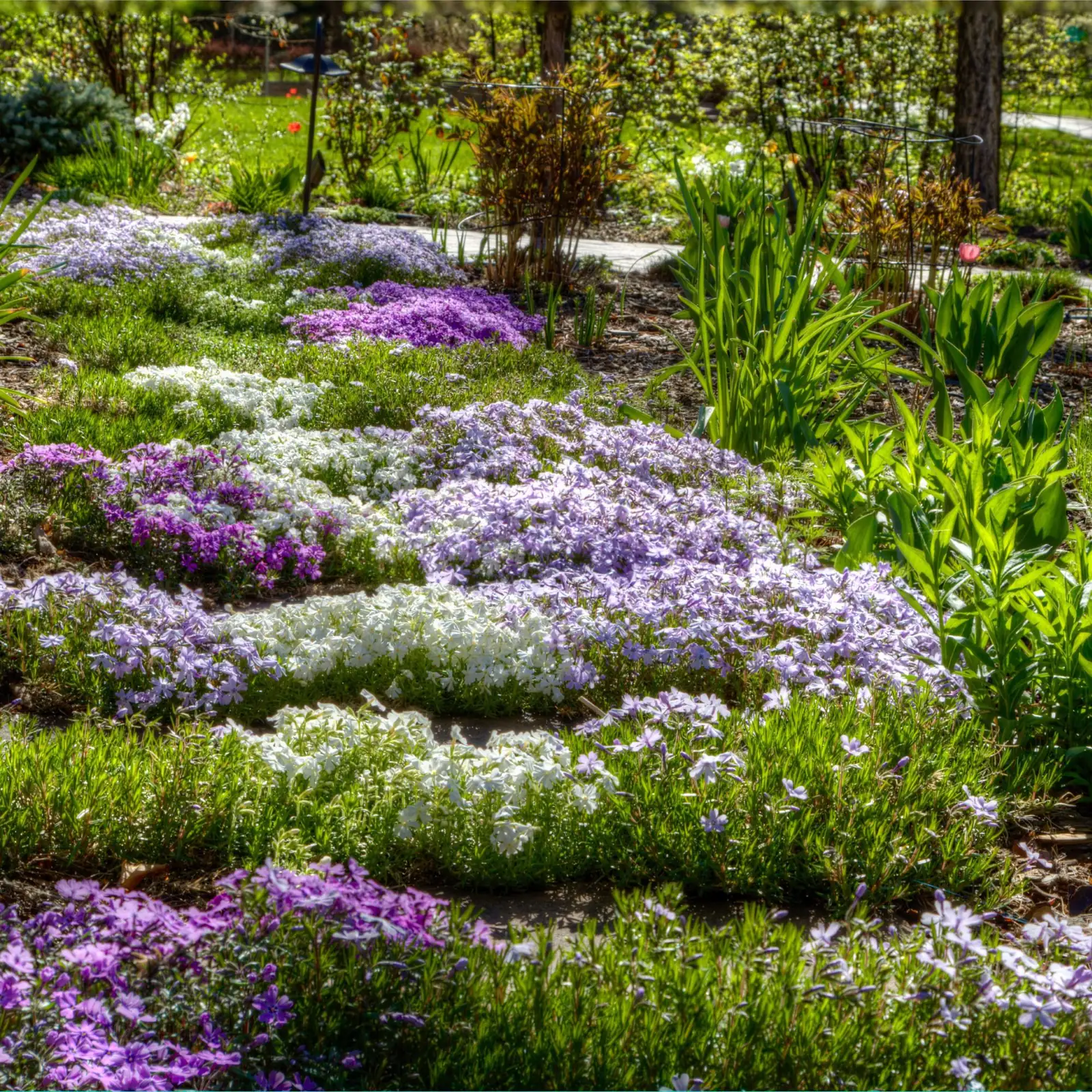
Ground covers are like the orchestra’s string section—subtle, yet essential. They add depth and texture without overshadowing the main act. Consider these options:
- Lime Thyme: A fragrant, low-growing option that contrasts beautifully with the iris’s upright leaves.
- Alyssum: Its delicate, fragrant flowers form a soft carpet at the iris’s base, attracting beneficial insects.
- Lithodora: With vibrant blue flowers, it provides a striking contrast and thrives in well-drained soil.
Flowering in Sequence: Continuous Blooms
To keep your garden in bloom from spring through summer, plan for a sequence of flowering. Pair your irises with plants that will take turns in the spotlight. Oriental poppies, for instance, offer an explosion of color—reds, peaches, and whites—that fill the gap when irises start to fade. Lupines, with their tall, colorful spires, add a touch of wildflower charm.
Designing with Purpose: A Garden Symphony
When designing your garden, think about color harmony and foliage texture. Use complementary and contrasting colors to create visual interest. The iris’s sword-like foliage offers an elegant texture that pairs beautifully with more rounded leaf forms.
For a structured, formal look, place taller plants at the back and shorter ones in the front. In contrast, for a natural, casual effect, mix heights and textures to mimic a wild meadow.
The Language of Flowers: Iris Symbolism
Irises carry deep symbolism, often associated with faith, hope, wisdom, and admiration. In mythology, Iris was a divine messenger, her rainbow bridge connecting the heavens and earth. The colors of irises also convey specific meanings—purple for royalty and wisdom, blue for hope and faith, and yellow for joy and passion. Understanding these meanings can add a layer of personal significance to your garden.
Final Thoughts: Cultivating Beauty and Balance
By choosing the right companions for your irises, you’re not only enhancing their beauty but also promoting ecological balance in your garden. The combination of shrubs, perennials, and ground covers creates a symphony of color, texture, and fragrance that delights the senses and supports local wildlife.
So, what will you plant alongside your irises this year? With these tips in mind, you’re ready to create a garden that’s as harmonious as it is breathtaking. Happy gardening!


