

The Pomegranate’s Journey: From Ancient Persia to Global Gardens
Step into the world of the pomegranate, a fruit that has traveled across continents and centuries, weaving its way into the very fabric of human history and culture. Known scientifically as Punica granatum, this fruit-bearing plant is much more than its jewel-like seeds. Its story is a rich tapestry, beginning in ancient lands and spreading its roots globally, capturing imaginations and taste buds alike.
Ancient Origins: The Cradle of Cultivation
Imagine a time long before modern agriculture, where the fertile lands stretching from Iran to the Himalayas were home to a hardy, resilient plant—the pomegranate. In these regions, the pomegranate was not just a source of nourishment but a symbol of life and fertility. It thrived in the warm, temperate climates of southeastern Europe and western Asia, where its cultivation began in earnest.
The pomegranate’s journey from these ancient lands is as fascinating as its origins. It was carried by travelers and traders across the Mediterranean, into Egypt and Greece, where it was revered both for its beauty and its bounty. The fruit is mentioned in ancient texts, including the Bible, where it is one of the “seven kinds” blessed upon the land of Israel.
Across Cultures: A Symbol of Life
As the pomegranate spread, it took on various symbolic meanings. In the Middle East and Mediterranean, it became a symbol of abundance, prosperity, and fertility—a perfect metaphor for a fruit that bursts with seeds. Its presence in mythology and art from ancient Persia to the palaces of Greece underscores its cultural significance.
In many cultures, the pomegranate is seen as a bearer of good fortune. In Greece, smashing a pomegranate on New Year’s Day is a tradition believed to bring luck and prosperity. Its numerous seeds are thought to represent life’s richness and fertility—a sentiment echoed in Jewish New Year celebrations, where the fruit is a staple.
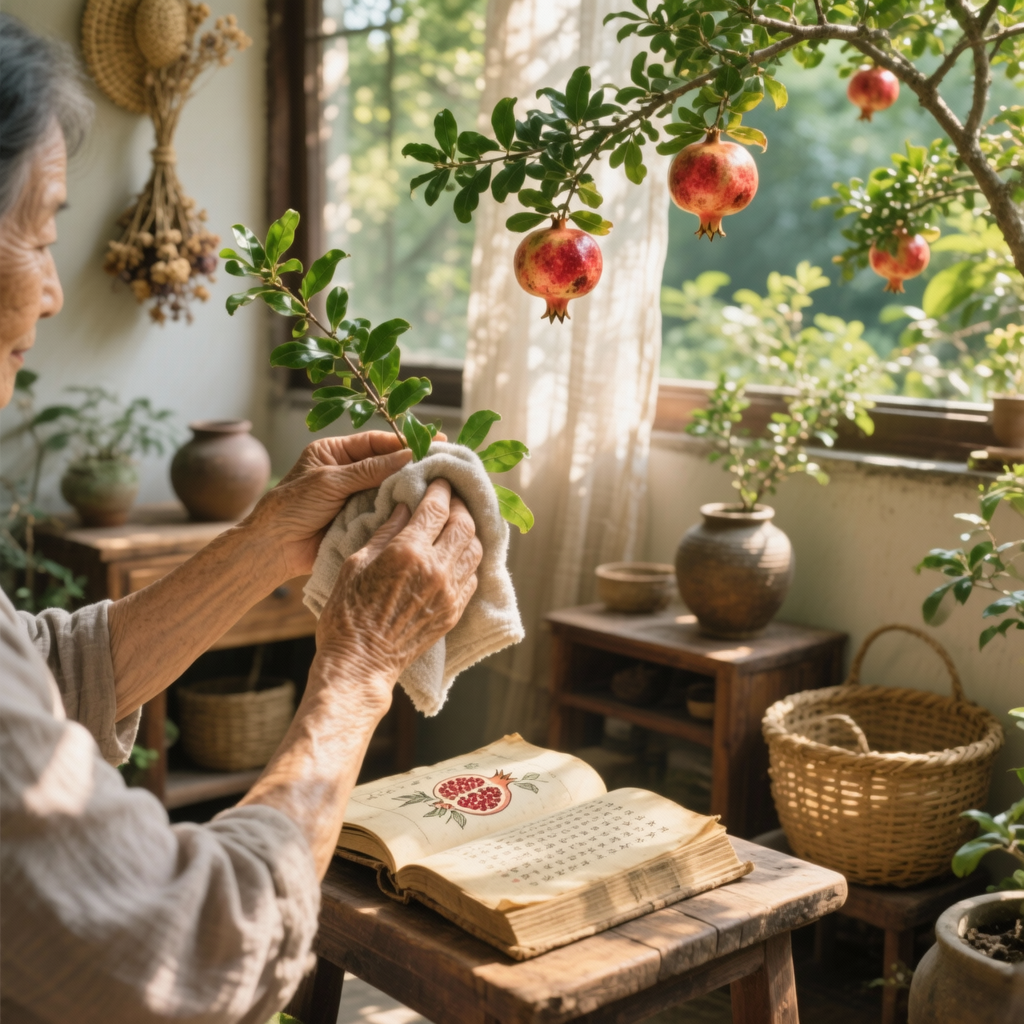
Cultivation: From Garden to Table
Despite its storied past, the pomegranate is not a relic of ancient times. It is a plant that continues to adapt and thrive, now cultivated in warm-temperate to subtropical regions worldwide. From the orchards of California to the gardens of Spain, the pomegranate’s adaptability is one of its greatest strengths.
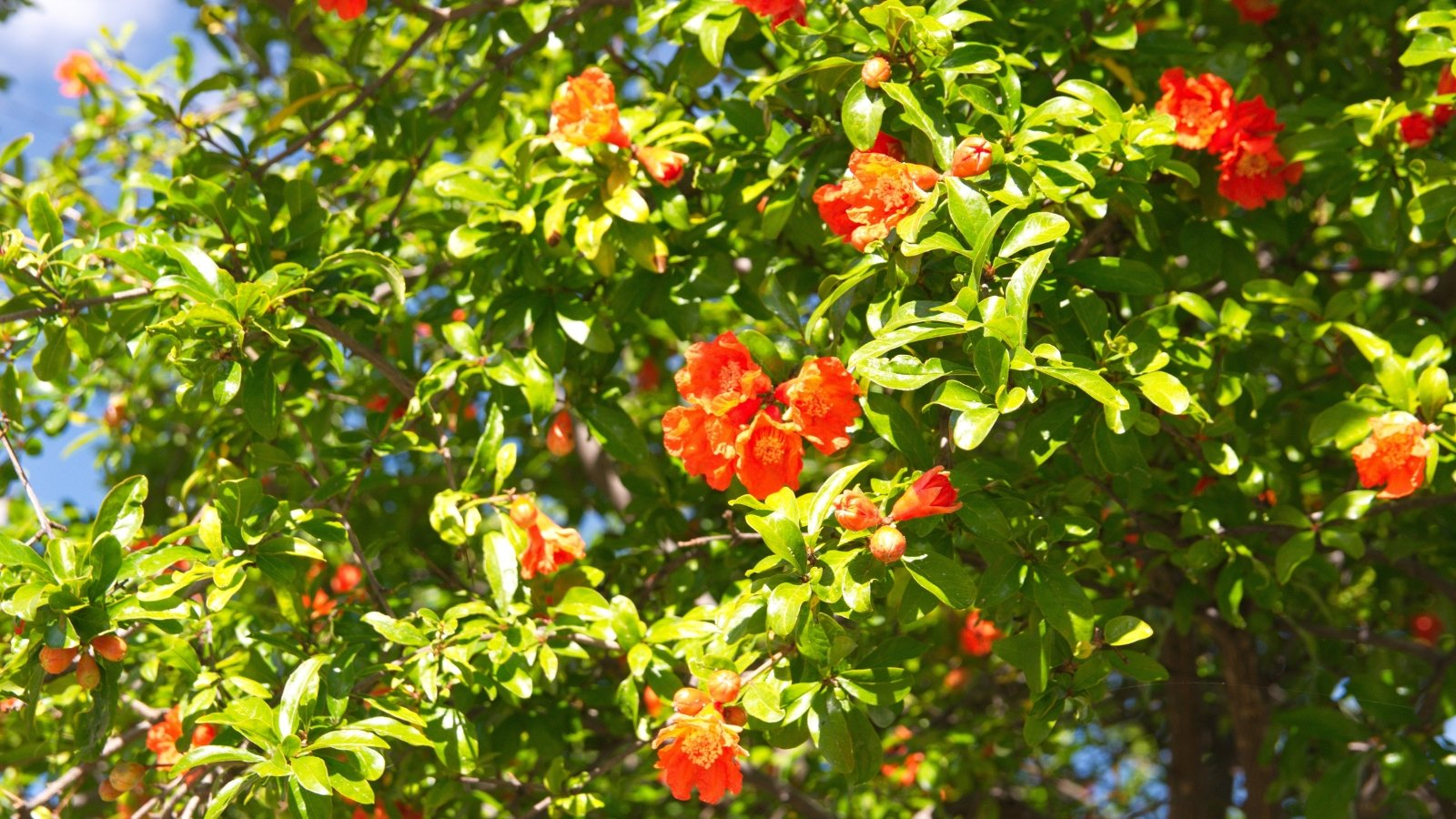
This sun-loving shrub or small tree can grow up to 2 meters high, producing glossy leaves and flamboyant orange-red flowers. In gardens and pots alike, it is a resilient and drought-tolerant plant, making it a favorite for both ornamental and fruit-bearing purposes. However, its one dislike is soggy soil—too much water, particularly during fruit ripening, can lead to splitting and drop.
A Modern Resurgence
In recent decades, the pomegranate has enjoyed a resurgence, thanks in part to its health benefits. Rich in antioxidants and packed with vitamins, it is hailed as a superfruit. Today, its arils are used in an array of culinary delights—from fresh salads to exotic juices and even in traditional recipes that date back centuries.
Fun Facts and FAQs
- Why is my pomegranate flowering but not setting fruit? It could be a sunlight issue. Pomegranates need full sun (at least six hours a day) to set fruit effectively. Also, ensure your soil drains well and isn’t too rich in nitrogen.
- What causes fruit splitting? Uneven moisture is often the culprit. Keep your watering steady and protect the plant from heavy rain as the fruit ripens.
- Do dwarf varieties bear edible fruit? While they can produce fruit, dwarf varieties are typically grown for their vibrant flowers, and their fruit is often small and not very palatable.
Conclusion: A Legacy Continues
The pomegranate is a testament to the enduring relationship between plants and people. From ancient Persia to your backyard, its journey is a story of resilience, adaptation, and cultural significance. Whether you grow it for its stunning flowers, its delicious fruit, or its symbolic meanings, the pomegranate remains a beloved plant with a legacy as rich and vibrant as its arils. So next time you enjoy a pomegranate, remember—you’re tasting a piece of history.