

Plant Features
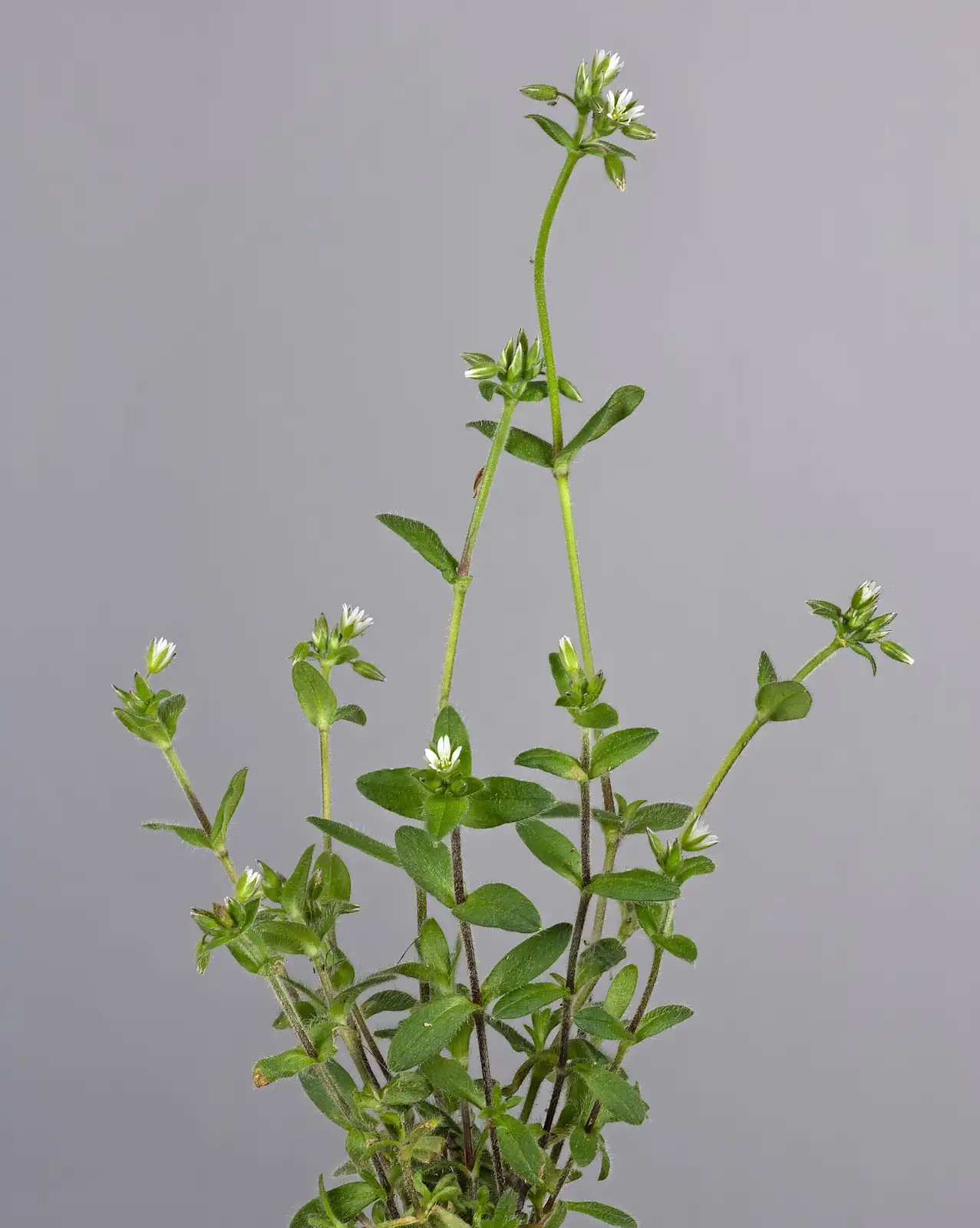
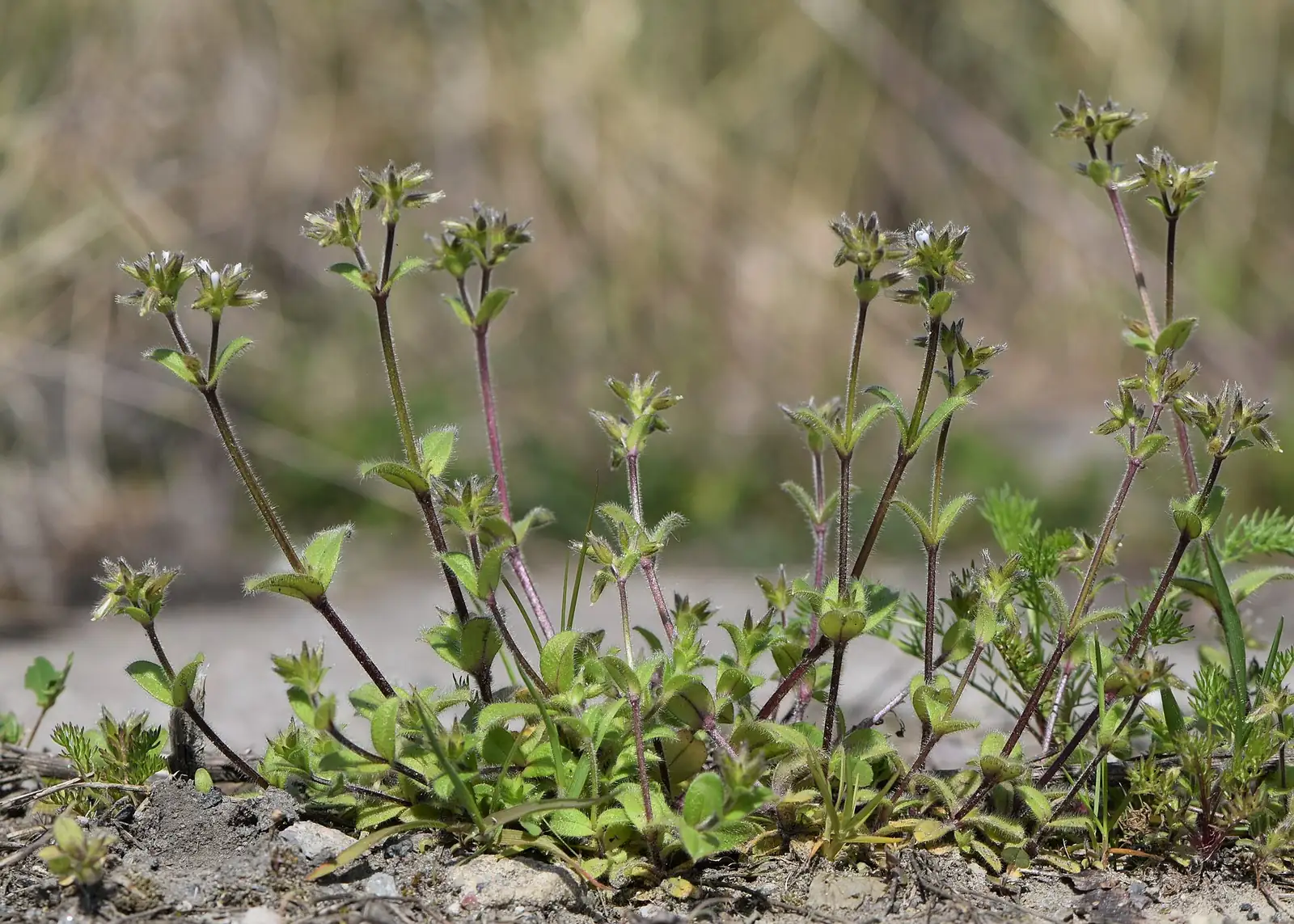
- Size: Up to 30 cm (12 in) tall; typically a low, tufted, clump-forming annual.
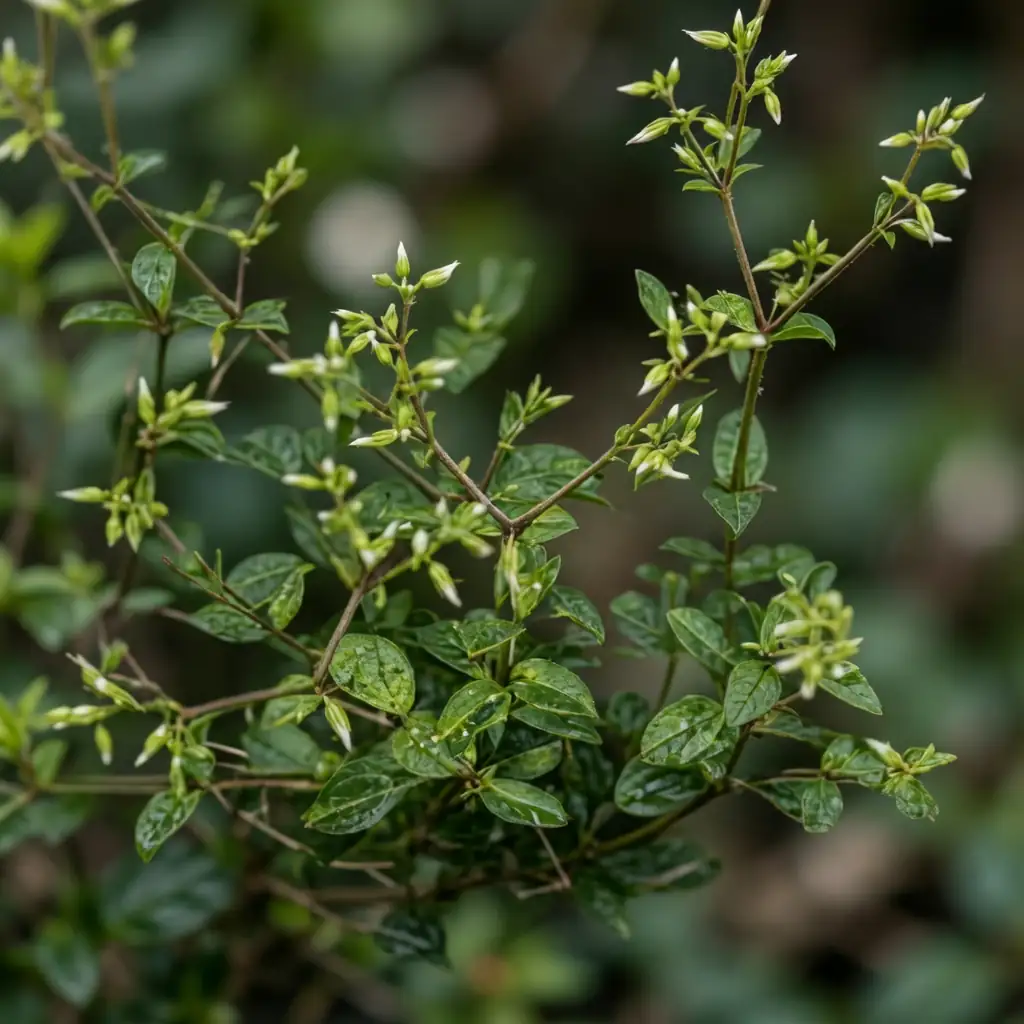
- Foliage: Leaves and stems are densely covered with long, soft hairs, giving the plant its “mouse-ear” look and feel; upper stems may also carry sticky glandular hairs. Lower leaves are spoon-shaped with blunt tips and narrow into a stalk-like base. Upper stem leaves are obovate to elliptic with sharper tips and short stalks. Leaf margins are ciliate (fringed with hairs) and a clear midrib is usually visible.
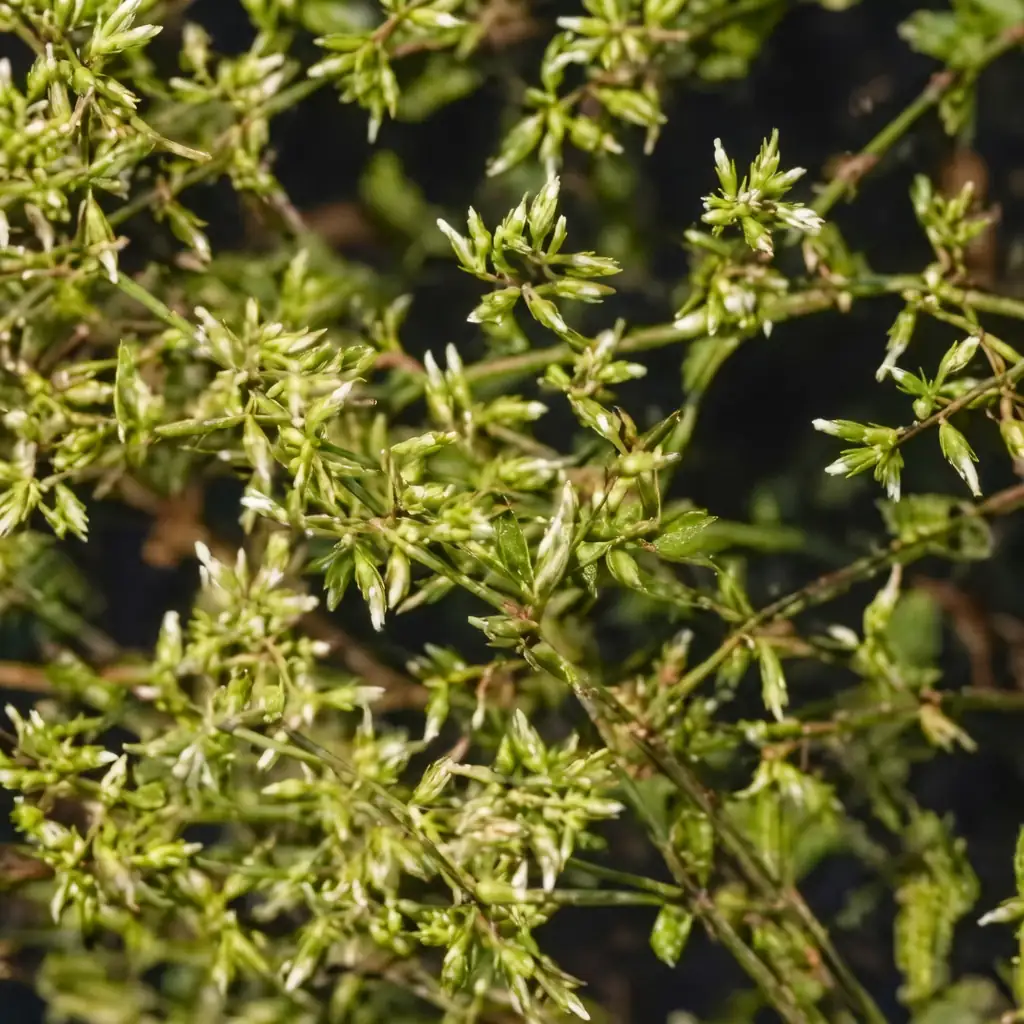
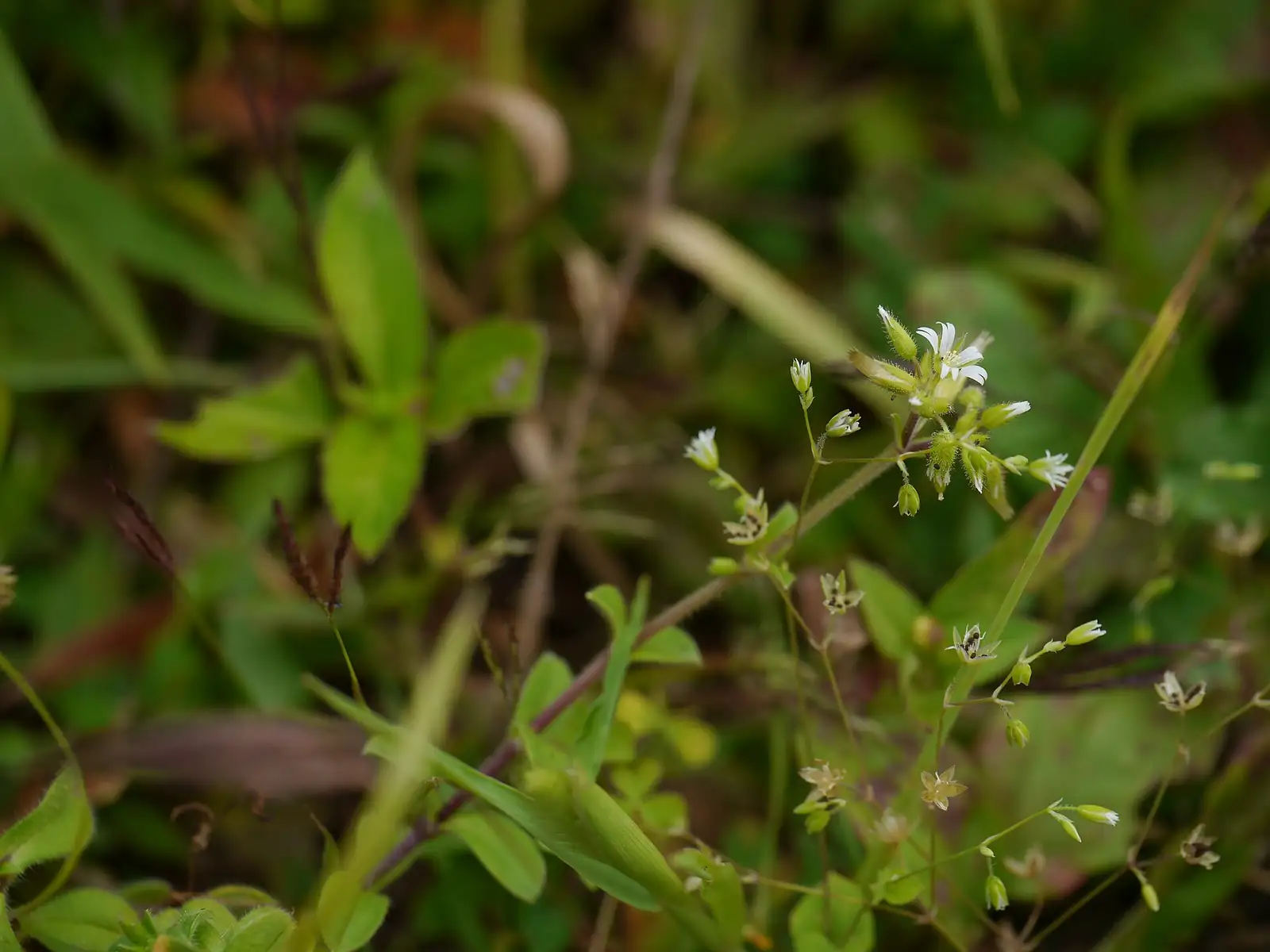
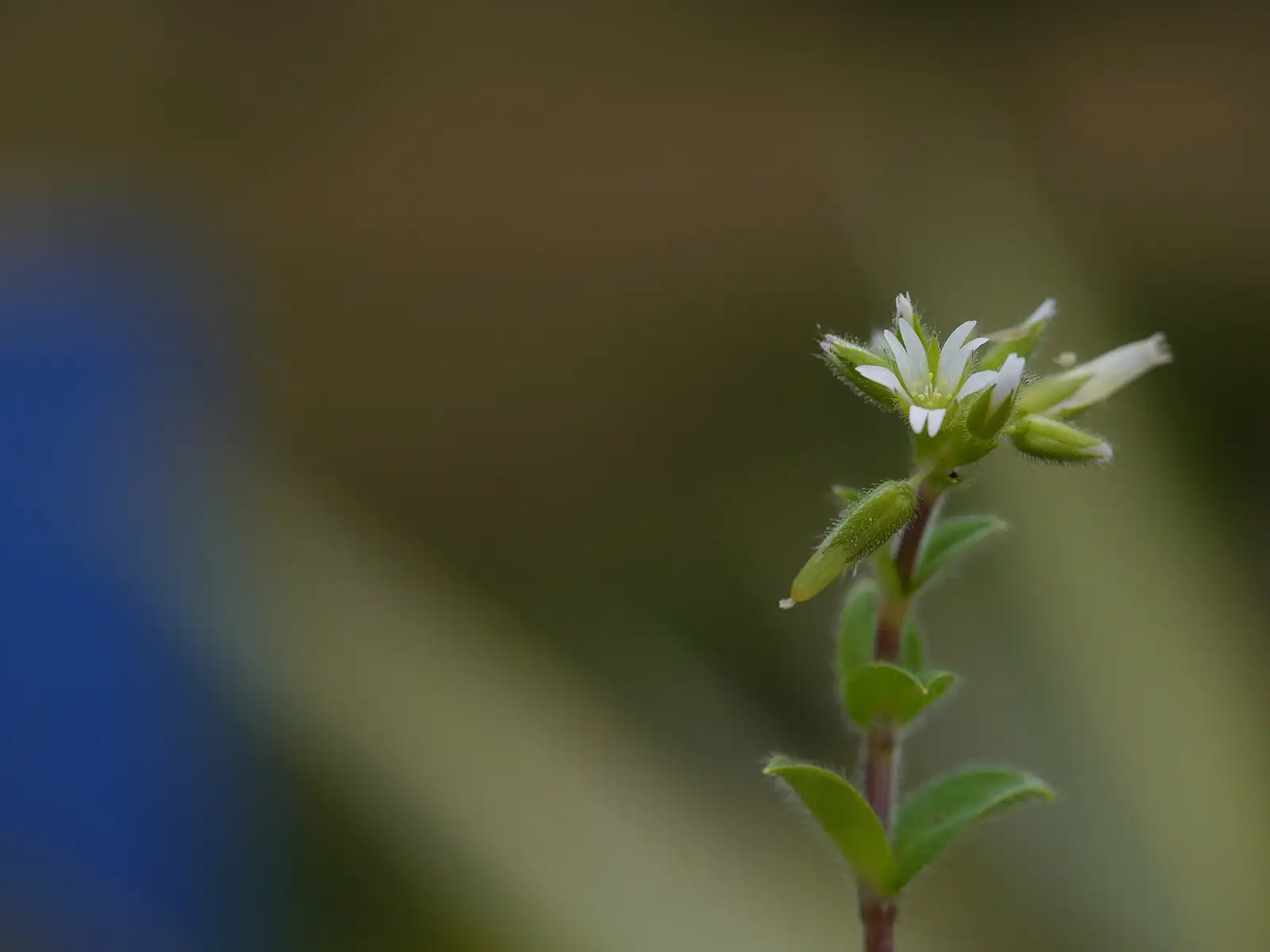
- Flower: Small white flowers appear in tight, clustered cymes that can look almost head-like. Each flower has 5 narrow, oblong white petals. After flowering, it forms an oblong-cylindrical capsule; seeds are brown, flattened-triangular, and warty-textured.
- Flowering Season: March–April
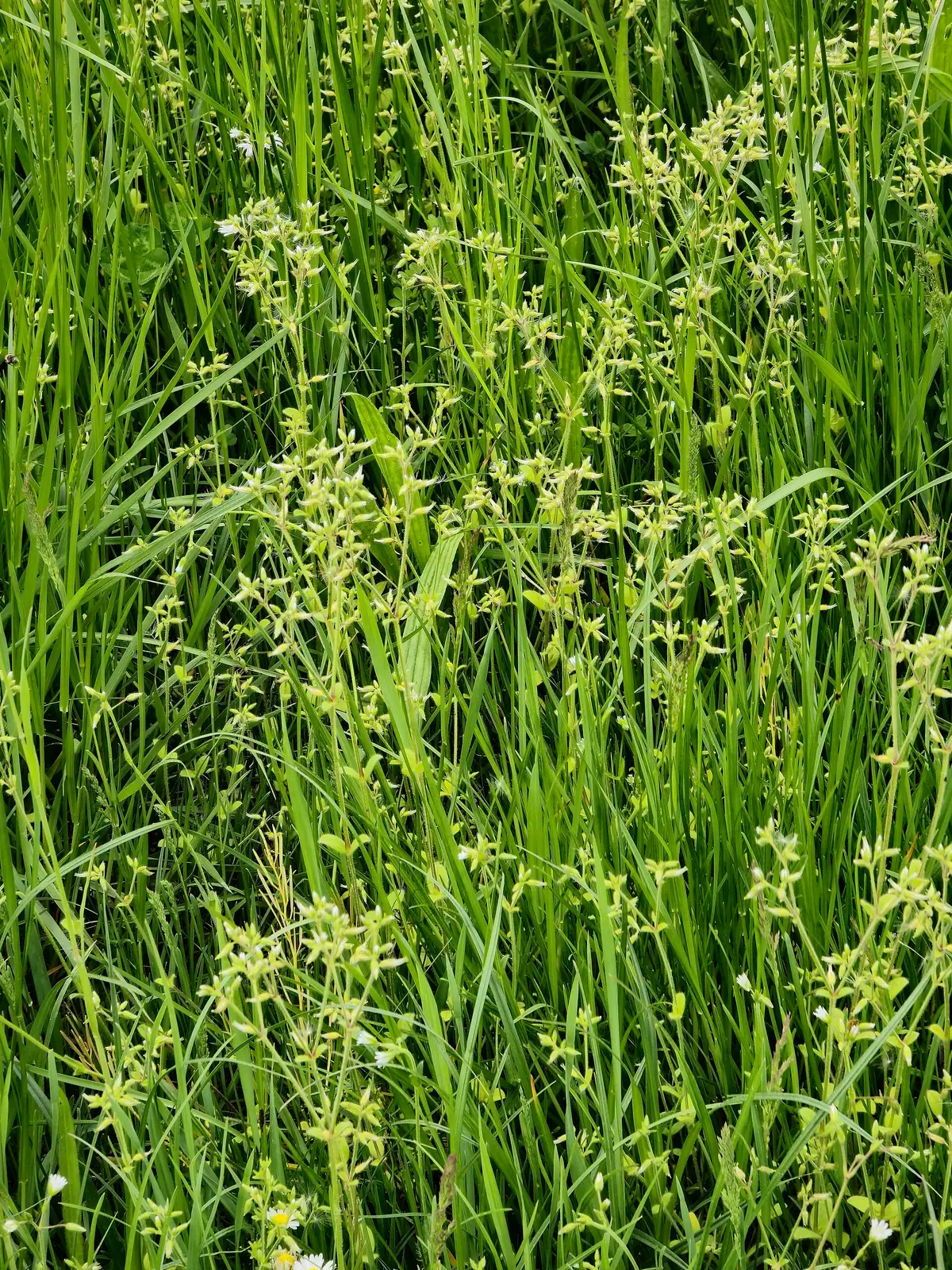
- Growth Habit: Annual herb; stems solitary or tufted and very hairy. Highly adaptable, thriving as a quick colonizer of disturbed habitats and readily self-sowing where conditions suit it.
Environment
Sunlight
Full sun to partial shade; flowers best with brighter light.
Temperature
Cool-season annual; grows best around 10–25°C (50–77°F).
Humidity
Handles average outdoor humidity; prefers moderate moisture and doesn’t love prolonged drought.
Soil
Very adaptable; prefers well-drained soil and does best in moderately fertile loam, but can also grow in compacted or disturbed ground.
Placement
Outdoors in naturalized patches, field margins, roadsides, wildflower areas; commonly pops up in lawns and garden beds.
Hardiness
Common across temperate regions; often treated as a hardy annual across USDA Zones 3–11 (typically persists by seed and may behave as a winter annual in mild climates).
Care Guide
Difficulty
Very easy—so adaptable that it usually needs no help (and is often considered a weed).
Buying Guide
Not commonly sold as an ornamental and is usually found growing wild. If you’re intentionally keeping it, pick plants with fresh green growth and avoid patches with obvious disease or heavy pest damage.
Watering
Water lightly during establishment or for seed germination; once established it typically relies on rainfall. Keep soil lightly moist for sprouting, but avoid waterlogging.
Fertilization
Usually unnecessary. Too much nitrogen can make it overly lush and floppy; if feeding is desired, use a very light, balanced fertilizer at low rates.
Pruning
No pruning needed. If you want to limit spreading, shear, hoe, or pull plants before they set seed.
Propagation
Primarily by seed. Capsules mature and release seed readily; collect mature capsules for sowing, or direct-sow in cool seasons. Self-seeds freely in suitable sites.
Repotting
Not typically grown in containers; if potted, use a free-draining mix and refresh the potting medium each season.
📅 Seasonal Care Calendar
Flowers March–April; fruits May–June. Remove plants before capsules mature if you want to prevent self-seeding.
Pests, Diseases & Safety
Common Pests & Diseases
Generally trouble-free. In damp, crowded growth it may show minor leaf spotting or mildew; improve airflow and avoid overwatering if problems appear.
Toxicity
No definitive toxicity note was provided in the source. It is described as being cut as hay/fodder and readily eaten by cattle, sheep, and pigs, but that does not guarantee safety for all animals or for people—use local guidance before allowing pets to graze or using it as food.
Culture & Symbolism
Symbolism: Not documented in the source.
History & Legends: Not documented in the source.
Uses: Useful as an informal, naturalized groundcover in open areas. In some rural contexts it may be cut and dried as hay/fodder and is reported to be readily eaten by cattle, sheep, and pigs.
FAQ
When does it flower?
March–April.
When does it set fruit?
May–June.
How tall does it get?
Up to 30 cm (12 in).
Where does it grow naturally?
Widespread in China; commonly found in fields, roadsides, and grassy slopes.
What is it used for?
It can be kept as a naturalized groundcover and has been used as hay/fodder for livestock in some settings.
Fun Facts
- Its flowers are packed into tight clusters that can look like tiny “heads,” each flower with five narrow white petals.
- The seed capsule is oblong-cylindrical, and the seeds are brown, flattened triangular, and warty-textured.
- The stems and leaves are notably hairy, and the upper stems may have sticky glandular hairs—one reason behind names like “sticky” or “clammy.”
- Because it loves disturbed ground, it often volunteers in gardens and along paths without being planted.


