Plant Features
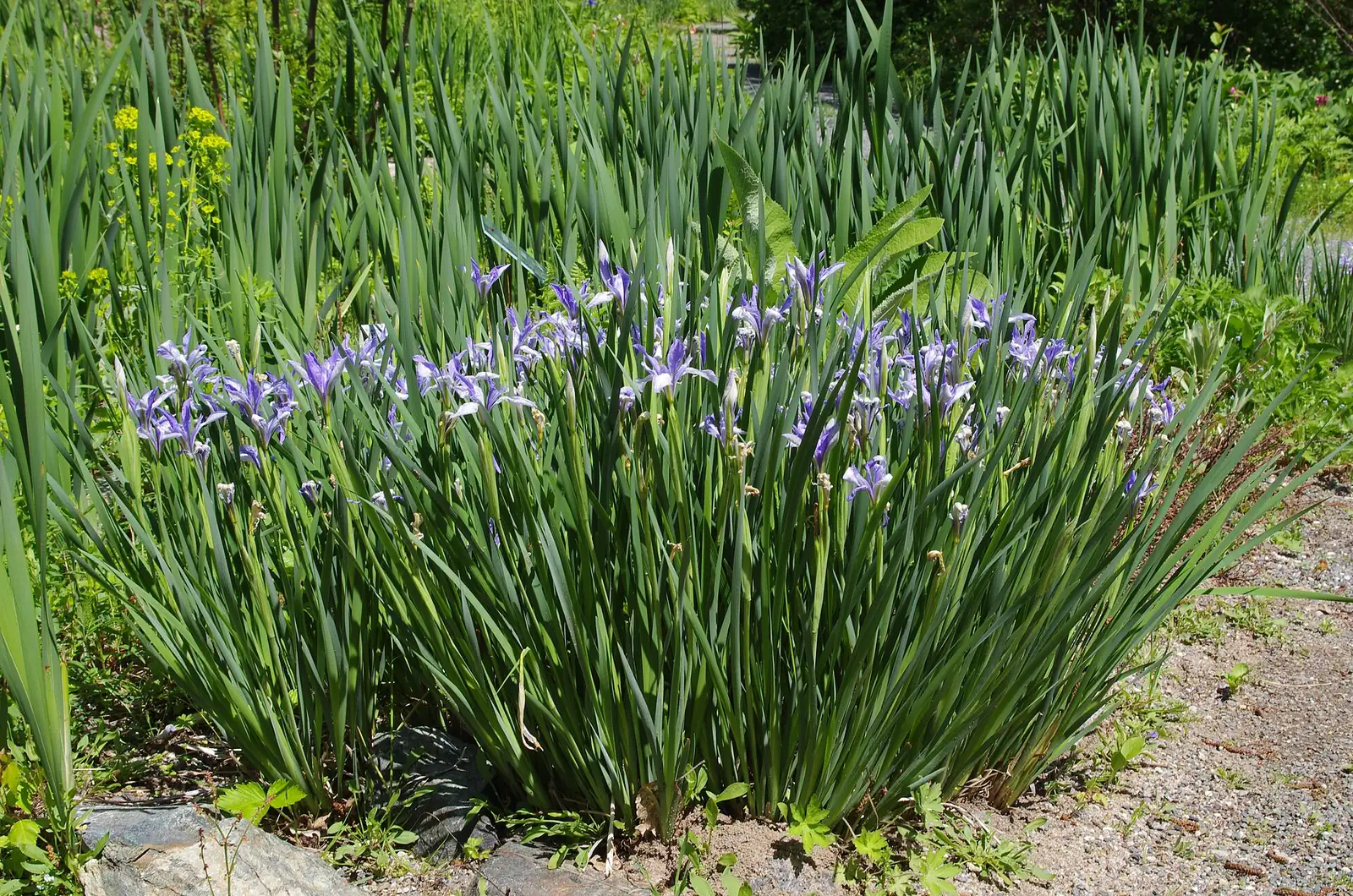
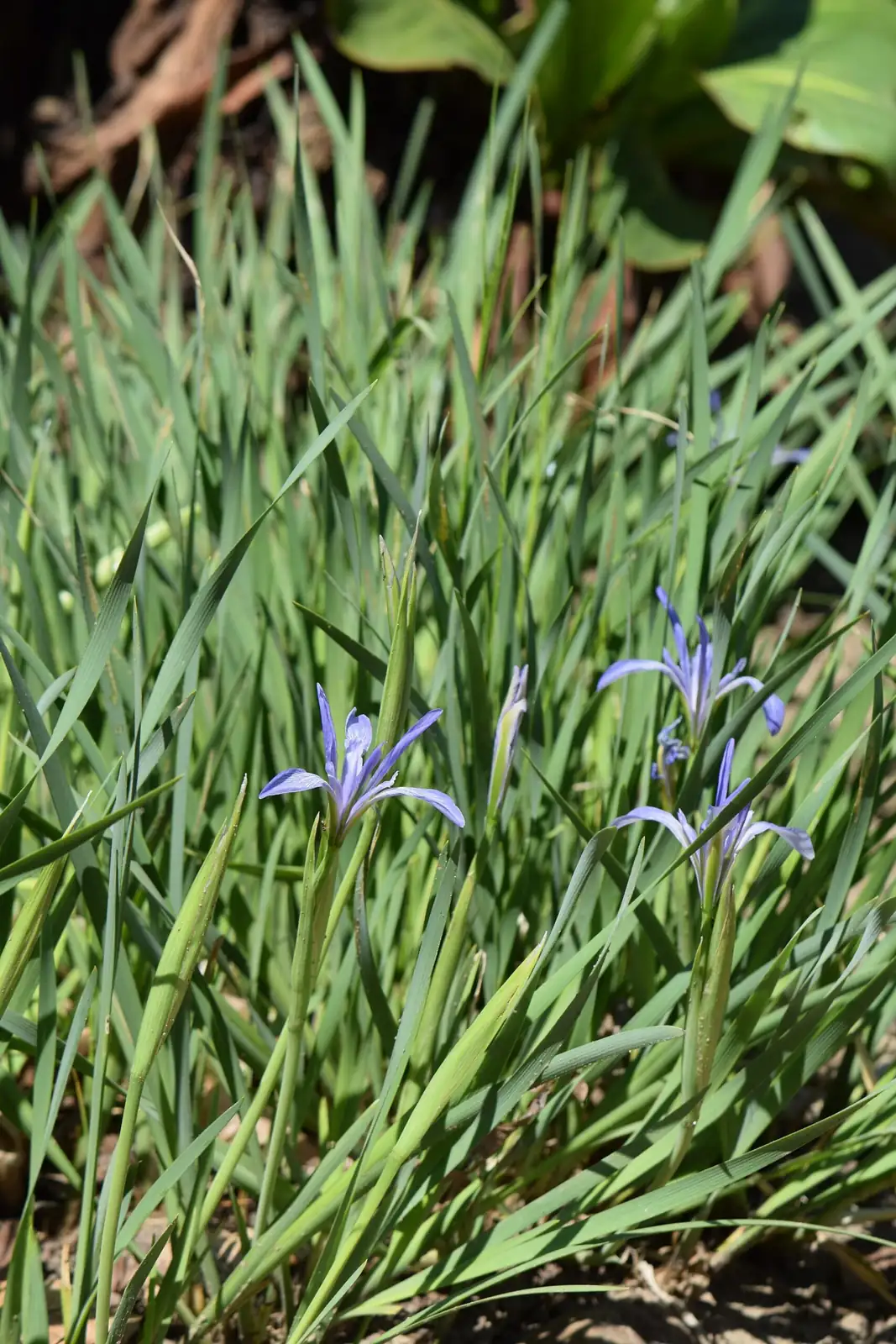
- Size: Up to about 1 m (3.3 ft) tall; forms dense clumps that gradually spread via rhizomes.
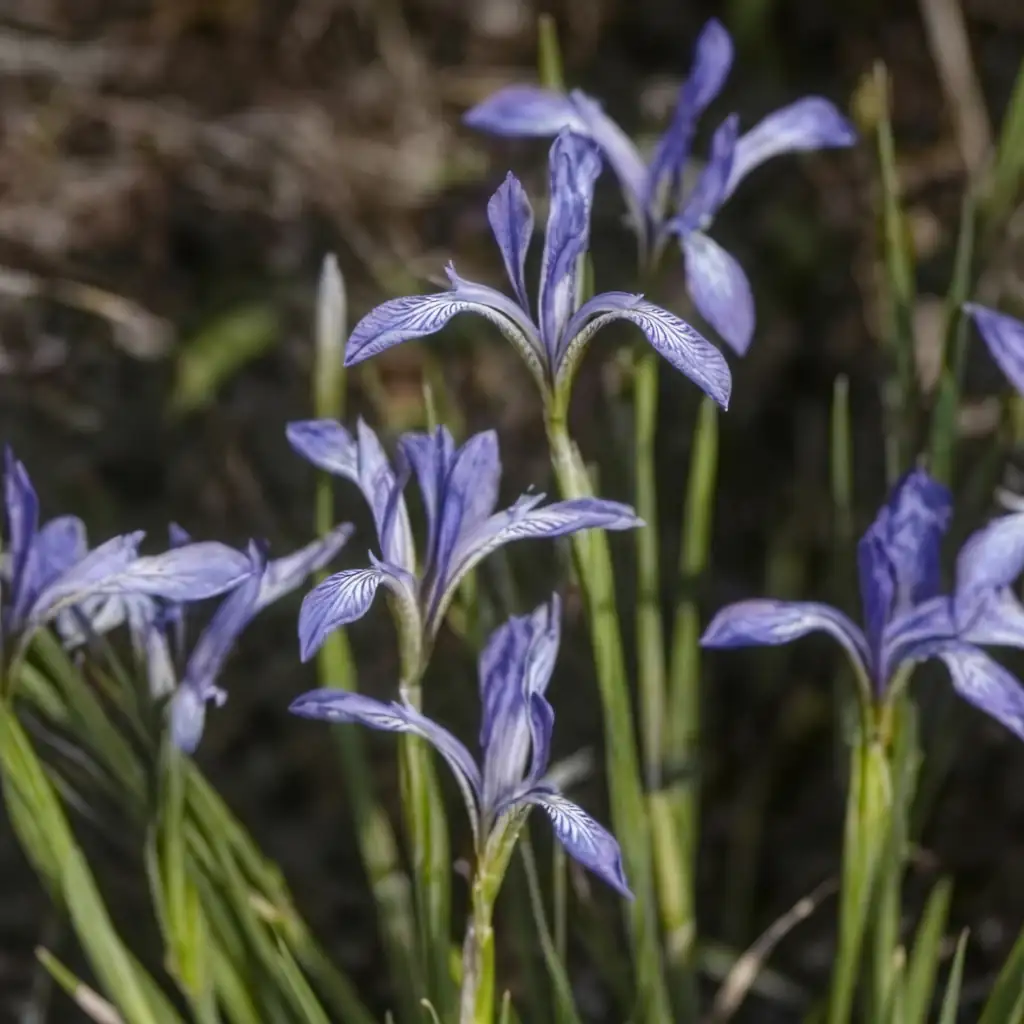
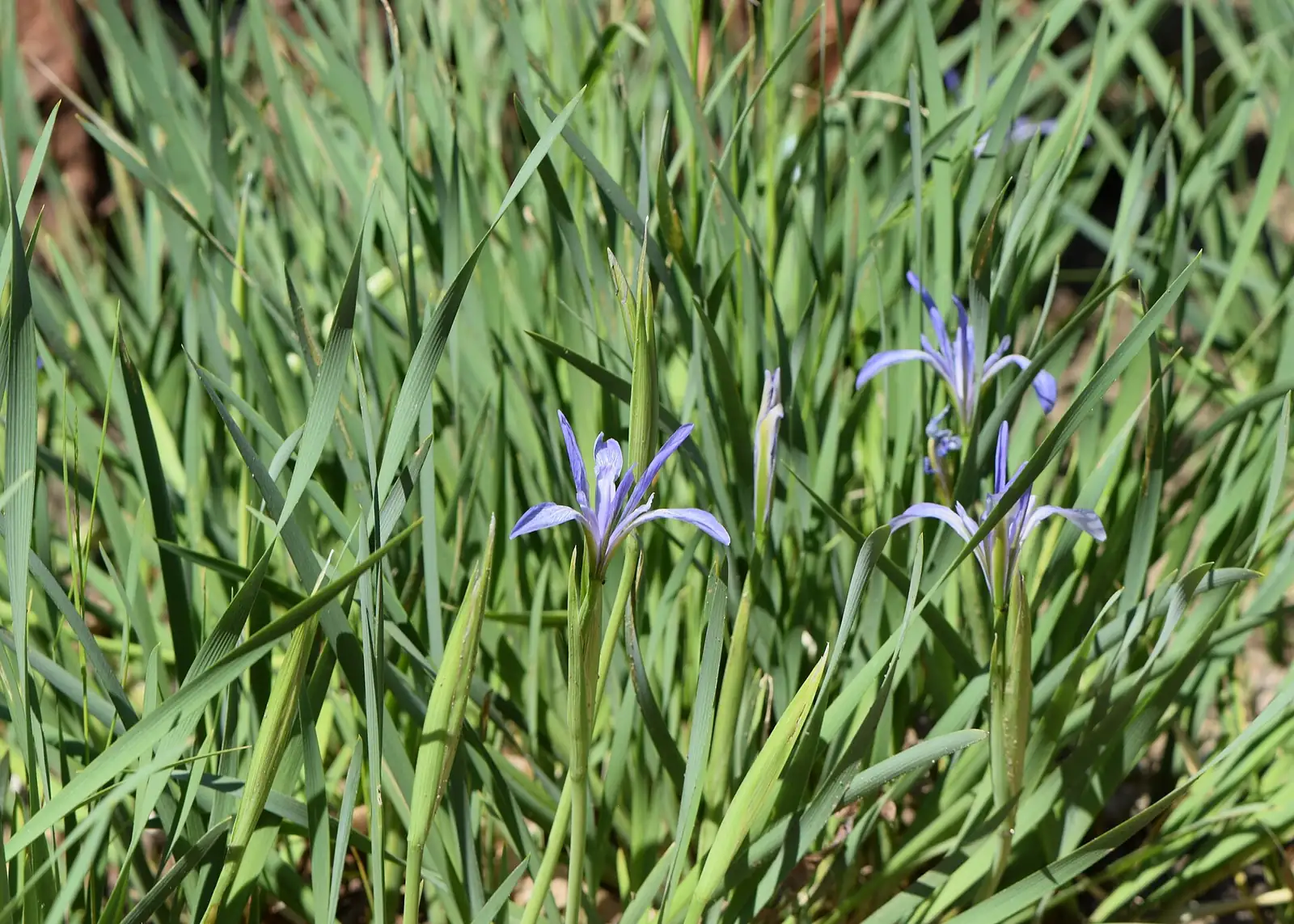
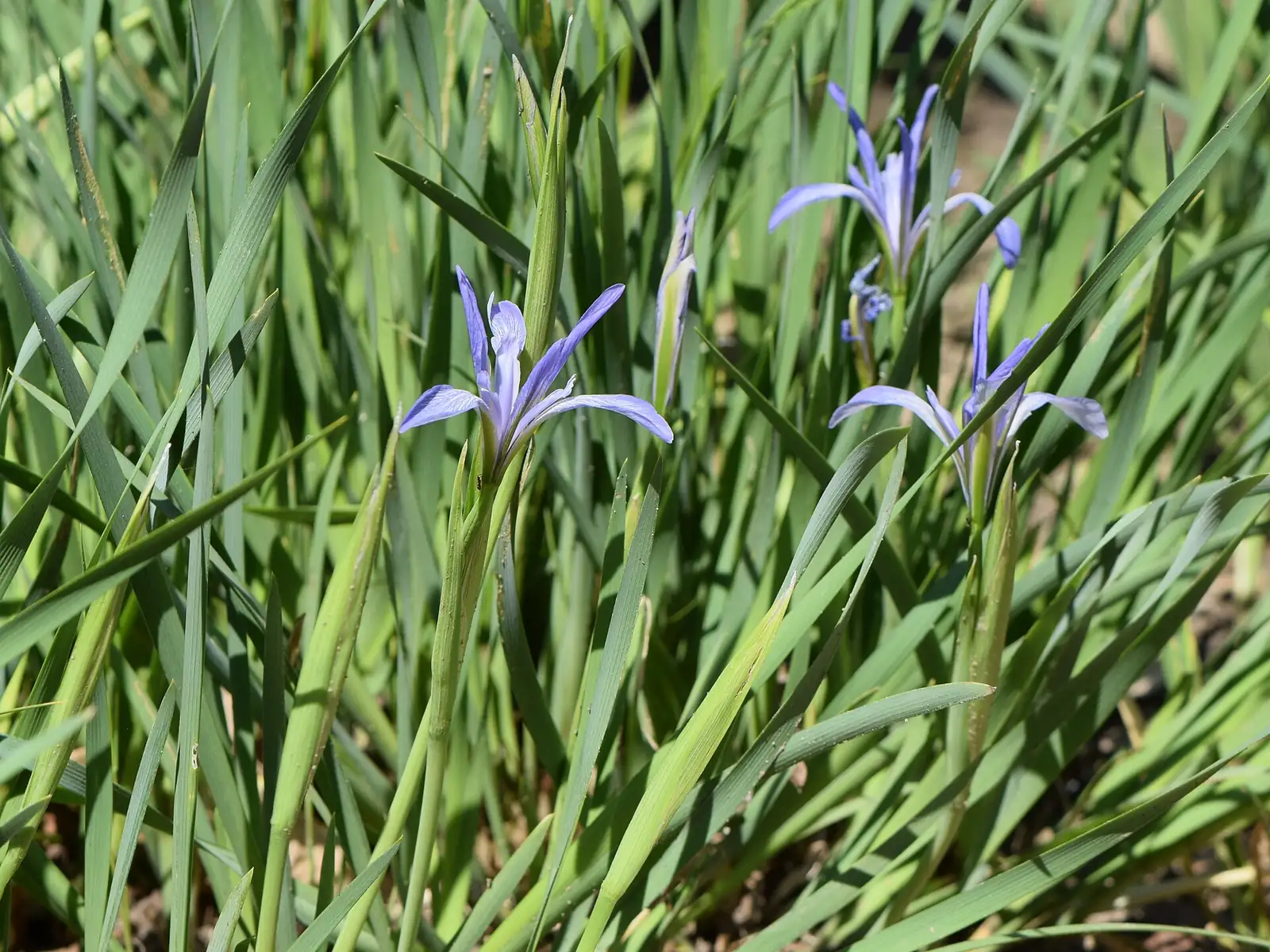
- Foliage: Basal leaves grow in thick, upright clumps; they are narrow, linear, and notably firm to the touch. At the base you’ll often see old, fibrous leaf sheaths, and the lower leaf portions may show a faint purplish tint. Underground, the plant has a stout rhizome supported by fine, tough fibrous roots—part of why it anchors so well in harsh sites.
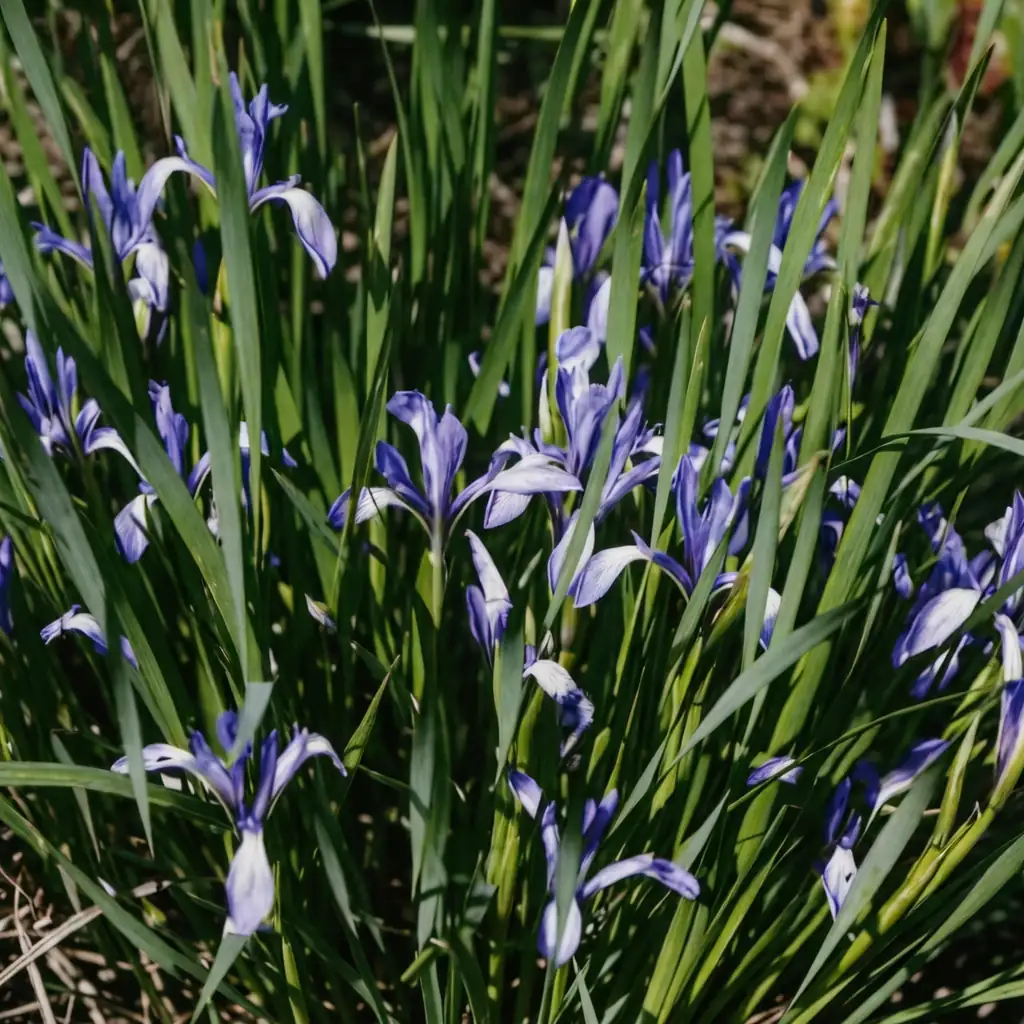
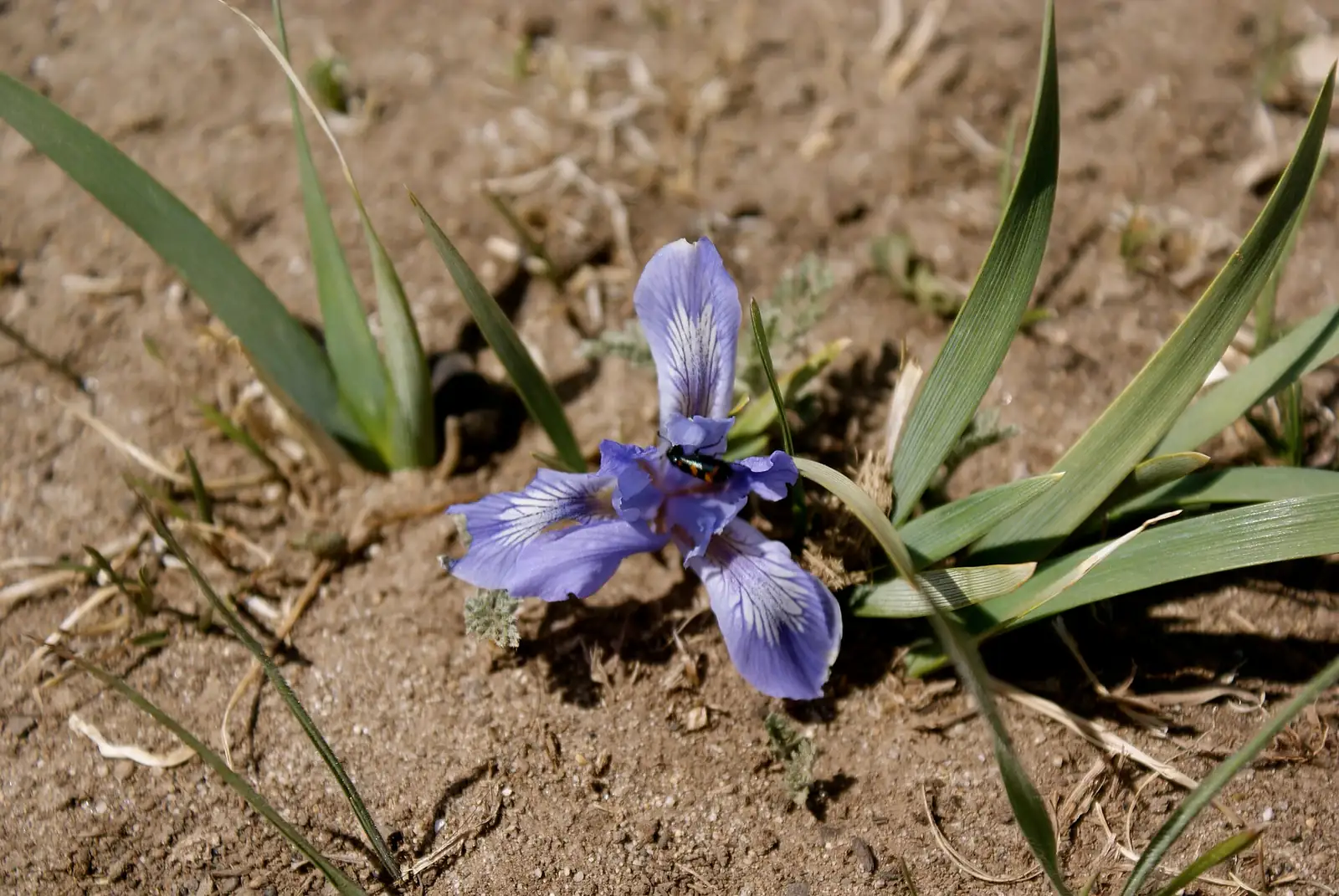
- Flower: Flower stems rise to about leaf height and usually carry 1–3 blooms. Each flower has six blue tepals: the outer segments are slightly larger and gently droop, each marked by a yellow stripe/signal, while the inner segments stand more upright. The style branches are petal-like and split at the tips, adding to the classic iris look.
- Flowering Season: May–June
- Growth Habit: Cold-hardy, rhizomatous perennial herb forming upright, dense clumps.
Environment
Sunlight
Full sun to partial shade; flowering is best in full sun.
Temperature
Very cold-hardy; typically tolerates about -30 to 30°C (-22 to 86°F).
Humidity
Highly adaptable—handles consistently moist soil and shallow water, but also tolerates drought once established.
Soil
Adaptable to many soils, including poor or disturbed ground; notably tolerant of saline-alkaline conditions. For typical garden culture, well-drained soil is ideal, but it also accepts seasonally wet sites and pond-edge conditions.
Placement
Sunny borders, mass plantings, naturalistic areas, slopes and tough roadside-style spots, rain-garden edges, and pond margins (including shallow water). Also suitable where you want dependable cut greenery.
Hardiness
Commonly grown in USDA Zones 3–8; resilient and more tolerant of foot traffic than many ornamentals.
Care Guide
Difficulty
Easy. A famously resilient iris that copes with cold, varied moisture (from wet margins to drought), and a wide range of soils—including saline-alkaline sites.
Buying Guide
Look for plants with firm, green leaves and solid, healthy (not soft) rhizomes. Avoid pots that smell sour or are severely waterlogged unless you’re specifically planting it at a wet margin and can manage rot risk.
Watering
Water regularly while establishing. Once settled, you can treat it either as a moisture-lover (consistently moist soil, even near shallow water) or as a tough garden perennial—watering deeply only during extended drought.
Fertilization
Often minimal. If you want stronger flowering, feed in spring with a balanced slow-release fertilizer at label rates. Avoid heavy nitrogen, which can encourage soft, floppy growth.
Pruning
After bloom, remove spent flower stems. Tidy damaged or brown leaves anytime. If needed, cut foliage back to about 5–10 cm (2–4 in) in late fall or early spring.
Propagation
Easiest by division: lift and divide rhizome clumps in early spring or soon after flowering, then replant at the same depth. It can also be grown from seed; capsules typically mature through summer.
Repotting
In containers, divide or repot every 2–3 years, or when crowded. Use a sturdy pot. Choose mix moisture level to match your goal—more moisture-retentive for wet-edge culture, freer-draining for standard pots.
📅 Seasonal Care Calendar
Blooms in May–June. Seed capsules typically mature June–September. Divide and replant in early spring or shortly after flowering; keep evenly moist while new divisions establish.
Pests, Diseases & Safety
Common Pests & Diseases
Generally robust. Possible pests include iris borers (where present), aphids, thrips, and slugs/snails on young growth. In poorly drained conditions, rhizome rot and leaf spot may occur—improve airflow, avoid planting rhizomes too deep, and remove affected tissue promptly.
Toxicity
Like many irises, the rhizomes and sap can irritate skin and may cause stomach upset if chewed or ingested. Keep away from pets and children who may nibble plants.
Culture & Symbolism
Symbolism: Irises are often linked with hope, faith, and good news; blue irises commonly suggest calm, trust, and steady confidence.
History & Legends: In parts of northern and western China it has long been familiar as a hardy wildflower of grasslands and disturbed ground, admired for thriving where many plants struggle.
Uses: Ornamental mass planting, borders, groundcover, and tough landscape sites; especially useful for slopes, rain-garden edges, and pond margins. Also valued for cut foliage in floral work.
FAQ
When does it bloom?
Typically May–June.
When does it set seed?
Seed capsules generally mature from June–September.
How tall does it get?
Up to about 1 m (3.3 ft), depending on growing conditions.
What kind of habitat does it tolerate?
It’s unusually flexible: it grows in moist soils and can handle shallow water, but also tolerates drought, poor disturbed soils, and saline-alkaline grasslands.
What are the key leaf and root features?
It has a stout rhizome with fine, tough fibrous roots, and dense basal clumps of narrow, firm leaves with fibrous old sheaths at the base and sometimes a purplish tint near the lower leaf.
Fun Facts
- It can thrive in overgrazed, saline-alkaline grasslands—conditions that defeat many ornamentals.
- It tolerates trampling better than many flowering perennials, making it useful in resilient plantings.
- It’s unusually flexible about water: comfortable in wet ground and shallow water, yet able to cope with drought once established.
- It can be used both as a flowering groundcover and as a source of cut greenery for arrangements.
- Its tough fibrous roots and stout rhizomes help it anchor and persist in harsh, disturbed sites.