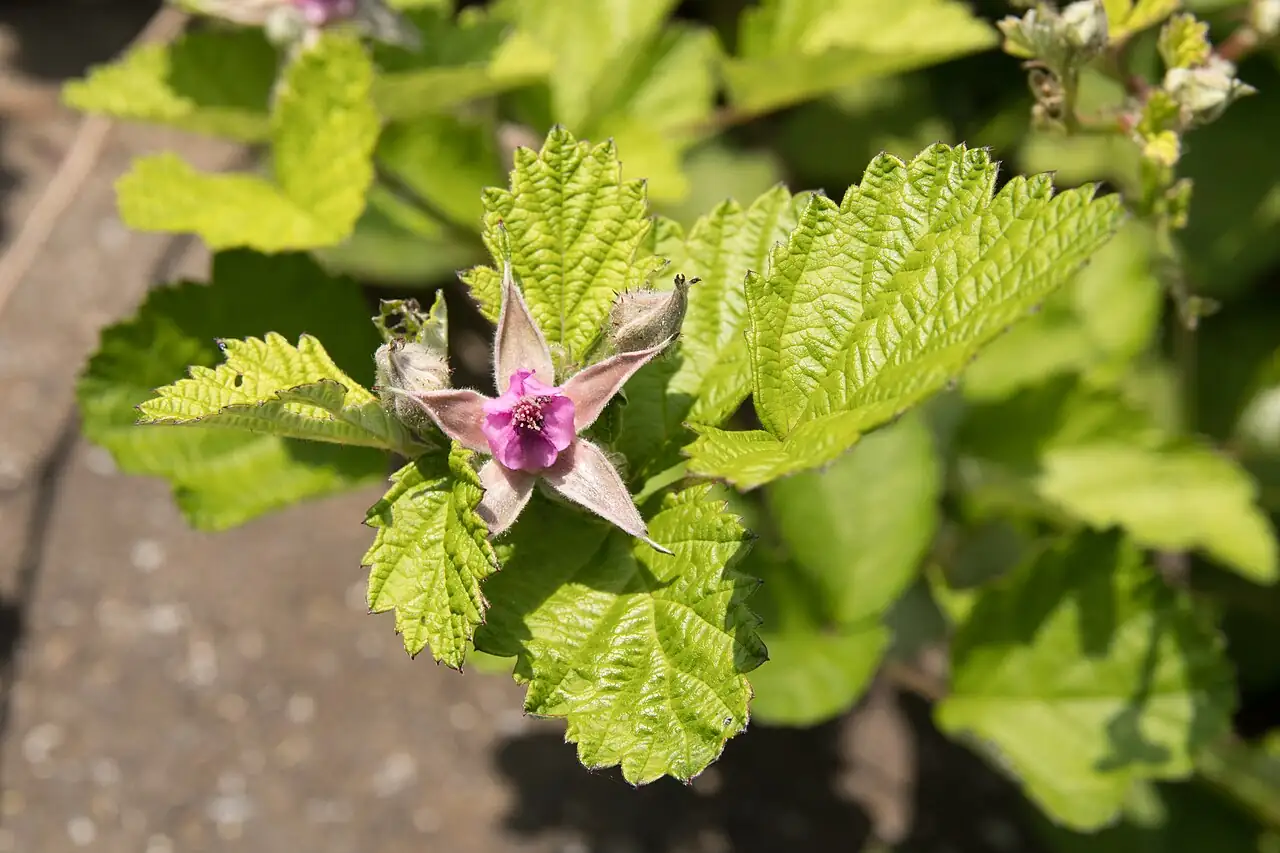

Plant Features
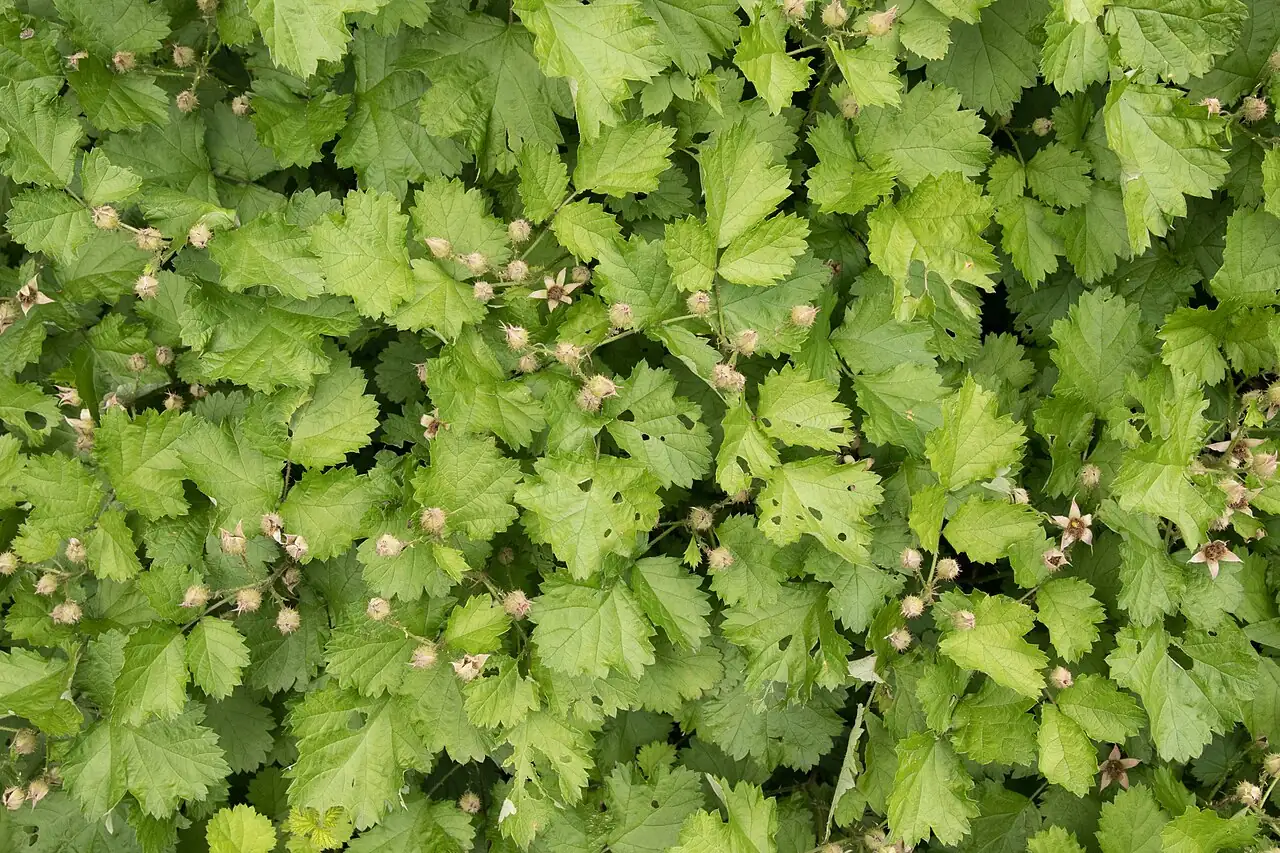
- Size: Typically 1–2 m (3.3–6.6 ft) tall; can spread to form a broad, thicketing groundcover.
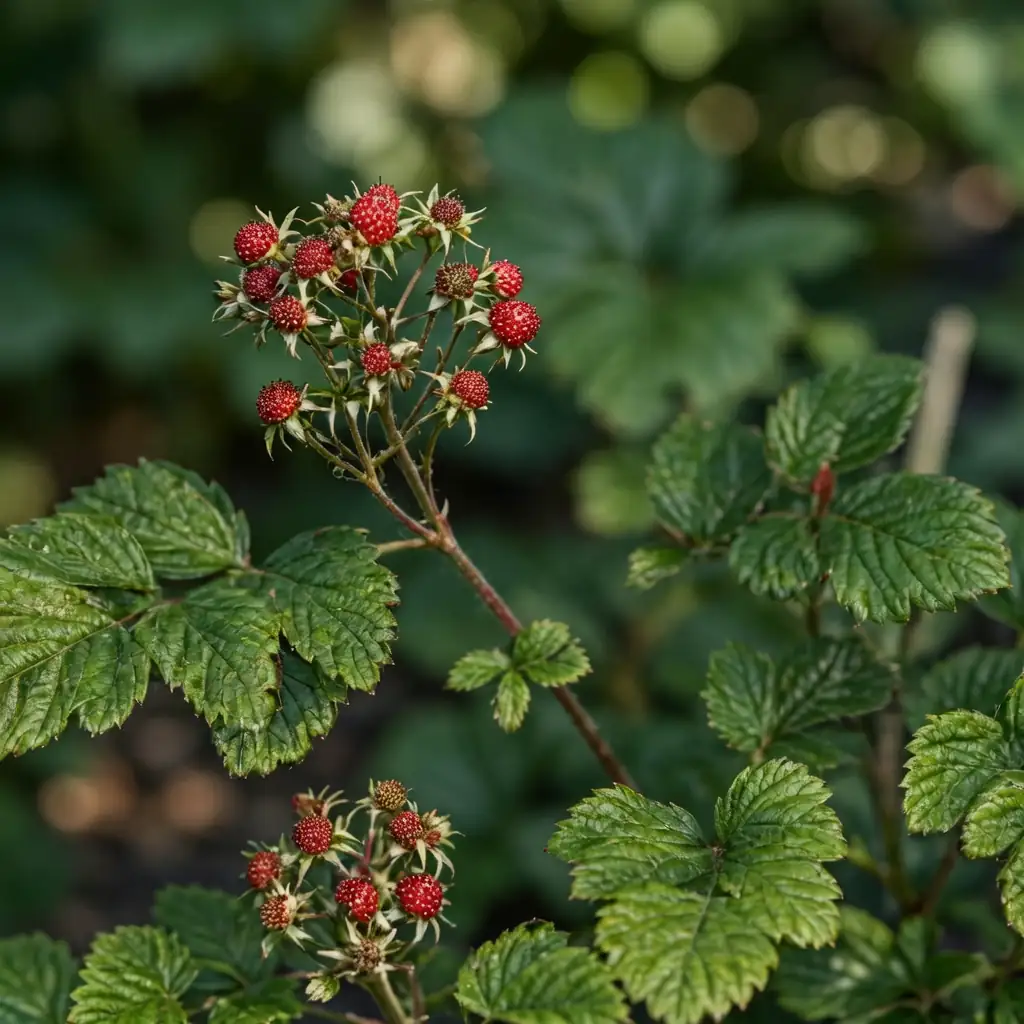
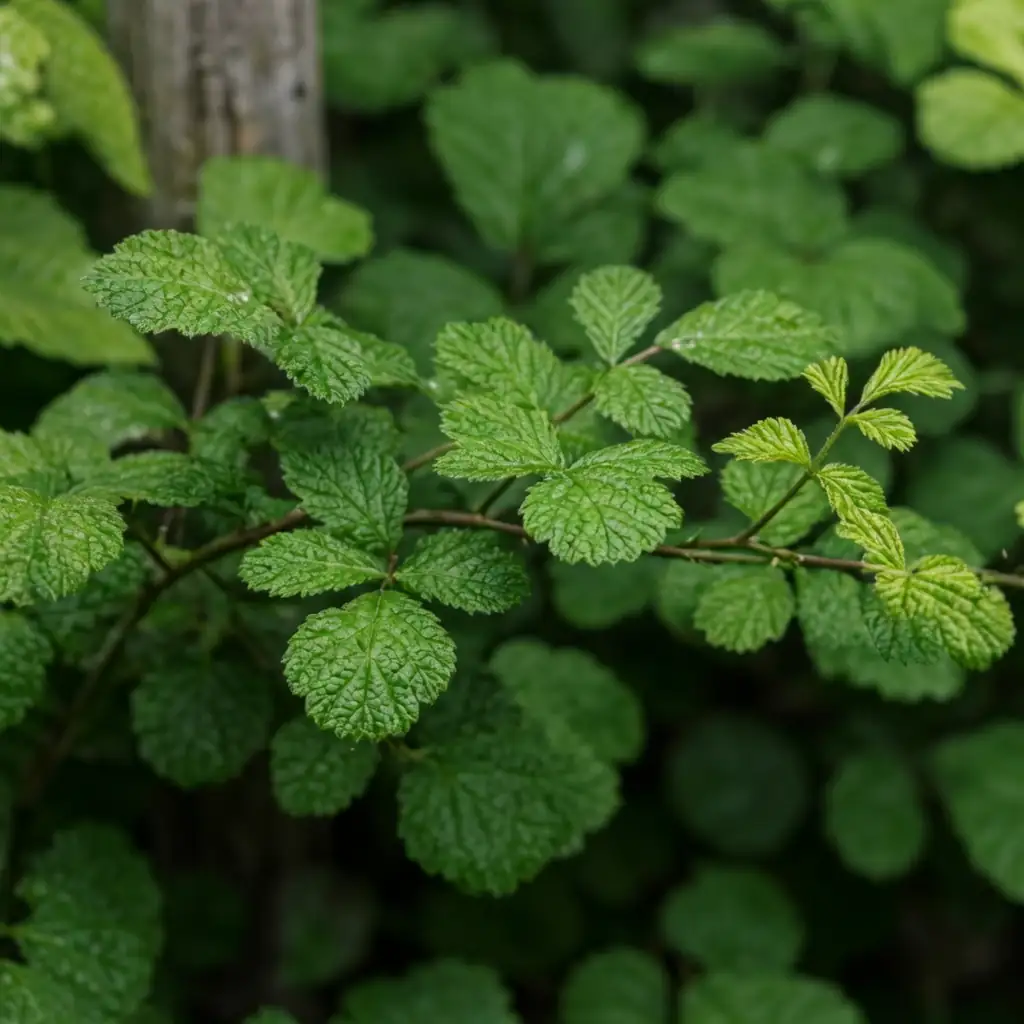
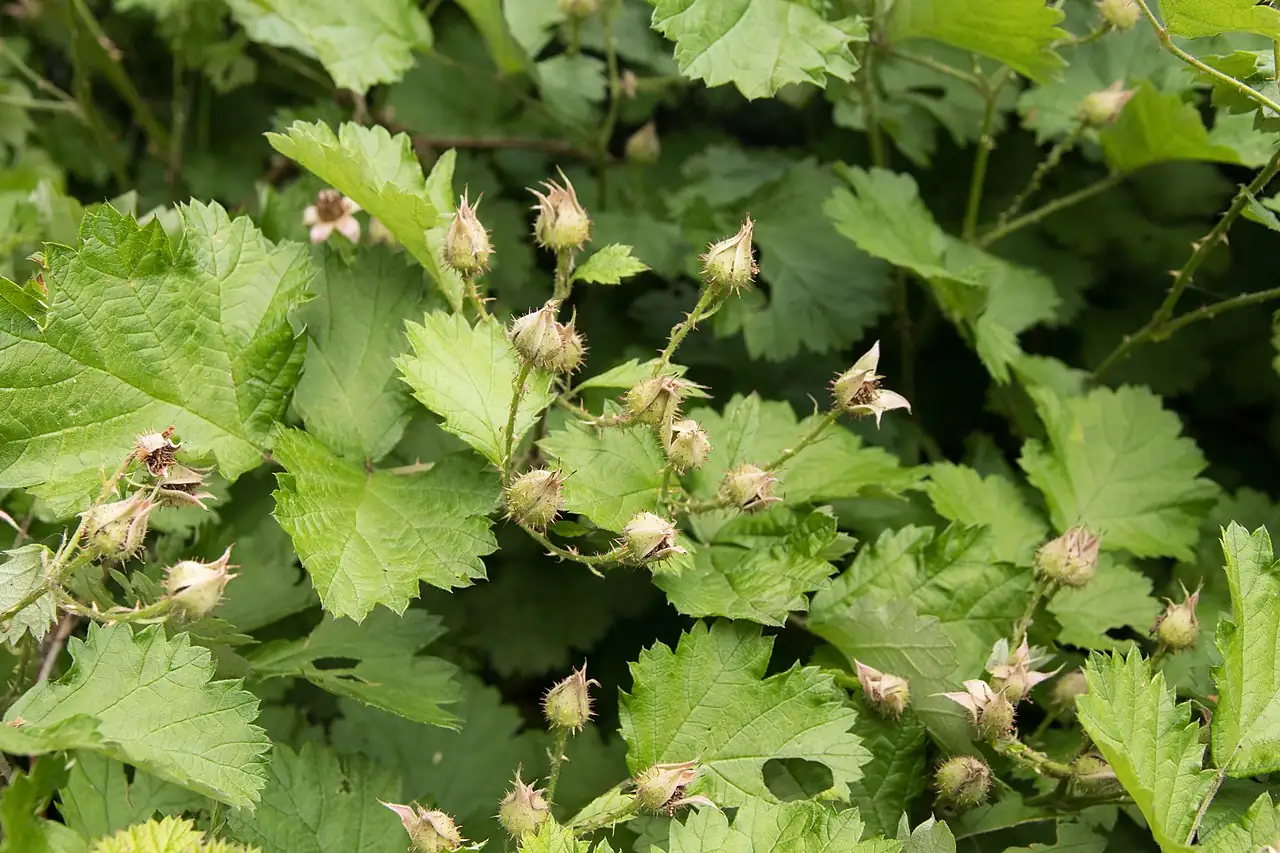
- Foliage: Leaves are usually trifoliate (3 leaflets), sometimes 5 on vigorous new shoots. Canes are softly hairy and armed with sparse, hooked prickles.
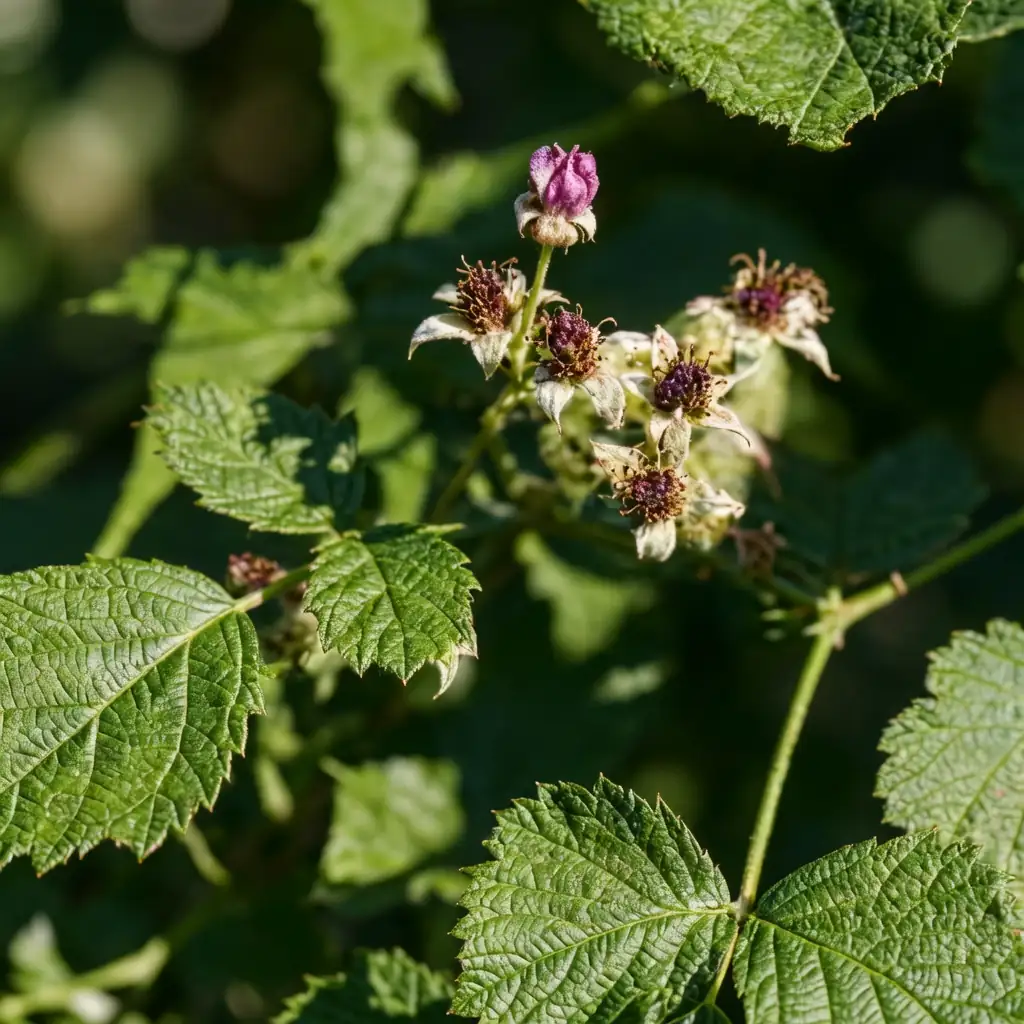
- Flower: Small flowers in corymb-like clusters (terminal or axillary). Petals are oval to oblong and range from pink to purplish-red.
- Flowering Season: May–June
- Growth Habit: A deciduous, arching bramble that spreads readily and can form dense patches; canes may root where they touch the ground, helping it act like a living groundcover.
Environment
Sunlight
Full sun to partial shade; flowering and fruiting are best with brighter light.
Temperature
Prefers cool to warm temperate conditions; roughly 10–30°C (50–86°F) during active growth. Protect from extreme heat and prolonged hard freezes.
Humidity
Adaptable to average outdoor humidity. Avoid persistently stagnant, overly humid conditions that encourage fungal problems.
Soil
Well-drained loam or sandy loam with steady moisture. Tolerates a range of soils, but performs best in fertile, organically enriched ground.
Placement
Outdoors in borders, woodland edges, slopes, or naturalistic plantings. Give it room (or a boundary) because it can spread and thicken.
Hardiness
Cold-hardy in temperate regions; commonly grown outdoors in mild-to-cool temperate climates (exact USDA zone depends on local conditions and provenance).
Care Guide
Difficulty
Easy. Very adaptable and resilient, with vigorous growth; the main ‘challenge’ is simply managing its enthusiastic spreading habit.
Buying Guide
Pick plants with firm, healthy canes and fresh green foliage. Skip any pots that smell sour or look waterlogged, and avoid plants with obvious heavy aphid or mite activity. If you want quick groundcover, buying several smaller plants often fills in faster than one big specimen.
Watering
For the first growing season, keep soil evenly moist but not soggy to help it establish. Once established, water during dry spells; more consistent moisture generally improves flowering and fruit set.
Fertilization
In early spring, top-dress with compost or use a balanced slow-release fertilizer. Don’t overdo nitrogen—too much can mean lots of leaves but fewer flowers and berries.
Pruning
After fruiting, thin out weak, damaged, or overcrowded canes to improve airflow and reduce disease risk. Wear gloves—those hooked prickles can snag and scratch.
Propagation
Very easy. Layering is especially natural (arching canes often root where they touch soil). You can also divide rooted sections or use softwood/semi-hardwood cuttings. Seed is possible but less commonly used for garden plants.
Repotting
Usually grown in the ground. If grown in a container, repot every 1–2 years or refresh the top layer of soil; ensure excellent drainage and allow space (or light support) for arching canes.
📅 Seasonal Care Calendar
Spring: feed with compost/fertilizer, tidy, and guide/peg canes down if using as groundcover. Late spring–early summer: enjoy blooms; keep moisture steady. Summer: fruiting typically July–August; water during drought. Autumn–winter: remove tangled/spent canes, thin for airflow, and mulch in colder areas.
Pests, Diseases & Safety
Common Pests & Diseases
Can attract aphids, spider mites, scale insects, and caterpillars. Diseases may include powdery mildew, leaf spot, and cane blight—especially with poor airflow or persistently wet foliage. Improve airflow with thinning, avoid overhead watering late in the day, and remove infected material promptly.
Toxicity
Generally considered non-toxic, and the ripe berries are edible. The main hazard is physical: prickly canes can cause scratches, so handle carefully around children and pets.
Culture & Symbolism
Symbolism: Often linked with wild abundance and resilience—classic bramble qualities, thriving and spreading even where conditions are rough.
History & Legends: A familiar wild bramble across East Asia, commonly seen along hillsides, woodland edges, and field margins—more appreciated for its hardy nature and bright fruit than for formal garden pedigree.
Uses: Grown as an ornamental, naturalistic groundcover (especially useful on slopes) with charming pink flowers and bright red fruit. Ripe berries are edible.
FAQ
When does it flower?
Typically May–June.
When does it fruit?
Typically July–August.
How tall does it grow?
About 1–2 m (3.3–6.6 ft) tall, and it can also spread outward to form dense cover.
Where is it found in the wild and what habitat does it prefer?
It occurs in East Asia (Japan, the Korean Peninsula, and China), often on wooded slopes, sunny valleys, roadsides, and open or disturbed ground.
How can I identify small-leaf bramble?
Look for arching, softly hairy canes with scattered hooked prickles; leaves usually in 3 leaflets (sometimes 5 on vigorous shoots); clusters of small pink to purplish-red flowers; and bright red, egg-shaped berries about 1–1.5 cm (0.4–0.6 in) across.
Fun Facts
- The berries are bright red and about 1–1.5 cm (0.4–0.6 in) across.
- Leaves are usually in sets of three leaflets, but vigorous new shoots may show five.
- Its arching canes can root where they touch the soil—one reason it spreads so easily.
- It naturally grows from woodland edges to roadsides, showing impressive adaptability.
- It can cover a slope quickly, but in small gardens it may need boundaries or regular thinning.