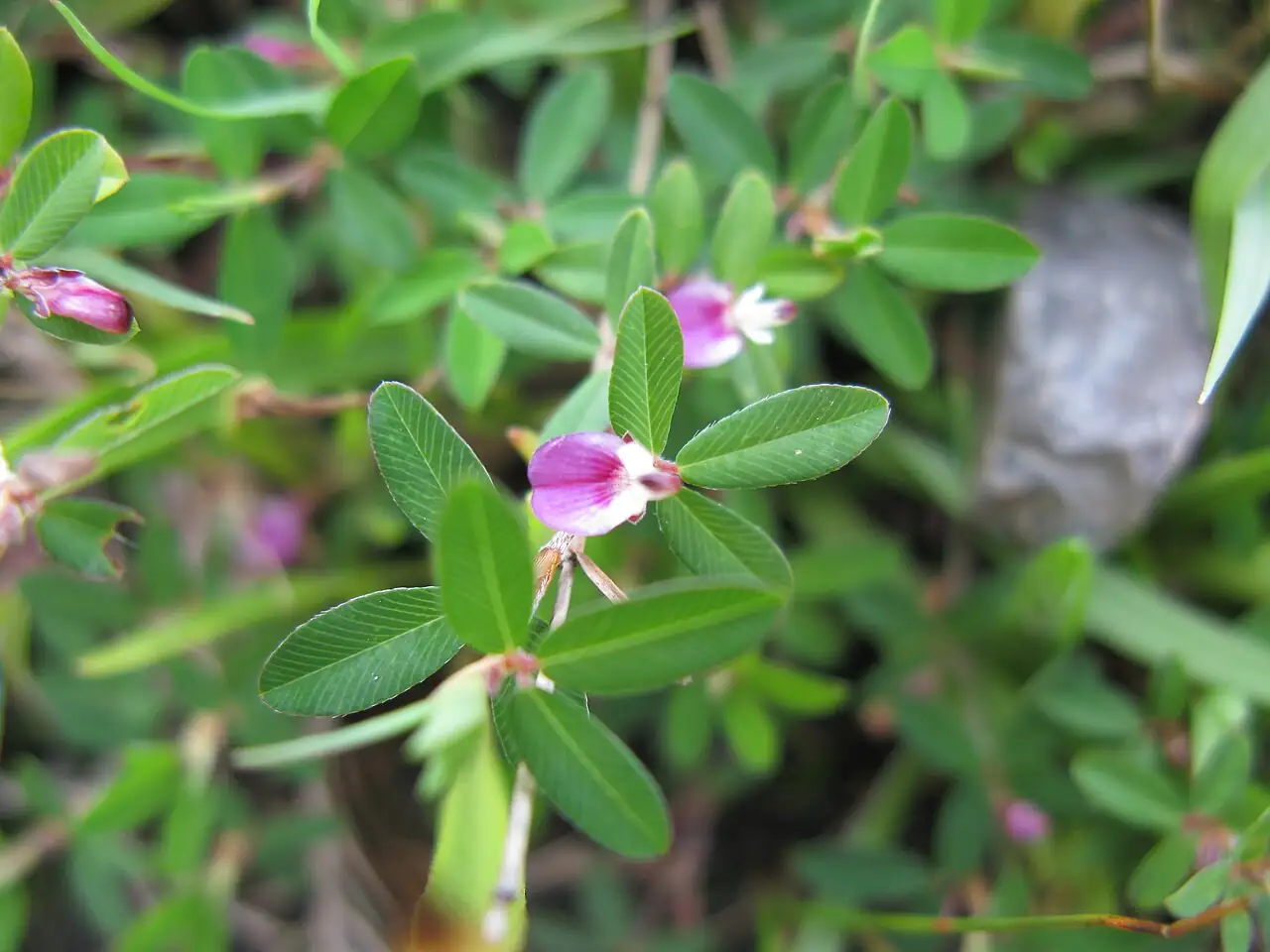
Plant Features
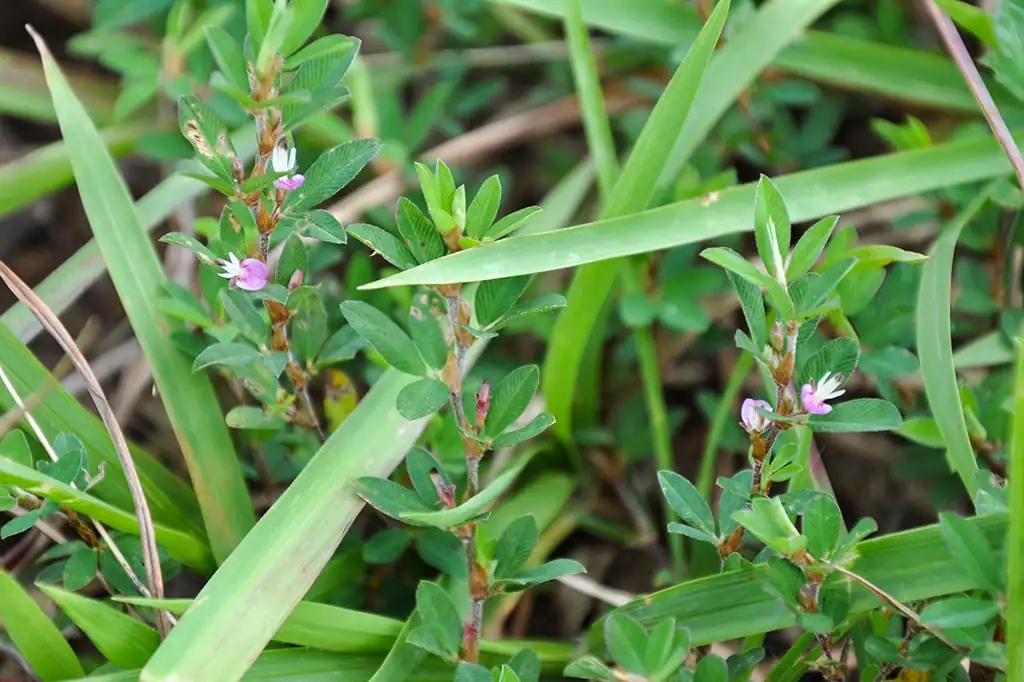
- Size: Typically 5–45 cm (2–18 in) tall, with a low, spreading habit; spread may reach about 30–60 cm (12–24 in) depending on site conditions.
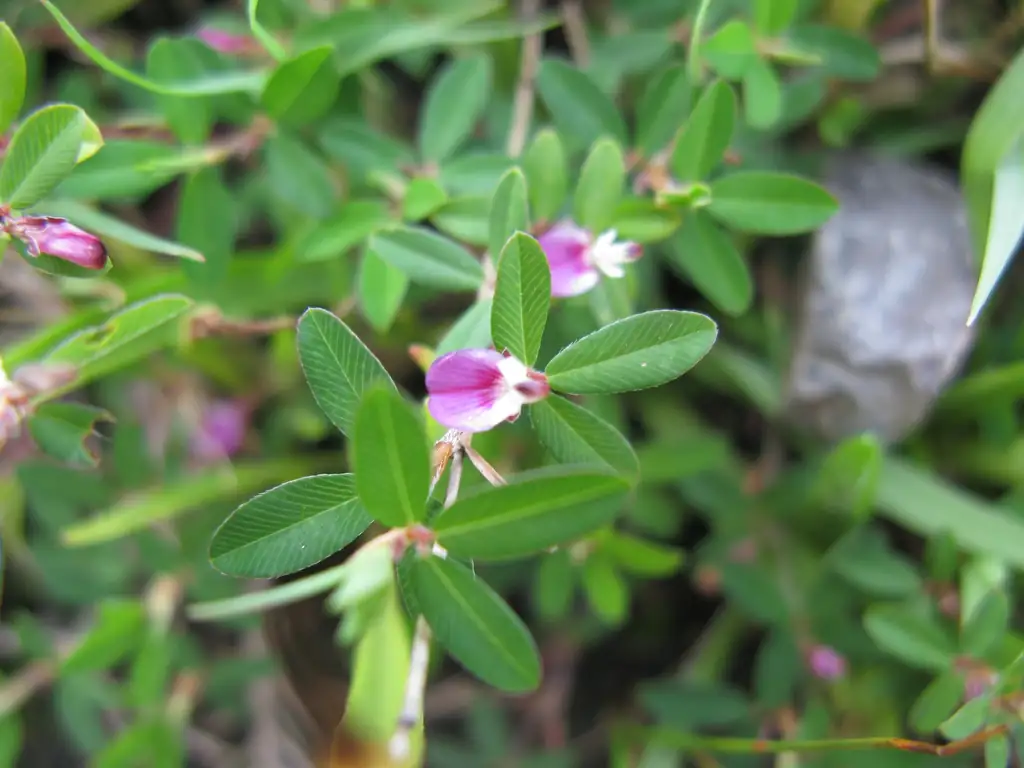
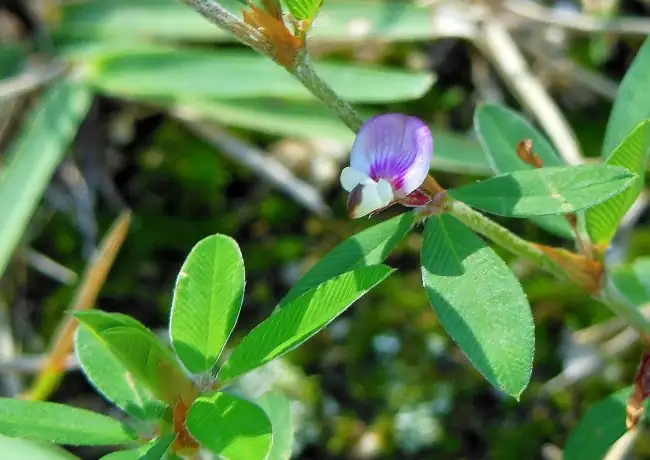
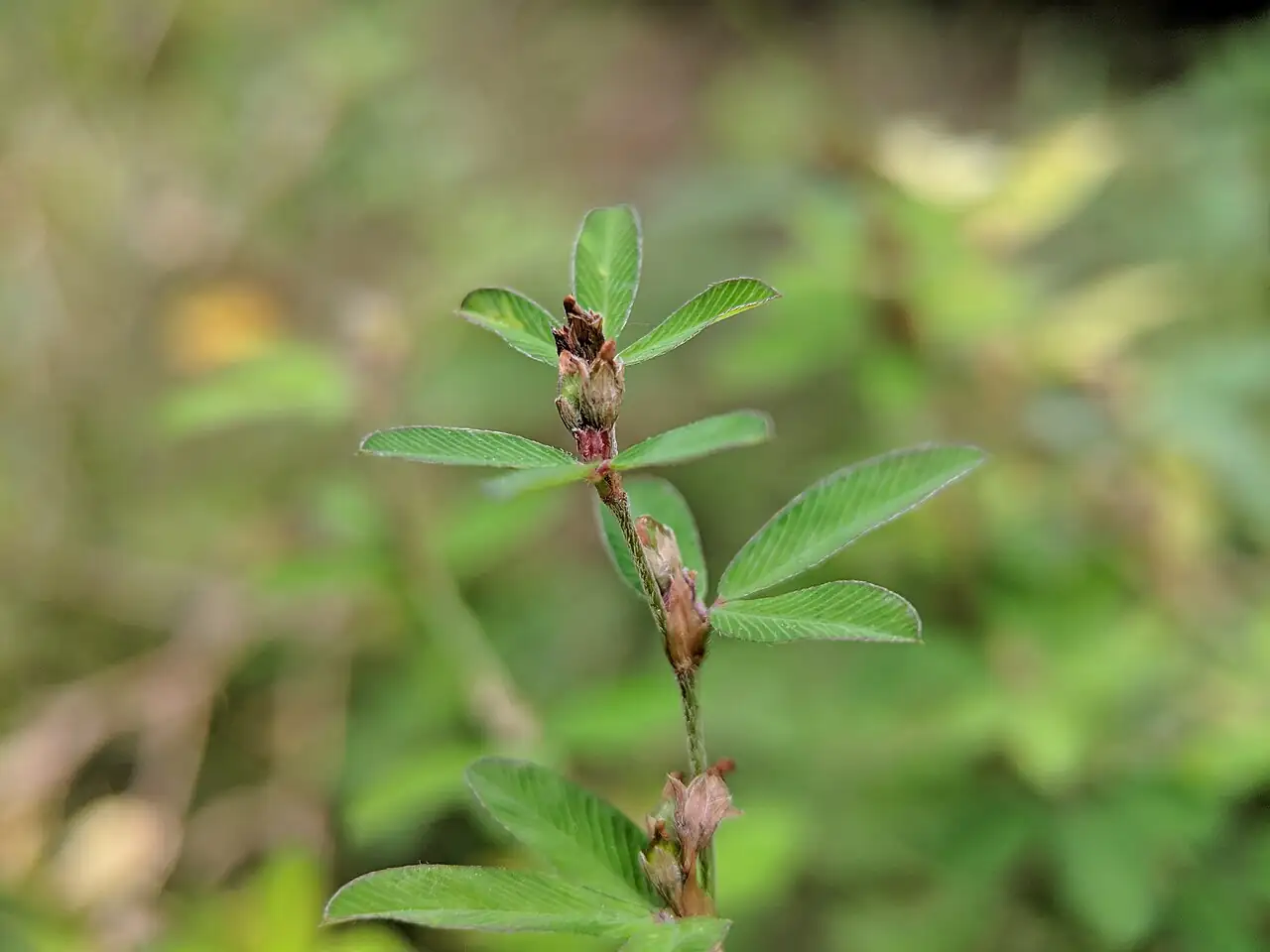
- Foliage: Leaves are trifoliate (three leaflets). Stipules are relatively large, papery, and oblong-ovate, often longer than the leaf stalk. Stems and branches are covered with fine, backward-pointing white hairs.
- Flower: Small pea-like flowers are borne singly or in small clusters of 2–3 in the leaf axils. After flowering, rounded to inversely egg-shaped pods form; they are slightly flattened.
- Flowering Season: July–September
- Growth Habit: Annual herb; prostrate to spreading, freely branched, often forming a low mat.
Environment
Sunlight
Full sun to light shade; blooms best in brighter sun.
Temperature
Prefers cool-to-mild conditions; best growth around 15–25°C (59–77°F). Growth typically ends with hard frost around 0°C (32°F).
Humidity
Average outdoor humidity; once established it tolerates relatively dry air.
Soil
Very adaptable; does well in well-drained sandy or lean soils and tolerates low fertility. Avoid persistently waterlogged ground.
Placement
Best outdoors in naturalistic plantings—meadows, field edges, roadsides, stream banks, sandy slopes—or used as a quick cover crop/ground cover on bare soil.
Hardiness
Temperate-region annual: hardy through the growing season, but naturally finishes its life cycle and dies back with hard frost (about 0°C / 32°F).
Care Guide
Difficulty
Easy (especially outdoors). Once established it’s notably tolerant of drought and low-nutrient soils.
Buying Guide
Choose fresh, viable seed (especially if sowing as a cover crop) or healthy young plants with dense branching and no obvious mildew, spotting, or insect damage. For restoration or larger sowings, buy from reputable sources suited to your region.
Watering
Water to establish: keep the top 2–3 cm (0.8–1.2 in) of soil lightly moist for about 1–2 weeks. After that, water only during prolonged drought, letting the soil dry between waterings.
Fertilization
Usually unnecessary. In containers or extremely depleted soil, feed lightly with a balanced fertilizer at 1/4–1/2 strength every 4–6 weeks during active growth. Avoid heavy nitrogen, which can push leafy growth and reduce flowering.
Pruning
Not required. You can trim lightly to keep it tidy or to limit self-seeding—cut back before pods mature if you don’t want it to reseed.
Propagation
Primarily by seed. Sow in spring after the danger of hard frost, or broadcast in late spring/early summer; lightly rake in and keep evenly moist until germination.
Repotting
Generally not needed (annual). If grown in a pot and roots fill the container, shift to a slightly larger pot with a free-draining mix.
📅 Seasonal Care Calendar
Spring: sow and keep evenly moist until established. Summer: low maintenance; water only during extended dry spells; flowering peaks. Late summer–autumn: pods form—cut back before seed set to prevent self-seeding, or allow seeds to mature for natural reseeding.
Pests, Diseases & Safety
Common Pests & Diseases
Usually trouble-free. Occasionally aphids or leafhoppers appear; fungal leaf spots can happen in humid, crowded conditions. Improve airflow, avoid late-day overhead watering, and remove badly affected growth if needed.
Toxicity
Not widely reported as toxic to people or pets with normal handling. However, as with many legumes, eating large amounts may cause mild digestive upset—discourage pets from grazing heavily.
Culture & Symbolism
Symbolism: Often linked with resilience and practical usefulness—thriving where soil is poor and still offering forage and living ground cover.
History & Legends: More “working plant” than showpiece: it has long been part of East Asian agricultural landscapes, valued for forage and soil-improving qualities rather than for ornamental display.
Uses: Forage and fodder; green manure/soil improvement (as a legume it can contribute to soil fertility over time); stabilizing sandy or bare ground as quick ground cover; sometimes mentioned in traditional herbal contexts.
FAQ
When does it flower?
Typically July–September.
When does it set fruit (pods)?
Usually August–October.
How tall does it grow?
About 5–45 cm (2–18 in) tall.
Where does it grow naturally?
It’s native to China, the Korean Peninsula, Japan, and parts of the Russian Far East (Siberia region), often along roadsides, field edges, stream banks, sandy ground, and grassy slopes.
What conditions does it prefer?
Full sun to light shade, cool-to-mild temperatures, and well-drained soil. It’s highly adaptable and copes well with drought and low fertility once established.
What is it used for?
Commonly used for forage/fodder, green manure, and fast ground cover for bare soil; it also has a history of use in traditional herbal settings.
How can I identify Japanese clover (Kummerowia striata)?
Look for a small, low, spreading annual with many branches; trifoliate leaves with noticeably large papery stipules; fine white backward-pointing hairs on the stems; tiny pea-like flowers in the leaf axils (often 1–3 together); and small, slightly flattened pods.
Fun Facts
- As a legume, it can partner with root microbes to fix nitrogen, gradually helping enrich lean soils.
- It’s surprisingly good at covering and stabilizing sandy, bare ground where fussier plants struggle.
- Even at only 5–45 cm (2–18 in) tall, it can form a dense, carpet-like cover in sunny sites.
- Its natural range spans much of East Asia and reaches into parts of Russia’s Far East.