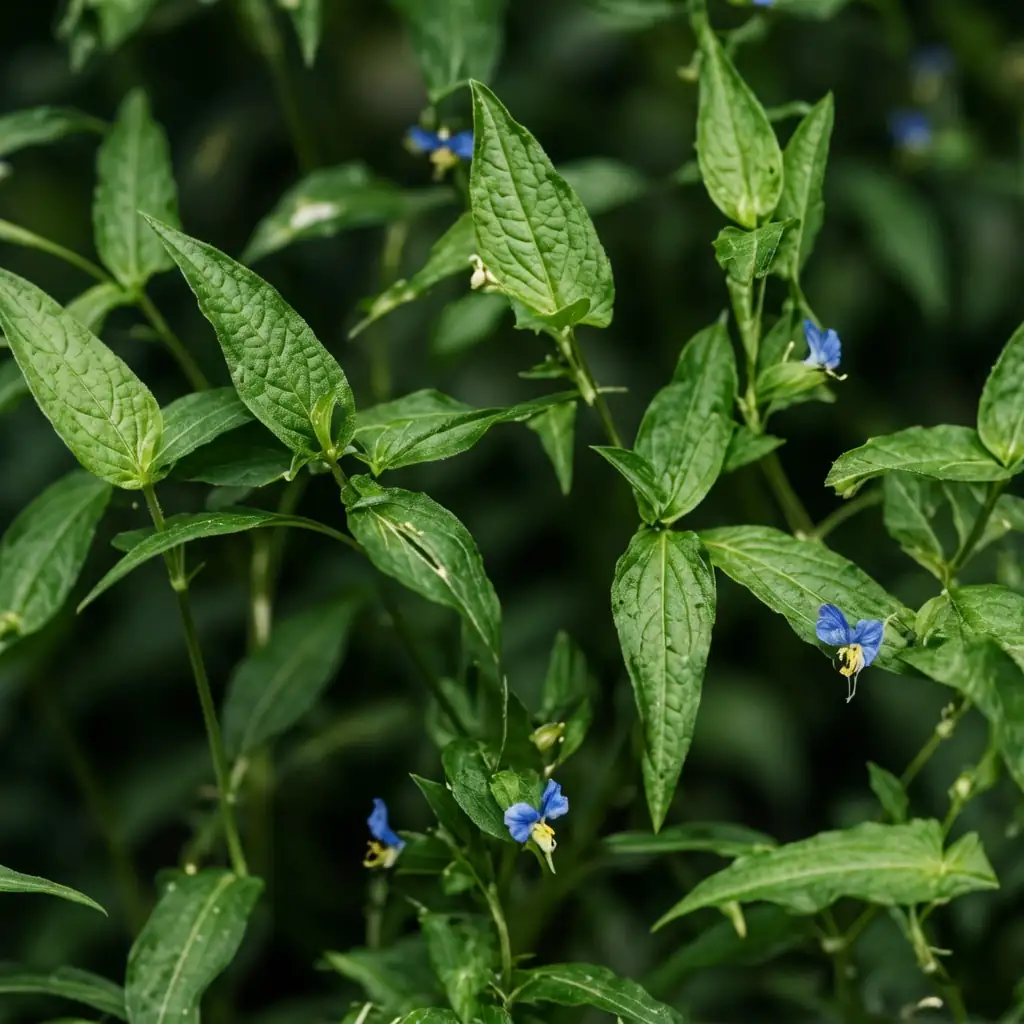
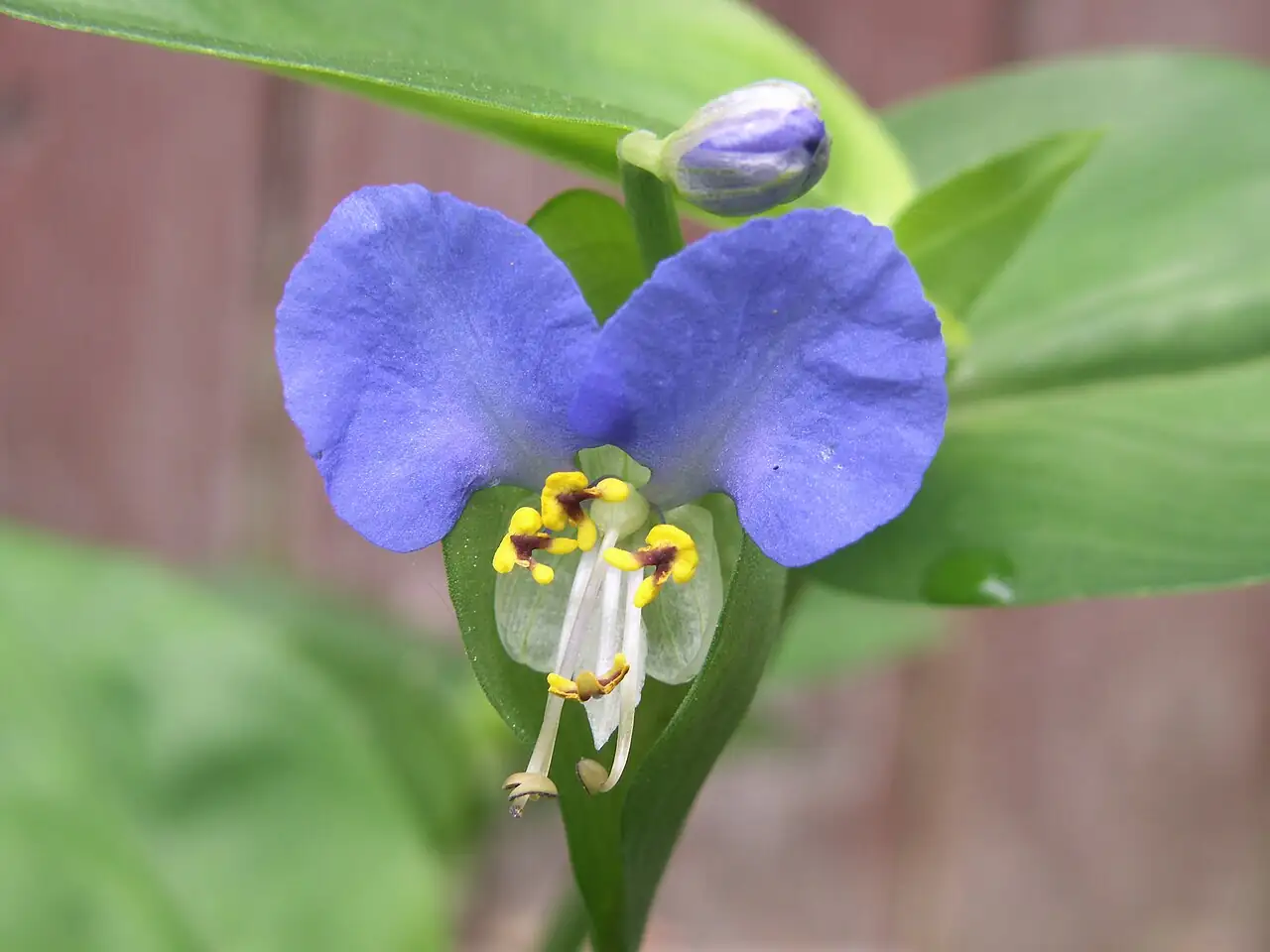
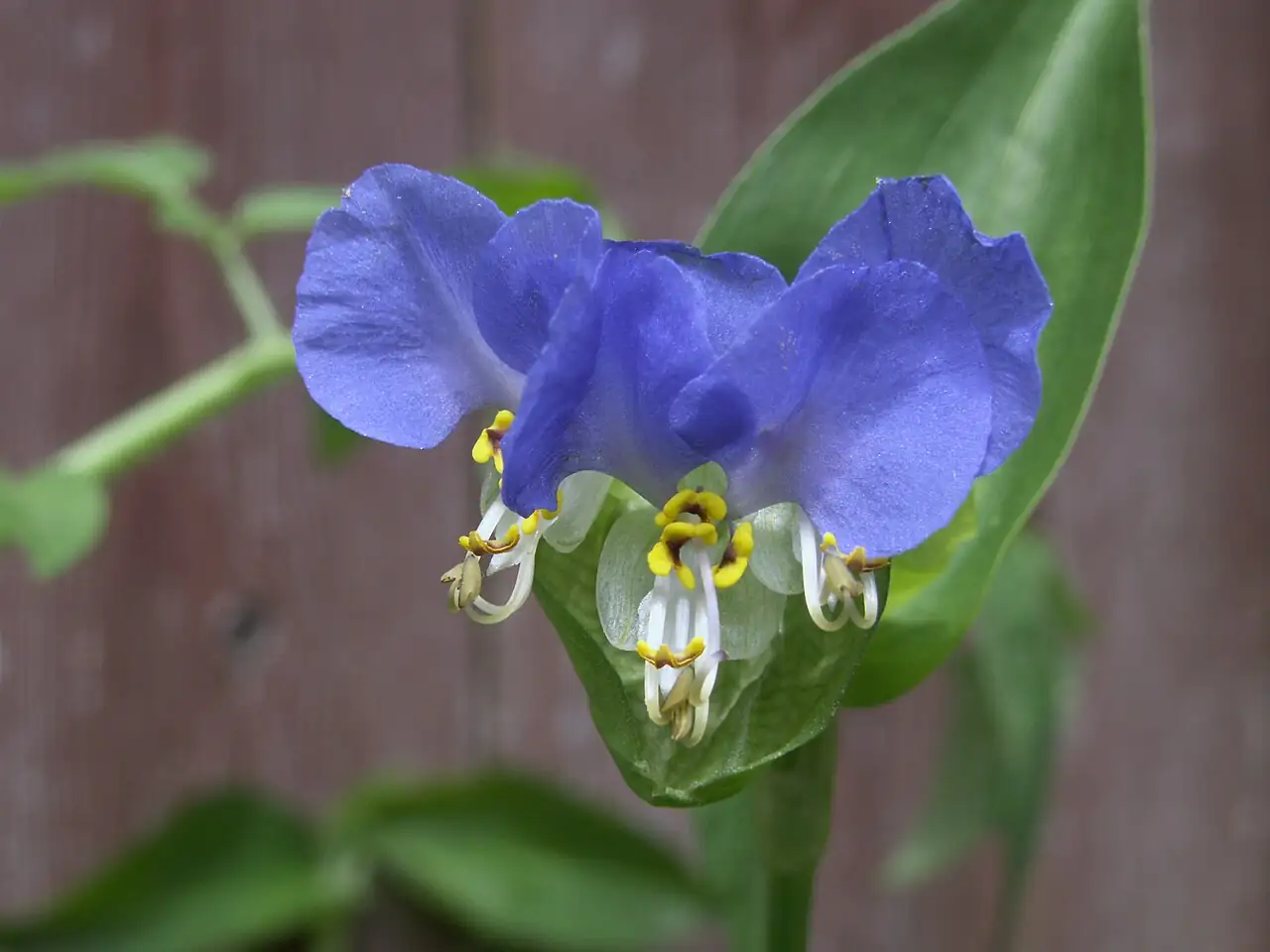
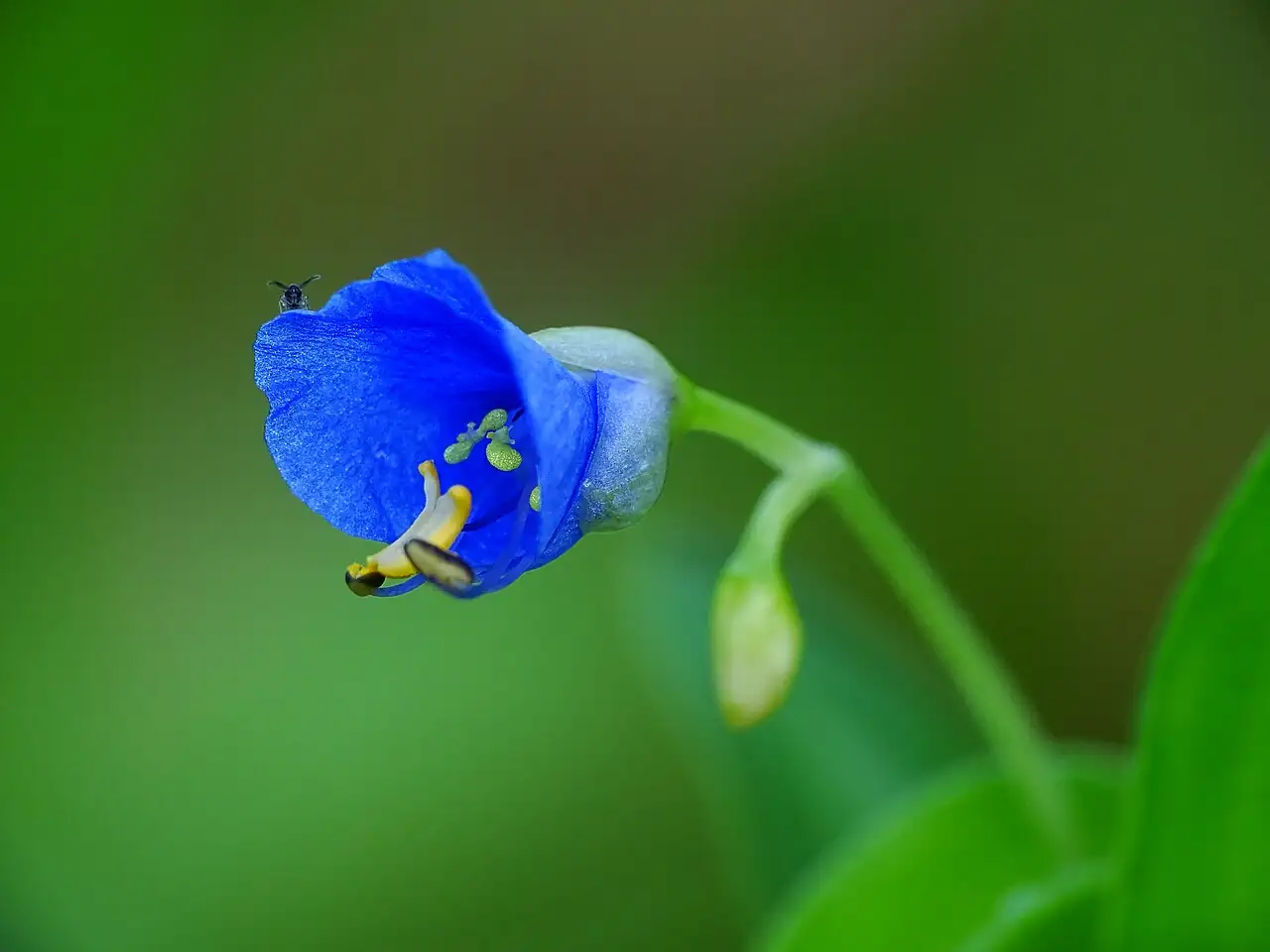
Plant Features
- Size: Typically about 15–20 cm (6–8 in) tall. Creeping stems spread outward and can root at the nodes; trailing sections are often around 9 cm (3.5 in) or more depending on conditions.
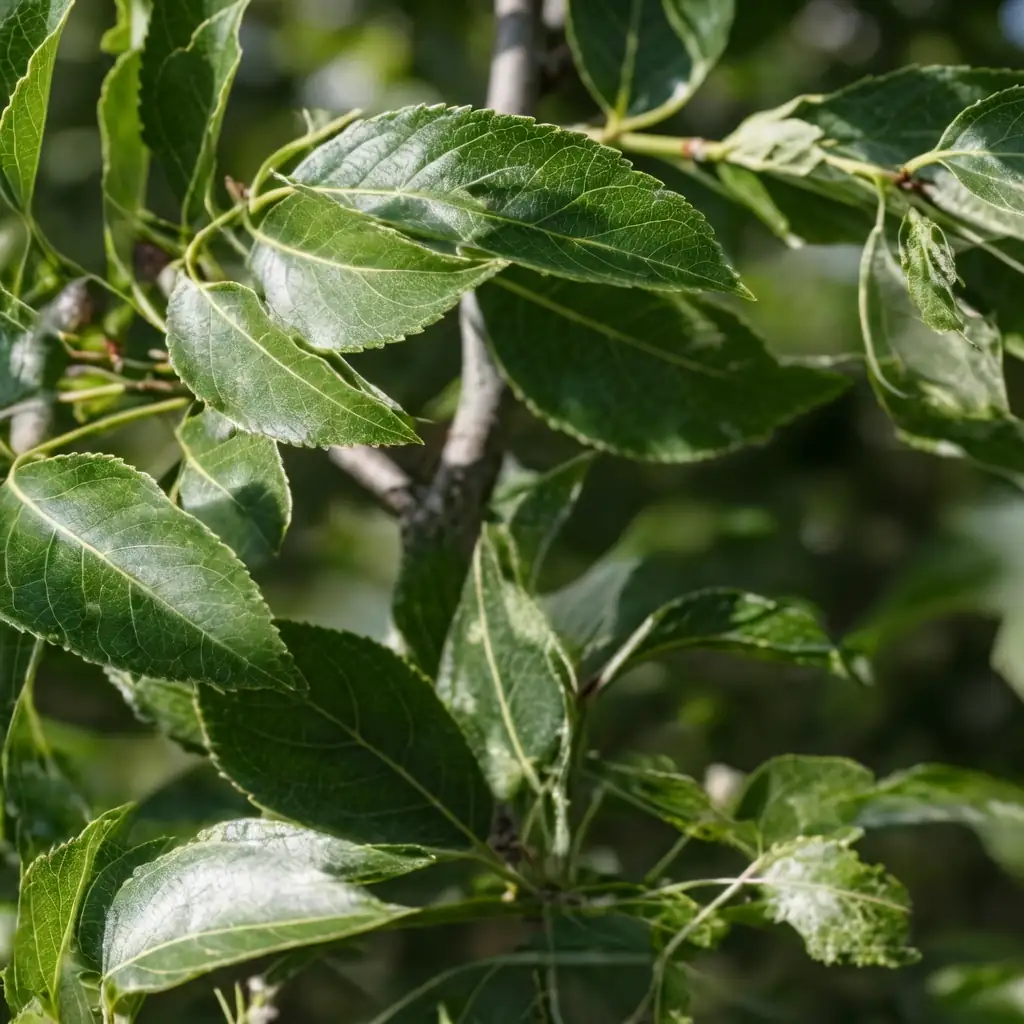
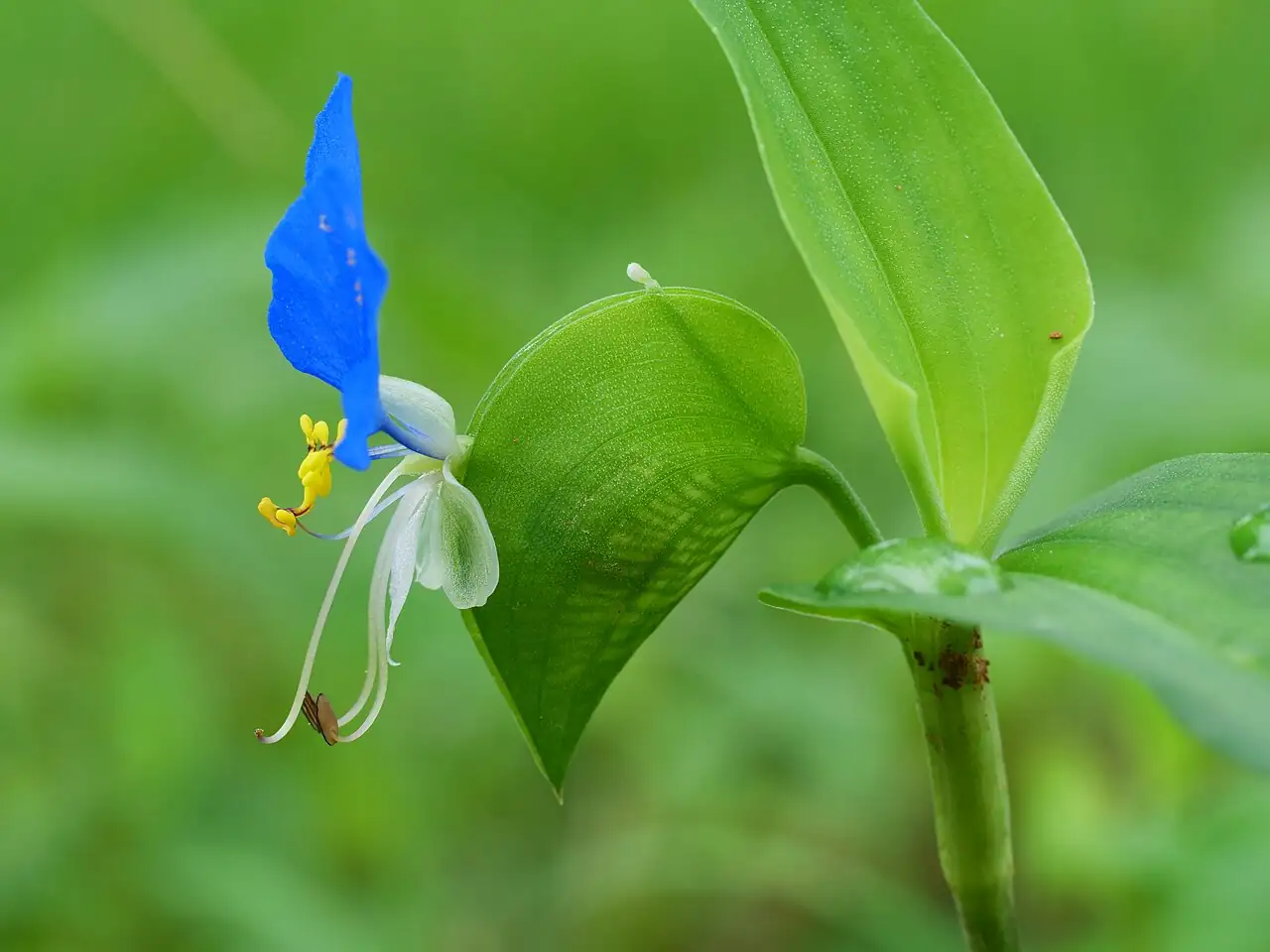
- Foliage: Smooth, fresh green leaves with a gently drooping/arching look; typically lance-shaped to ovate-lanceolate, about 11 cm (4.3 in) long and 4 cm (1.6 in) wide.
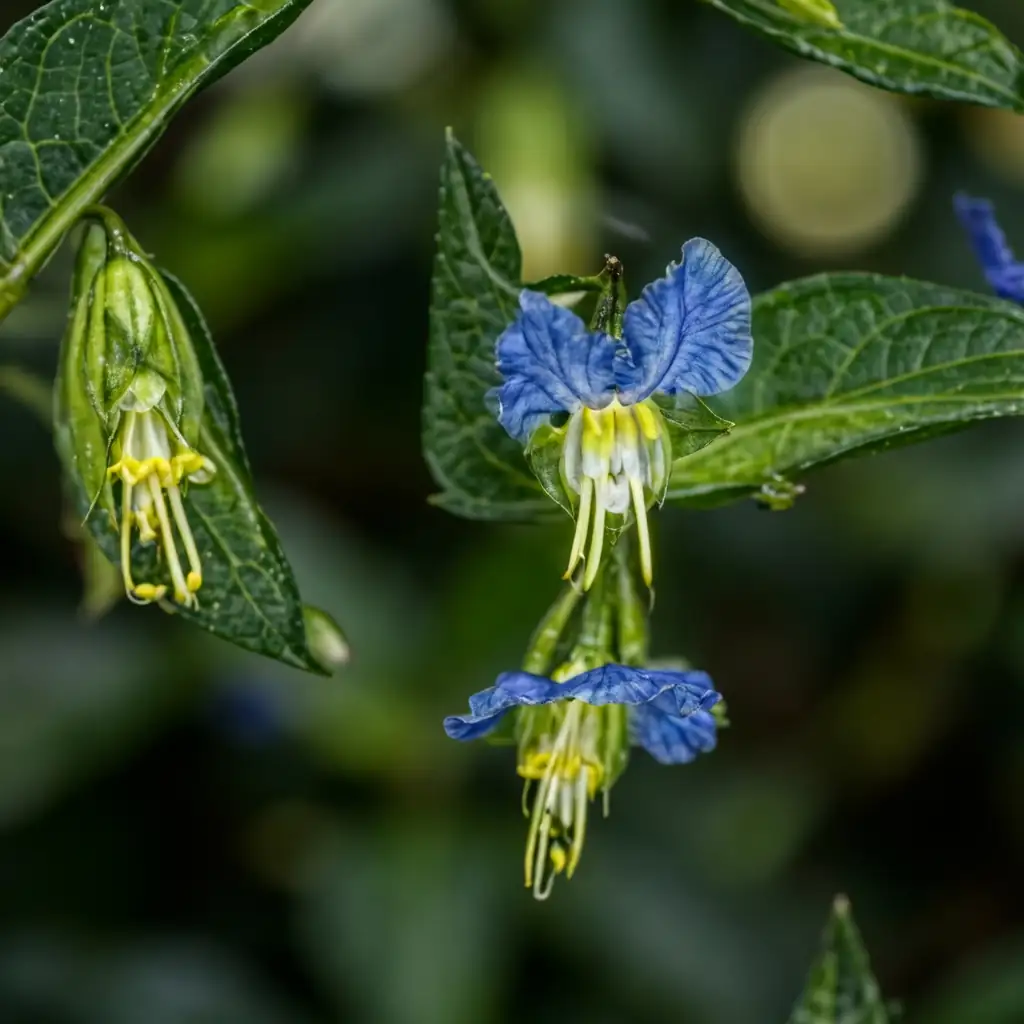
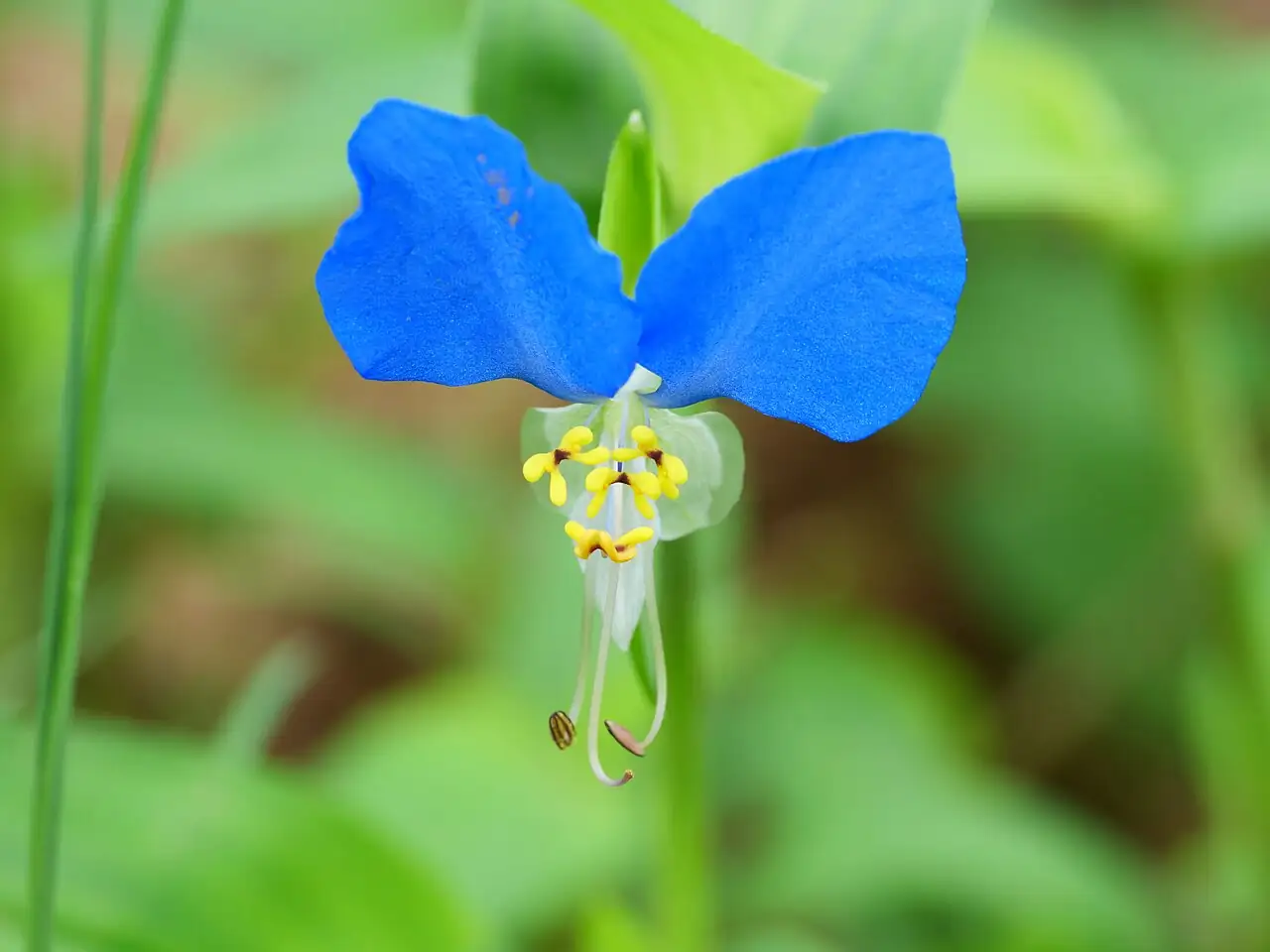
- Flower: Small, vivid deep-blue flowers that pop strongly against the green foliage; blooms are short-lived individually but appear through the season.
- Flowering Season: July–September (Jul–Sep)
- Growth Habit: Herbaceous perennial with a creeping, branching base; stems often sprawl/prostrate and root where nodes contact moist soil, while upper portions may rise slightly.
Environment
Sunlight
Shade-tolerant; happiest in bright shade or filtered/indirect light. Avoid harsh, all-day hot summer sun, which can scorch and dry it out.
Temperature
Prefers warmth; grows best around 18–30°C (64–86°F).
Humidity
Enjoys evenly moist conditions and decent airflow. Adapts to average indoor humidity if the soil isn’t allowed to dry out too much.
Soil
Adaptable, but best in loose, fertile, well-drained soil that stays consistently moist (moist, not soggy).
Placement
Indoors: near a bright window with indirect light (windowsill/plant stand). Outdoors: shady borders, edging, or sheltered moist spots as a spreading groundcover.
Hardiness
Cold sensitivity varies with climate; above-ground growth is generally frost-sensitive. In mild-winter areas it can behave as a warm-season perennial/groundcover; in hard-freeze climates it’s often treated as an annual or may die back.
Care Guide
Difficulty
Easy—vigorous and forgiving as long as it doesn’t dry out completely. Good drainage helps prevent setbacks.
Buying Guide
Pick plants with firm green stems and clean, unblemished leaves. Avoid pots that smell sour or stay waterlogged, and skip plants with widespread yellowing (often a drainage/root issue).
Watering
Keep evenly moist. Water when the top 1–2 cm (0.4–0.8 in) of soil starts to dry, then water thoroughly and let excess drain away. Outdoors, aim for consistent moisture without standing water.
Fertilization
Optional but helpful for lush growth: feed during active growth with a balanced fertilizer at 1/4–1/2 strength every 4–6 weeks, or use a slow-release fertilizer per label directions.
Pruning
Trim or pinch back leggy, sprawling stems to keep it compact and encourage branching. Remove tired growth after flowering if you prefer a tidier look.
Propagation
Very easy: take stem cuttings, divide clumps, or simply pin a node onto moist soil until it roots—then snip and replant. Nodes naturally root wherever they touch the ground.
Repotting
Repot in spring when roots fill the pot or growth slows. Go up about 2–5 cm (1–2 in) in pot diameter and refresh with a fertile, well-draining mix.
📅 Seasonal Care Calendar
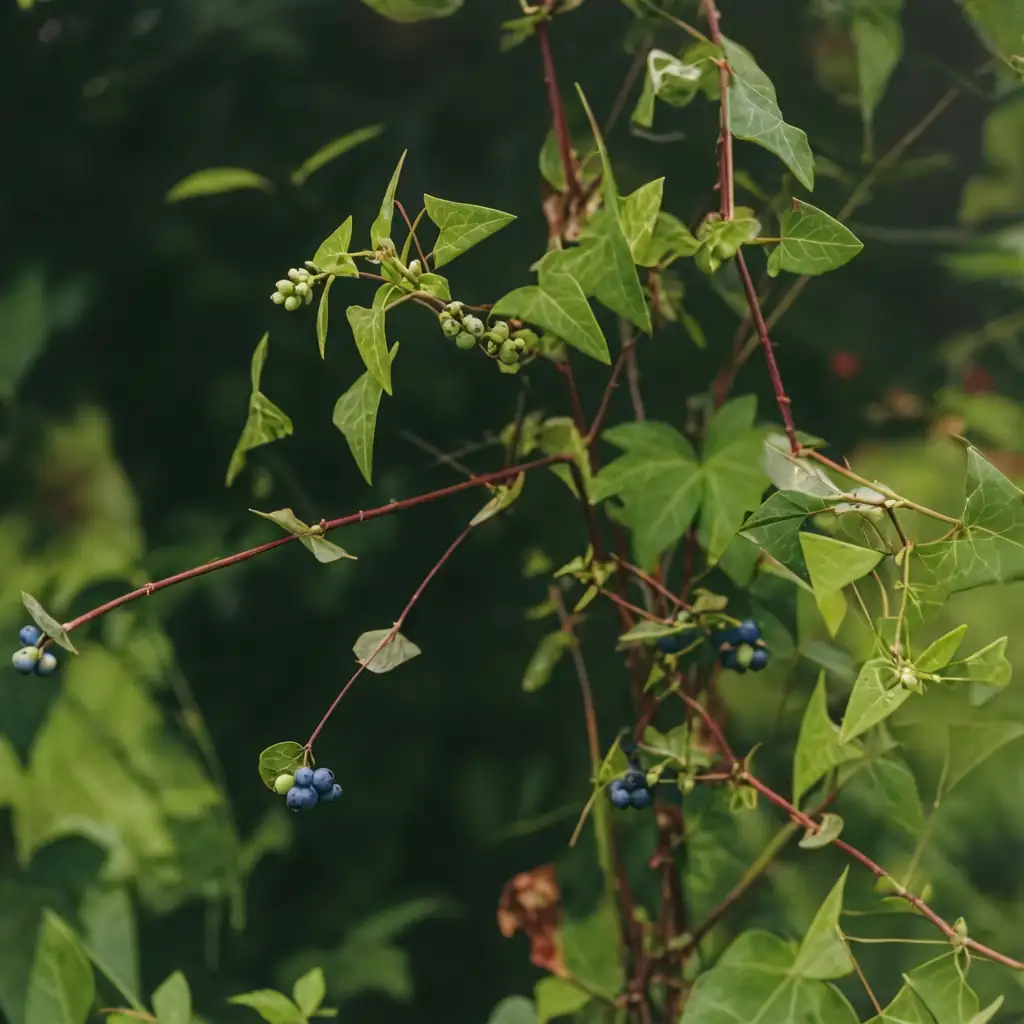
Main flowering is July–September (Jul–Sep); fruits typically form August–October (Aug–Oct). Through flowering/fruiting, keep moisture steady and maintain good airflow to reduce rot risk.
Pests, Diseases & Safety
Common Pests & Diseases
Usually trouble-free. Overly wet, stagnant conditions can lead to rot. Indoors, watch for aphids, spider mites, and mealybugs; improve airflow, avoid waterlogging, and treat infestations with insecticidal soap if needed.
Toxicity
Not widely reported as toxic to people or pets. Still, chewing or ingesting plant material may cause mild stomach upset in sensitive individuals or animals—best kept out of reach of persistent nibblers.
Culture & Symbolism
Symbolism: Often linked with simple, everyday beauty—its blooms are small and short-lived, yet an unforgettable shade of blue.
Uses: Popular as a shade-tolerant edging and groundcover plant outdoors, and as an easy trailing foliage plant for bright indoor windowsills or plant stands.
FAQ
When does it flower?
Typically July–September (Jul–Sep).
When does it set fruit?
Usually August–October (Aug–Oct).
How tall does it get?
Commonly about 15–20 cm (6–8 in) tall, with creeping stems that spread and can root at the nodes (often around 9 cm / 3.5 in or more).
Where is it native and where does it occur naturally?
It is native to China and is widespread across eastern, northern, and southwestern regions.
Where should I place it for display?
Indoors, keep it near a bright window with indirect light. Outdoors, use it as edging or groundcover in shady, sheltered borders.
What growing conditions does it prefer?
Bright shade/filtered light, warm temperatures, consistently moist (but well-drained) soil, and good airflow. It adapts to many soil types if drainage is adequate.
Fun Facts
- Its creeping stems often root wherever the nodes touch soil, letting it spread naturally as a living groundcover.
- Individual leaves can reach about 11 cm (4.3 in) long and 4 cm (1.6 in) wide.
- The deep blue flowers stand out dramatically against the smooth green foliage.
- Because it spreads so readily, a small planting can fill in a shady edge surprisingly fast.