Plant Features
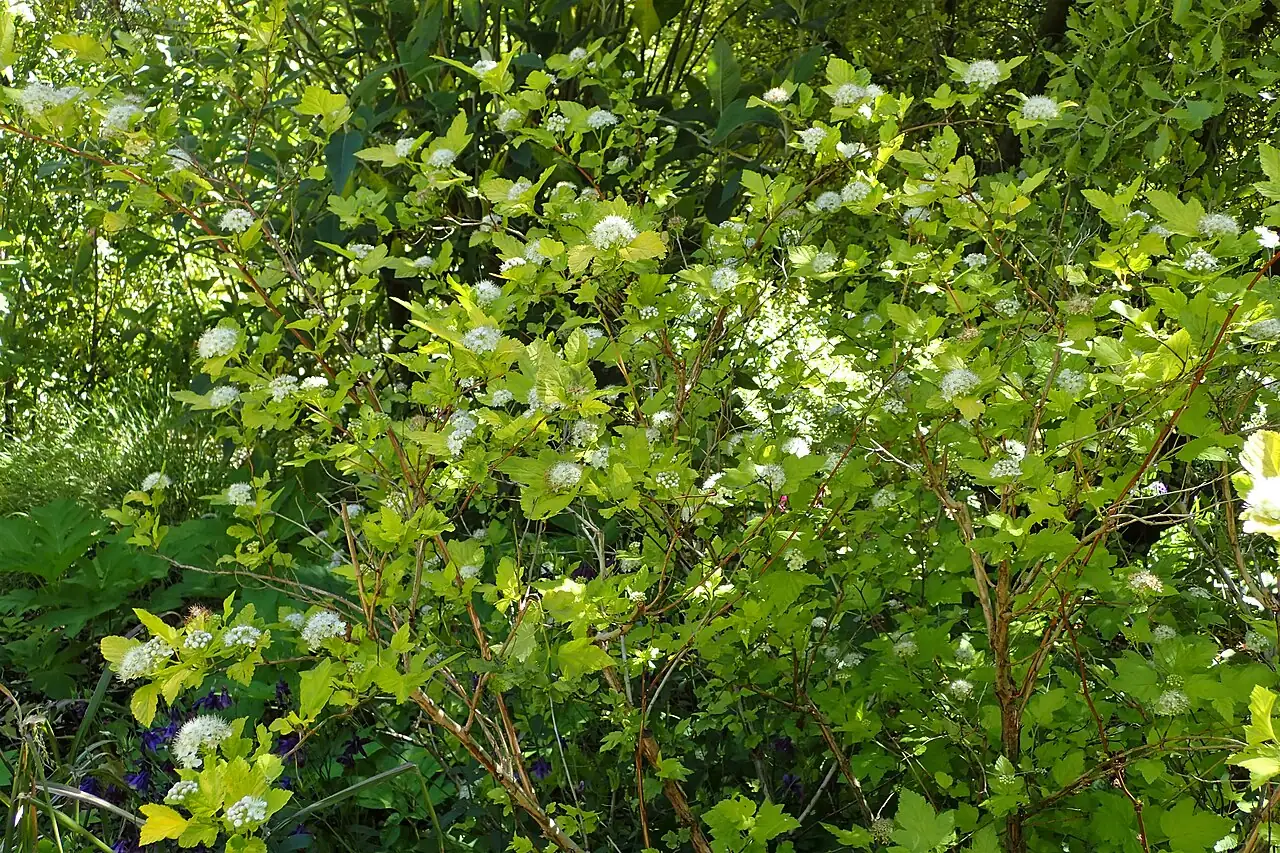
- Size: Up to about 3 m (9.8 ft) tall, typically forming a broad, spreading clump.
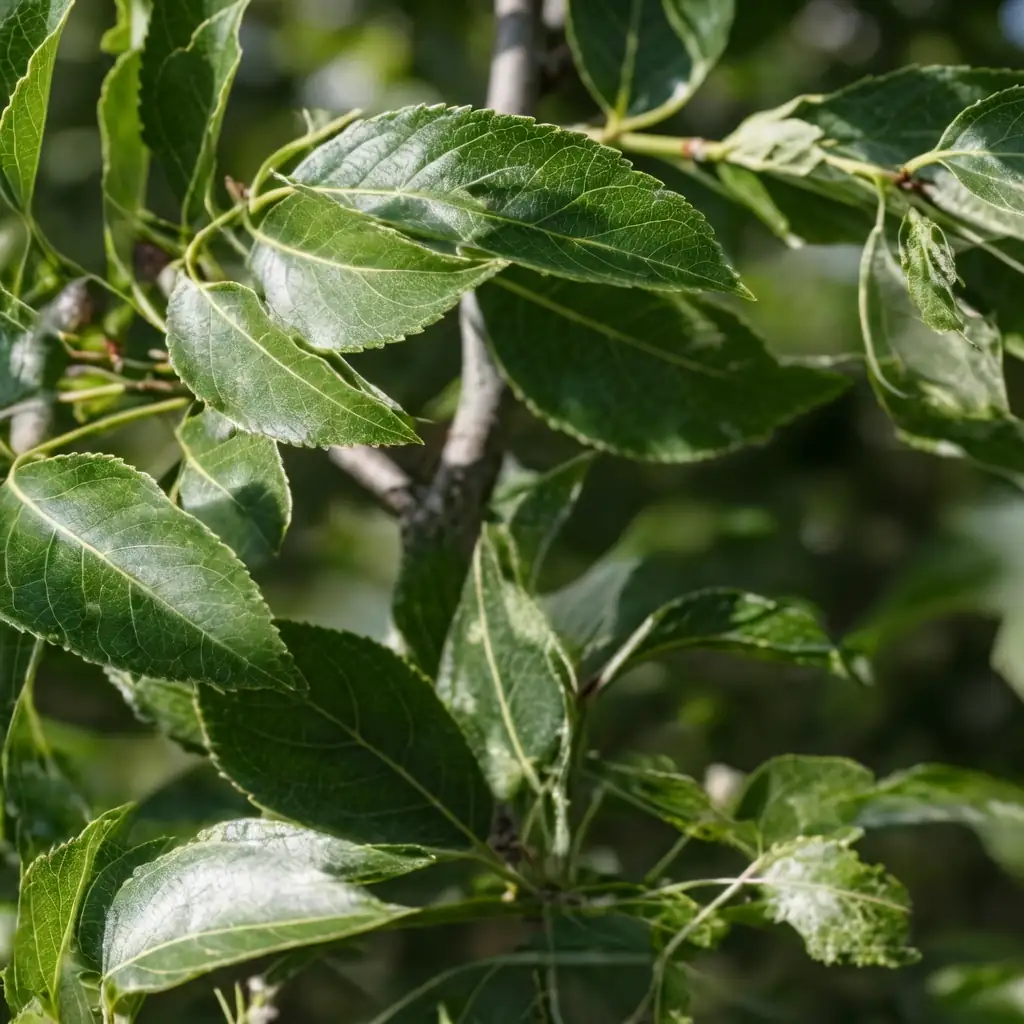
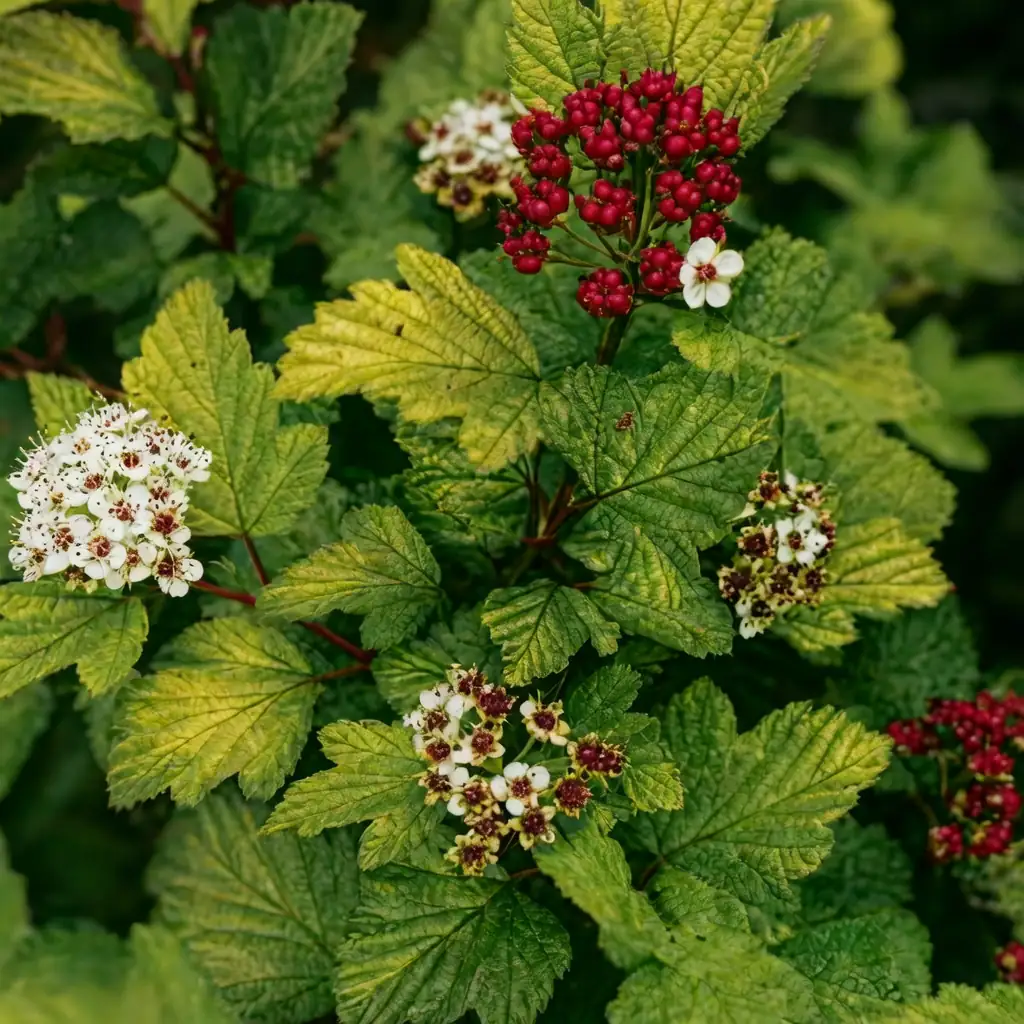
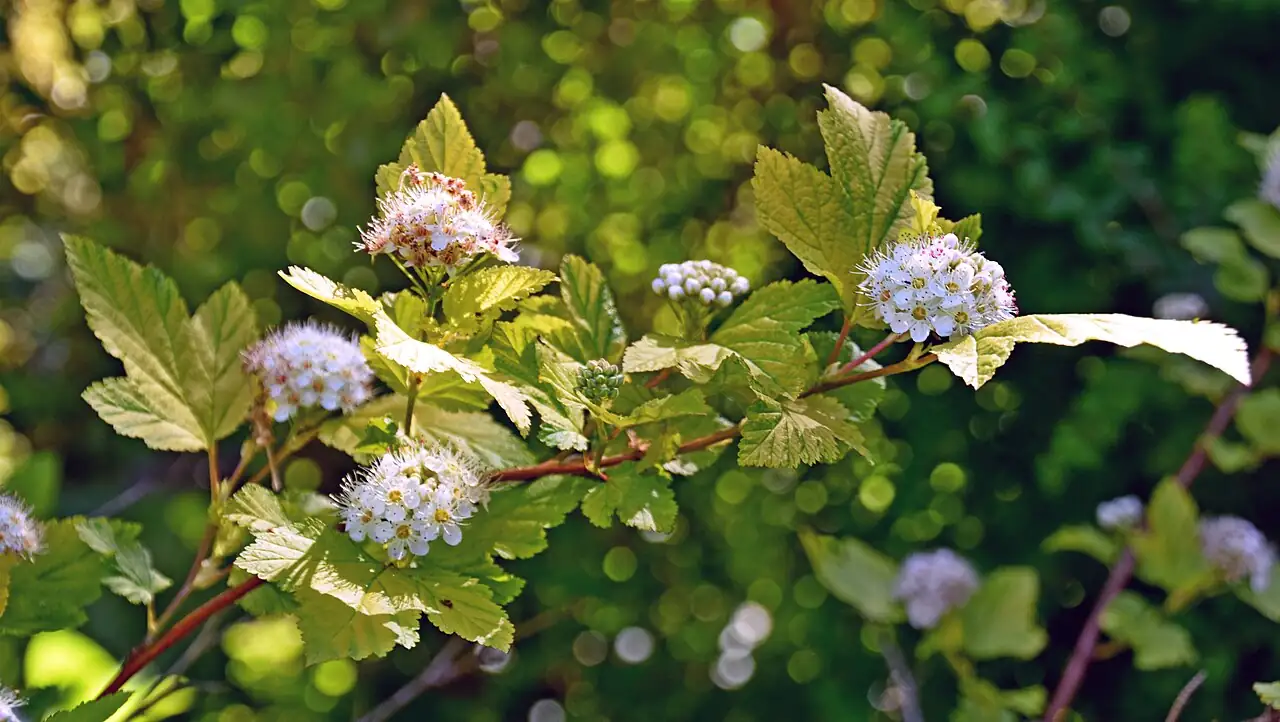
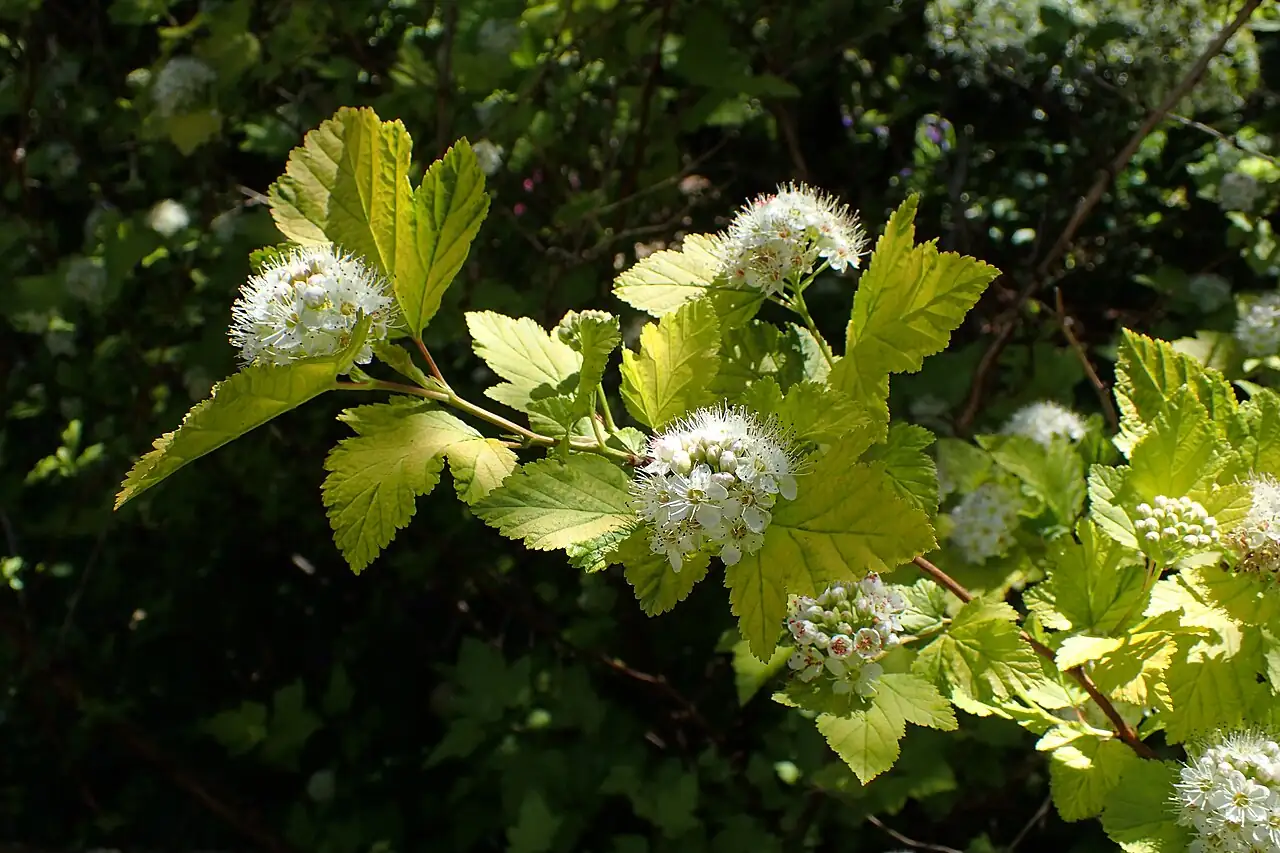
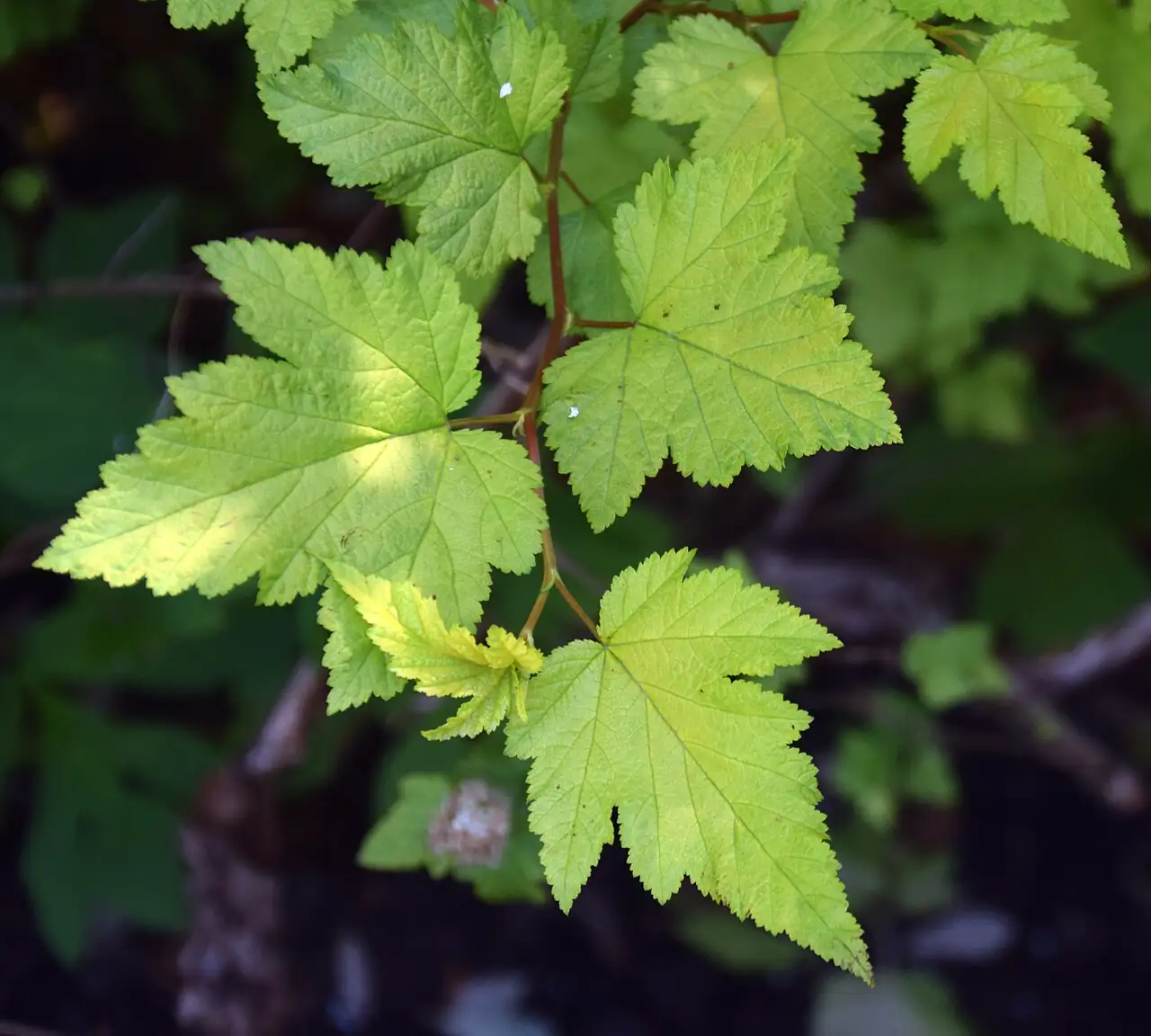
- Foliage: Leaves are triangular-ovate to broadly ovate, with a heart-shaped to nearly heart-shaped base and sharply toothed margins. Young stems are cylindrical; older stems develop bark that peels in long, narrow strips—one of the signature “ninebark” features.
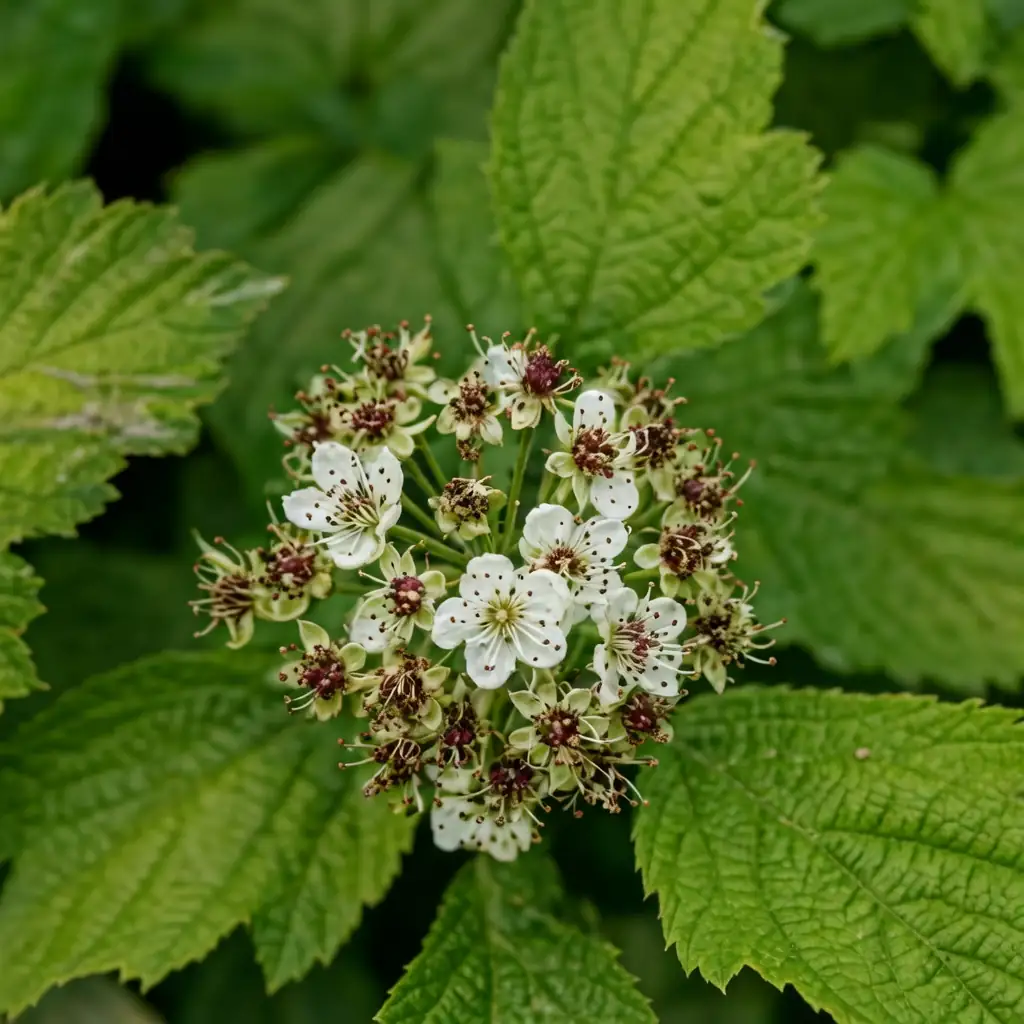
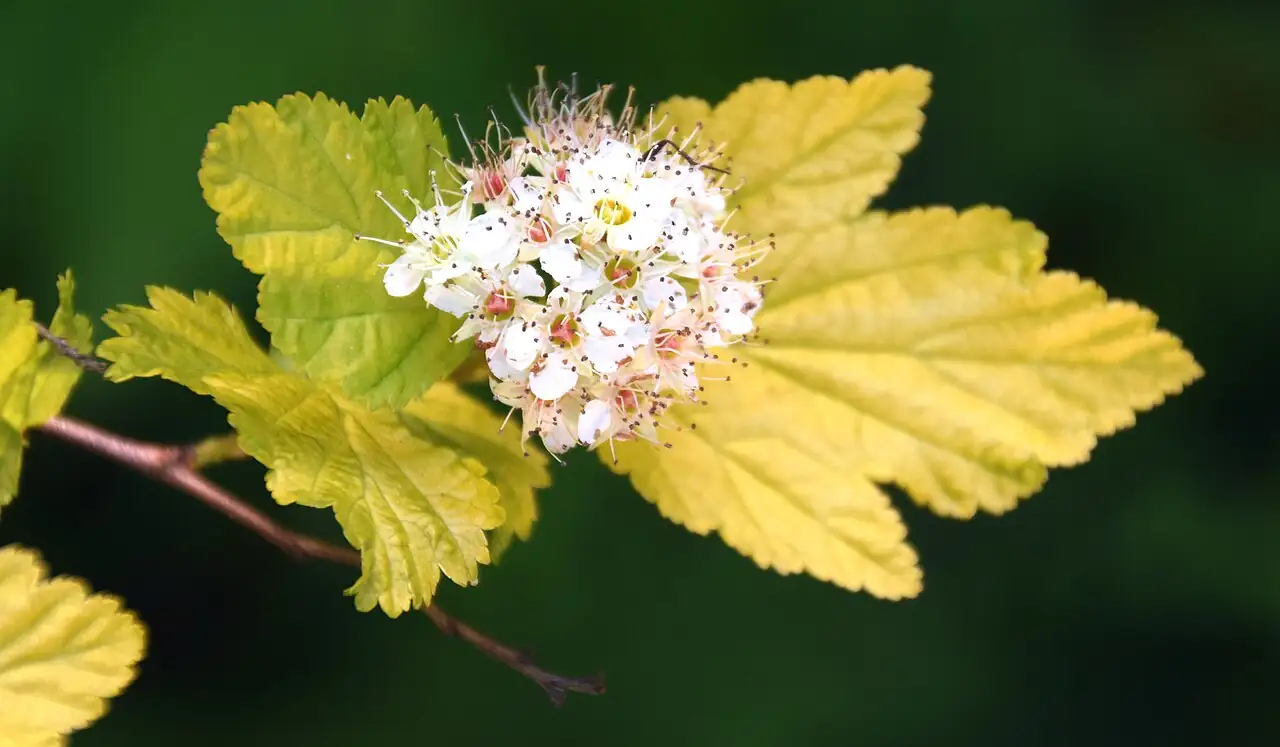
- Flower: In early summer it produces dense, umbrella-like (corymb-style) clusters of small, pale flowers held over the foliage.
- Flowering Season: June
- Growth Habit: Deciduous, multi-stemmed, clump-forming shrub with a naturally spreading outline. Performs best in sun but tolerates partial shade, and is notably hardy in cold winters.
Environment
Sunlight
Full sun to partial shade; flowering, fruiting, and overall show tend to be best with more sun.
Temperature
Very cold-hardy and well suited to harsh-winter climates. Often grown in USDA Zone 3–7 (roughly down to about -40°C to -12°C / -40°F to 10°F depending on local conditions and plant provenance).
Humidity
Not fussy; average outdoor humidity is fine. In dense plantings, good airflow helps prevent leaf diseases.
Soil
Prefers consistently moist, well-drained soil. Tolerates a range of soil types but strongly dislikes waterlogged, heavy, poorly drained ground—avoid sites with standing water.
Placement
Best as an outdoor landscape shrub: along woodland edges, in naturalistic shrub borders, as an informal hedge or thicket, near patios/pavilions, and beside rock gardens. In nature it’s often found on ridges, in gullies, and at forest margins.
Hardiness
USDA Zone 3–7 (frost tolerant; very cold-hardy).
Care Guide
Difficulty
Easy to moderate. It’s generally rugged and forgiving, with the main “sweet spot” being evenly moist soil without sogginess. More sun usually means better flowers and fruit.
Buying Guide
Pick plants with multiple healthy stems, firm buds, and no signs of cankers, dieback, or rot. Avoid pots with sour-smelling or waterlogged media (a red flag for poor drainage). If in leaf, choose plants with clean foliage (minimal spotting) and little to no sticky residue from insects.
Watering
Water deeply to keep soil evenly moist, especially during establishment and dry spells. Let the top few cm (top 1–2 in) dry slightly between thorough waterings, but don’t allow long droughts. Avoid constantly saturated soil and make sure drainage is good.
Fertilization
Often doesn’t need feeding in decent garden soil. If growth is weak, apply a balanced slow-release fertilizer in spring according to label directions. Avoid overdoing nitrogen, which can push leafy growth at the expense of flowers.
Pruning
Prune after flowering or in late winter/early spring. Remove dead, damaged, or crossing stems. For older shrubs, rejuvenate by cutting out some of the oldest stems at the base each year to encourage fresh new shoots.
Propagation
Easy from cuttings: take softwood or semi-hardwood cuttings in summer, or hardwood cuttings in late autumn to winter. Seed is possible but typically slower and less uniform.
Repotting
Usually grown in the ground rather than as a long-term container shrub. If grown in a pot, repot in early spring into a free-draining mix and avoid oversized containers that stay wet for too long.
📅 Seasonal Care Calendar
Spring: prune for structure and remove winter damage; feed lightly only if needed. June: flowering period. Summer: keep moisture steady and take cuttings; fruits begin developing. Late summer to early autumn: enjoy the red fruit display; reduce the risk of soggy soil as weather cools. Winter: minimal care; late-winter pruning is optional and useful for shaping/rejuvenation.
Pests, Diseases & Safety
Common Pests & Diseases
Generally resilient. Aphids may appear on fresh growth; leaf spot and occasional powdery mildew can occur in humid, crowded conditions. Improve airflow, avoid late-day overhead watering, and remove badly affected leaves. Use insecticidal soap or horticultural soap for aphids if needed.
Toxicity
No widely documented serious toxicity to humans or pets for Physocarpus, but chewing or ingesting ornamental plant parts can still cause mild stomach upset. Best kept out of reach of children and pets that like to nibble plants.
Culture & Symbolism
Symbolism: Often linked with resilience and dependable, multi-season interest—flowers in early summer, colorful fruit later on, and attractive peeling bark year-round.
History & Legends: A wild Chinese ninebark species mainly appreciated as a hardy ornamental shrub. It’s less internationally common than the North American ninebark (Physocarpus opulifolius), but offers similar toughness and seasonal appeal in cold climates.
Uses: Ornamental landscaping in colder regions: excellent for woodland-edge plantings, informal hedges, naturalistic shrub borders, and mixed plantings near rockwork. Chosen for its clumping form, flower clusters, peeling bark, and red fruit display.
FAQ
Does Amur ninebark prefer sun or shade?
It’s happy in full sun to partial shade. Full sun usually gives the strongest flowering and the best fruit color, while partial shade works well in places with hot summers.
Why does it struggle in wet soil if it likes moisture?
It likes moisture, not soggy roots. Waterlogged soil reduces oxygen around the roots and can lead to stress and dieback. Improve drainage (raised bed, soil structure amendments) and water deeply but less often.
When will it flower and fruit?
Flowering is typically in June. Fruits usually develop and color from July to August, with the best display often lasting into late summer and early autumn.
Fun Facts
- Its fruit is an inflated, capsule-like structure that typically contains about 2–5 glossy yellow seeds.
- In the wild it often forms natural clumps in mountain shrublands, gullies, and along forest edges.
- The signature peeling bark is one of the reasons many Physocarpus species share the common name “ninebark.”
- It’s recorded from northeastern and northern China, including Heilongjiang and Hebei.
- With good conditions, mature shrubs can reach around 3 m (9.8 ft) tall.