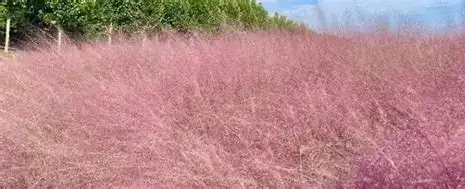
Plant Features
- Size: Typically 30–90 cm (12–35 in) tall and about 30–90 cm (12–35 in) wide, depending on growing conditions and cultivar.
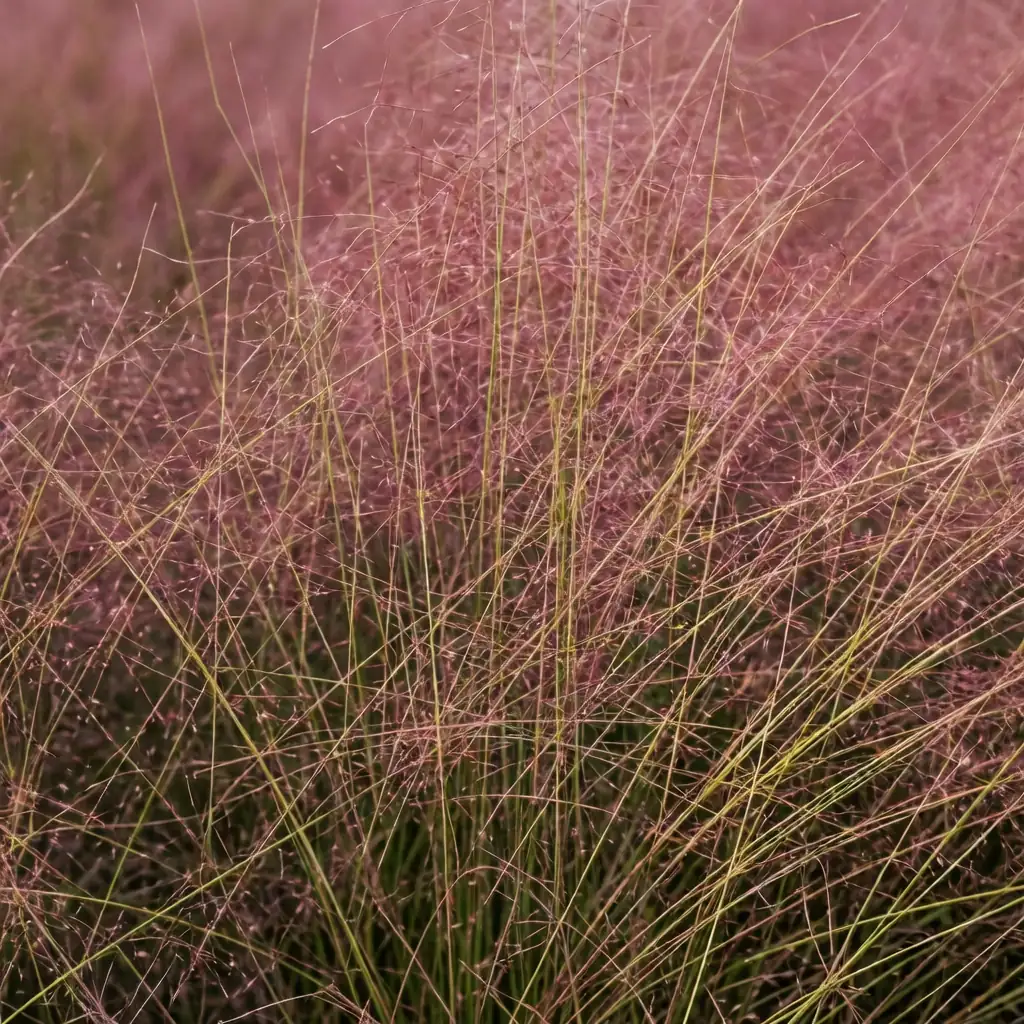
- Foliage: Fine, narrow, grass-like leaves that are green through the growing season, often shifting to straw-blond or tan as temperatures cool.
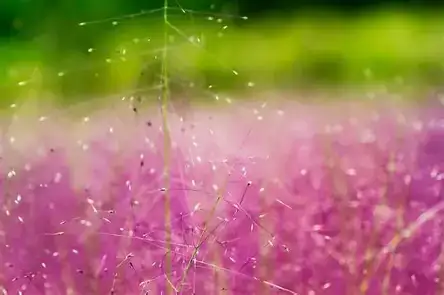
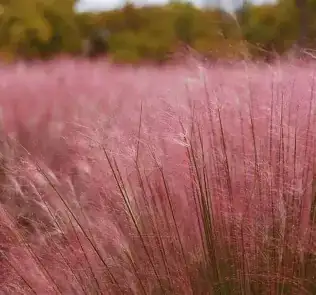
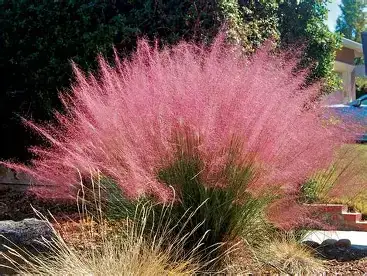
- Flower: Airy, feathery panicles that form a hazy pink to rosy-purple cloud above the foliage; as they dry, the plumes turn buff/tan and may persist for continued texture.
- Flowering Season: September–November (Sep–Nov)
- Growth Habit: A warm-season, perennial, clump-forming grass with upright-to-arching stems that build a fountain-like mound; it stays in tidy clumps rather than running aggressively.
Environment
Sunlight
Full sun for the strongest pink color and heaviest bloom. Tolerates light/partial shade, but flowering and color intensity can drop.
Temperature
Prefers warm growing-season conditions. Winter survival typically aligns with minimums around -18 to -12°C (0 to 10°F), with performance strongly influenced by drainage and winter wetness.
Humidity
Adaptable. Once established it handles dry air and drought well; it also tolerates occasional moisture, but does best with good air flow and soils that don’t stay wet.
Soil
Very adaptable (sand, loam, or clay) as long as drainage is decent; tolerates poor soils and some salinity/alkalinity. Avoid persistently waterlogged ground, especially in winter.
Placement
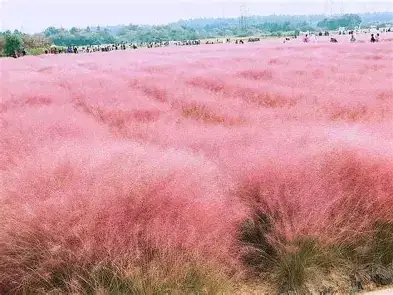
Best in sunny borders, prairie-style plantings, and mass drifts for a sweeping pink-haze effect; also works well in containers placed in bright, open locations.
Hardiness
USDA Zone 6–10 (most reliable in well-drained sites).
Care Guide
Difficulty
Easy. A tough ornamental grass that tolerates heat, drought, and varied soils. The main thing it dislikes is staying soggy—especially through winter.
Buying Guide
Pick dense, well-rooted clumps with fresh green shoots. Avoid plants with a sour smell, blackened crowns, or pots sitting in water. Choose named cultivars if you want more consistent height and flower color.
Watering
Water regularly during the first growing season to establish roots. After that, water mainly during prolonged dry spells. Avoid constantly wet soil, particularly in cool weather.
Fertilization
Low-feeding. If growth is weak, use a light, balanced slow-release fertilizer in spring. Too much nitrogen can cause floppy growth and fewer blooms.
Pruning
Cut back in late winter to early spring before new growth starts, leaving about 10–15 cm (4–6 in) of stubble. If you enjoy winter texture, avoid hard cutting in autumn.
Propagation
Divide mature clumps in spring (or early fall in mild climates). Seed propagation is possible, but seedlings may not come true to named cultivars.
Repotting
In containers, repot or divide every 2–3 years. Step up only slightly in pot size and use a free-draining mix.
📅 Seasonal Care Calendar
Spring: optional light feeding and divide if needed. Summer: minimal care once established; water only in extended drought. Fall (Sep–Nov): peak pink plume season. Late fall into early winter: plumes dry to buff/tan and can persist; avoid wet, stagnant conditions. Late winter/early spring: cut back to 10–15 cm (4–6 in).
Pests, Diseases & Safety
Common Pests & Diseases
Usually trouble-free. In crowded, humid conditions it may develop leaf spot or rust; poorly drained sites can cause crown rot. Give it sun, spacing, and fast drainage to prevent problems.
Toxicity
Not known to be toxic to people or pets. Dry foliage can be mildly scratchy/irritating to sensitive skin, and the fine seed heads may cause minor mechanical irritation if handled roughly.
Culture & Symbolism
Symbolism: Often linked with gentle romance and dreamy “pink cloud” autumn scenery in modern gardens.
History & Legends: A North American native prairie grass that rose to fame in contemporary landscape design thanks to its show-stopping fall plumes and its ability to thrive in sunny, low-input plantings.
Uses: Primarily ornamental—ideal for borders, prairie-style gardens, and large-scale mass plantings where it creates a striking pink “mist” from September through mid-November (Sep–mid-Nov). Also suitable for bright container displays.
FAQ
Why is my pink muhly grass not turning pink?
Lack of sun is the top culprit—give it full sun. Also avoid heavy nitrogen feeding, which can push leafy growth at the expense of blooms and color.
Can it tolerate drought and heavy rain?
Yes—once established it handles drought very well, and it can cope with short wet spells. The key is drainage: it should not sit in waterlogged soil for long, especially in winter.
Fun Facts
- It’s native to North American prairies and other open habitats.
- Mass plantings can look like a drifting “pink fog” in autumn.
- Peak display is usually September to mid-November (Sep–mid-Nov), with dried plumes often lingering longer in dry weather.
- It grows in fountain-like clumps rather than spreading aggressively by runners.