
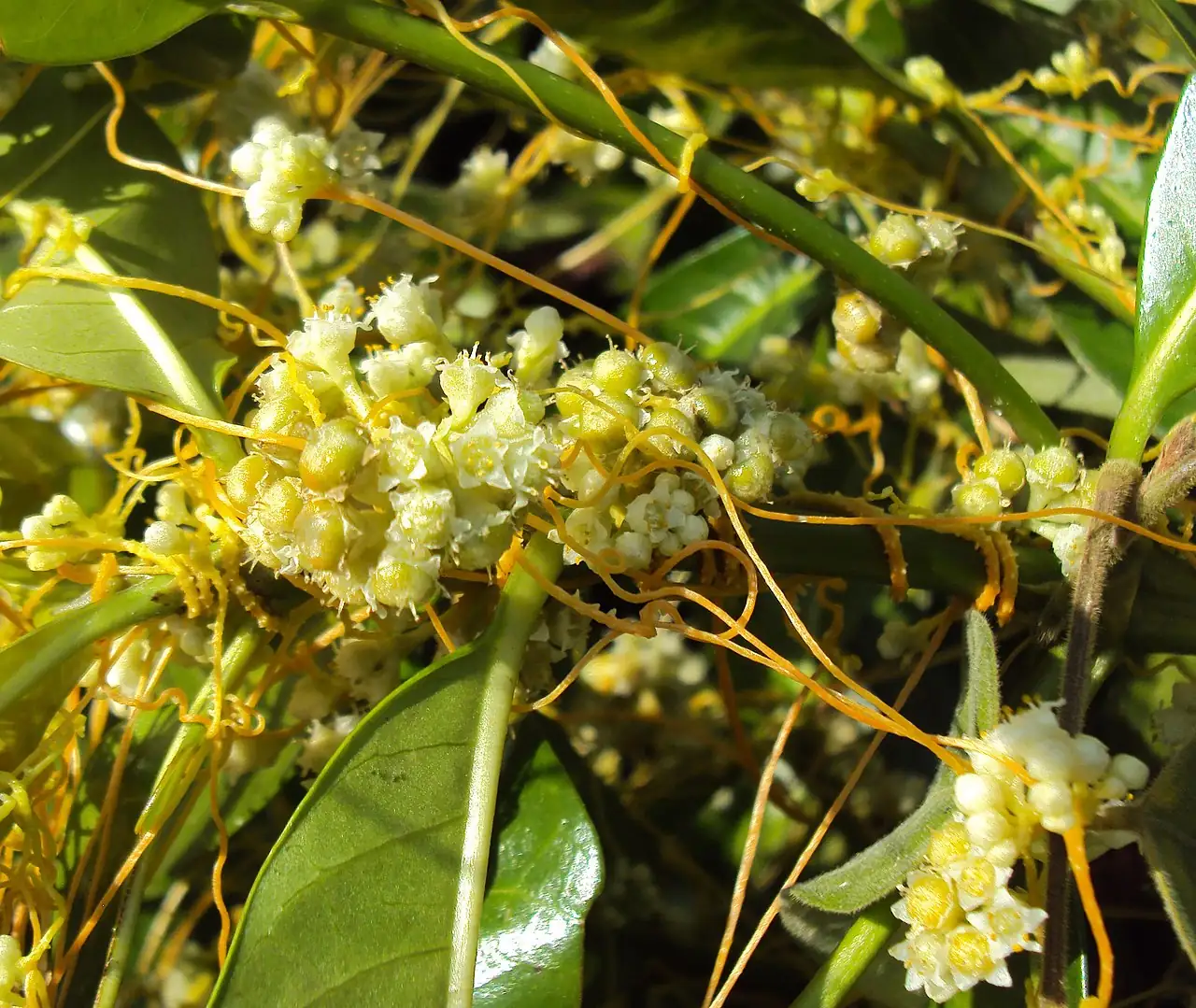
Plant Features
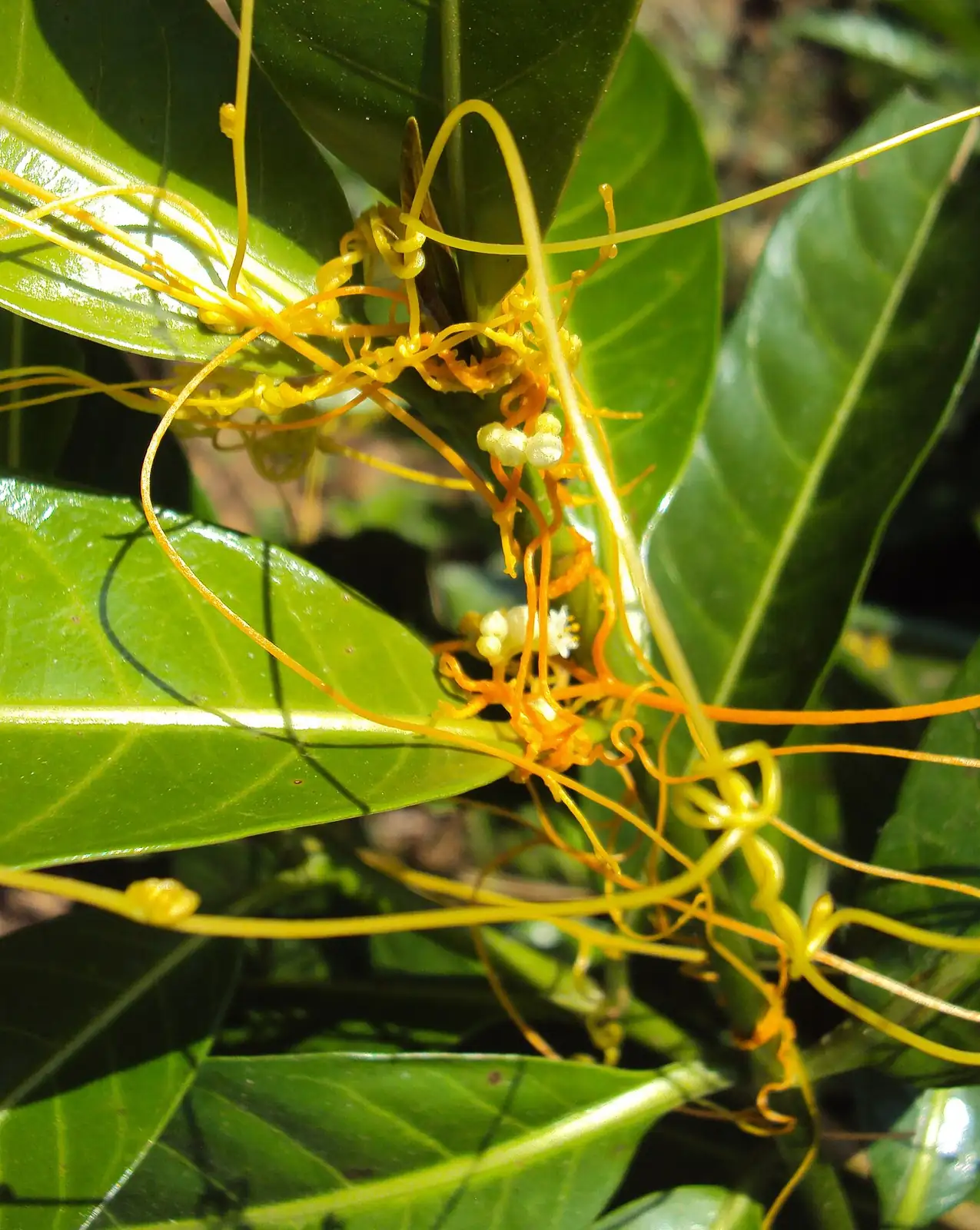
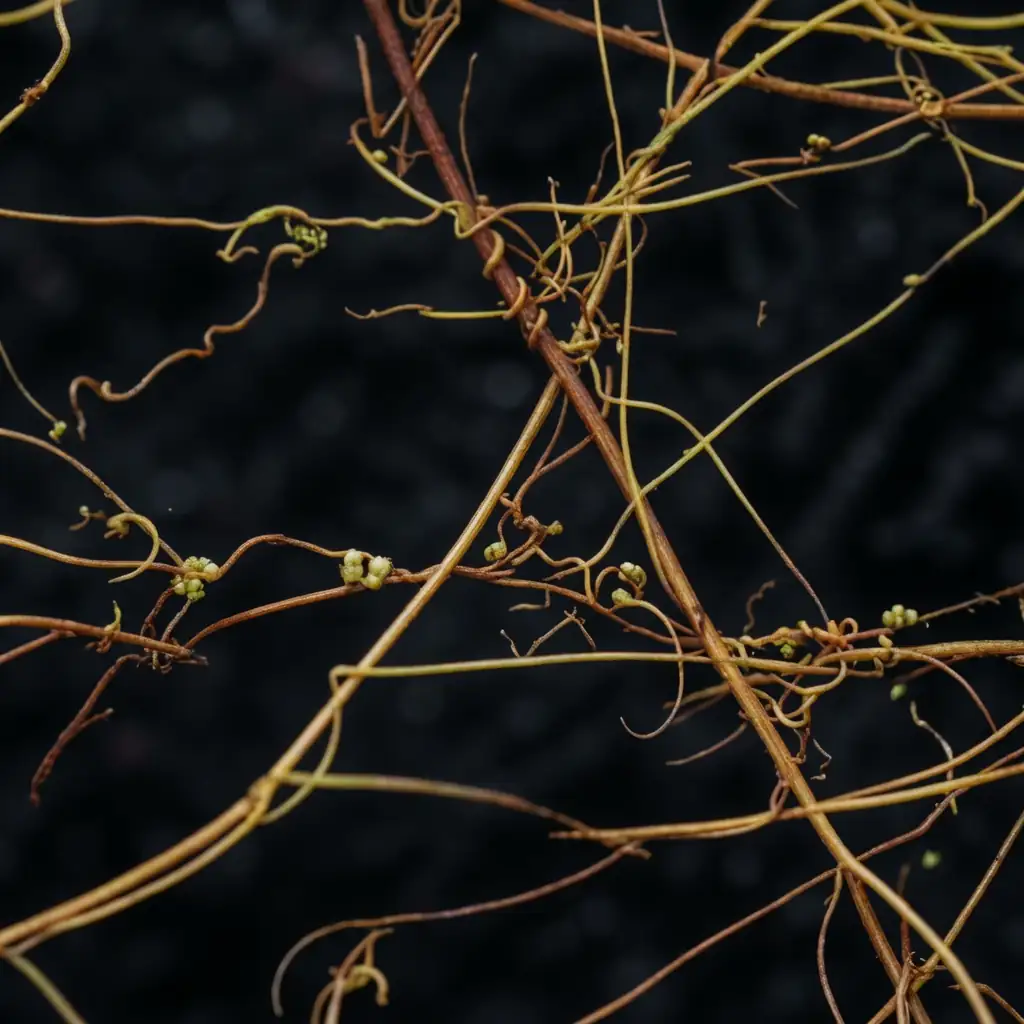
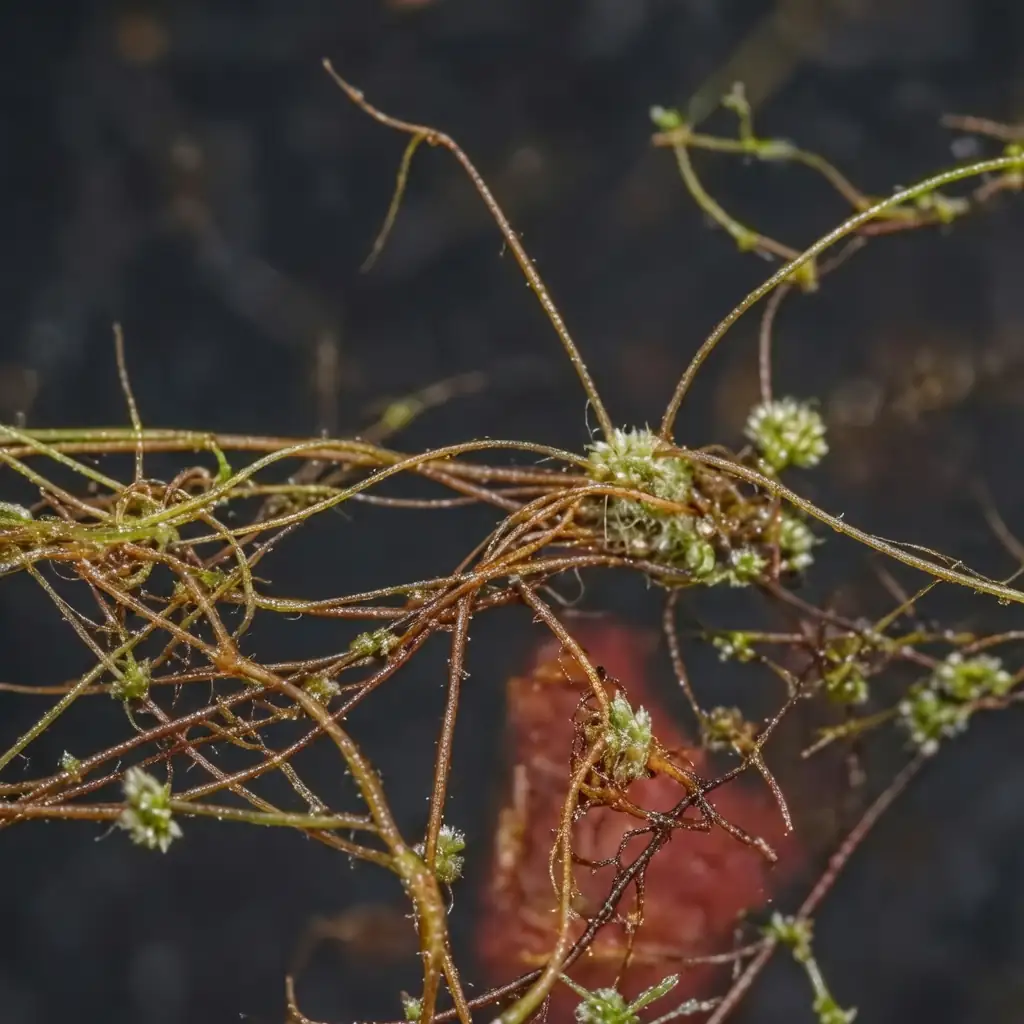
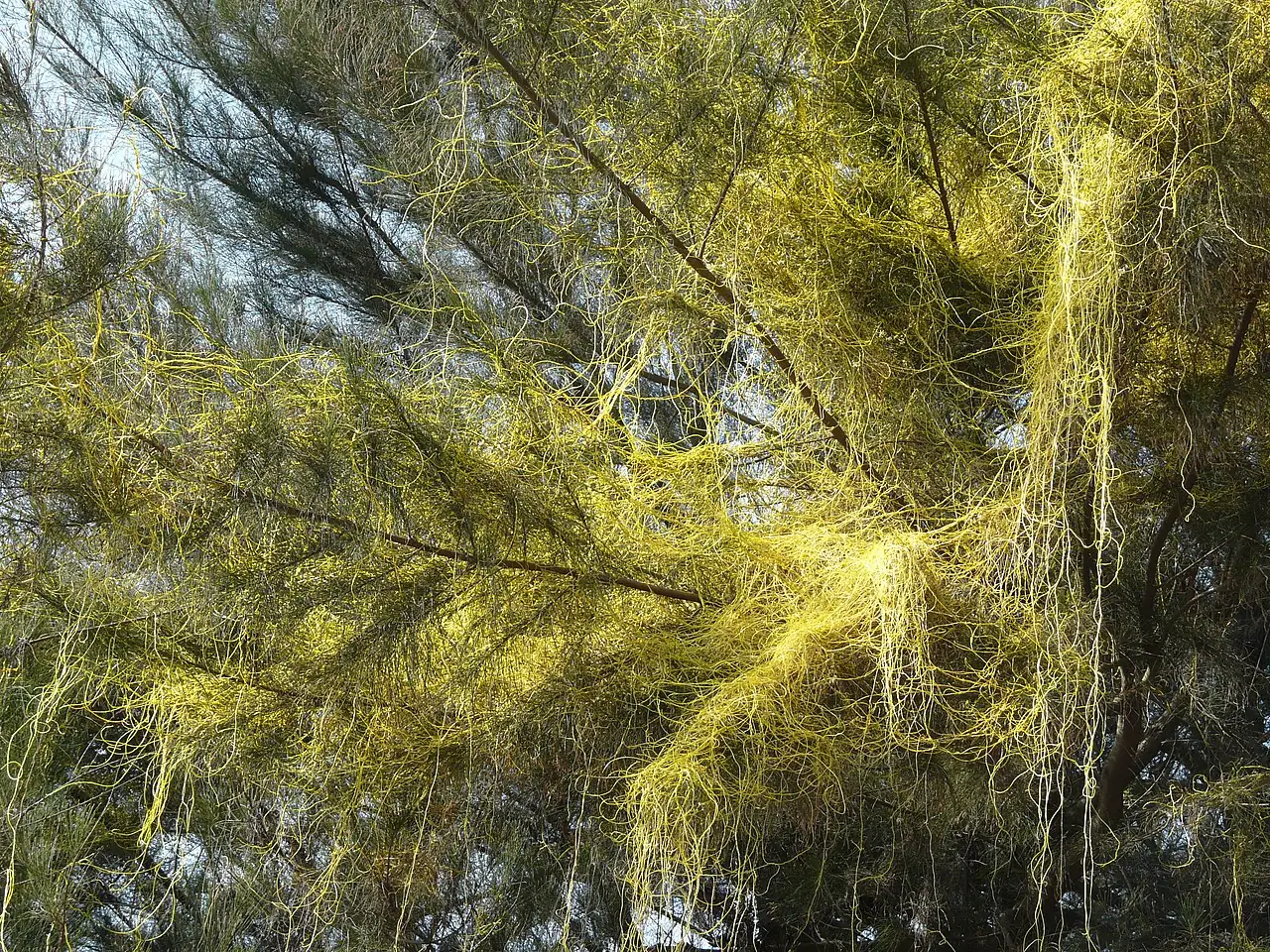
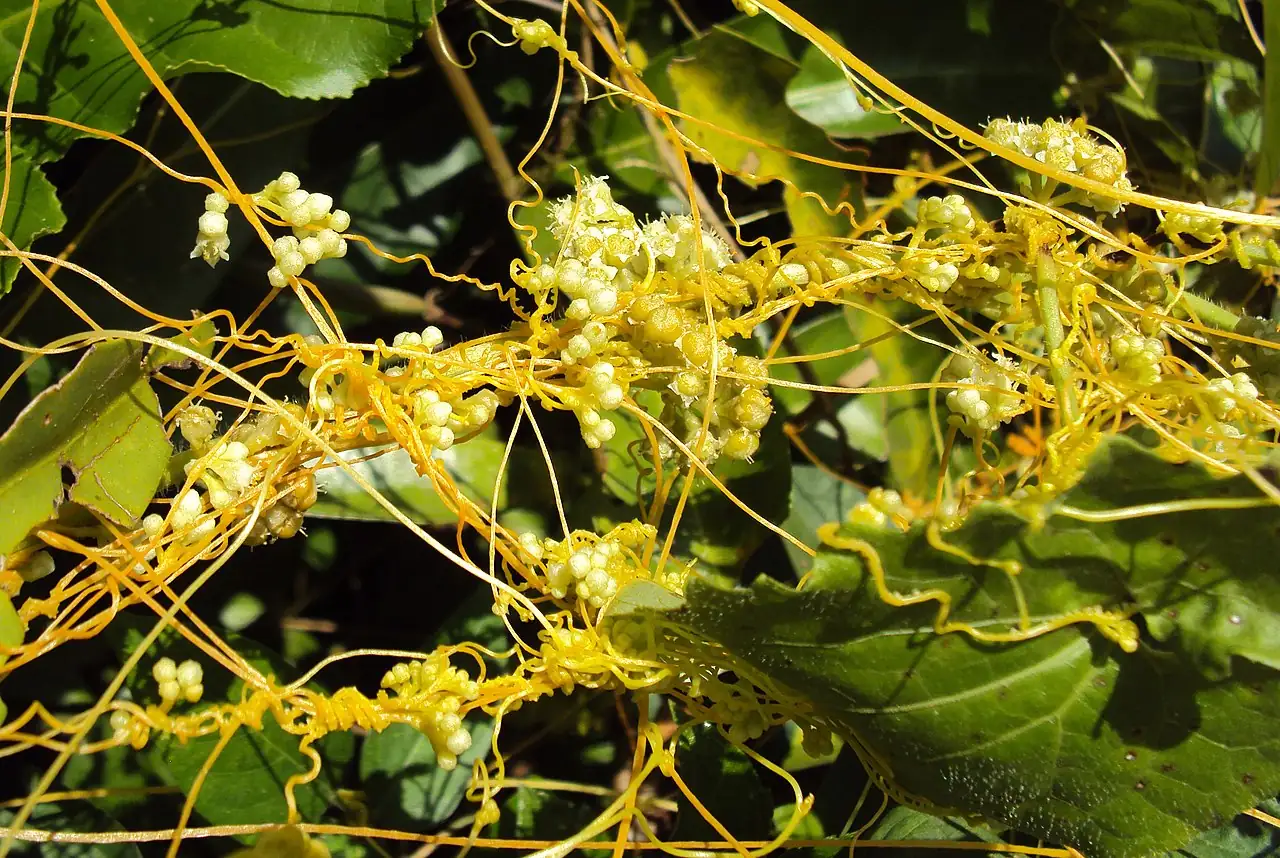
- Size: Twining, thread-like stems about 1 mm (0.04 in) thick; overall spread depends on the host plant and can blanket large sections of the host and nearby vegetation.
- Foliage: True leaves are absent or reduced to tiny, scale-like remnants; the plant does very little photosynthesis compared with most non-parasitic vines.
- Flower: Produces small white flowers that are tubular to bell-shaped, typically borne in clustered side inflorescences (often described as umbel-like). After flowering, it forms a nearly spherical capsule containing pale brown, egg-shaped seeds with a rough texture.
- Flowering Season: July–August (summer)
- Growth Habit: An annual, obligate parasitic twiner that coils around host stems and feeds through specialized attachments; it tends to thrive in warm, moist-to-humid conditions wherever suitable host plants are present.
Environment
Sunlight
Light needs are mostly determined by the host: Chinese dodder commonly appears where host plants grow in full sun to partial shade, and it tolerates those conditions while riding on the host.
Temperature
Prefers warm conditions; typically most vigorous around 20–30°C (68–86°F).
Humidity
Performs best in moist to humid settings; moderate to high humidity favors establishment and growth.
Soil
Once attached to a host it’s not truly soil-dependent, but seedlings establish more readily in disturbed ground (for example crop fields) where host stems are easy to reach.
Placement
Primarily an outdoor parasite of other plants—seen in crop fields, hillsides, edges of shrubland, and weedy patches. It’s not a standalone houseplant and isn’t suited to normal pot culture.
Hardiness
Annual and not frost-tolerant; most common in warm-temperate to subtropical climates (practical “hardiness” varies by region and by host availability).
Care Guide
Difficulty
Not a typical ornamental plant; from a gardener’s perspective it’s difficult and undesirable because it parasitizes other plants and can be hard to eliminate once established.
Buying Guide
Not recommended for purchase or cultivation. Introducing it intentionally risks harming many nearby plants and may create a persistent weed problem due to seed spread.
Watering
Not applicable in the usual sense—after attachment it draws water directly from the host plant rather than from soil via its own roots.
Fertilization
Not applicable for the dodder itself. Note that fertilizing host plants can indirectly encourage dodder by boosting host growth and resources.
Pruning
For control: remove and securely dispose of infested host stems as early as possible, ideally before flowering and seed set. Clean tools afterward to reduce the chance of spreading plant pieces or seeds.
Propagation
Primarily by seed. Seeds can be spread in contaminated soil, mixed into crop seed lots, or moved with plant debris; they may persist and reappear if prevention is not consistent.
Repotting
Not applicable.
📅 Seasonal Care Calendar
Late spring through summer: monitor susceptible host plants regularly. Act quickly at first detection. Mid-to-late summer: prioritize removal before flowering/seed set to reduce next season’s seed bank.
Pests, Diseases & Safety
Common Pests & Diseases
More notable as a threat to plant health than as a target of pests: it parasitizes many hosts (commonly legumes and other broadleaf plants), weakening them and potentially reducing growth and yields. Prevention, sanitation, and early removal are the most effective strategies.
Toxicity
Toxicity to humans and pets is not clearly established in the provided source. As a precaution, avoid ingestion and wash hands after handling; treat it like other potentially irritating weedy plant material.
Culture & Symbolism
Uses: Mainly known as a parasitic weed impacting crops and wild plants, especially legumes; it can be a notable issue in soybean and other broadleaf crop systems. (In traditional contexts, related materials may be discussed as herbal products, but cultivation for gardens is generally not advised due to its parasitic nature.)
FAQ
Why does Chinese dodder have no real leaves?
Because it’s a parasite. After germination it rapidly attaches to a host plant and relies on the host for water and nutrients, so leaves are reduced to tiny scales or effectively absent.
How can I prevent it from spreading in a garden or field?
Remove infestations early—before it flowers and sets seed—then dispose of infested material securely. Avoid moving contaminated soil or plant debris, and monitor host plants regularly so you can act at the first sign of those yellow thread-like stems.
Fun Facts
- Its thread-thin stems are often about 1 mm (0.04 in) thick, yet they can form dense tangles that blanket host plants.
- Despite having almost no true foliage, it still produces clusters of tiny white flowers in summer.
- The fruit is a small, round capsule with pale brown, egg-shaped seeds that feel rough-textured.
- A folk-style explanation tied to its Chinese name mentions seeds “spitting silk”: when cooked, the seed coat may split and a yellow sprout can protrude like a tiny thread.
- Its wide host range helps explain why it’s reported so broadly wherever suitable plants grow.