

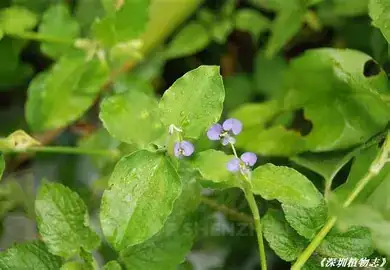
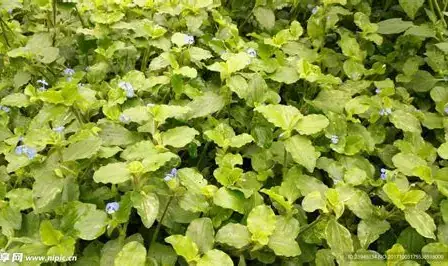
Plant Features
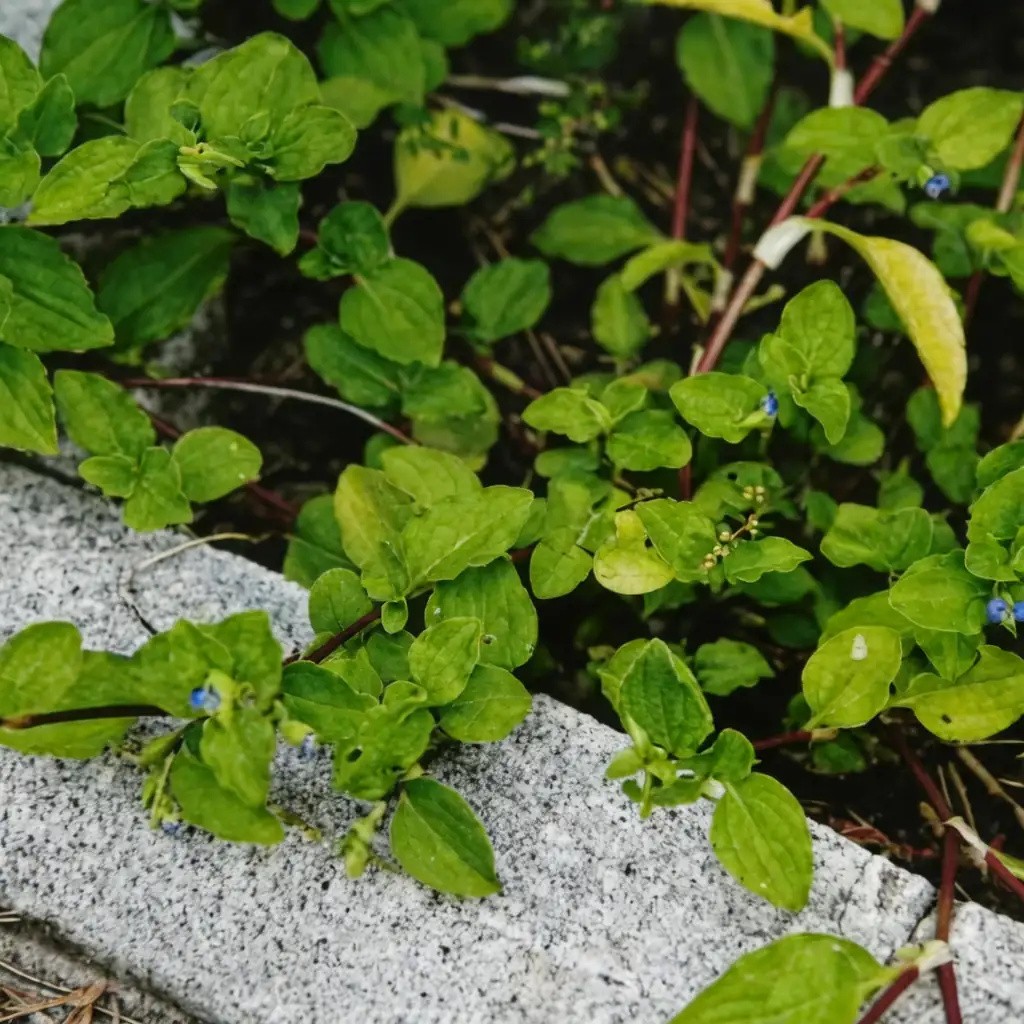
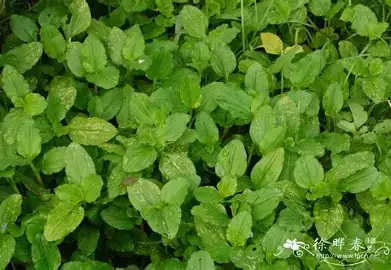
- Size: Sprawling perennial herb that often makes mats about 15–40 cm (6–16 in) tall, with stems spreading roughly 30–90 cm (12–35 in) or more when moisture and space are abundant.
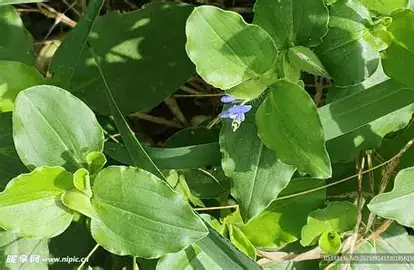
- Foliage: Leaves are oval to broadly elliptic with a noticeable petiole. They usually look clean and smooth, ranging from nearly hairless to lightly hairy depending on growing conditions.
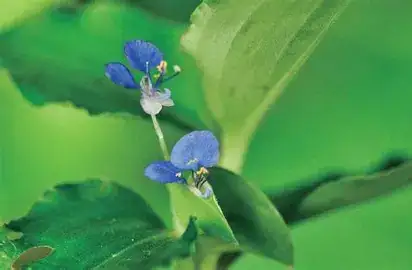
- Flower: Small, vivid blue flowers with rounded petals; the inner petals are characteristically clawed (narrow at the base), a classic dayflower trait.
- Flowering Season: July–October (in much of China); in warm climates it may flower for an extended period.
- Growth Habit: Spreading/trailing, mat-forming herbaceous perennial. Stems readily creep and can root at nodes where they touch moist soil, making it vigorous and adaptable—especially in warm, humid conditions and partial shade.
Environment
Sunlight
Partial shade to bright filtered light; tolerates full shade. In cooler climates it can handle more sun as long as the soil stays consistently moist.
Temperature
Best growth in warm conditions around 20–32°C (68–90°F). Growth slows in cool weather and it is generally frost-sensitive.
Humidity
Medium to high humidity; happiest when the surrounding air and the soil stay evenly moist.
Soil
Moist to wet, humus-rich soil that still drains well. Tolerates heavier soils if they don’t dry out repeatedly.
Placement
Great for damp, shaded garden edges, woodland-style beds, rain-garden margins, and containers kept evenly moist (shaded patios/balconies; bright bathrooms can work if light is adequate).
Hardiness
Best suited to frost-free or lightly frosty regions; commonly aligned with USDA Zone 9–11. In colder zones, treat as a warm-season annual or grow in containers and overwinter indoors.
Care Guide
Difficulty
Easy when moisture is steady. Main challenge is control: it can become weedy/invasive in some regions, so grow thoughtfully and contain where needed.
Buying Guide
Pick plants with firm, green stems and clean, unspotted leaves. Avoid pots that are bone-dry (wilting) or constantly waterlogged with sour-smelling mix. If planting outdoors, check local invasive-plant guidance before buying or releasing it into garden beds.
Watering
Keep the soil evenly moist. Water when the top 1–2 cm (0.4–0.8 in) begins to dry. In hot weather, containers may need frequent watering. Avoid repeated drought cycles, which reduce flowering and overall vigor.
Fertilization
A light feeder. Use a balanced liquid fertilizer at 1/4–1/2 strength every 2–4 weeks during active growth, or top-dress with compost. Reduce or stop feeding in cooler seasons.
Pruning
Pinch or trim long runners to keep a tidy shape and encourage bushier growth. Remove leggy stems as needed. Dispose of trimmings responsibly—cut pieces can reroot if left on moist soil.
Propagation
Very easy from stem cuttings (root in water or a moist potting mix) and by division of rooted nodes. It can also self-seed readily where conditions suit it.
Repotting
Repot in spring or early summer once roots fill the pot. Move up about 2–5 cm (1–2 in) in diameter, refresh with a moisture-retentive but well-draining mix, and ensure drainage holes are unobstructed.
📅 Seasonal Care Calendar
Spring: repot, divide, and begin light feeding. Summer: keep consistently moist; trim to control spread. Autumn: reduce feeding; keep watering as needed. Winter: protect from cold; indoors, keep slightly moist with bright filtered light and reasonable humidity.
Pests, Diseases & Safety
Common Pests & Diseases
Usually trouble-free. Watch for aphids, mealybugs, and spider mites (especially indoors with dry air). Constantly soggy, stagnant conditions can encourage stem/root rot—use a draining mix and don’t let pots sit in standing water.
Toxicity
Not commonly listed as toxic to people or pets, but chewing may cause mild stomach upset in sensitive individuals. Sap may irritate very sensitive skin—wash hands after handling if you’re prone to irritation.
Culture & Symbolism
Symbolism: Often linked with resilience and adaptability—thriving in damp shade where many ornamentals struggle.
History & Legends: A widely distributed dayflower admired for its bright blue blooms. In many warm regions it’s equally famous for being persistent, spreading by both rooting stems and seed—earning it a “beautiful nuisance” reputation in gardens.
Uses: Ornamental groundcover for moist, shaded landscapes (woodland edges, wet-area plantings, rain-garden margins) and for containers where consistent moisture is easy to maintain.
FAQ
Why does Benghal dayflower spread so quickly?
Its creeping stems can root wherever they touch moist soil, and it can also produce plenty of seed. To control it, trim runners, remove rooted nodes, and consider keeping it in containers or bordered beds.
Can it grow indoors?
Yes. Give it bright, filtered light, evenly moist soil, and a bit of extra humidity. In dry rooms, keep an eye out for spider mites.
Fun Facts
- The same plant is sold under multiple English names, including Benghal dayflower, Bengal dayflower, and tropical spiderwort.
- Its black seeds are strongly wrinkled with a net-like surface texture—an easy microscopic clue for identification.
- It naturally favors shaded, damp ground and woodland understories.
- It can be a fantastic wet-area ornamental, but in some places it’s considered invasive—responsible cultivation matters.


