

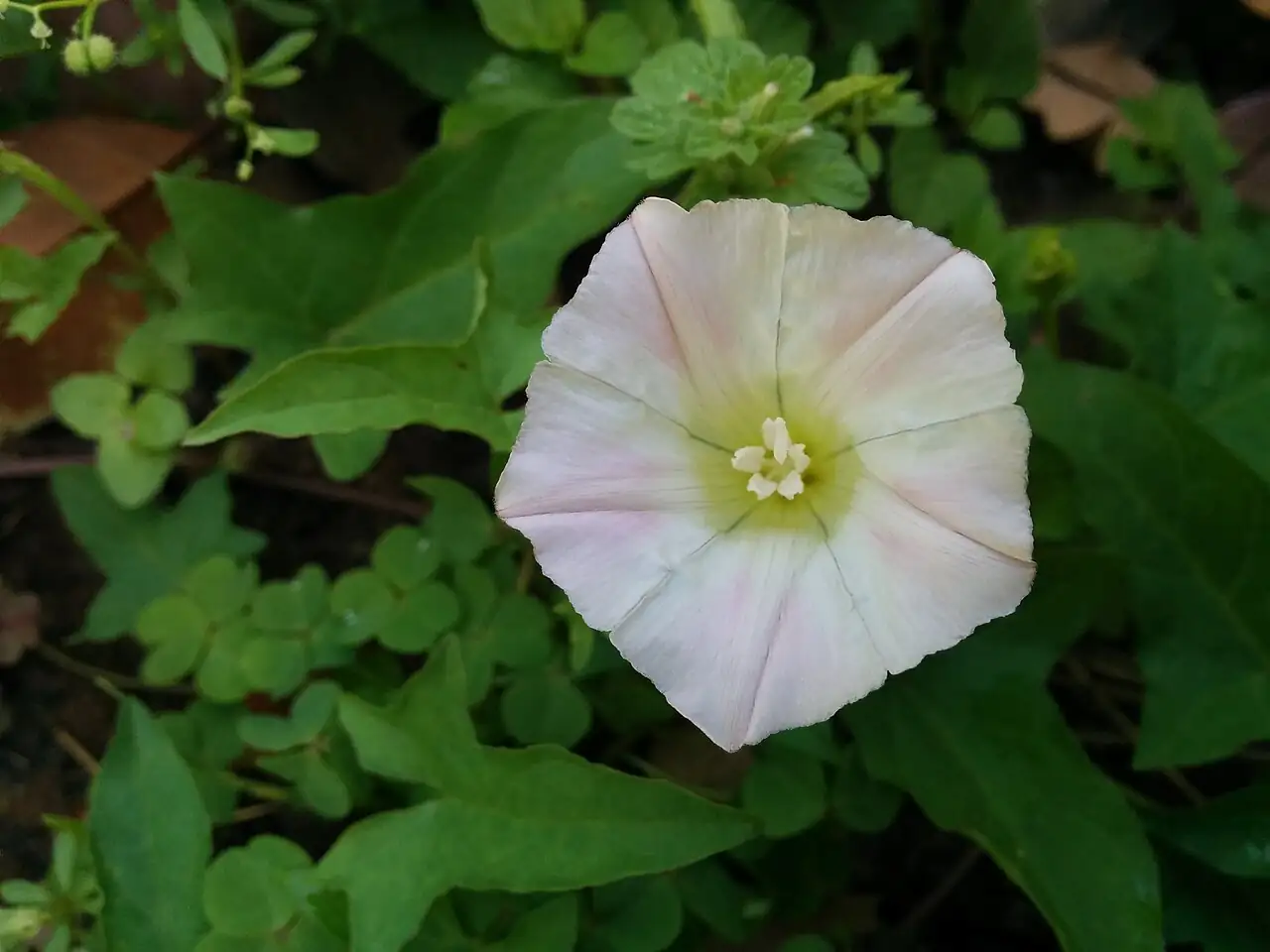
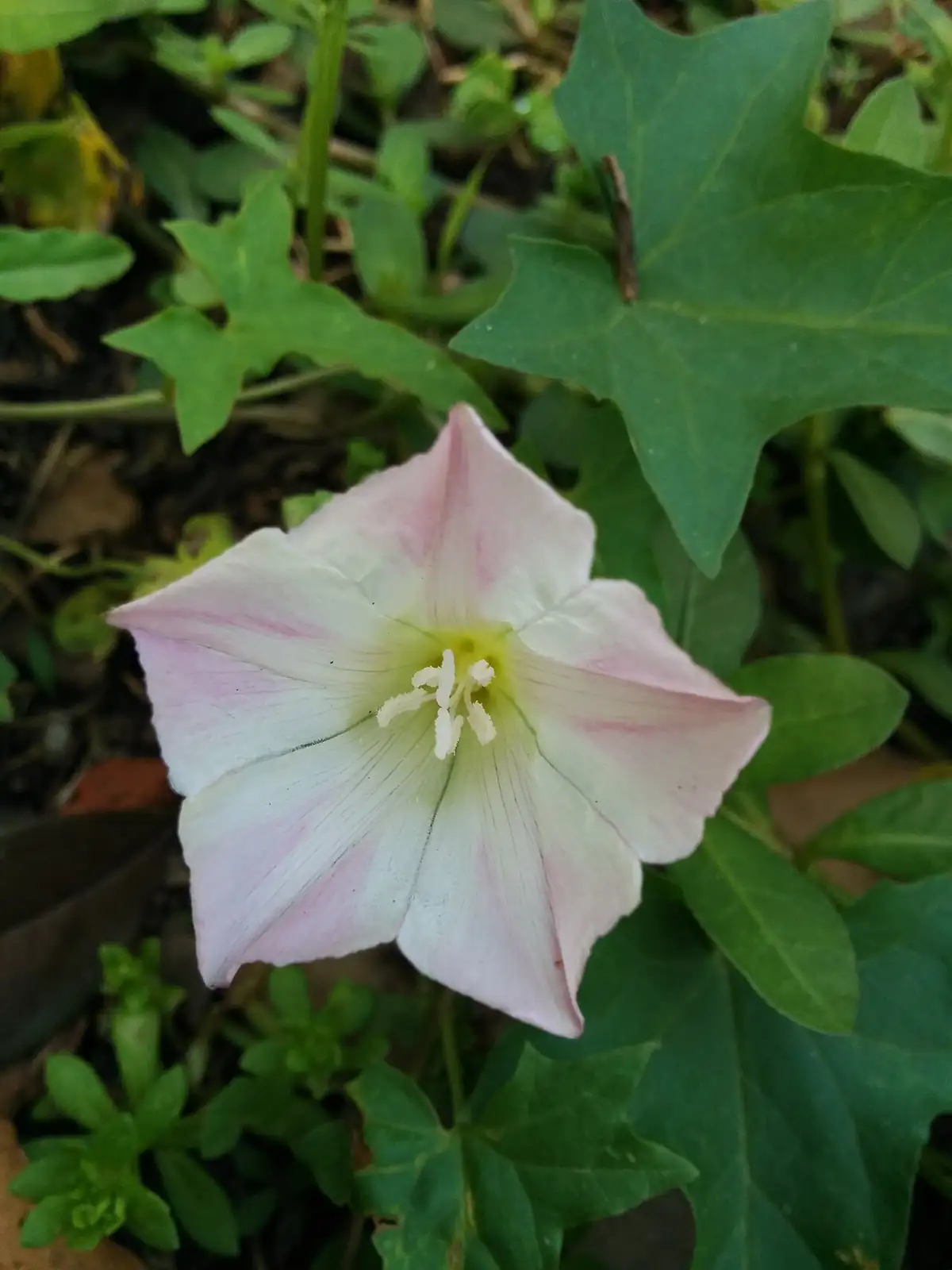
Plant Features
- Size: Typically about 20–30 cm (8–12 in) tall; usually low-growing and spreading, sometimes weakly twining when it can climb.
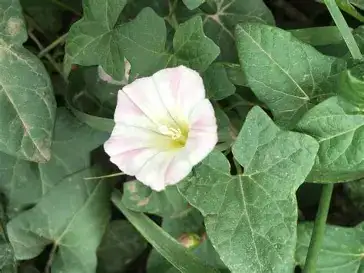
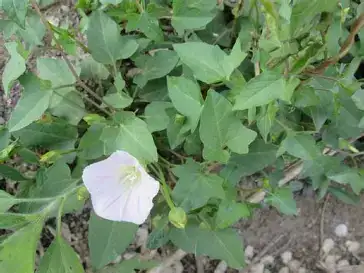
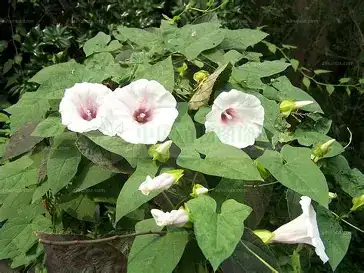
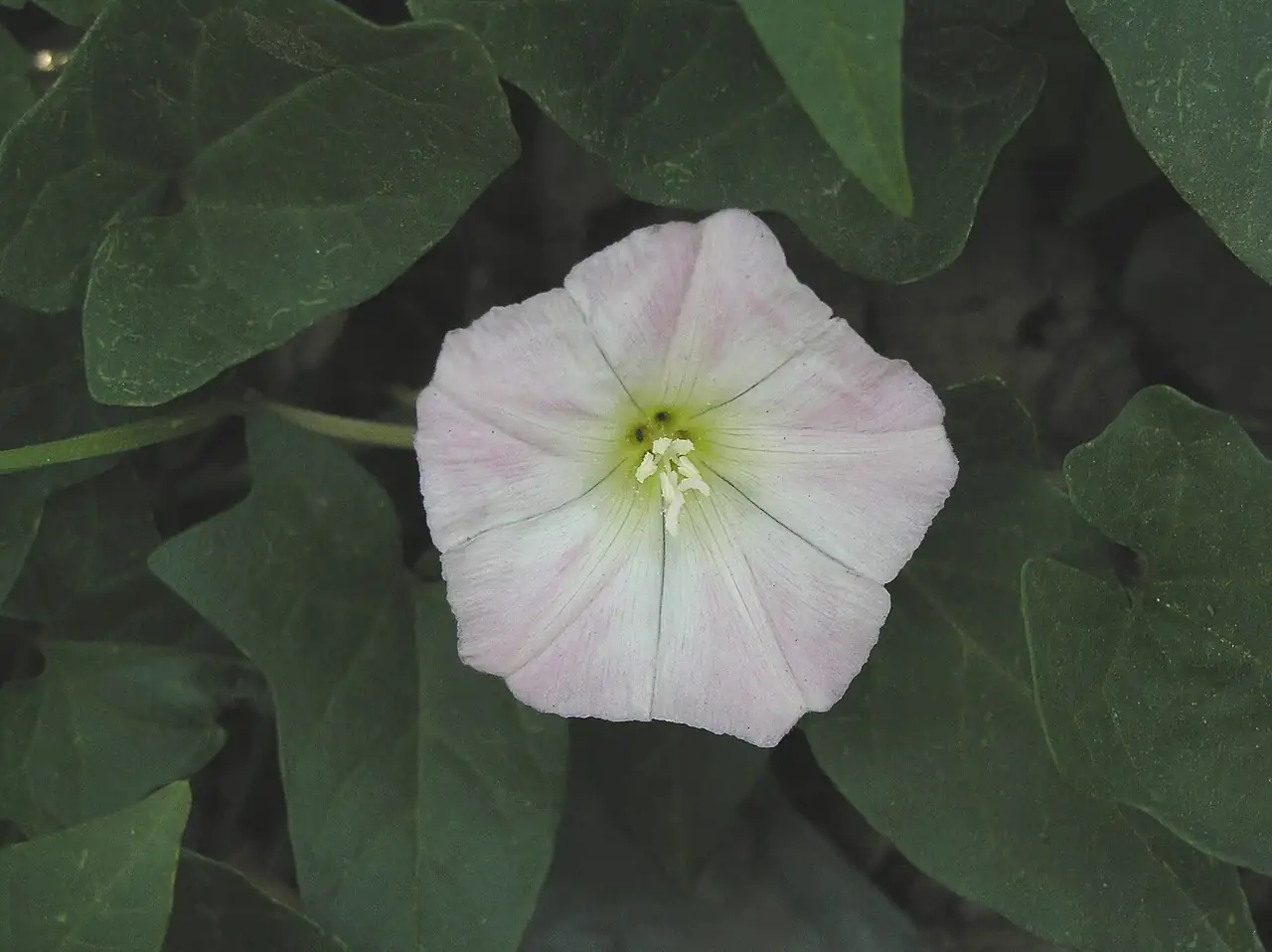
- Foliage: Smooth, hairless leaves with an ivy-like feel; the leaf base is often heart-shaped to truncate (bluntly cut), giving it that distinctive “ivy-leaf” look.
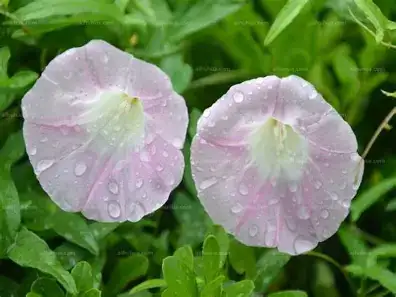
- Flower: Solitary flowers arise from the leaf axils, each with a soft, bell-shaped corolla in pale lavender to light pink. The fruit is an ovoid-to-globose capsule; seeds are dark brown to nearly black with a fine, slightly warty surface.
- Flowering Season: May–August
- Growth Habit: Small annual herb; low, spreading groundcover-style growth, sometimes weakly twining.
Environment
Sunlight
Full sun to light shade; flowering is best in full sun.
Temperature
Adaptable and generally tolerant of both heat and cooler conditions; for best growth, aim for about 10–25°C (50–77°F) during active growth when possible.
Humidity
Moderate to high humidity; does well where soil moisture and air moisture don’t swing to extremes for long periods.
Soil
Loose, well-drained soil is ideal (especially sandy loam) kept evenly moist; not fussy and can cope with poorer soils as long as drainage is decent.
Placement
Best in open ground and naturalistic plantings (meadows, banks, field edges, sandy areas). In gardens, give it a sunny border or wildflower patch and a bit of room to spread.
Hardiness
Treated as a hardy temperate wildflower outdoors in many regions; tolerates a broad range of conditions, though exact USDA zones are not consistently cited for this species.
Care Guide
Difficulty
Easy. A tough, adaptable wildflower that tolerates nutrient-poor soils and variable conditions, provided it isn’t left in waterlogged ground.
Buying Guide
When buying seed or starts, verify the scientific name (Calystegia hederacea), as “bindweed” is used for many look-alikes. Pick vigorous, pest-free plants; for seed, choose clean, dry seed from a reputable source.
Watering
Keep evenly moist while establishing. After that, water when the top 2–3 cm (about 1 in) dries out. Prioritize drainage—this plant handles “a bit dry” better than soggy roots.
Fertilization
Usually not needed in the ground. In containers or very lean soil, feed lightly with a balanced fertilizer at 1/4–1/2 strength every 4–6 weeks in spring and summer; avoid heavy nitrogen, which can boost leaves at the expense of blooms.
Pruning
Trim or deadhead after flowering to keep it tidy and reduce self-seeding. Thin weak or crowded stems if the patch becomes dense.
Propagation
Mostly by seed. Sow outdoors in spring after frost risk, or start indoors 4–6 weeks earlier; cover seeds lightly. It may also spread locally as creeping stems root where they touch soil.
Repotting
Not commonly kept long-term in pots, but if container-grown, repot in spring into a free-draining mix and move up to a pot 2–5 cm (1–2 in) wider.
📅 Seasonal Care Calendar
Spring: sow/transplant and keep evenly moist. Summer: low maintenance—water during prolonged drought and trim if it overruns neighbors. Autumn: either let some capsules mature for seed, or cut back to limit reseeding.
Pests, Diseases & Safety
Common Pests & Diseases
Usually trouble-free. Watch for aphids, and spider mites during hot, dry spells. Leaf spots can appear if air is stagnant and foliage stays wet—improve airflow and avoid frequent overhead watering if that happens.
Toxicity
No strong, widely agreed evidence of significant toxicity for this species, but it’s still best not to eat it and to discourage pets from chewing on wild plants.
Culture & Symbolism
Symbolism: Resilience and persistence—very fitting for a bindweed that happily shows up and thrives in “tough” places.
History & Legends: A familiar countryside sight across much of China, often noticed along roadsides and field edges. It’s better known as a common wildflower than a formal garden ornamental, yet its soft blooms and ivy-like leaves make it surprisingly charming up close.
Uses: Primarily ornamental for naturalistic gardens, wildflower areas, and low-maintenance sunny ground cover where a gently spreading plant is welcome.
FAQ
Is ivy-leaved bindweed invasive?
It can spread and self-seed readily in open ground. To keep it in bounds, trim after flowering and pull seedlings early.
Why is it not flowering well?
Most often it’s a light issue—too much shade. Move it to a sunnier spot and avoid high-nitrogen feeding, which can encourage leafy growth over flowers.
Fun Facts
- It’s commonly found across China in fields, roadsides, sandy ground, riverbanks, woodland edges, and grasslands.
- Its seeds are dark brown to nearly black and have a subtly warty surface.
- Despite the ‘ivy-leaved’ look, it’s not related to true ivy—its leaf shape is simply a clever bit of mimicry.
- It’s notably adaptable, tolerating poor soils and a wide range of temperatures as long as the soil drains well.


