Plant Features
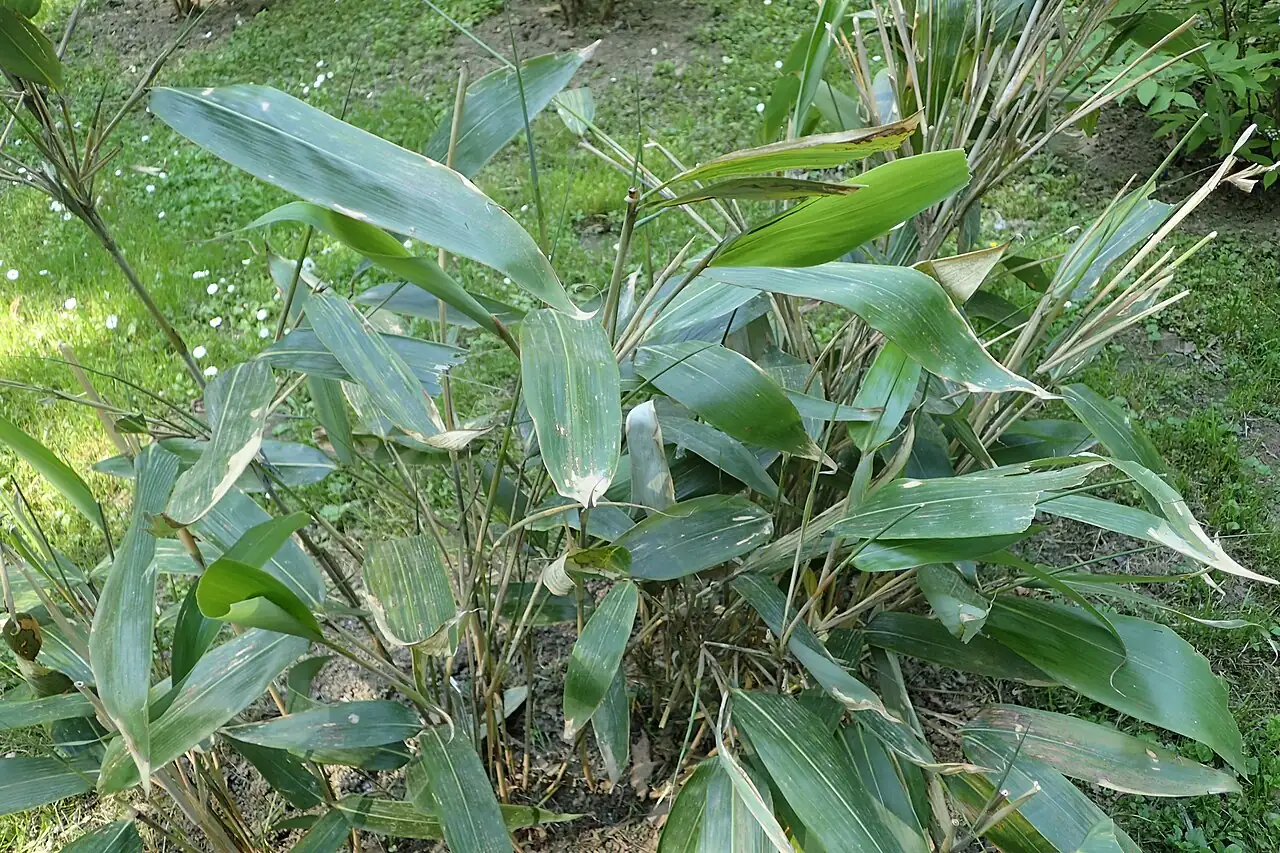
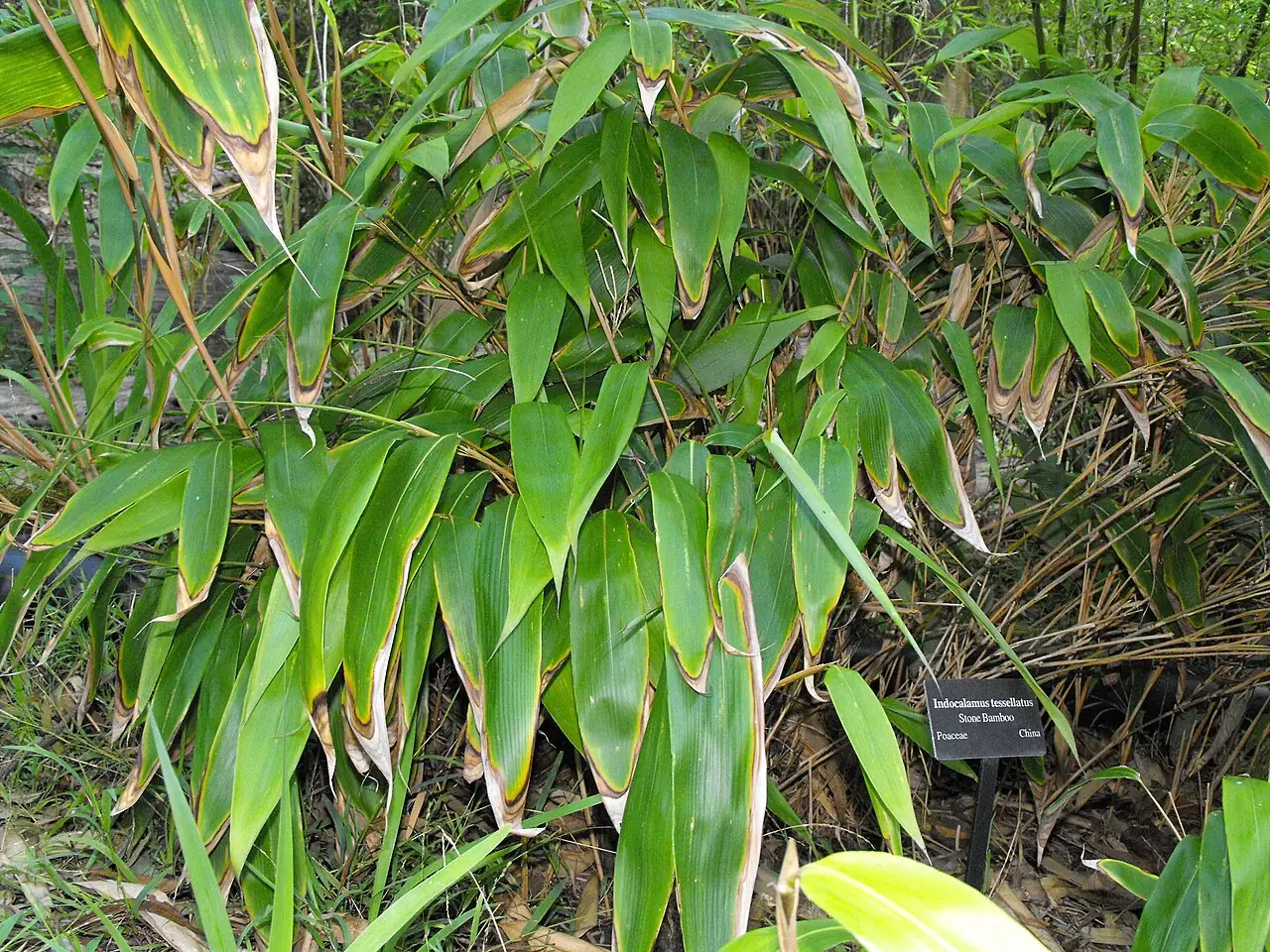
- Size: Typically 1–2 m (3.3–6.6 ft) tall; forms dense clumps suitable for a low screen/hedge.
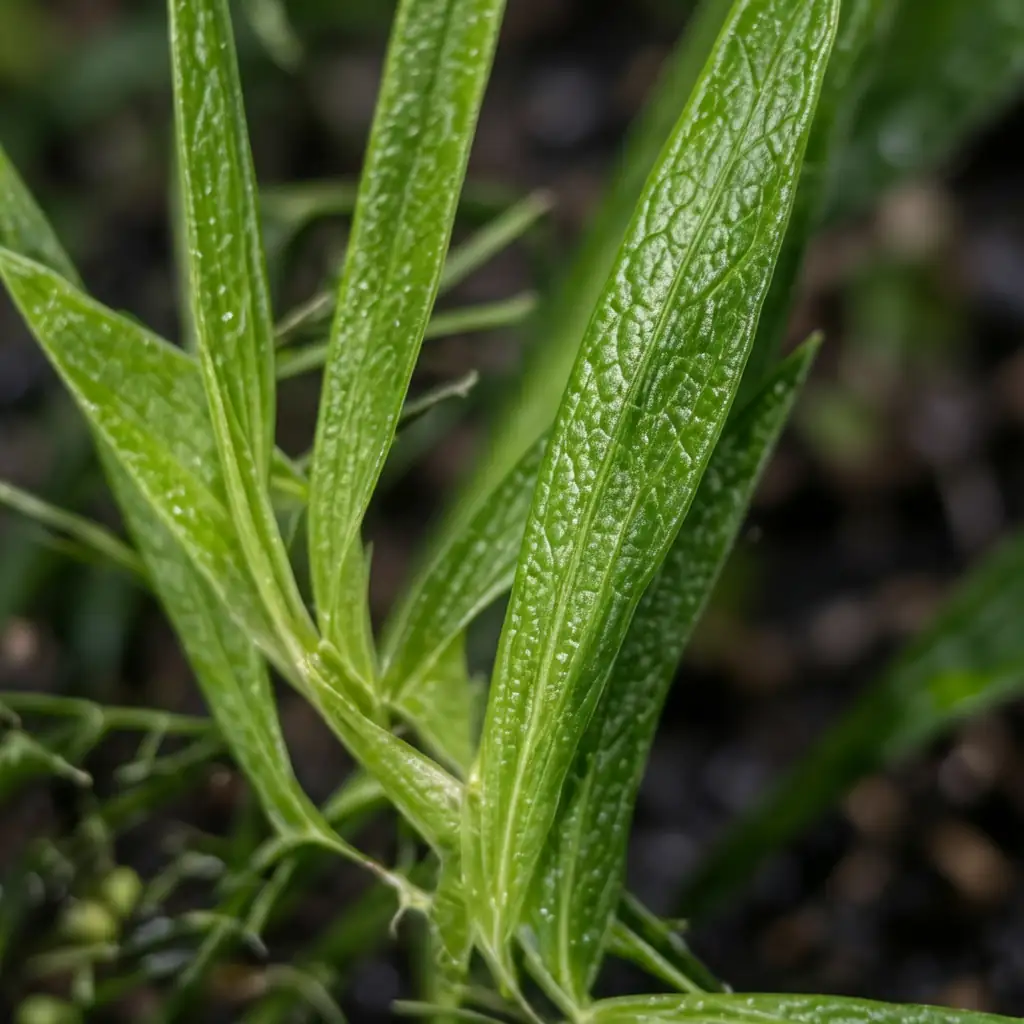
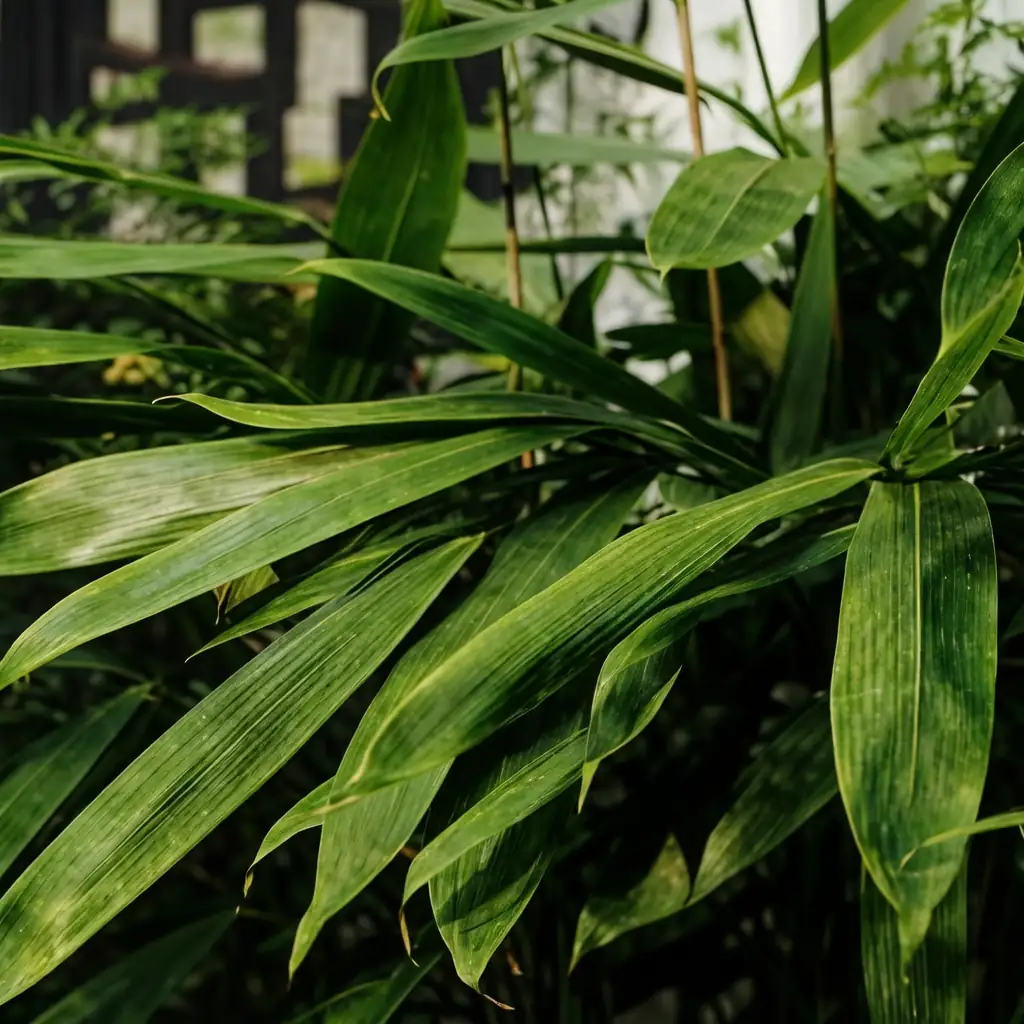
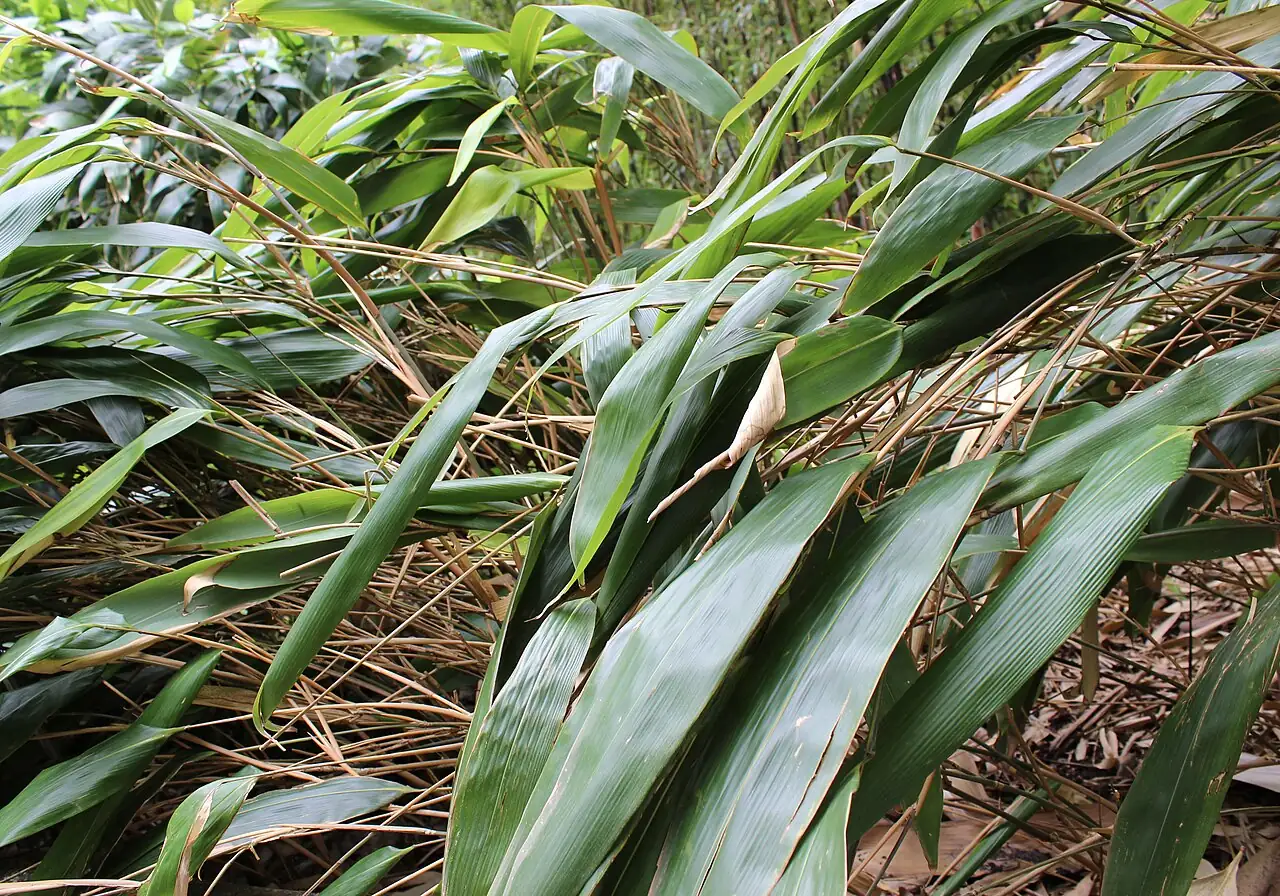
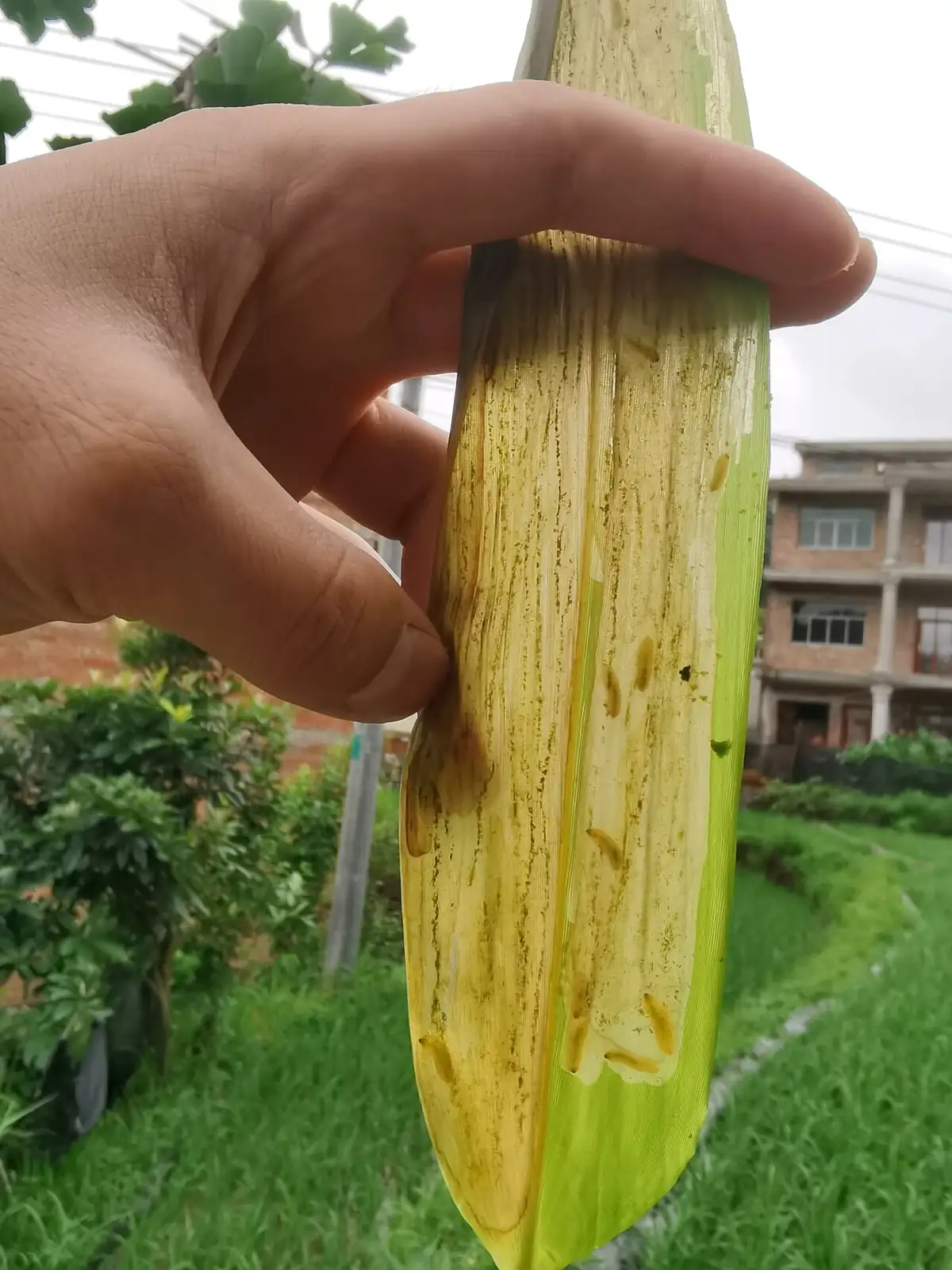
- Foliage: Notable for exceptionally large leaves—often 45 cm+ (18 in+) long and over 10 cm (4 in) wide. Leaves are short and broadly lance-shaped, with 8–16 pairs of secondary veins and very conspicuous fine cross-veins that create a distinctly tessellated, patterned look. The underside may show a single line of sparse hairs.
- Flower: Flowers are inconspicuous (typical of most bamboos). Flowering is reported in early to mid-summer when it occurs.
- Flowering Season: June–July
- Growth Habit: Low, clumping bamboo with tufted, cylindrical culms. Each node typically bears 1–3 branches. Rhizomes are sympodial (pachymorph), which supports a tight, clump-forming habit rather than running.
Environment
Sunlight
Bright, dappled light to partial shade is ideal. Tolerates gentle morning sun but benefits from protection against harsh, drying afternoon sun.
Temperature
Prefers warm, humid conditions and is generally cold-tolerant once established. During active growth, 15–28°C (59–82°F) is ideal. In containers, protect from hard freezes below about -5°C (23°F).
Humidity
Moderate to high humidity is preferred; performs best with consistently moist air and soil (around 50%+ humidity).
Soil
Moisture-retentive yet well-drained soil rich in organic matter; slightly acidic to neutral is ideal. Avoid waterlogged conditions.
Placement
Courtyards and gardens as a clump feature; excellent for edging rocky slopes or banks; suitable for dense planting as a low hedge/screen.
Hardiness
Roughly USDA Zone 7–10 (about -18 to -1°C / 0 to 30°F), depending on site conditions and shelter; container plants are more vulnerable to cold.
Care Guide
Difficulty
Easy to moderate. It’s quite tolerant once established, but it looks its best with steady moisture and some shelter from hot, dry sun and wind.
Buying Guide
Pick plants with firm, green culms and broad, clean leaves. Avoid pots with sour-smelling, waterlogged soil. Lots of browned leaf tips can hint at drought stress, wind scorch, or salt buildup.
Watering
Water deeply and keep evenly moist during the growing season. Let the top 2–5 cm (1–2 in) dry slightly, then soak thoroughly. In cooler weather, reduce watering, but don’t let the root zone fully dry out.
Fertilization
Feed from spring through mid-summer with a balanced slow-release fertilizer or a nitrogen-leaning bamboo/lawn fertilizer at label rates. Stop by late summer so growth can harden before winter.
Pruning
In late winter or early spring, remove weak, damaged, or overcrowded culms at the base. You can trim ragged leaves for looks, but avoid heavy pruning during extreme heat or cold.
Propagation
Best by division in spring. Split the clump/rhizomes so each division has healthy rhizomes and at least one culm (or strong buds) to re-sprout.
Repotting
For container plants, repot or divide every 2–3 years in spring. Move up one pot size or refresh the mix; keep evenly moist while it re-establishes.
📅 Seasonal Care Calendar
New shoots typically emerge in April–May. Flowering (when it occurs) is most often noted around June–July.
Pests, Diseases & Safety
Common Pests & Diseases
Generally robust. Spider mites may appear in hot, dry conditions; aphids can cluster on tender new growth; scale insects show up occasionally. Improve airflow, rinse foliage, and use horticultural soap/oil if needed. Avoid chronic waterlogging to prevent root problems.
Toxicity
Not known to be toxic to people or pets. However, the tough leaves can cause mild mechanical irritation if chewed in large amounts.
Culture & Symbolism
Symbolism: Like many bamboos, it’s associated with resilience, integrity, and steady, upright growth in East Asian garden culture.
History & Legends: Long appreciated in Chinese gardens as an ornamental bamboo, especially prized for its unusually large, decorative foliage.
Uses: Primarily ornamental: ideal for courtyard planting, accenting rockwork, stabilizing and softening slopes/banks, and creating a dense, leafy hedge or low screen. Shoots commonly emerge in April–May.
FAQ
Is this bamboo invasive?
No—this is a clumping bamboo with sympodial (pachymorph) rhizomes, so it spreads slowly compared with running bamboos. The clump will widen over time, but it’s usually easy to manage with occasional division or edging.
Why do the leaf tips turn brown?
Typical causes are dry air, inconsistent watering, wind scorch, or salt buildup from hard water/fertilizer. Keep moisture even, boost humidity, shelter from drying winds, and flush the potting mix occasionally with clean water.
Fun Facts
- Native to China’s Yangtze River basin, where it naturally grows on low hillsides and slopes.
- Its leaves can exceed 45 cm (18 in) long and 10 cm (4 in) wide—huge for a bamboo—so it’s often grown mainly for foliage impact.
- The fine cross-veins on the leaves create a distinctive “tessellated” pattern that inspired the species name tessellatus.
- New shoots usually appear in April–May, with flowering sometimes observed around June–July.
- Because it clumps tightly, it’s a popular choice for neat, leafy hedges and small garden spaces.