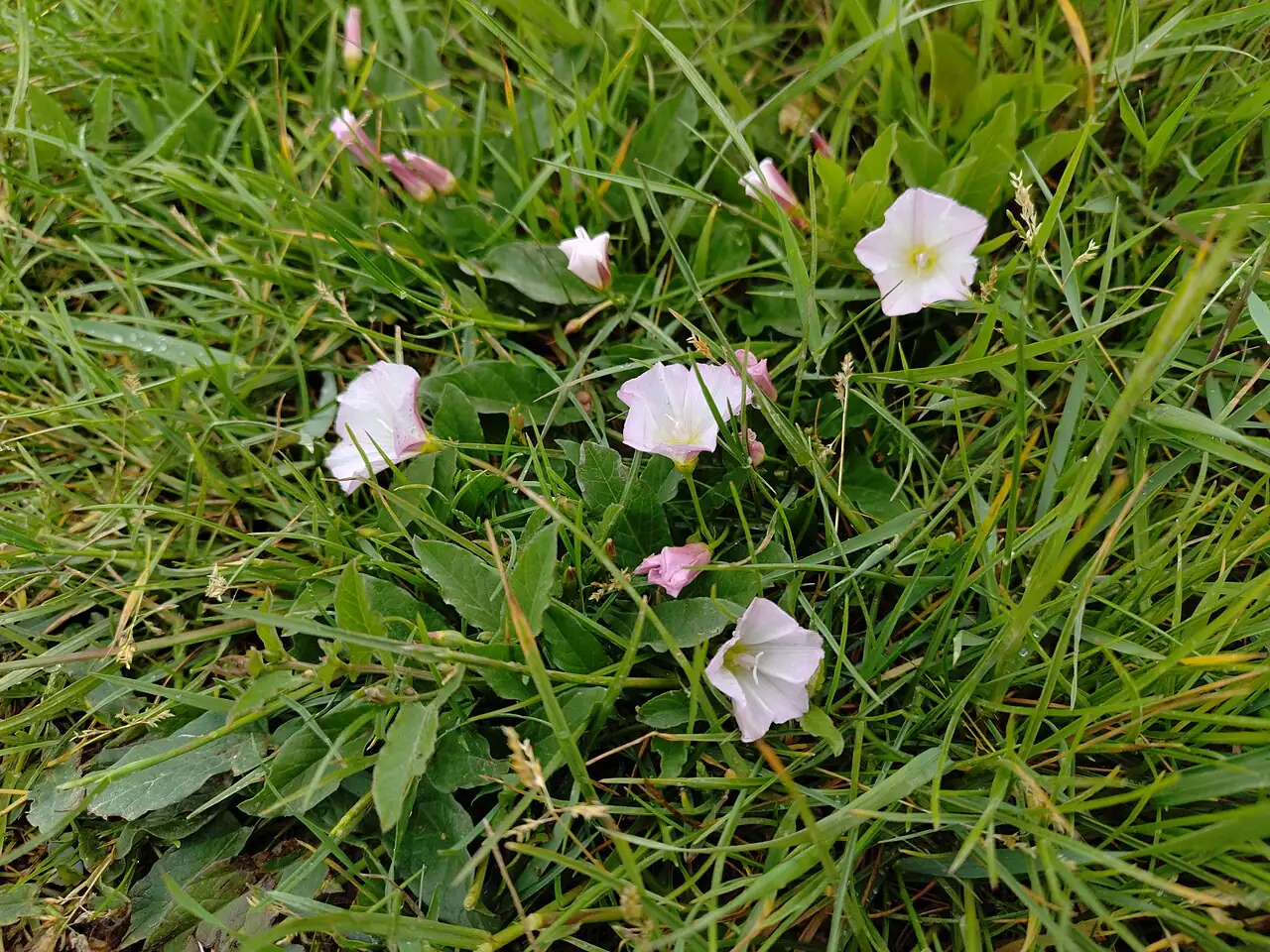
Plant Features
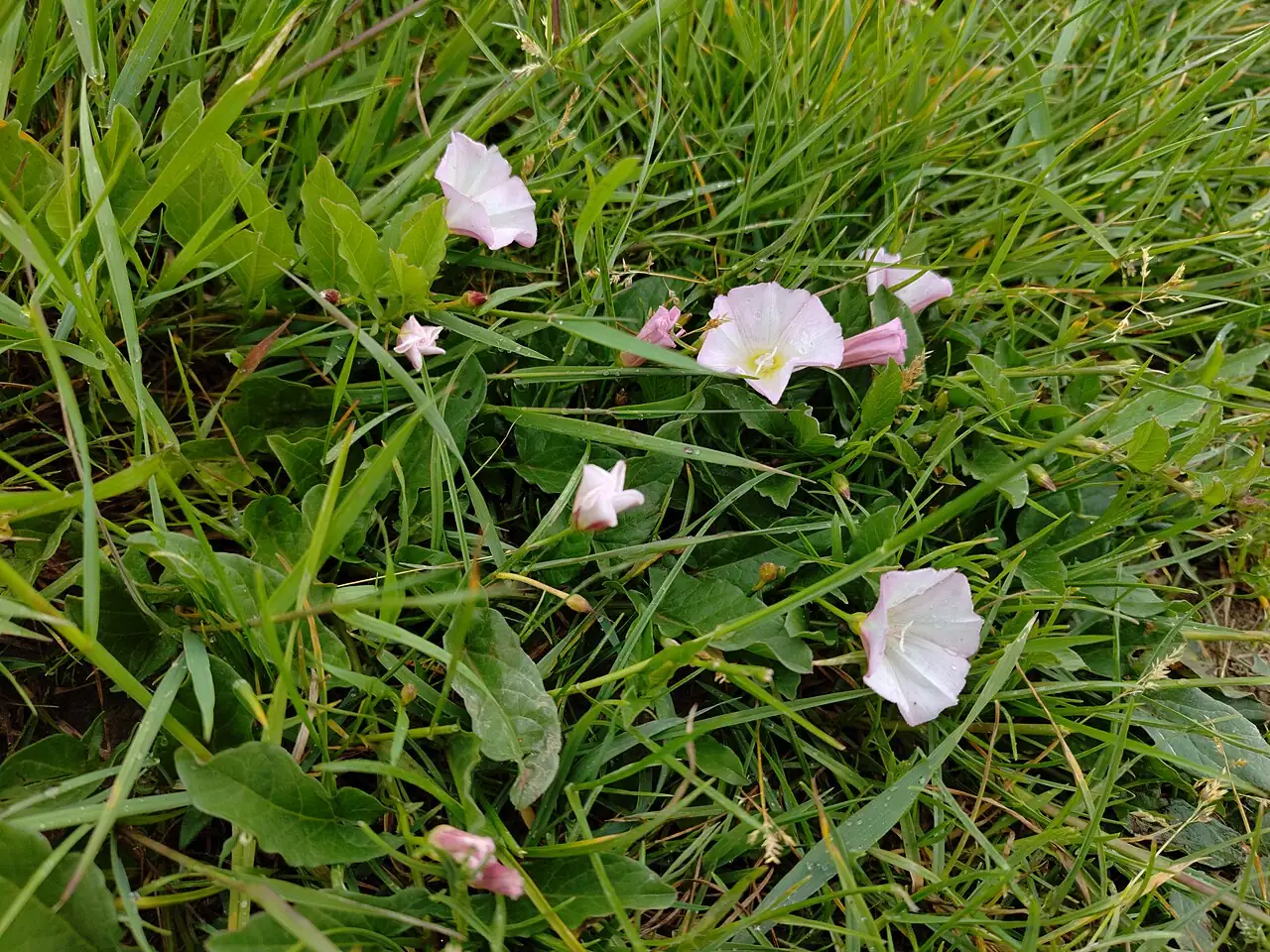
- Size: Low, trailing or twining perennial; stems commonly 30–200 cm (12–79 in) long, forming mats on the ground or climbing through nearby plants.
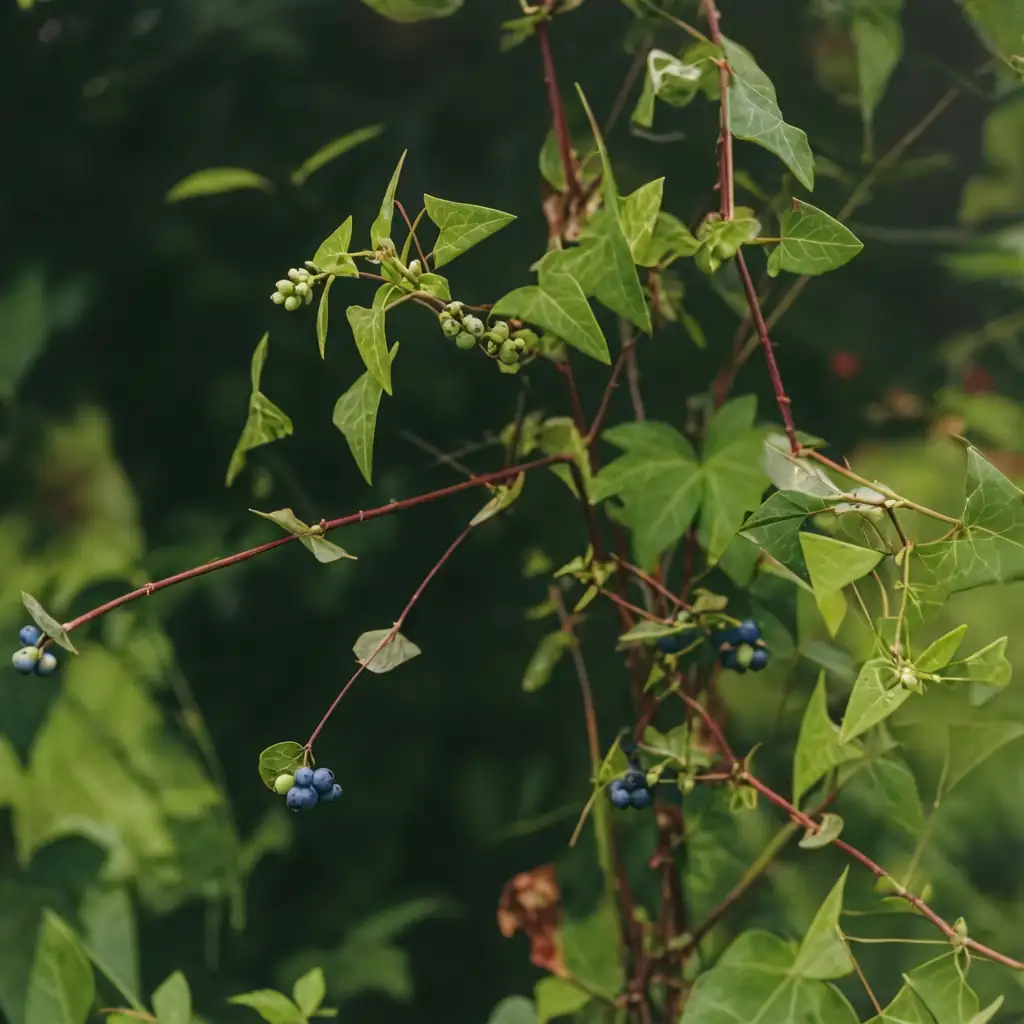
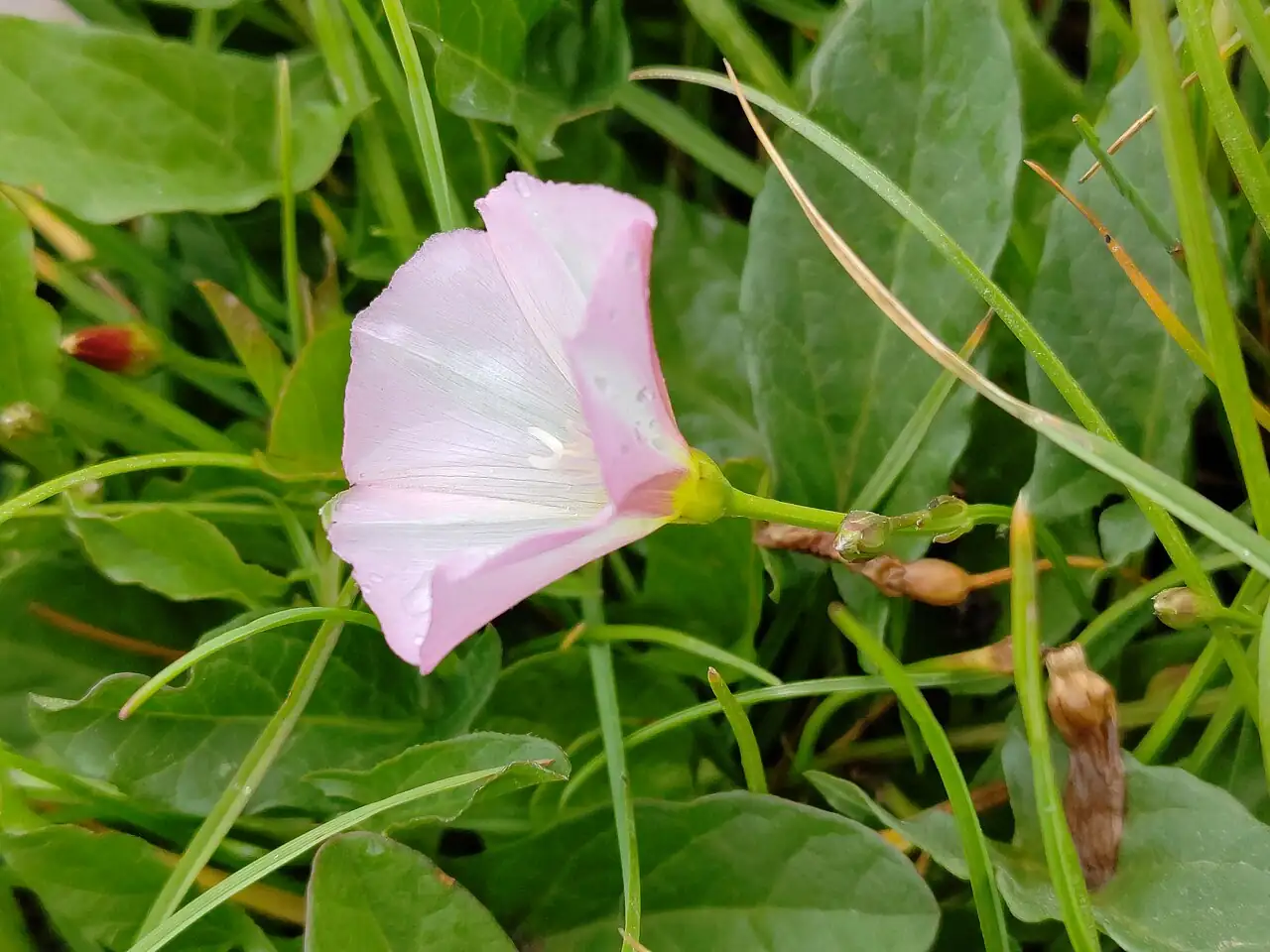
- Foliage: Leaves vary in shape but are typically arrowhead- to lance-shaped, sometimes with small basal lobes. They’re generally smooth (or only lightly textured) with noticeable veining.
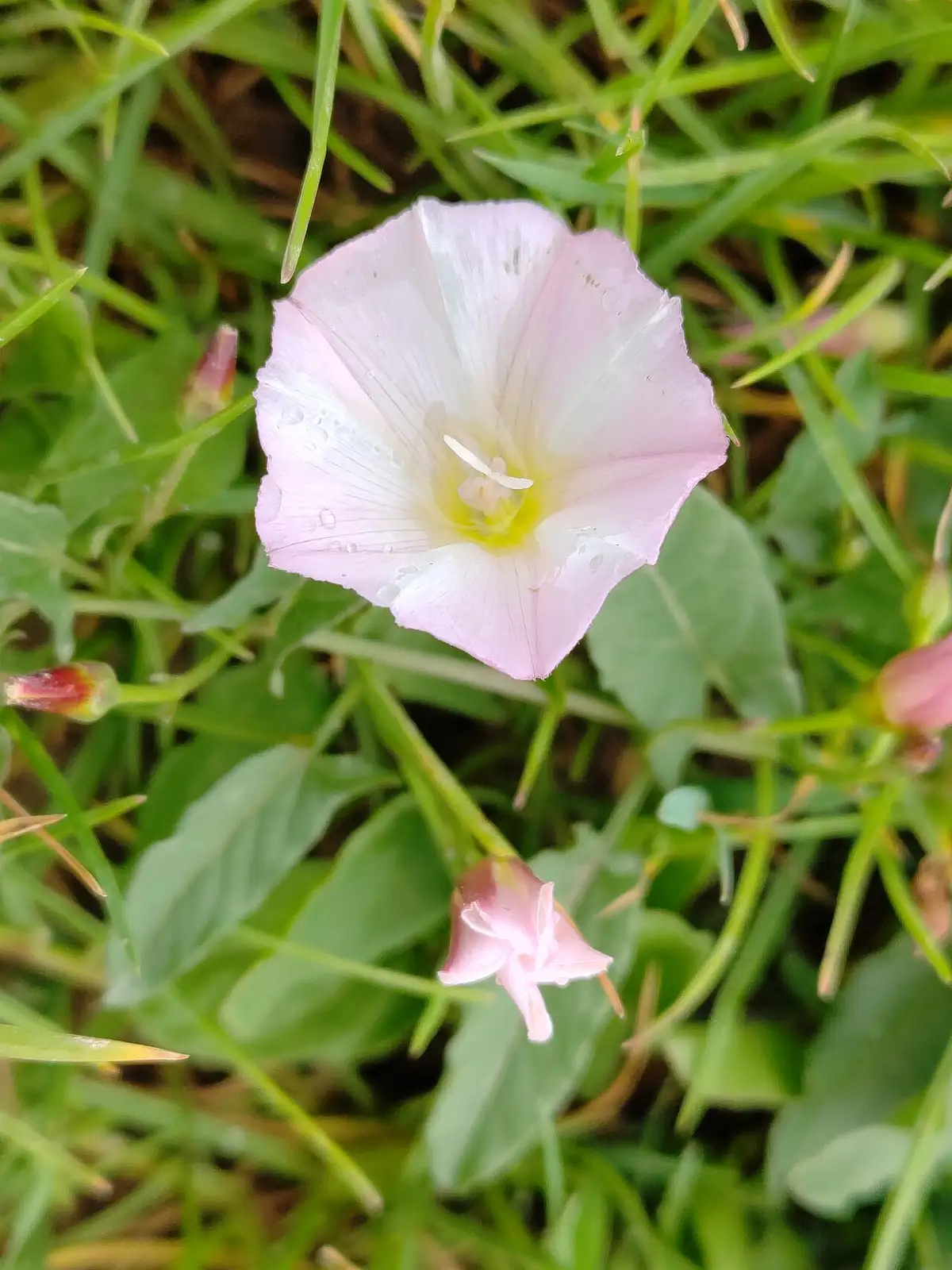
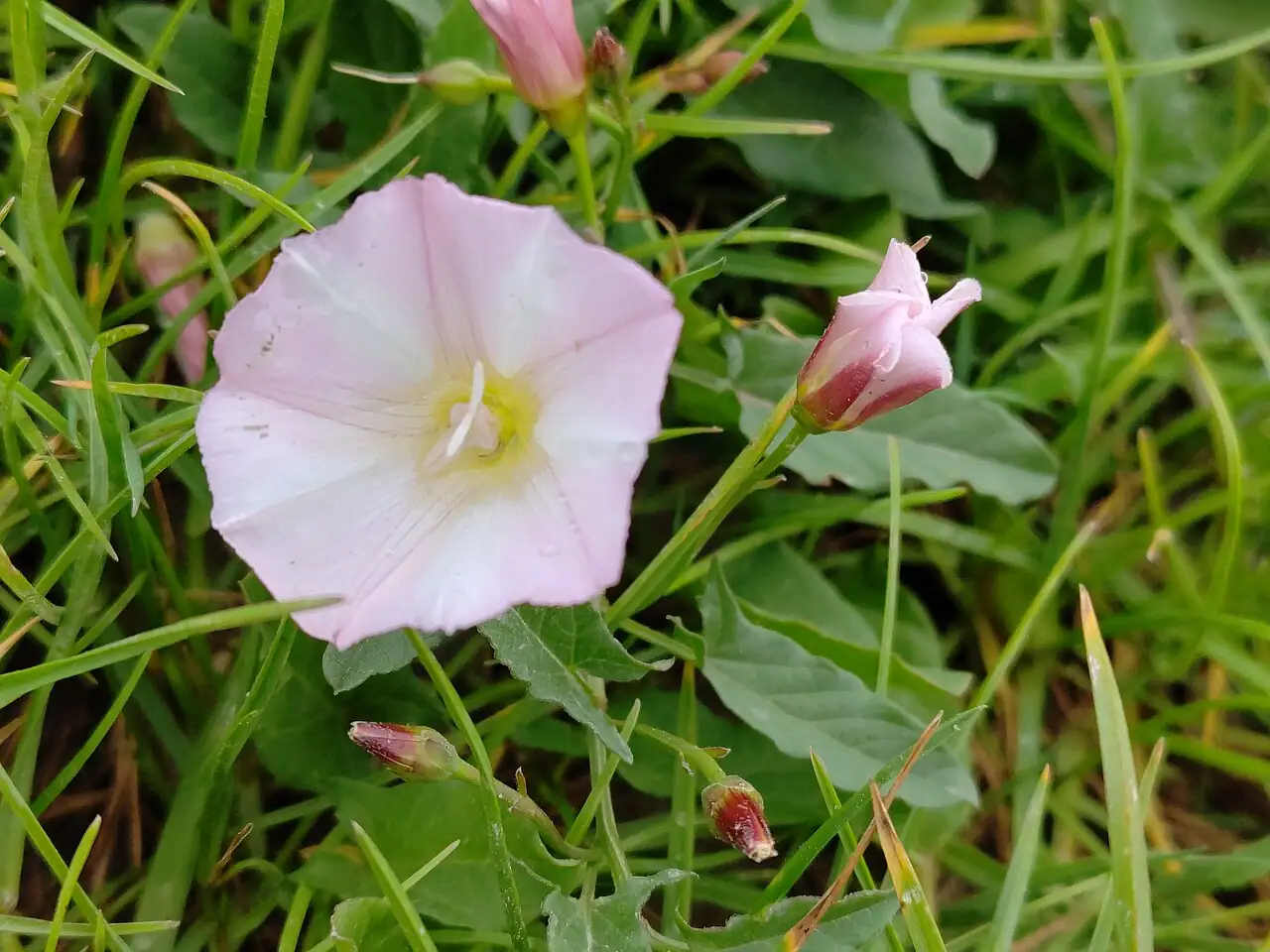
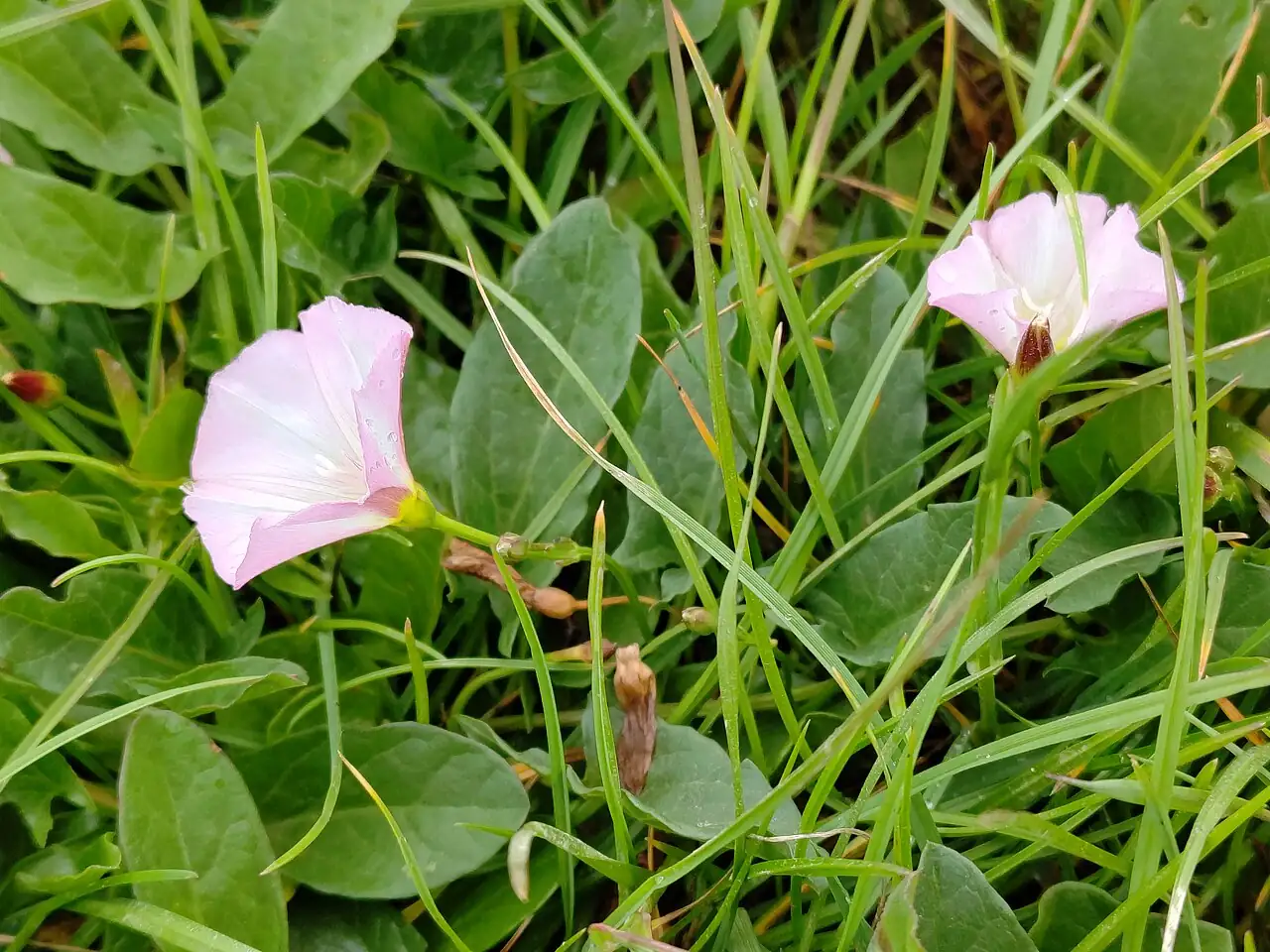
- Flower: Produces axillary trumpet/funnel-shaped flowers with 5 shallow lobes. Flowers are usually white or pale pink, often with darker pink-red stripes. After flowering, it forms a small rounded capsule (fruit) containing seeds.
- Flowering Season: June–August (often longer in mild climates)
- Growth Habit: Creeping and twining perennial that sprawls along the ground or climbs over other vegetation; spreads strongly via extensive roots/rhizomes and also by seed.
Environment
Sunlight
Full sun to partial shade; flowering is strongest in bright light.
Temperature
Grows best in mild conditions around 15–25°C (59–77°F). Established plants tolerate a wide range outdoors; heat may reduce flowering.
Humidity
Adaptable; prefers moderate moisture but handles dry spells once established.
Soil
Tolerates many soil types, including poor soils, as long as drainage is decent. If unintentionally cultivated, a well-drained loamy, humus-rich soil supports vigorous growth (which is usually not desirable).
Placement
Typically found outdoors in fields, lawns, borders, disturbed ground, roadsides, and ditch edges. Not recommended for intentional garden planting due to invasive behavior.
Hardiness
Very cold-hardy; roughly USDA Zone 3–9 (winter minimums about −40 to −1°C / −40 to 30°F depending on local conditions).
Care Guide
Difficulty
Easy to survive, hard to control. It’s rarely grown intentionally because it spreads aggressively and resprouts from deep roots even after repeated pulling.
Buying Guide
Usually not sold on purpose. If you see bindweed in nursery pots or new plants, avoid buying them. Check for thin twining stems and deep, pale/white roots; contaminated soil can re-infest your garden.
Watering
Generally needs no extra watering where it naturally occurs. If you’re trying to manage or remove it, avoid frequent light watering that can encourage fresh shoots; instead, water your desired plants appropriately while consistently removing bindweed regrowth.
Fertilization
Do not fertilize bindweed—added nutrients typically make it grow faster and spread more.
Pruning
Cut or pull shoots repeatedly (often weekly, or whenever new growth appears) to weaken the plant over time by exhausting root reserves. Remove as much root as possible, but expect regrowth from fragments.
Propagation
Spreads by seed and by creeping roots/rhizomes; even small root pieces can regenerate into new plants.
Repotting
Not recommended as a potted plant. If found in a container, discard contaminated soil and clean the pot thoroughly to prevent regrowth from leftover root fragments.
📅 Seasonal Care Calendar
Spring–summer: remove shoots promptly and consistently, especially before flowering and seed set. Late summer–fall: keep removing regrowth—this is when roots store energy for the next year; preventing seed production helps reduce future outbreaks.
Pests, Diseases & Safety
Common Pests & Diseases
Generally quite resilient. It may host sap-sucking pests such as aphids and spider mites. In gardens and crops, its dense tangles can reduce airflow and vigor of nearby plants.
Toxicity
Not commonly treated as a classic toxic houseplant, and it has been used as livestock forage in some contexts. However, it’s also considered undesirable in pastures and can vary in suitability by region and animal species—avoid intentional feeding unless you have reliable local agricultural guidance.
Culture & Symbolism
Symbolism: Often linked with persistence (and a bit of “entanglement”) because it twines, clings, and keeps returning even after removal attempts.
History & Legends: Long recorded in agriculture as a notorious, persistent field weed, largely due to its deep, spreading root system and the ability of its seeds to remain viable for years.
Uses: Occasionally grazed or used as forage for cattle and sheep in the wild, but far more commonly viewed as an invasive weed that competes with crops and garden plants.
FAQ
Why does field bindweed keep coming back after I pull it?
Because most of the plant’s strength is underground. It has a deep, spreading root/rhizome system, and even small leftover root pieces can resprout quickly.
When does it flower?
Most commonly from June to August, though it can bloom for longer in mild climates. Flowers are typically white to pale pink and often striped.
Is it a good garden plant?
Usually not. It spreads aggressively, twines around neighboring plants, and can form dense mats that compete for light, water, and nutrients.
Fun Facts
- Its flowers look like miniature morning glories, which is why it’s sometimes called “wild morning glory.”
- It spreads in two powerful ways: by seed and by regenerating from broken root fragments—making it famously hard to eradicate.
- It thrives in disturbed places like field edges, roadsides, and ditches, often arriving quietly and then spreading fast.
- Despite occasional forage use, its reputation is mainly that of a persistent agricultural and garden weed.