


Plant Features
- Size: Up to 20–30 m (66–98 ft) tall.
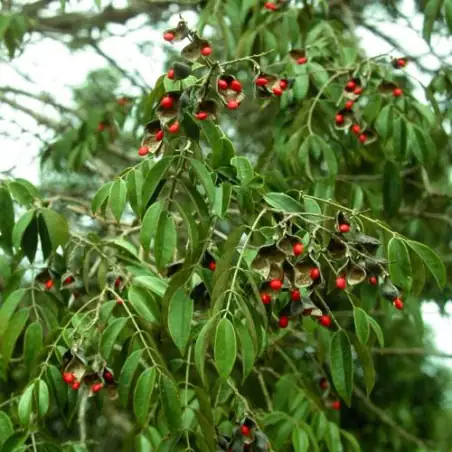
- Foliage: Leaves are odd-pinnate (feather-like compound leaves) with a terminal leaflet, giving the crown a refined, airy texture.
- Flower: Flowers appear in drooping panicles at branch tips or from the leaf axils. Blooms are loosely spaced and can be lightly fragrant; the calyx is bell-shaped with shallow lobes, and the corolla is white to pale lavender.
- Flowering Season: April–May (spring).
- Growth Habit: Medium to large tree with an upright, dignified silhouette; reported as evergreen to deciduous depending on local climate conditions.
Environment
Sunlight
Full sun to light shade; best flowering and seed set usually occur with at least 6 hours of sun per day.
Temperature
Prefers mild temperate to subtropical conditions. Roughly suitable for 5–30°C (41–86°F); young trees should be protected from severe frost.
Humidity
Enjoys consistently moist, woodland-like conditions and higher ambient humidity; avoid prolonged hot, dry exposure.
Soil
Deep, fertile, humus-rich, well-drained soil; performs especially well in loam enriched with organic matter.
Placement
Outdoors only in most situations—ideal as a landscape specimen, shade tree, or avenue/street tree in parks and large gardens.
Hardiness
Approximately USDA Zone 8–10; not reliably frost-hardy in very cold regions.
Care Guide
Difficulty
Moderate. Once established it’s fairly resilient, but it looks and flowers best with fertile soil and steady moisture rather than dry, exposed sites.
Buying Guide
Pick a healthy young tree with a straight central leader, evenly spaced branches, and an uninjured trunk. Avoid stock with circling roots or a dried-out root ball; deeper containers are often better for developing a strong root system.
Watering
During the first 1–2 years, water regularly so the soil stays evenly moist (never soggy). After establishment, water during extended dry spells. Mulch about 5–8 cm (2–3 in) to conserve moisture and buffer root temperatures.
Fertilization
In spring, top-dress with compost or use a balanced slow-release fertilizer as directed. Don’t overdo nitrogen, which can push leafy growth while reducing flowers and seed set.
Pruning
Prune in late winter to early spring to remove dead/damaged/crossing branches and to maintain a strong leader. Avoid heavy pruning during active growth.
Propagation
Usually grown from seed. Because seeds have a hard coat, scarify (nick or sand) and soak before sowing. Keep warm and evenly moist until germination.
Repotting
Not a long-term container plant. In nursery pots, move up one size in spring when roots fill the pot, and minimize disturbance to the main root system.
📅 Seasonal Care Calendar
Spring (Mar–May): plant, lightly feed, keep evenly moist, enjoy flowering. Summer (Jun–Aug): mulch, water during heat/drought, monitor pests. Autumn (Sep–Nov): ease off watering as temperatures fall; collect mature seeds if desired. Winter (Dec–Feb): structural pruning; protect young trees where hard frosts occur.
Pests, Diseases & Safety
Common Pests & Diseases
Sapwood is less decay-resistant and can be more vulnerable to wood-boring insects than the heartwood. Keep the tree vigorous (good watering and soil care), inspect for borer holes/frass/dieback, prune out affected wood, and follow local recommendations for borer management if needed.
Toxicity
Not clearly documented in the provided source. As a sensible precaution, treat the seeds as non-edible—avoid ingestion and keep them away from small children and pets.
Culture & Symbolism
Symbolism: Often linked with longing and remembrance, echoing the traditional “love-bean” symbolism associated with bright red seeds.
Uses: Grown mainly as an ornamental shade, street, and park tree for its elegant form, lightly fragrant spring bloom, and showy red seeds. The wood is hard, fine-textured, and glossy—heartwood is more decay-resistant, while sapwood is less durable and more insect-prone—so it’s prized for carving, crafts, and quality furniture.
FAQ
Does Hose’s ormosia need full sun?
It tolerates light shade, but for the strongest flowering and best seed display, aim for full sun or at least 6 hours of direct light per day.
Why aren’t my seeds sprouting?
The seeds have a very hard coat. Scarify (nick/sand) and soak them before sowing, then keep the medium warm and evenly moist until germination.
Fun Facts
- Landscapers value it for an upright, dignified silhouette that works beautifully for shade and avenue planting.
- The glossy bright-red seeds are so eye-catching that people often collect them for display.
- Its timber is dense, fine-grained, and naturally glossy—excellent for carving and premium furniture.
- Sapwood is typically less durable and more insect-prone, while heartwood is noticeably more decay-resistant.


