


Plant Features
- Size: Typically 4–6 m (13–20 ft) tall; occasionally up to about 12 m (39 ft), usually forming a rounded crown.
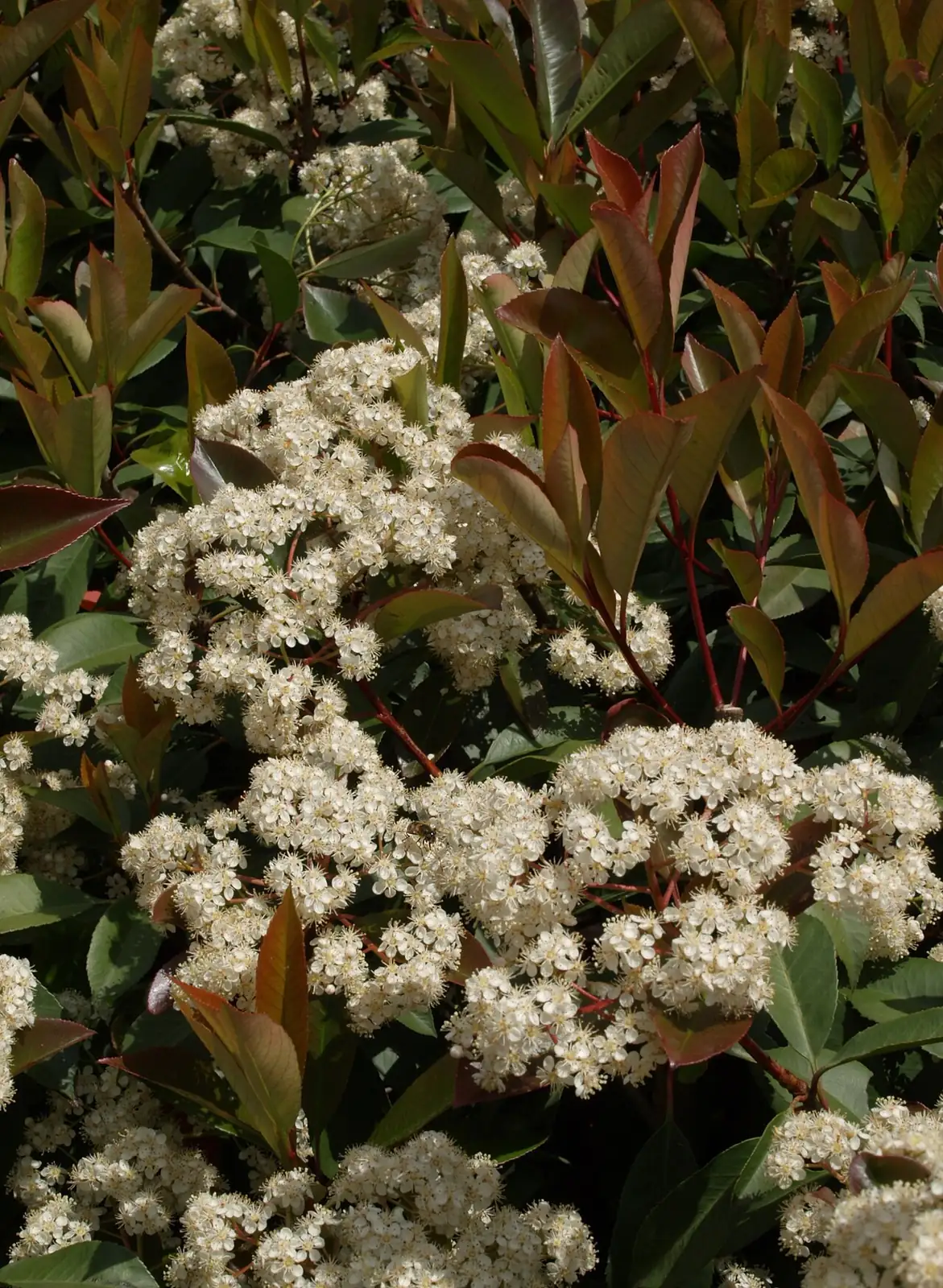
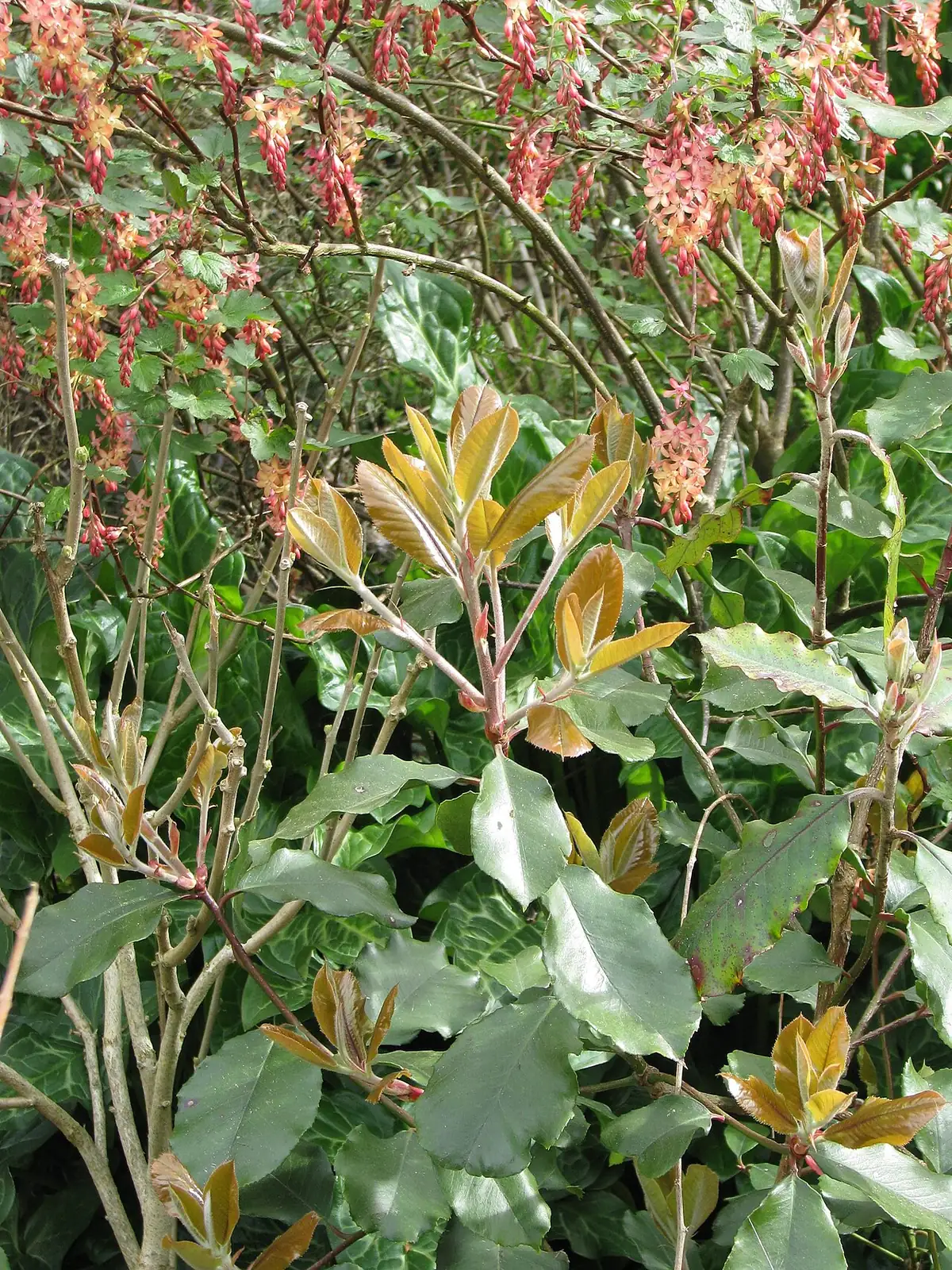
- Foliage: Leaves are leathery, thick, and glossy—typically elliptic to oblong-elliptic. New growth emerges a vivid red, then gradually matures to deep green, creating a dense, leafy canopy that clips well into formal shapes.
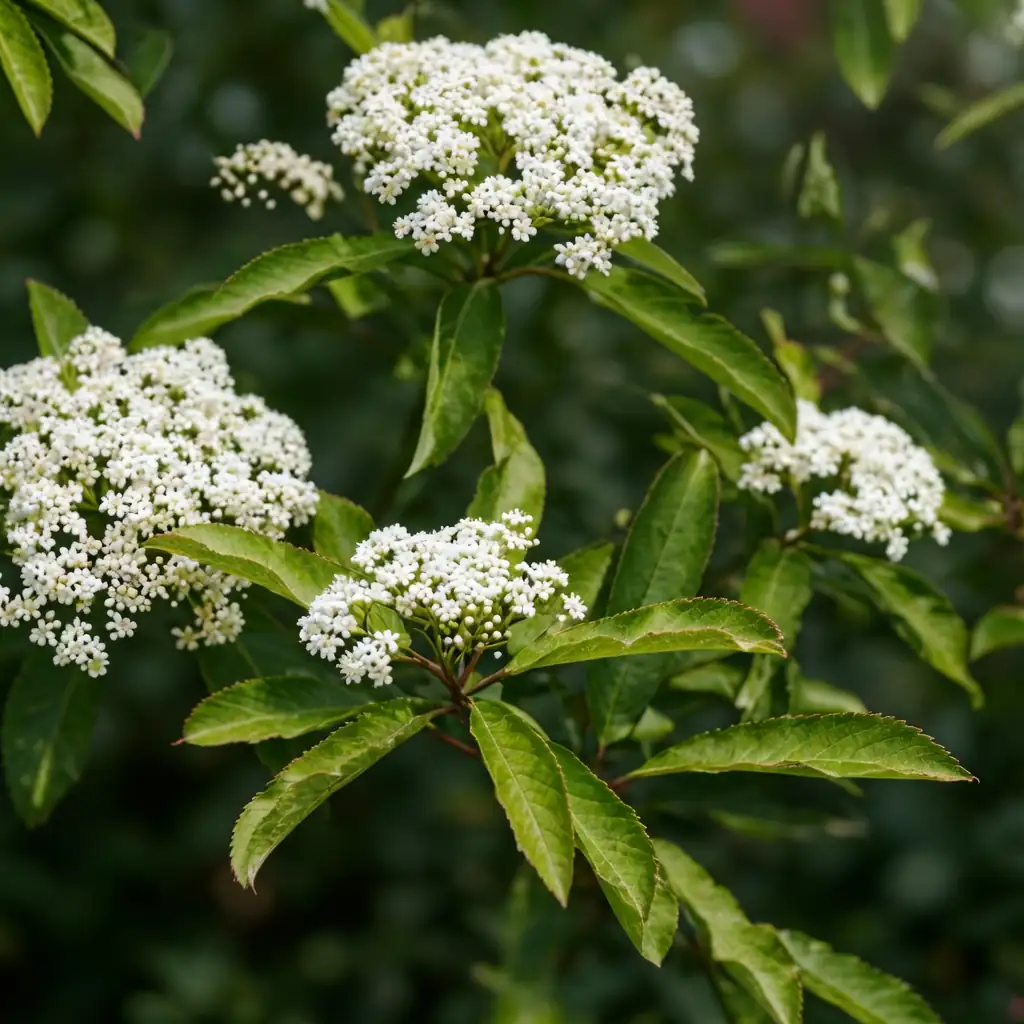
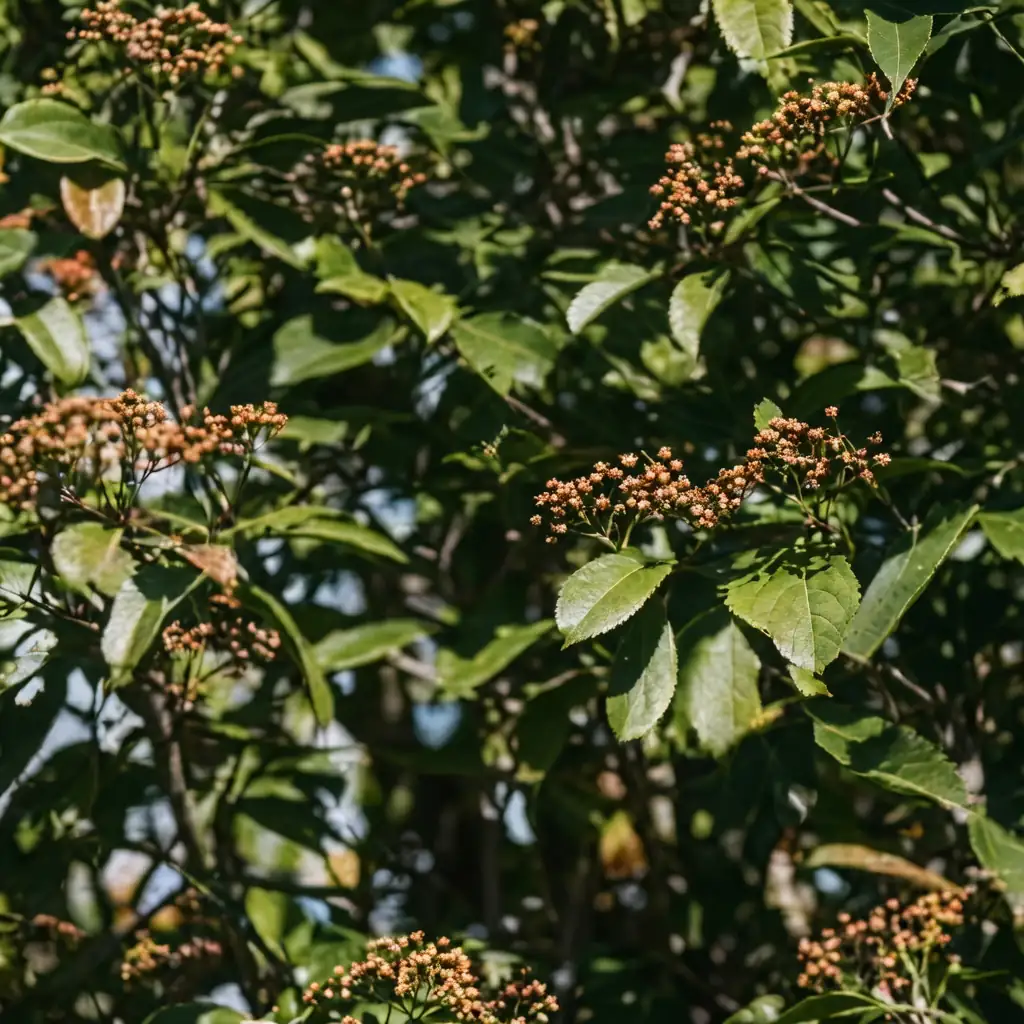
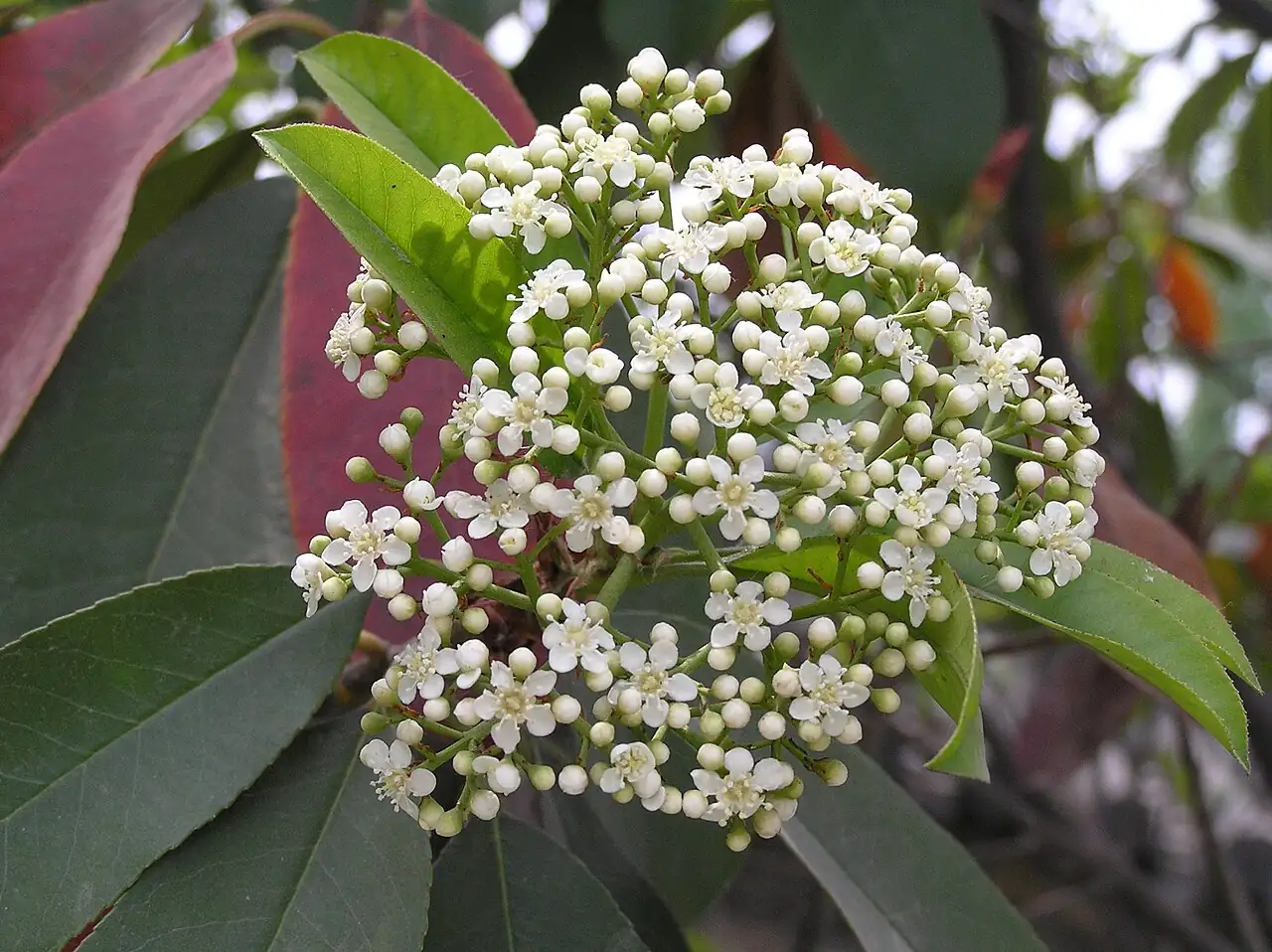
- Flower: In spring it produces terminal, branched clusters packed with many small white flowers. These are followed by round fruits that are red at first and later can darken toward purplish-brown; seeds are smooth and brown.
- Flowering Season: April–May (spring)
- Growth Habit: Evergreen shrub to small tree with a rounded habit; vigorous sprouter that responds strongly to clipping and shaping, making it ideal for hedges.
Environment
Sunlight
Full sun to part shade. Brighter light generally gives stronger red new growth and better flowering.
Temperature
Prefers warm conditions; typical growth is strongest around 15–30°C (59–86°F). Protect from hard freezes, especially when young.
Humidity
Moderate to high humidity suits it best; it’s well adapted to warm, moist climates.
Soil
Adaptable to many soil types (even relatively poor/lean soils) as long as drainage is reasonable. Avoid consistently waterlogged ground.
Placement
Best outdoors in gardens, parks, and streetscapes—especially as hedges, screens, or a small ornamental tree. Also fits well in mixed woodland-style plantings.
Hardiness
Generally suited to USDA Zone 7–10 (approx. -17 to -1°C / 1 to 30°F), though real-world cold tolerance varies with local conditions and plant provenance; not reliably hardy where severe freezes are common.
Care Guide
Difficulty
Easy to moderate: tough, fairly urban/pollution-tolerant, and very forgiving of pruning. Its main weak point is severe cold, and it looks best in warm, humid conditions.
Buying Guide
Pick plants with firm, glossy leaves and healthy red new shoots. Avoid plants with heavy leaf spotting, dieback, or severely root-bound pots. For hedging, choose stock with good basal branching so it fills in from the bottom.
Watering
Water deeply after planting and keep evenly moist while it establishes. Once established, it’s fairly resilient—water during prolonged dry spells. Avoid constantly soggy soil, which can stress roots and worsen disease issues.
Fertilization
Feed in spring with a balanced slow-release fertilizer. In very poor soils, a light follow-up feed in early summer can help maintain strong growth. Avoid heavy nitrogen late in the season, which can push soft new shoots just before cold weather.
Pruning
Prune after flowering to keep a neat shape and encourage fresh, colorful new growth. It tolerates hard clipping and can regenerate well from older wood—useful for renovating overgrown hedges.
Propagation
Most commonly propagated from semi-ripe cuttings in summer. Grafting is also used in cultivation for certain horticultural purposes.
Repotting
If container-grown, repot every 2–3 years in spring into a free-draining mix. Step up only one pot size at a time and refresh the top layer annually to keep vigor steady.
📅 Seasonal Care Calendar
Spring: fertilize; enjoy bloom; prune after flowering. Summer: keep moisture steady and take semi-ripe cuttings. Autumn: ease off feeding and avoid heavy pruning. Winter: protect young plants from hard freezes in colder areas.
Pests, Diseases & Safety
Common Pests & Diseases
In humid weather it can develop leaf spot and other foliar diseases—improve airflow, avoid overhead watering, and remove infected leaves. Pests can include aphids, scale insects, and spider mites, especially on stressed plants.
Toxicity
No widely established toxicity is commonly cited for this species, but it’s still best to prevent pets or children from chewing ornamental plants. If ingestion occurs and symptoms appear, seek veterinary/medical advice.
Culture & Symbolism
Symbolism: Often linked with vitality and renewal—thanks to its bright red new growth paired with year-round evergreen structure.
History & Legends: Long cultivated in East Asia as both an ornamental and a practical plant, valued not only for garden use but also for materials historically obtained from its wood and seeds.
Uses: A popular landscape plant for hedges, screens, and small specimen trees—prized for evergreen mass, red flushes of new leaves, spring flowers, and colorful fruit. Historically, the wood has been used for durable items (such as tool handles and wheel parts), and seeds have been pressed for oil used in products like soaps, finishes/paints, and lubricants; in some contexts the timber has been used for heavy-duty applications (e.g., sleepers/ties).
FAQ
Why are the new leaves red, and how can I keep them red longer?
That red color is a normal feature of young growth. To encourage stronger, longer-lasting red flushes, grow it in brighter light (full sun to part sun) and prune lightly after flowering to stimulate fresh shoots; in deeper shade, the red tends to be less intense.
Can Chinese photinia handle shade?
Yes—part shade is fine. But for the densest growth, best flowering, and the most vivid red new leaves, give it a sunnier position.
Fun Facts
- The fiery red flush of young leaves is so showy that a clipped hedge can look like it’s ‘glowing’ in spring and after trimming.
- Its spring flowers are small but numerous, and the following fruits can add seasonal color well into cooler months before darkening.
- It’s often considered relatively tolerant of urban dust and air pollution compared with many ornamental shrubs.
- The wood has a history of use in hard-wearing items like tool handles due to its durability.
- Seeds have been used as a traditional source of oil for soap-making and other industrial-style applications.


