


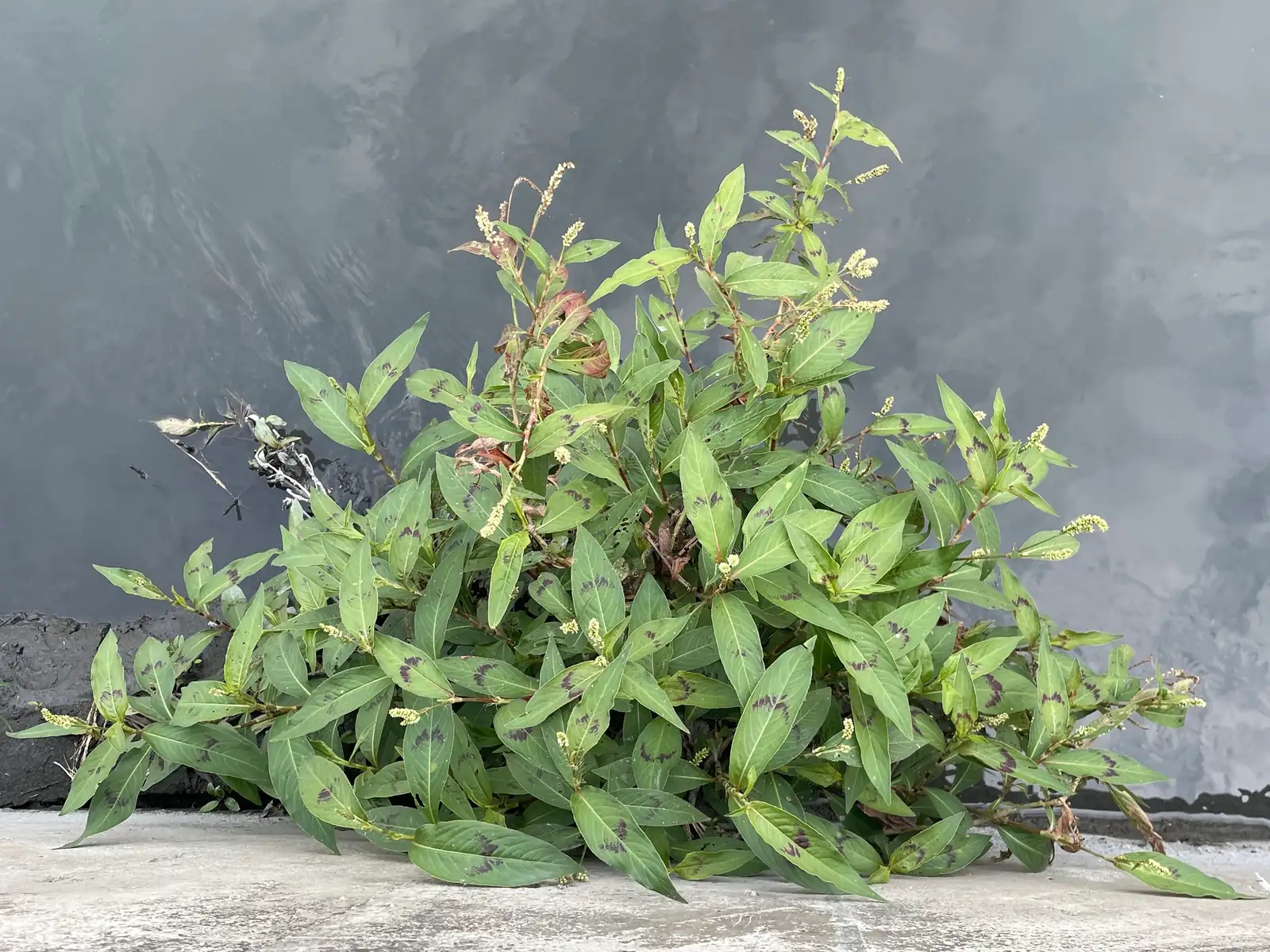
Plant Features
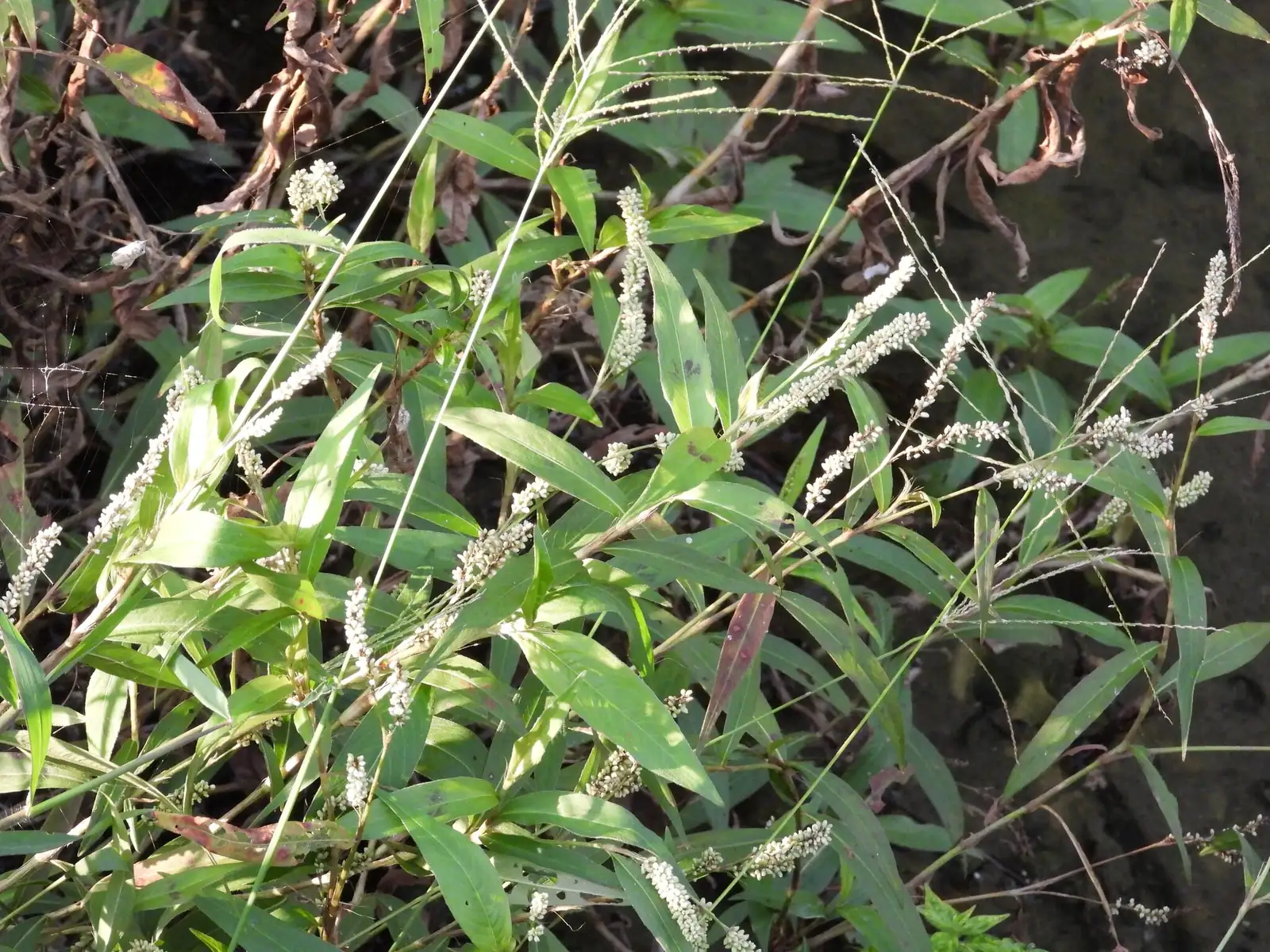
- Size: Typically 60–90 cm (24–35 in) tall; forms upright clumps that can broaden gradually in consistently wet sites.
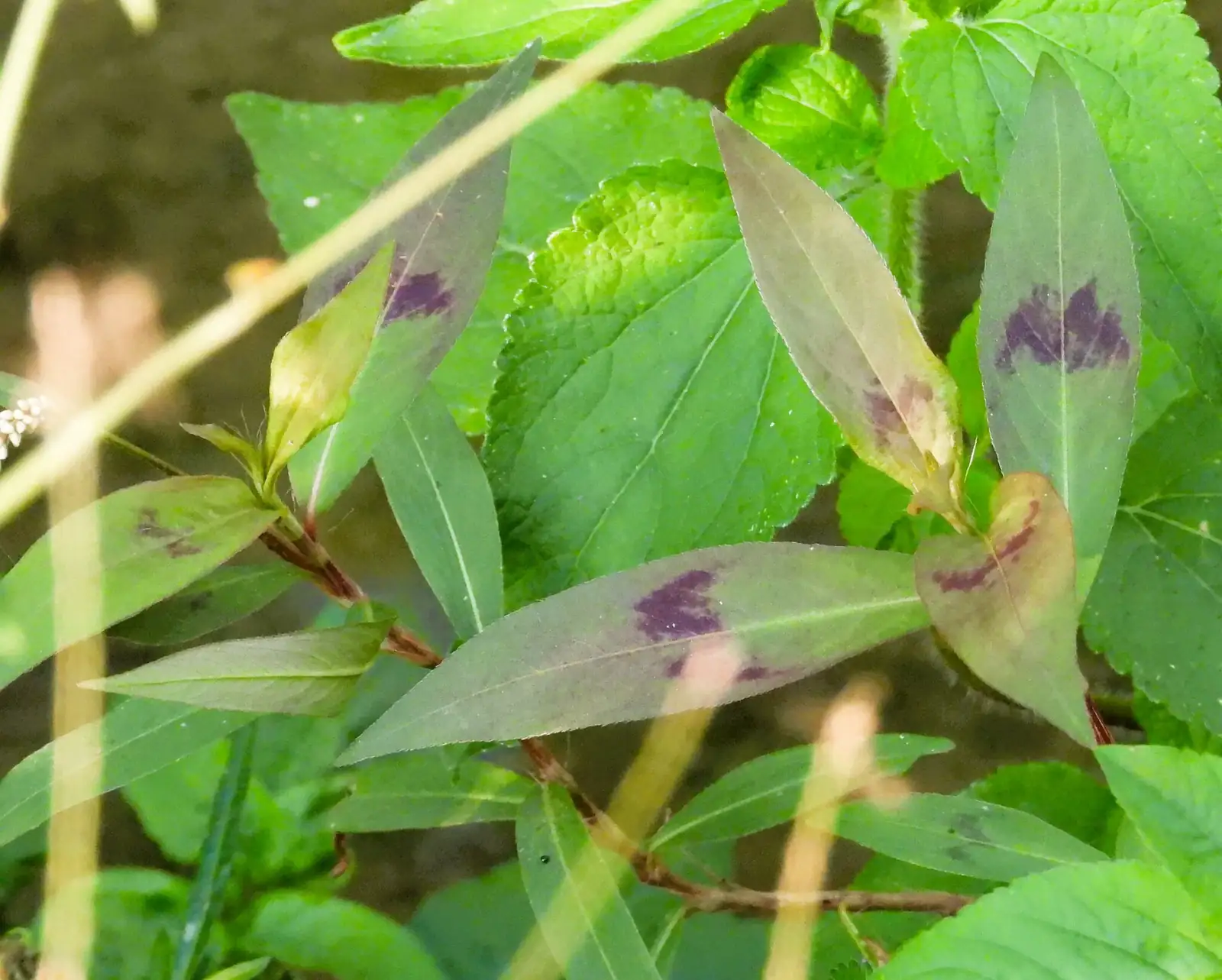
- Foliage: Leaves are narrow and lance-shaped with a long-pointed tip and a tapered base. Surfaces may be sparsely short-hairy, especially along the leaf margins and midrib. A key identifying feature is the papery, tubular stipule sheath (ocrea) at the nodes—densely long-hairy and finishing in conspicuous, coarse bristles, giving the plant its “bearded” look.
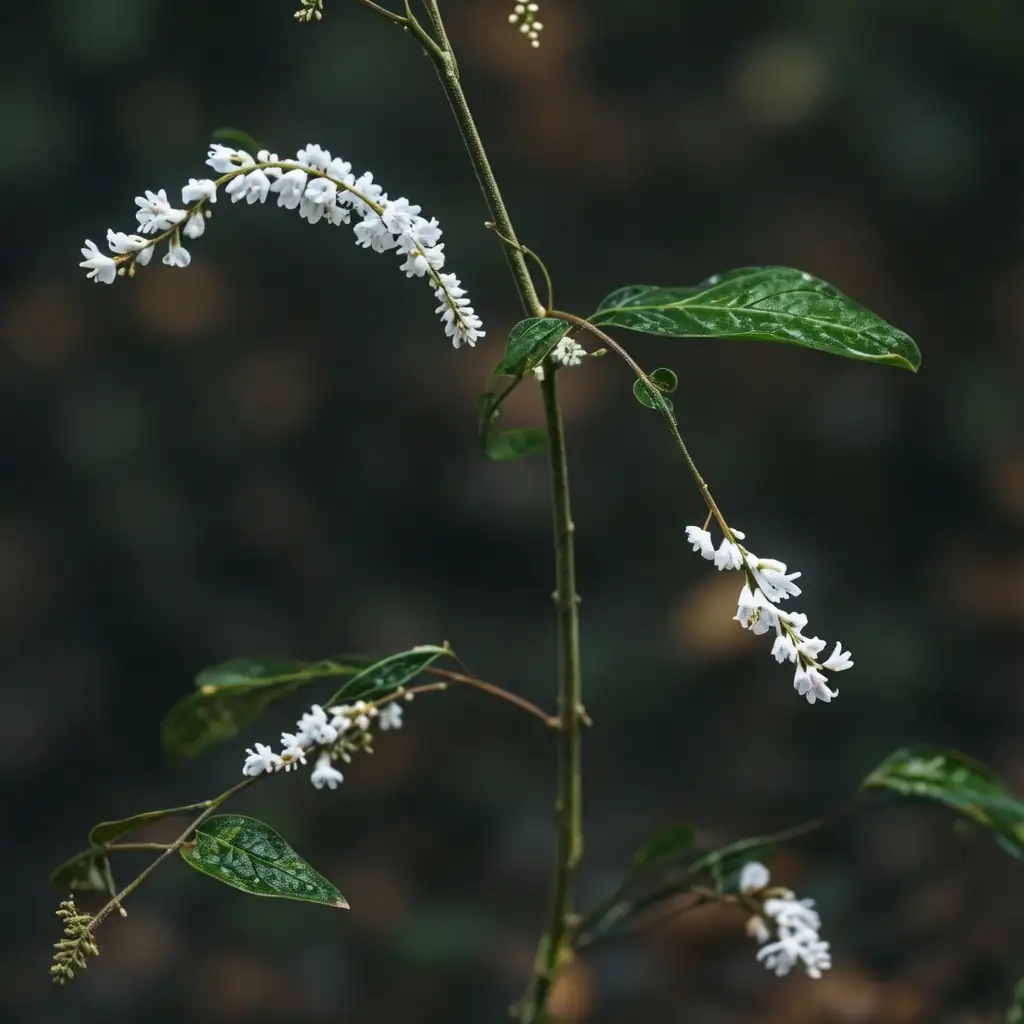
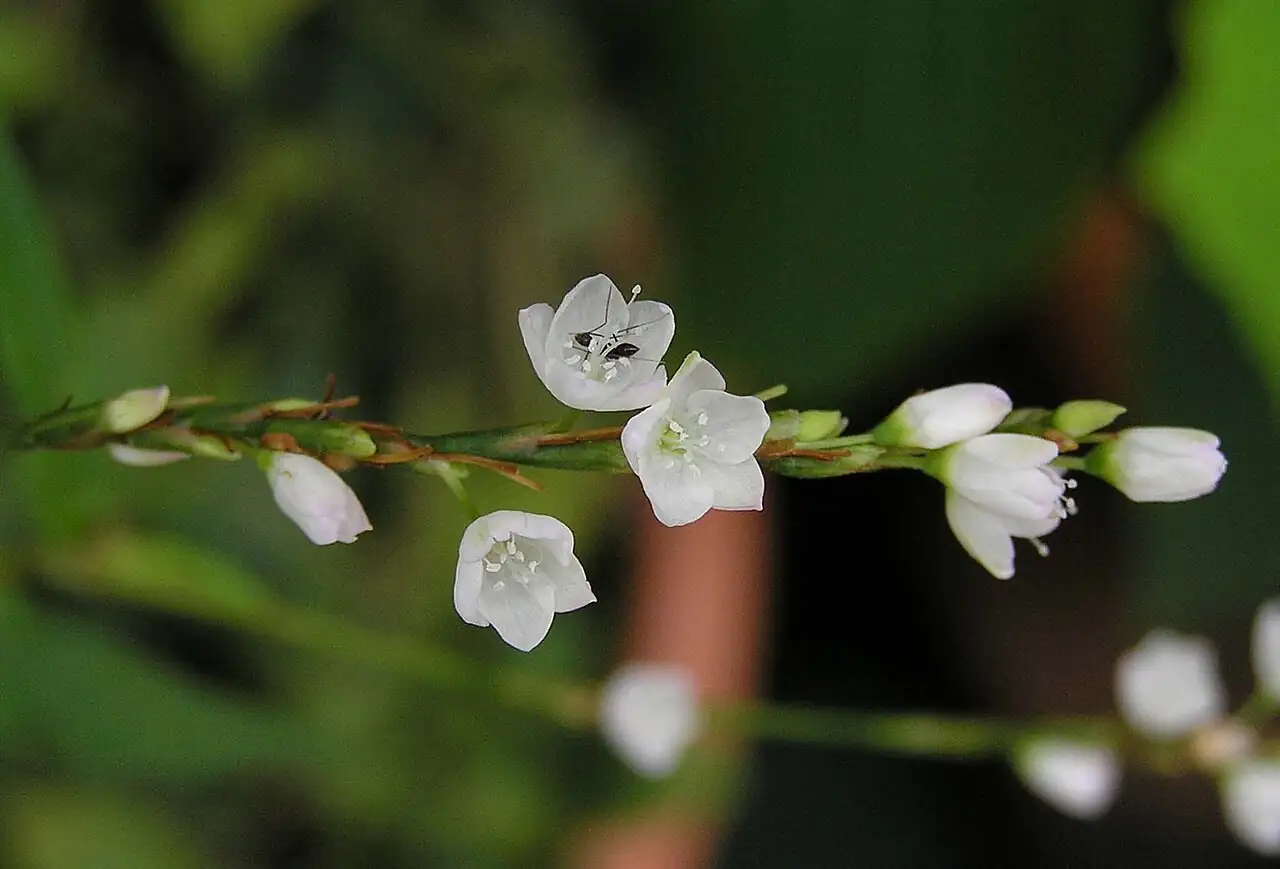
- Flower: Slender flower spikes (terminal or axillary, sometimes slightly branched) carry many tiny flowers with a 5-lobed perianth in white to pale pink. After flowering, it produces egg-shaped, three-angled achenes that mature to a glossy black.
- Flowering Season: July–September
- Growth Habit: Upright, clump-forming perennial herb. Stems are erect and may be sparsely short-hairy or nearly hairless. Especially well adapted to warm, humid habitats and soils that stay wet or even waterlogged.
Environment
Sunlight
Full sun to partial shade; blooms best with more sun as long as the soil stays consistently moist.
Temperature
Prefers warmth; commonly grows well around 18–30°C (64–86°F). In cooler areas, growth slows markedly and plants may need protection from hard frost.
Humidity
Enjoys humid air and consistently wet conditions; tolerant of waterlogging.
Soil
Moist to wet, humus-rich soil is ideal. Also performs in marshy ground and along ditches or pond edges. Aim for evenly moist to wet soil—avoid letting it dry out.
Placement
Excellent for pond margins, rain gardens, wet meadows, ditches, and other seasonally or permanently wet areas; also works as a naturalistic groundcover at damp woodland edges.
Hardiness
Generally suited to mild-winter regions as a warm-temperate to subtropical perennial (about USDA Zone 8–11). Protect from hard frost, especially in colder microclimates.
Care Guide
Difficulty
Easy when given constant moisture; becomes difficult in dry soils or anywhere watering can’t keep up.
Buying Guide
Pick plants with fresh, upright stems and clean, unblemished leaves. Avoid pots that are bone-dry or plants with widespread yellowing—often a sign of drought stress.
Watering
Keep soil consistently moist to wet. For pots, don’t allow the mix to fully dry; setting the container in a shallow tray of water can help during hot weather, but refresh water occasionally so it doesn’t stagnate for long periods.
Fertilization
Usually minimal feeding is needed in rich, wet soils. If growth looks weak, use a balanced fertilizer at half strength every 4–6 weeks during active growth.
Pruning
Deadhead spent flower spikes if you prefer a tidier look. Cut stems down after fruiting or at the end of the season; clear away dead stems in late winter/early spring before new growth starts.
Propagation
Most commonly grown from seed. Sow on the surface of a moist medium and keep evenly wet—light and warmth typically improve germination.
Repotting
If grown in containers, repot in spring once roots fill the pot. Choose a larger container and a moisture-retentive mix to reduce drying between waterings.
📅 Seasonal Care Calendar
Spring: refresh soil/mulch and resume steady watering. Summer: keep constantly moist; flowering begins. Autumn: fruits ripen; collect seed if desired. Winter: cut back dead growth and protect from hard frost in colder areas.
Pests, Diseases & Safety
Common Pests & Diseases
Usually trouble-free in suitable wet conditions. Aphids may appear on tender growth. Leaf spots can occur in stagnant air or overcrowded plantings—thin for airflow, avoid prolonged wet foliage where possible, and remove heavily affected leaves.
Toxicity
No widely documented serious toxicity as an ornamental. As with many Polygonaceae plants, sensitive people may experience mild irritation; it’s best to discourage pets from chewing it.
Culture & Symbolism
Symbolism: Often associated informally with resilience and adaptability, since it thrives in waterlogged soils that defeat many garden plants.
History & Legends: No specific widely recorded legends are strongly associated with this species; it’s best known as a characteristic waterside plant in its native range.
Uses: Primarily an ornamental for wet gardens and naturalistic waterside plantings—pond edges, rain gardens, wetland beds, field margins, and damp woodland understory—appreciated for its airy summer flower spikes and glossy black fruits.
FAQ
When does it flower?
Usually from July to September.
When does it fruit?
Most often from August to October, after the summer flowering period.
How tall does it get?
About 60–90 cm (24–35 in) tall.
Where is it mainly found?
In China it’s recorded from Jiangsu, Zhejiang, Anhui, Fujian, Taiwan, and Yunnan, commonly along watersides, in roadside wetlands, field margins, and damp/open woodland understory.
How do you propagate it?
Most commonly by seed—surface sow on moist media and keep warm and evenly wet for best results.
Fun Facts
- Its ripe fruits are glossy black and distinctly three-angled—an easy ID clue late in the season.
- The bristly stipule sheath (ocrea) at each node is a signature “bearded” feature.
- Because it tolerates waterlogged soil, it’s a natural fit for rain gardens and pond margins.
- In the right habitat it can behave like a flowering groundcover, weaving into naturalistic plantings.


