Plant Features
- Size: Typically 30–60 cm (12–24 in) tall; clumps can spread to about 30–45 cm (12–18 in) wide over time.
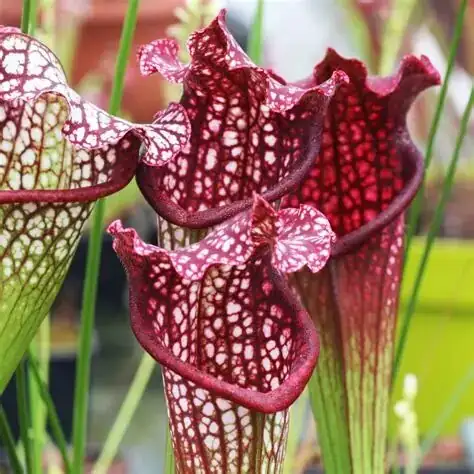
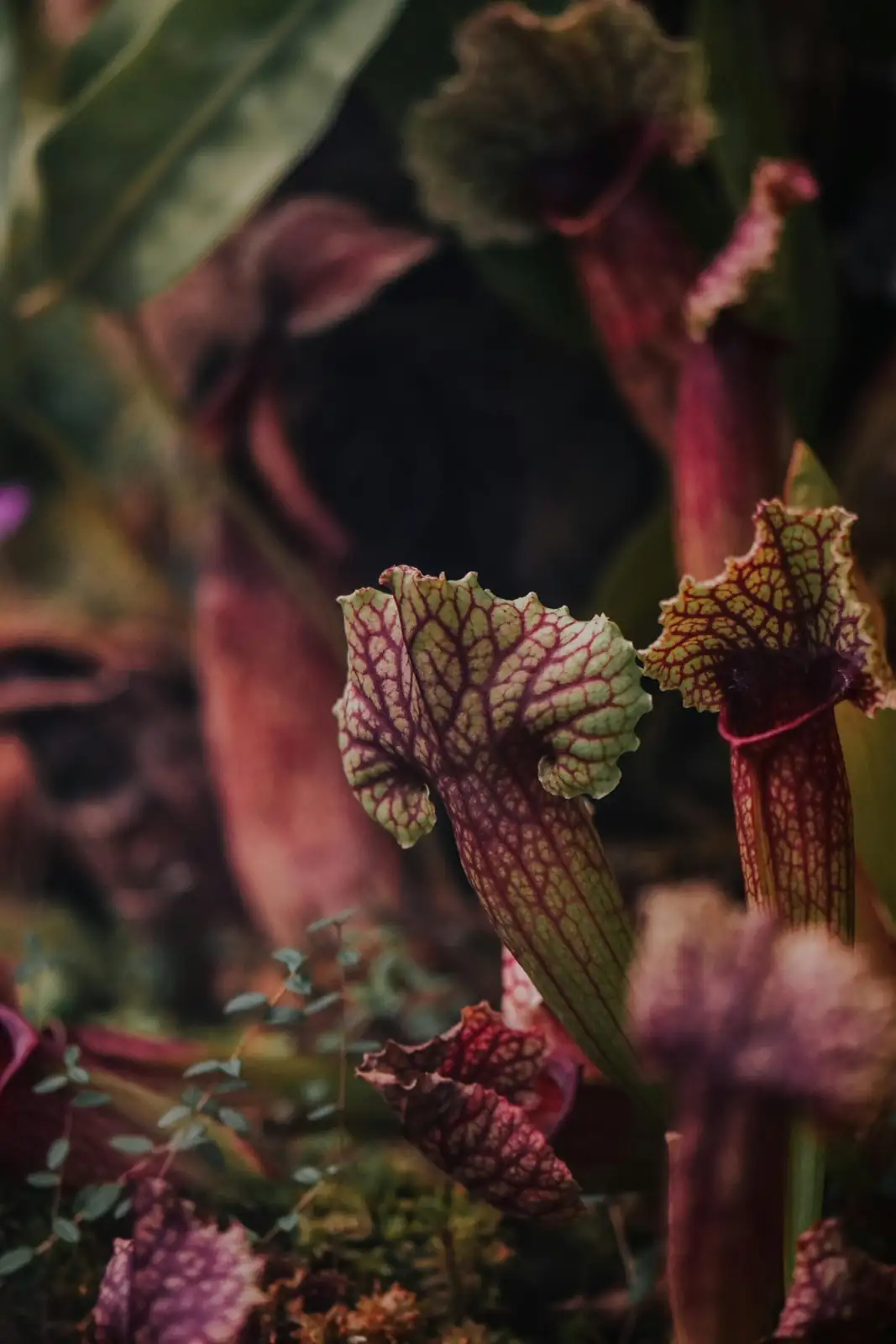
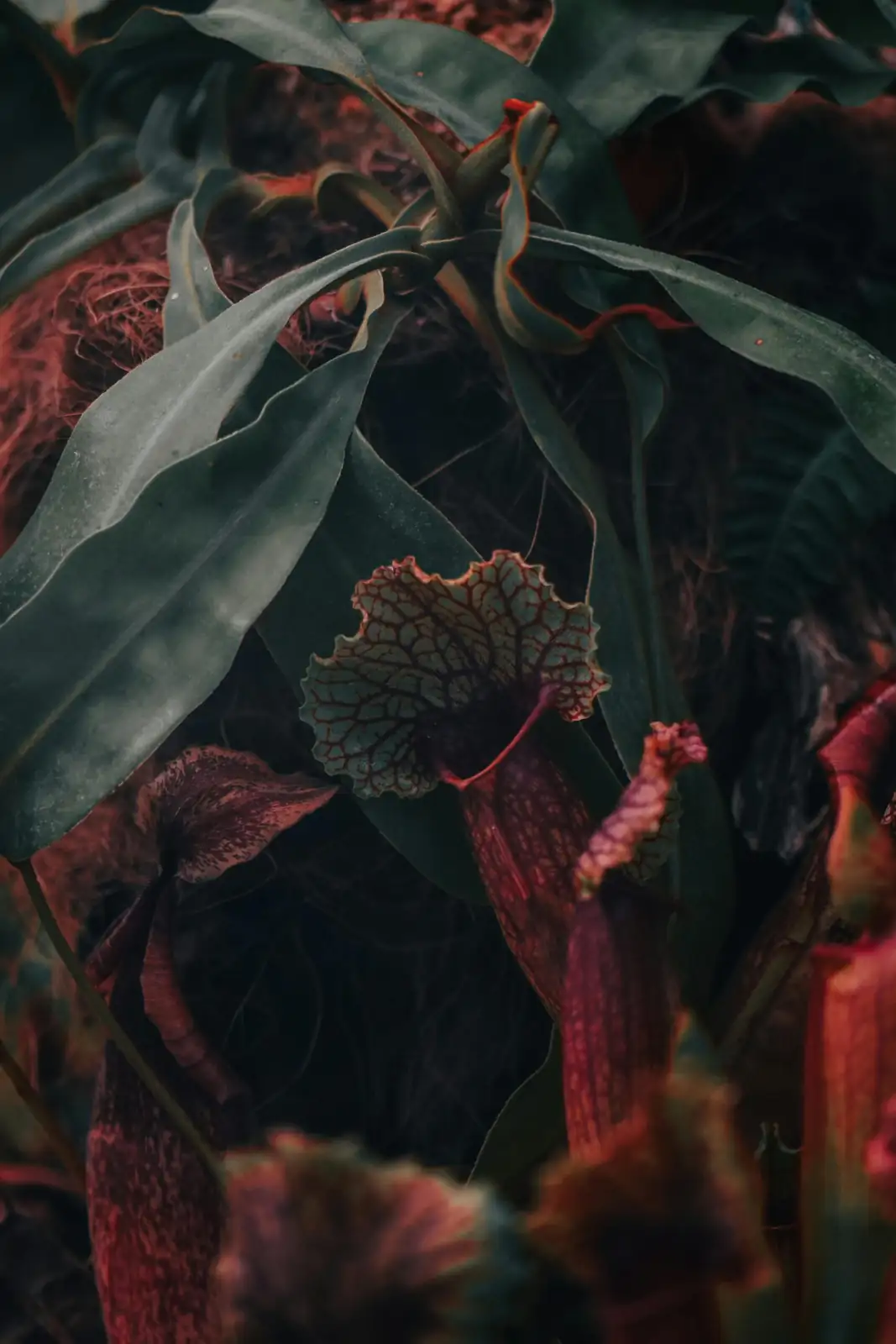
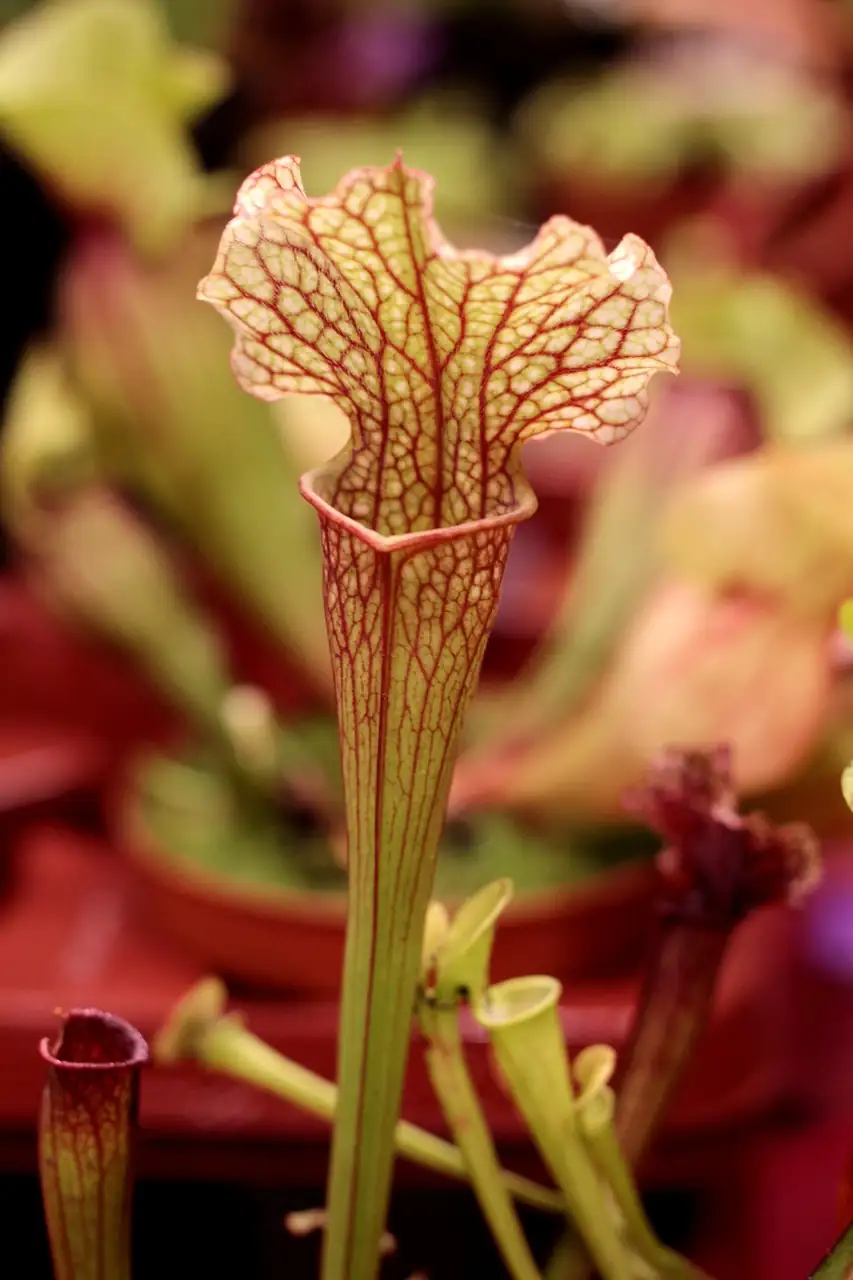
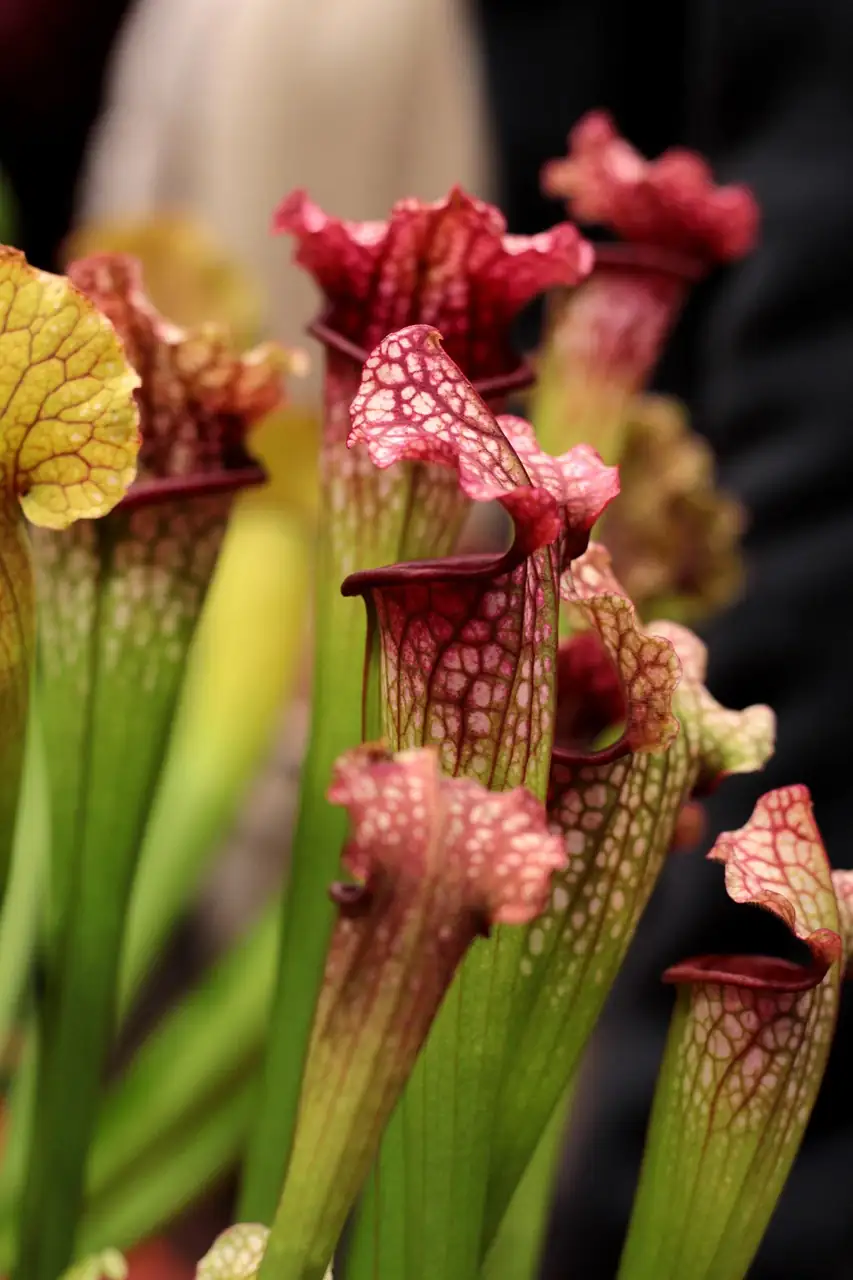
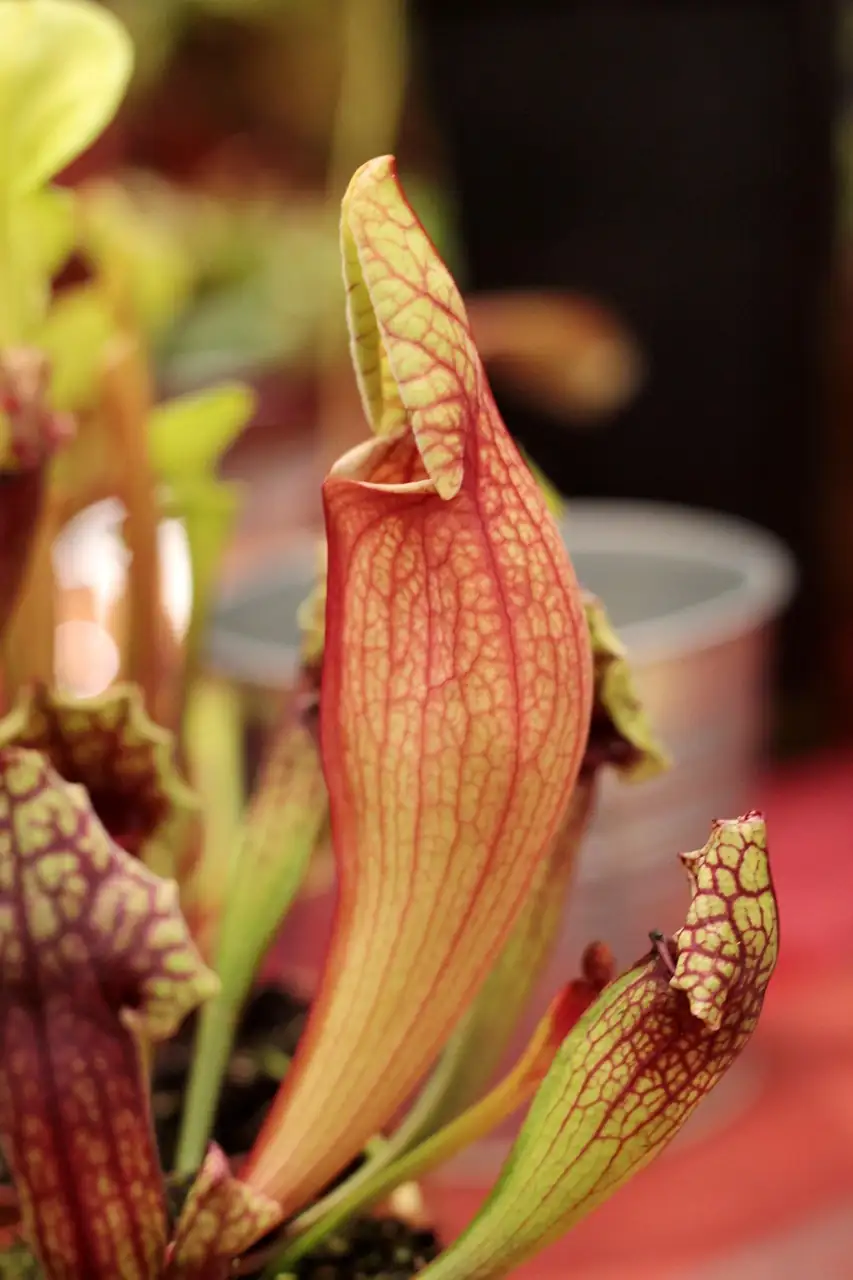
- Foliage: Upright tubular pitchers (modified leaves) with a hooded lid; strong pink to red coloration with contrasting white and red veins. Fresh growth usually shows the best color in strong, direct sun.
- Flower: Nodding, showy red flowers held above the pitchers on tall stems.
- Flowering Season: Spring (often March–May, depending on climate)
- Growth Habit: Clump-forming, upright herbaceous perennial grown from a rhizome; produces seasonal flushes of pitchers.
Environment
Sunlight
Full sun is best: 6–8+ hours of direct sun daily. In very hot climates, a little light afternoon shade can help reduce scorching.
Temperature
Active growth: about 18–32°C (64–90°F). Benefits from a winter dormancy: about 0–10°C (32–50°F) for several weeks.
Humidity
Adaptable; average outdoor humidity is usually fine. Moderate to high humidity around 50–80% is ideal.
Soil
Nutrient-poor, acidic bog mix such as sphagnum peat moss with perlite and/or silica sand. Avoid fertilizer, compost, and limestone-based materials. Keep evenly wet.
Placement
Best outdoors in full sun (patio, balcony, garden bog, or in a water-tray setup). Indoors only under very strong grow lights and with a planned dormancy period.
Hardiness
Generally hardy in USDA Zone 7–9 (approx. -17 to -1°C / 1 to 30°F), though exact hardiness can vary by clone and winter conditions. Container plants may need protection from prolonged deep freezes.
Care Guide
Difficulty
Moderate. Straightforward once the essentials are met: lots of sun, mineral-free water, nutrient-poor bog soil, and a cool winter dormancy.
Buying Guide
Pick plants with firm rhizomes and intact pitchers (minor cosmetic blemishes are normal). Avoid any plant potted in regular potting soil or marketed as needing fertilizer. If you want predictable coloration, confirm it is the named cultivar Sarracenia ‘Bella’.
Watering
Use only rainwater, distilled, or reverse-osmosis water. In the growing season, keep the pot standing in 2–5 cm (0.8–2 in) of water. During winter dormancy, keep the medium just damp—never bone-dry, but avoid waterlogged conditions when freezing temperatures are possible.
Fertilization
Do not fertilize the soil. Outdoors it typically catches enough prey. Indoors (under lights), occasional feeding with small insects is optional; if using fertilizer at all, use only very dilute foliar-only applications (about 1/8–1/4 strength) and sparingly—overfeeding can burn pitchers.
Pruning
Cut away brown, dead pitchers at the base with clean scissors. In late winter/early spring, remove most old dead growth to improve airflow and reduce mold risk.
Propagation
Divide the rhizome in late winter to early spring. Seed can be grown, but seedlings won’t come true to the cultivar—division is the way to keep ‘Bella’ true-to-type.
Repotting
Repot every 1–2 years, ideally in late winter before spring growth. Refresh with a peat-based bog mix; plastic pots help reduce mineral buildup compared with unglazed terracotta.
📅 Seasonal Care Calendar
Spring: flowers and fresh pitchers—full sun and steady water tray. Summer: peak growth—maintain tray water and avoid mineral-rich water. Fall: growth slows—slightly reduce water depth. Winter: provide cool dormancy; keep medium damp and protect potted plants from prolonged deep freezes.
Pests, Diseases & Safety
Common Pests & Diseases
Aphids (especially on flower stalks), scale, mealybugs, thrips, and spider mites can occur—more often indoors. Rhizome or crown rot can develop with poor airflow or when the plant stays cold and waterlogged. Remove dead material promptly and use carnivorous-plant-safe treatments (e.g., insecticidal soap used carefully) when needed.
Toxicity
Generally considered non-toxic to people and pets. The pitchers won’t harm animals, though chewing or swallowing plant parts may cause mild stomach upset in sensitive pets.
Culture & Symbolism
Symbolism: Often linked with fascination, resilience, and nature’s clever engineering—thanks to its elegant insect-trapping pitchers.
History & Legends: Sarracenia are iconic North American carnivorous plants beloved by botanists and collectors. ‘Bella’ is a horticultural cultivar name used for a particularly ornamental, colorful hybrid selection; like other named cultivars, it’s maintained by vegetative propagation rather than seed.
Uses: Ornamental carnivorous plant for bog gardens, patio containers, and specialty collections; also a natural “conversation starter” because of its dramatic pitchers and spring blooms.
FAQ
Can I grow Bella pitcher plant indoors on a windowsill?
Usually not long-term. It needs very strong light and a cool winter dormancy. Indoors it does best under powerful grow lights, plus a planned dormancy period.
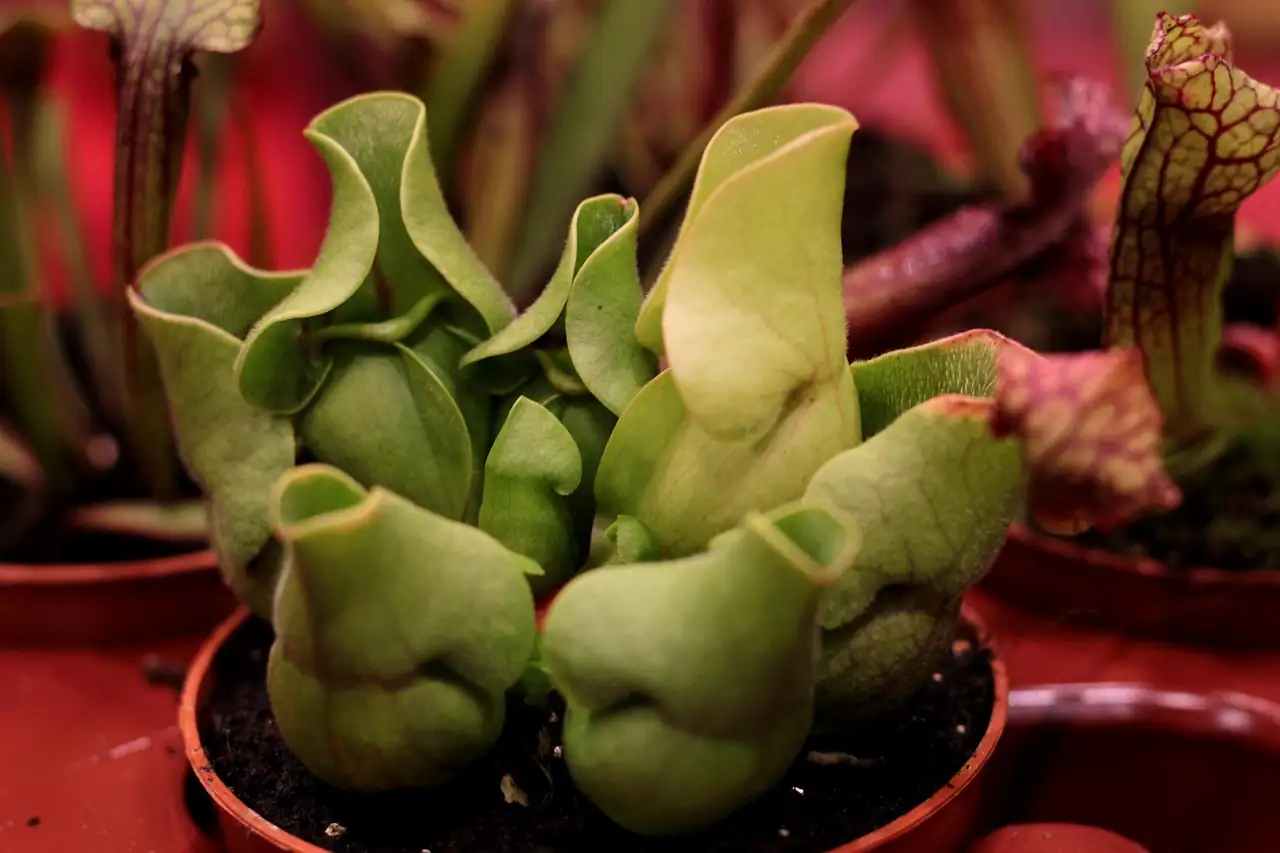
Why are the pitchers staying green instead of turning pink and red?
Low light is the most common reason. Move it into full sun (6–8+ hours daily); new pitchers should color up much more strongly.
Do I need to feed it insects?
Outdoors, no—natural prey is typically enough. Indoors, occasional feeding can help, but never fertilize the soil and don’t overfeed (it can damage pitchers).
Fun Facts
- Each pitcher is a modified leaf that uses nectar, scent, and a slippery interior to guide insects downward.
- Named Sarracenia cultivars like ‘Bella’ must be propagated by division to remain true to the cultivar.