Plant Features
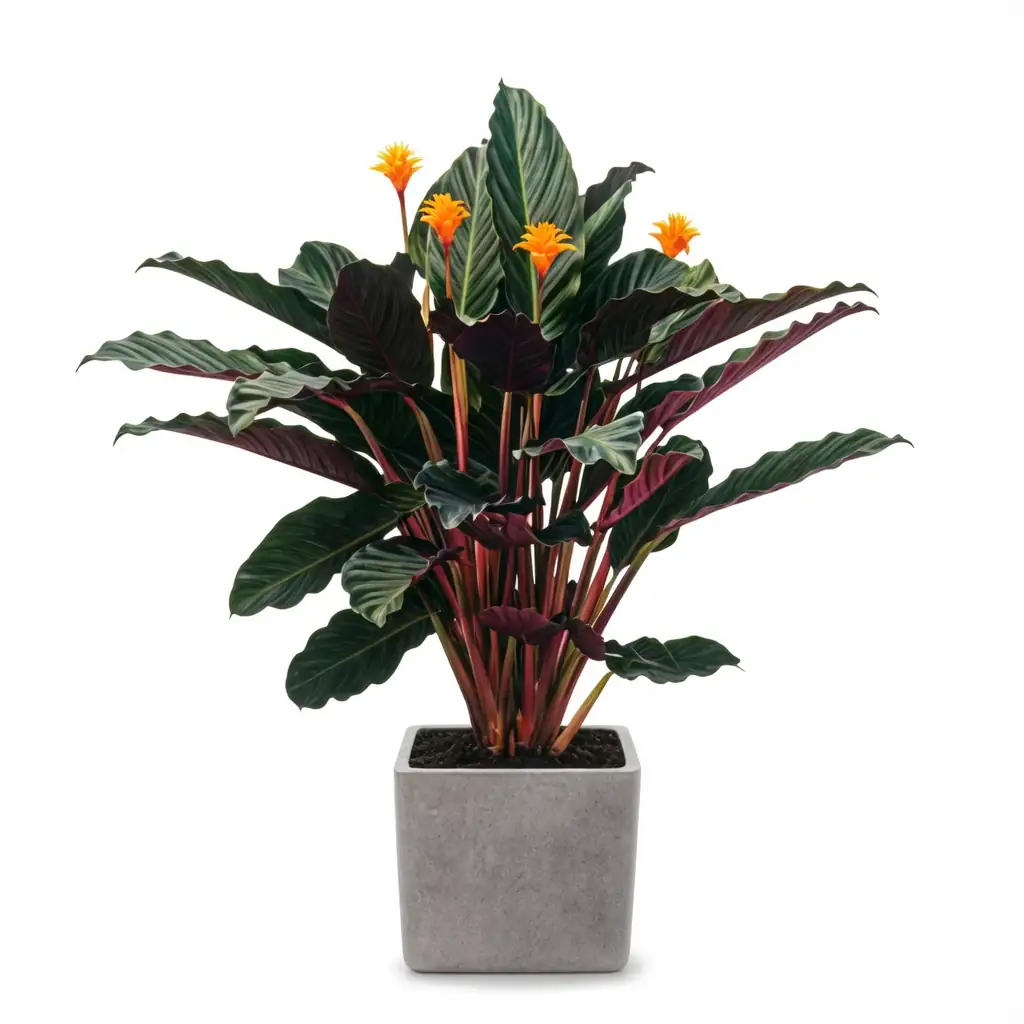
- Size: Typically about 60 × 60 cm (24 × 24 in) as a mature houseplant.
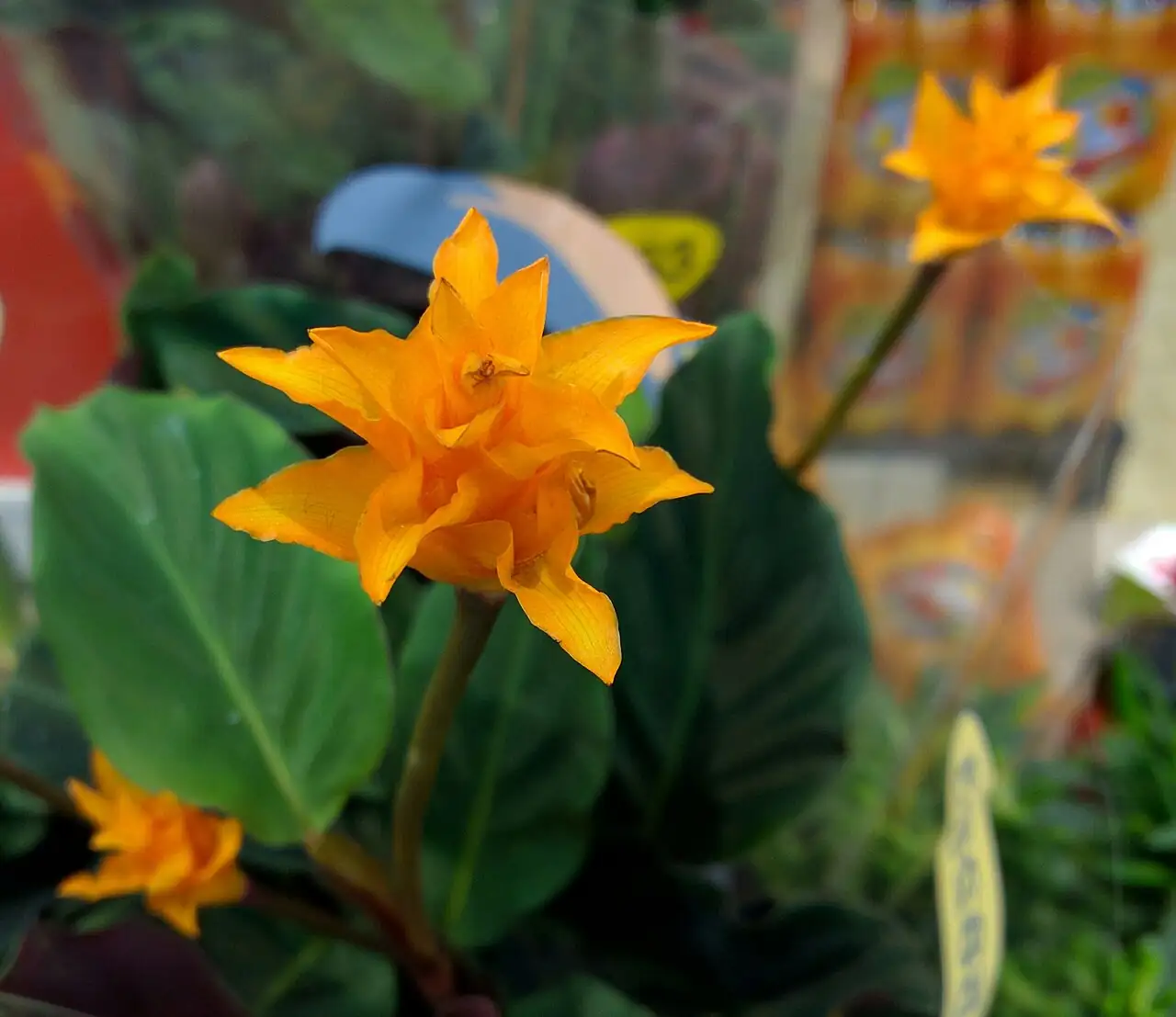
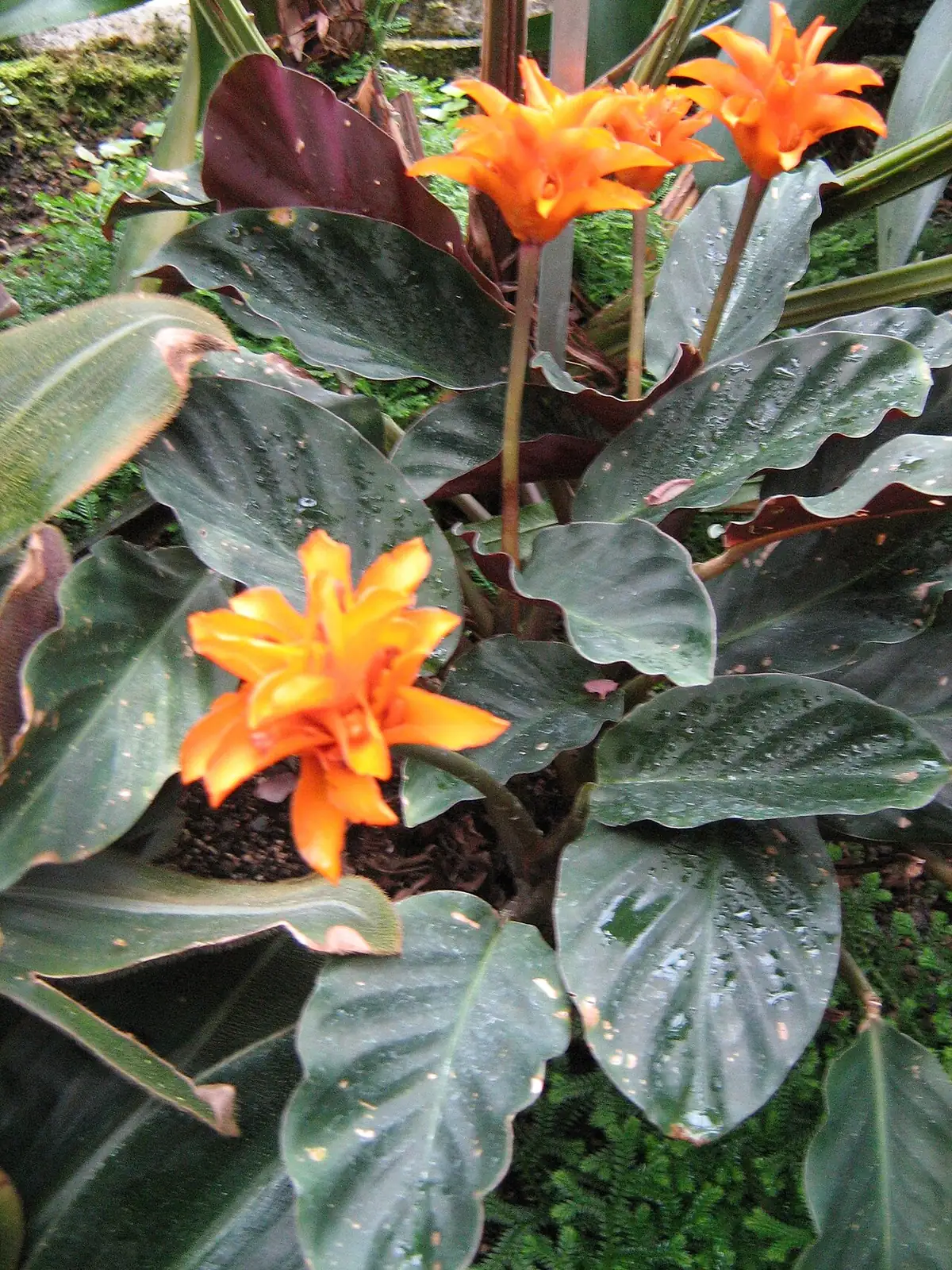
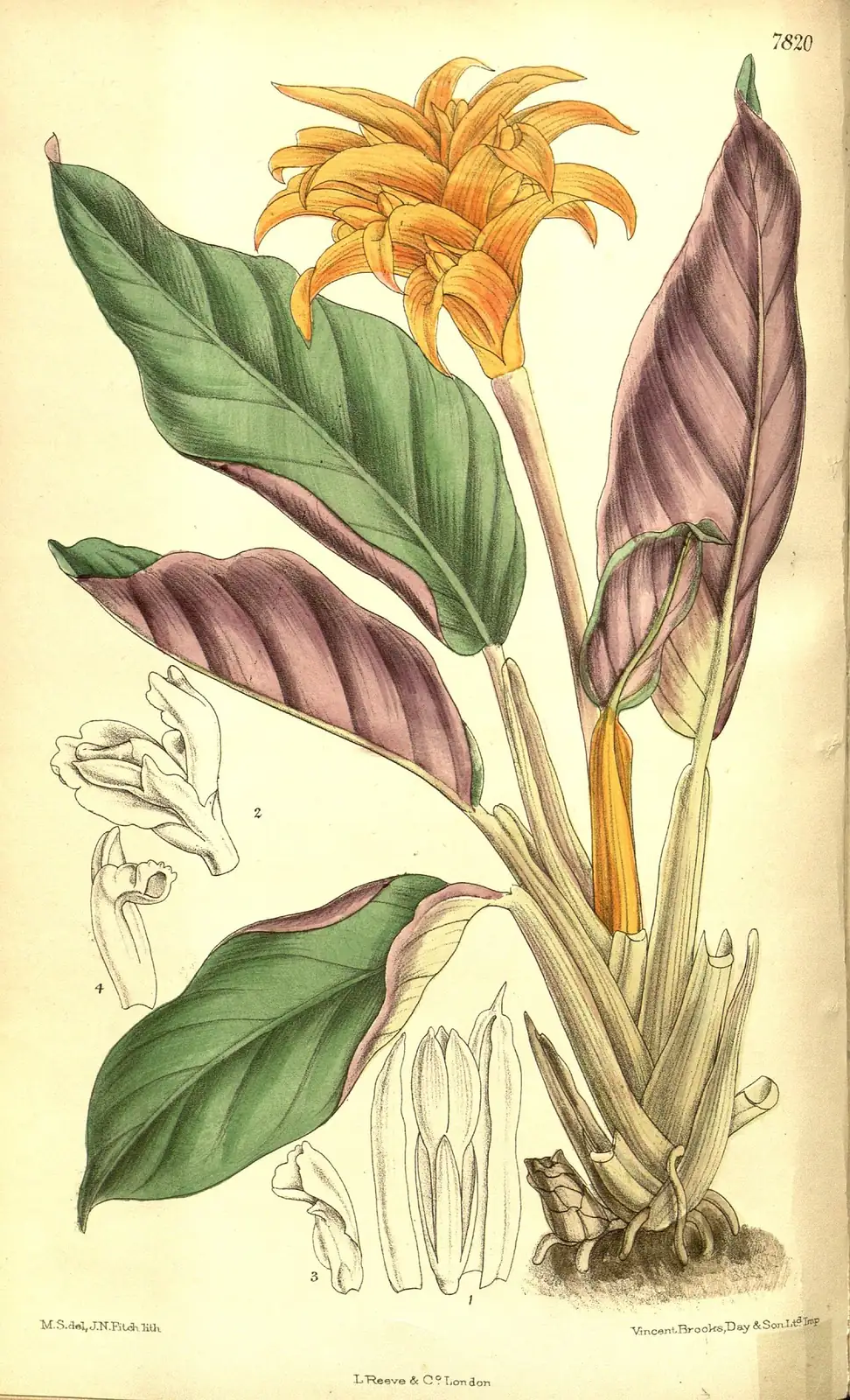
- Foliage: Broad, oval leaves with gentle rippling/puckering; the upper surface is green with a soft metallic sheen, while the underside is deep burgundy to wine-red.
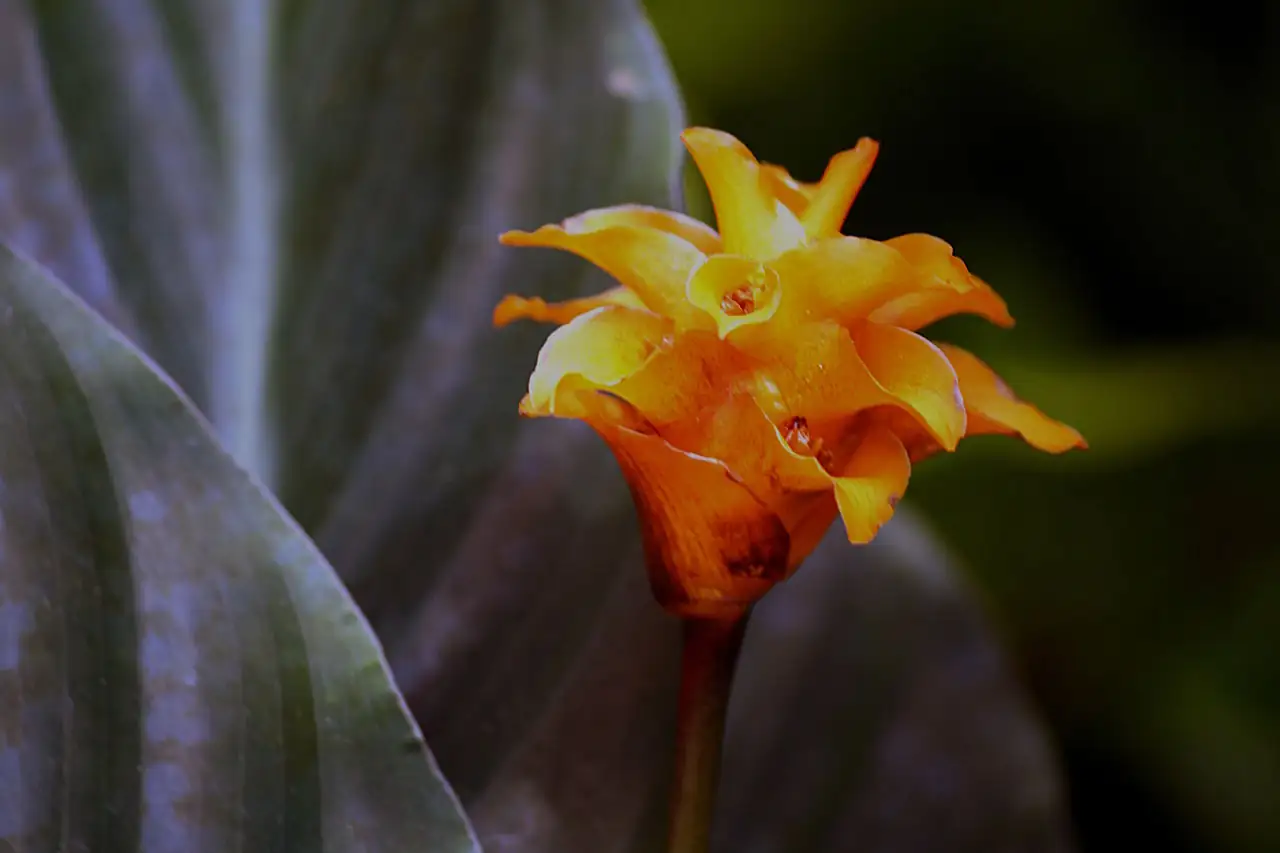
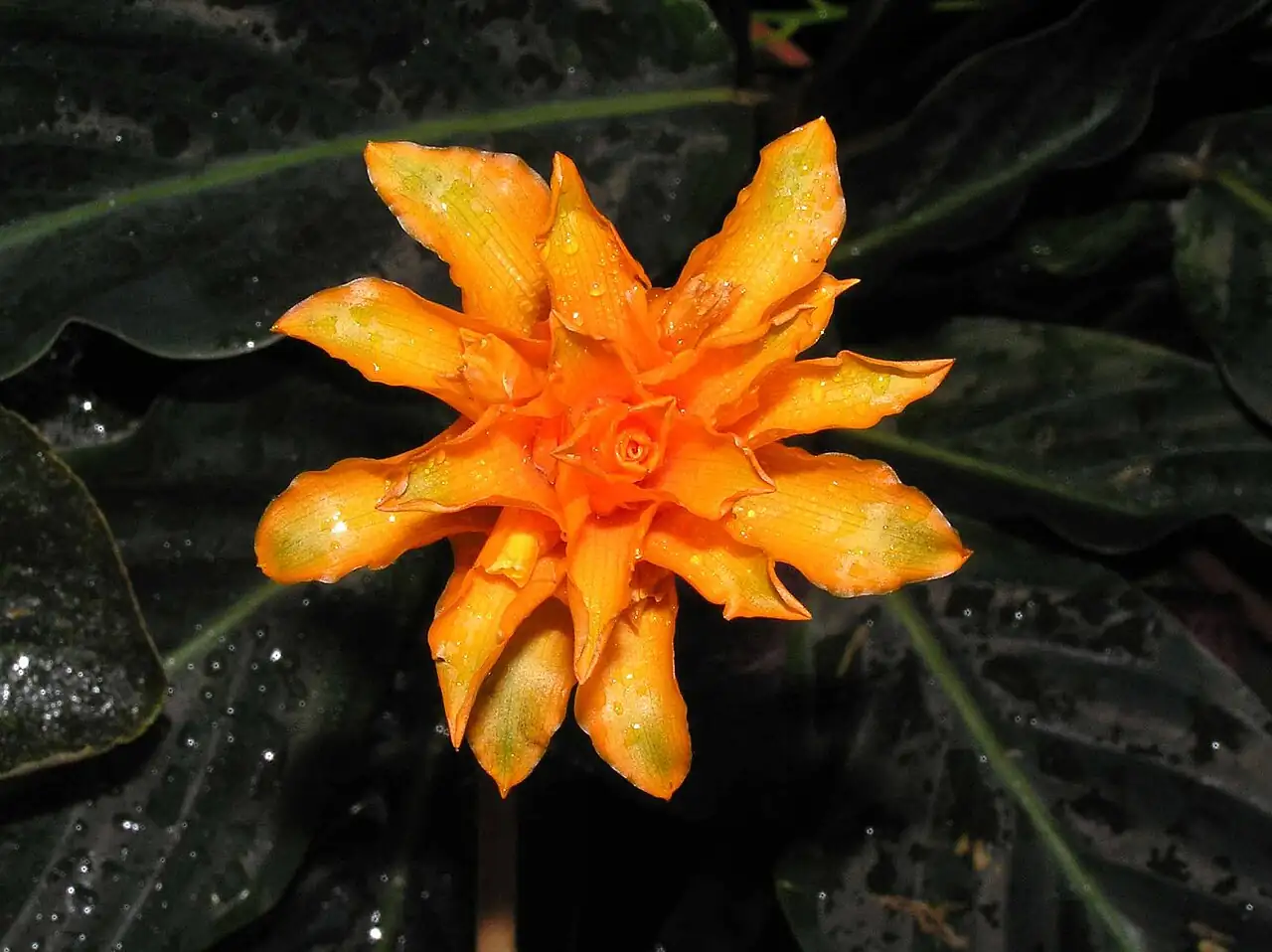
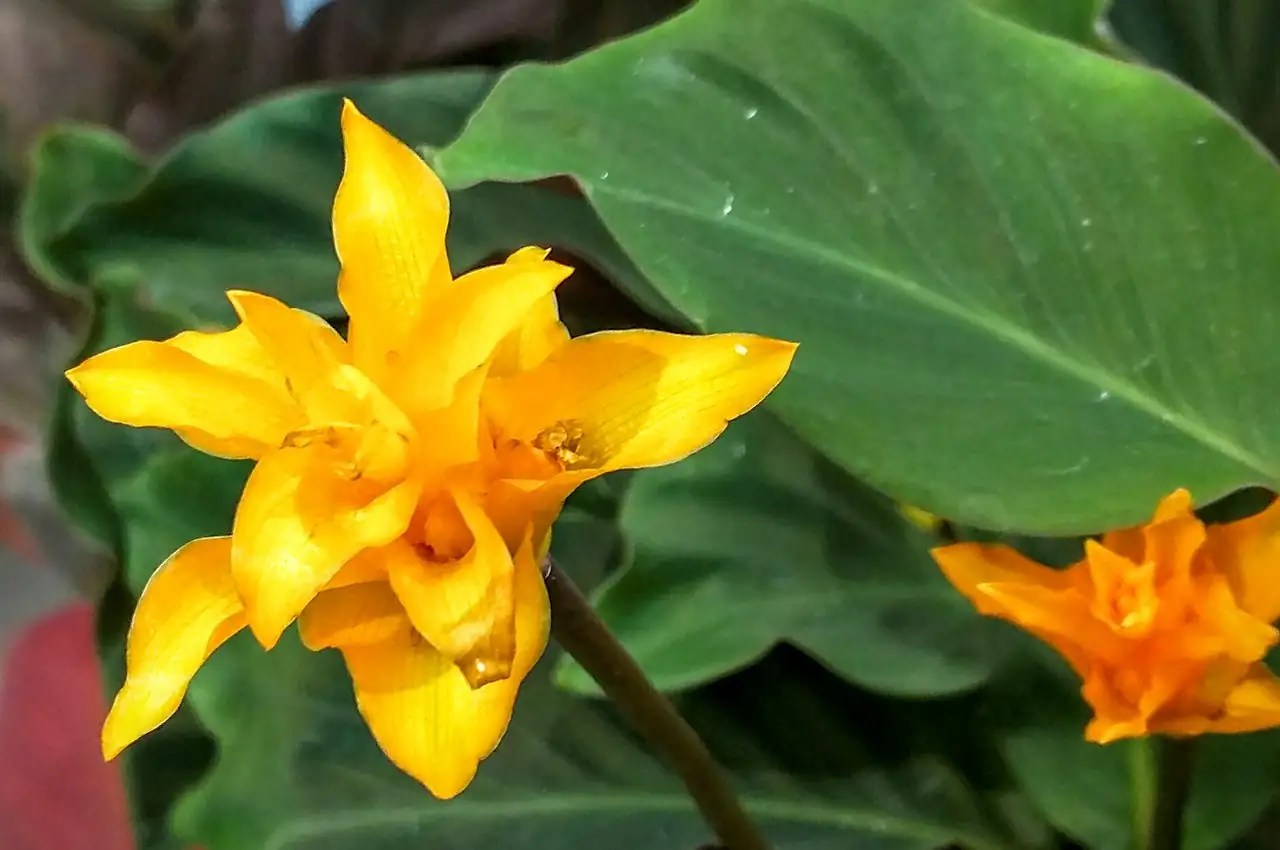
- Flower: Upright, torch-like clusters of vivid orange bracts/flowers; most likely to appear indoors when the plant gets strong bright-indirect light, steady warmth, and good humidity.
- Flowering Season: Summer
- Growth Habit: Clump-forming plant with an upright, rosette-like look; slowly spreads from the base over time.
Environment
Sunlight
Bright, indirect light is ideal; it will tolerate partial shade but avoid harsh direct sun which can scorch leaves and fade color.
Temperature
16–24°C (61–75°F). Keep it consistently warm, away from cold drafts, and ideally above 16°C (61°F).
Humidity
Medium to high humidity; aim for about 50–70%+ for best leaf quality and fewer crispy edges.
Soil
Loose, moisture-retentive but well-draining mix (for example, a peat/coco-based indoor mix amended with perlite and/or fine bark). A starter pot around 12.5–15 cm (5–6 in) suits many store-bought plants, as long as drainage is excellent.
Placement
Place in a bright spot out of direct sun—near an east window or set back from a brighter window. Great in a well-lit bathroom or near a humidifier for steadier humidity.
Hardiness
Not frost hardy; suitable outdoors only in very warm, humid climates (approximately USDA Zone 11–12).
Care Guide
Difficulty
Easy to moderate: it’s very doable as a houseplant when you keep it warm, evenly moist (not soggy), and give it decent humidity.
Buying Guide
Look for firm leaves that aren’t tightly curled, with strong color and clean undersides. Avoid plants with crispy brown edges (often low humidity), widespread yellowing, or pots that feel constantly wet and heavy (possible root stress).
Watering
Keep the mix evenly moist year-round, but never waterlog. Water when the top 1–2 cm (0.4–0.8 in) just begins to dry. Use room-temperature (or slightly warm) water. If your home is dry, boost humidity with a pebble tray, grouping plants, or a humidifier; misting can help briefly but isn’t a full solution on its own.
Fertilization
Spring through early autumn: feed about once a month with a balanced liquid houseplant fertilizer (full label rate, or half-strength if the plant seems sensitive). Reduce feeding or pause in winter when growth slows.
Pruning
Snip off yellowing or damaged leaves by cutting the stem at the base. Remove spent flower spikes after blooming to keep the plant tidy and to redirect energy back into new growth.
Propagation
Best by division during repotting: gently separate the clump so each division has healthy roots and several leaves, then pot each piece into fresh mix.
Repotting
Repot every 2–3 years, or sooner if rootbound. Move up only one pot size at a time and refresh the potting mix; a typical indoor pot diameter is around 12.5–15 cm (5–6 in) for a medium plant.
📅 Seasonal Care Calendar
Spring–early autumn: maintain even moisture and fertilize monthly. Summer: best chance of orange blooms with strong bright-indirect light and humidity. Autumn–winter: slow down watering slightly if growth slows, stop or reduce feeding, and keep temperatures above 16°C (61°F) with no cold drafts.
Pests, Diseases & Safety
Common Pests & Diseases
Can attract spider mites in dry air, plus mealybugs and scale. Brown, crispy leaf edges often point to low humidity or inconsistent watering. Yellowing leaves combined with persistently wet soil may indicate overwatering or root stress—improve drainage and adjust watering.
Toxicity
Generally considered non-toxic to cats and dogs (often listed as pet-safe). Even so, chewing may cause mild stomach upset in some pets.
Culture & Symbolism
Symbolism: Often linked with warmth, resilience, and lasting brightness—thanks to those flame-like orange blooms.
History & Legends: Promoted in the houseplant trade as “Eternal Flame” because it’s one of the more famous calatheas that can produce truly vivid orange flower spikes indoors under good conditions.
Uses: Primarily grown as an ornamental indoor plant for its two-toned foliage and occasional bright orange flowering spikes.
FAQ
Why are the leaf edges turning brown and crispy?
This is most commonly caused by low humidity, irregular watering, or drying out too much between waterings. Aim for 50–70%+ humidity, keep the mix evenly moist, and avoid placing the plant near heaters, vents, or cold drafts.
Does the Eternal Flame Plant really flower indoors?
Yes—more readily than many calatheas—but it still needs the basics: bright indirect light, steady warmth (16–24°C / 61–75°F), and good humidity. Flowering is most likely in summer.
Why do the leaves move or change position?
It’s a normal “prayer plant” trait (Marantaceae). Leaves may lift or shift between day and night in response to light, which is part of its natural rhythm.
Fun Facts
- Among calatheas, Calathea crocata is especially famous for its vivid orange, torch-like blooms—not just its foliage.
- Its leaves can subtly reposition from day to night, a classic feature of the prayer-plant family (Marantaceae).